Skip to content

Rhine Wine (homemade)

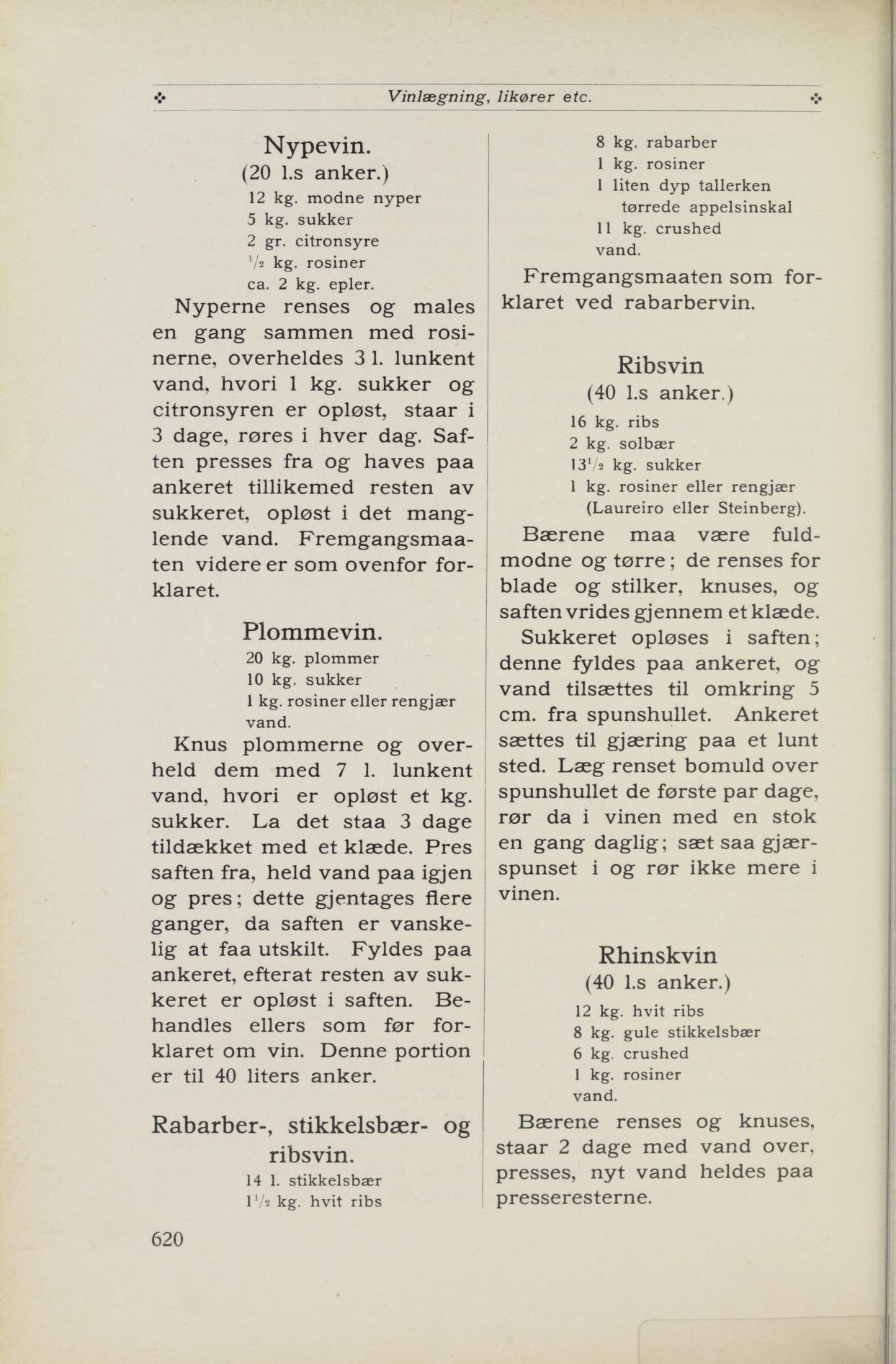
Homemade Norwegian "rhinskvin" (a light wine meant to imitate German Rhine wine) for a 40-liter cask from 12 kg white currants and 8 kg yellow gooseberries that are crushed, left 2 days in water, pressed twice, and fermented with 6 kg crushed sugar and 1 kg raisins following the same method as redcurrant wine.

Source: Henriette Schønberg Erken, Stor kokebok, 1914-utg. s. 620 (falt i det fri)

Be the first to rate

About the dish

From the chapter "Winemaking, liqueurs, etc." in "Stor kokebok" (1914). A light homemade wine of white currants and yellow gooseberries, called "rhinskvin" because it was meant to imitate German Rhine wines. "Crushed" was the term of the day for crushed white refined sugar.

How to make it

  1. 1

    Clean and crush the berries

    Clean the berries of leaves and stems and crush them.

  2. 2

    Soak in water

    Pour water over the berries and let stand for 2 days.

  3. 3

    Press

    Press out the juice, pour fresh water over the pressing residue, and press again.

  4. 4

    Mix and fill the cask

    Dissolve the sugar in the juice, fill it into a 40-liter cask together with the raisins, and top up with water to about 5 cm from the bunghole.

  5. 5

    Fermentation

    Set the cask in a warm place to ferment with clean cotton over the bunghole for the first couple of days, stir daily with a stick, and then insert the fermentation bung. Leave the wine undisturbed until it has finished fermenting and can be racked off clear.

Changes from the original

Units and spelling have been modernized, "crushed" is explained as crushed white sugar, and the method has been divided into numbered steps with the cross-reference to redcurrant wine written out.

Time machine – what changed?

Pick two editions and see what Henriette Schønberg Erken added, removed or changed between them.

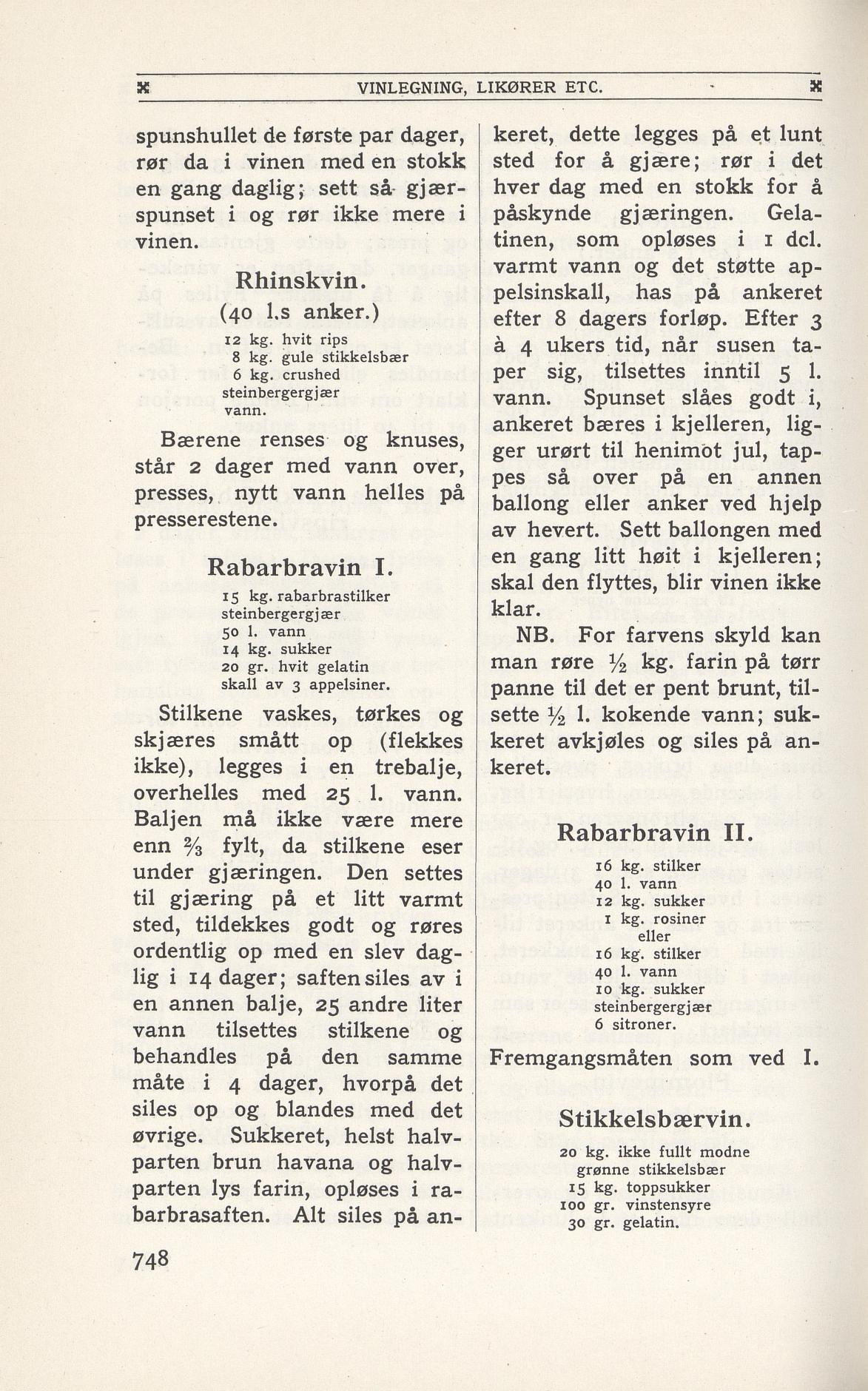
Modernised → 1949 (proofread, p. 748)~93% of the text changedremovedadded
Rhinskvin. (40 l.s anker.) 12 kg kg. hvit rips. rips 8 kg kg. gule stikkelsbær. stikkelsbær 6 kg sukker (crushed, dvs. knust hvitt raffinade). 1 kg rosiner (eller rengjær). vann (til å fylle ankeret). Rens bærene for blad og stilker og knus dem.. Hell vann over bærene kg. crushed steinbergergjær vann. Bærene renses og la stå i knuses, står 2 døgn.. Press saften fra, hell dager med vann over, presses, nytt vann på pressrestene og press på nytt.. Løs sukkeret i saften, fyll den helles på et 40 liters anker sammen med rosinene og etterfyll med vann til ca. 5 cm fra spunshullet.. Sett ankeret lunt til gjæring med renset bomull over spunshullet de første par dagene, rør daglig med en stokk, og sett deretter i gjærspunset. La vinen ligge urørt til den er utgjæret og kan tappes klar. presserestene.

Note on Modernised

Enheter og skrivemåte er modernisert, «crushed» er forklart som knust hvitt sukker, og fremgangsmåten er delt i nummererte trinn med henvisningen til ripsvin skrevet ut.

Community interpretations

Be the first to share your own version.

See interpretations →

Frequently asked questions

Which berries are used in this "Rhine wine"?
12 kg white currants and 8 kg yellow gooseberries, plus 6 kg sugar (crushed) and 1 kg raisins, all calculated for a 40-liter cask.
How are the berries treated?
The berries are cleaned and crushed, left 2 days with water over them, pressed, and fresh water is poured over the pressing residue. From there you follow the method for redcurrant wine.
Why is the total time so long?
The work itself is short, but the wine must ferment and mature in the cask for several months — the stated total time corresponds to about half a year before the wine is finished.
Where does the recipe come from?
From Henriette Schønberg Erken's "Stor kokebok" (1914), page 620, in the chapter on fruit and berry wine.

Related recipes

More dishes in the same category from the archive

Read also

Kommentarer

Ingen kommentarer ennå. Bli den første til å dele!