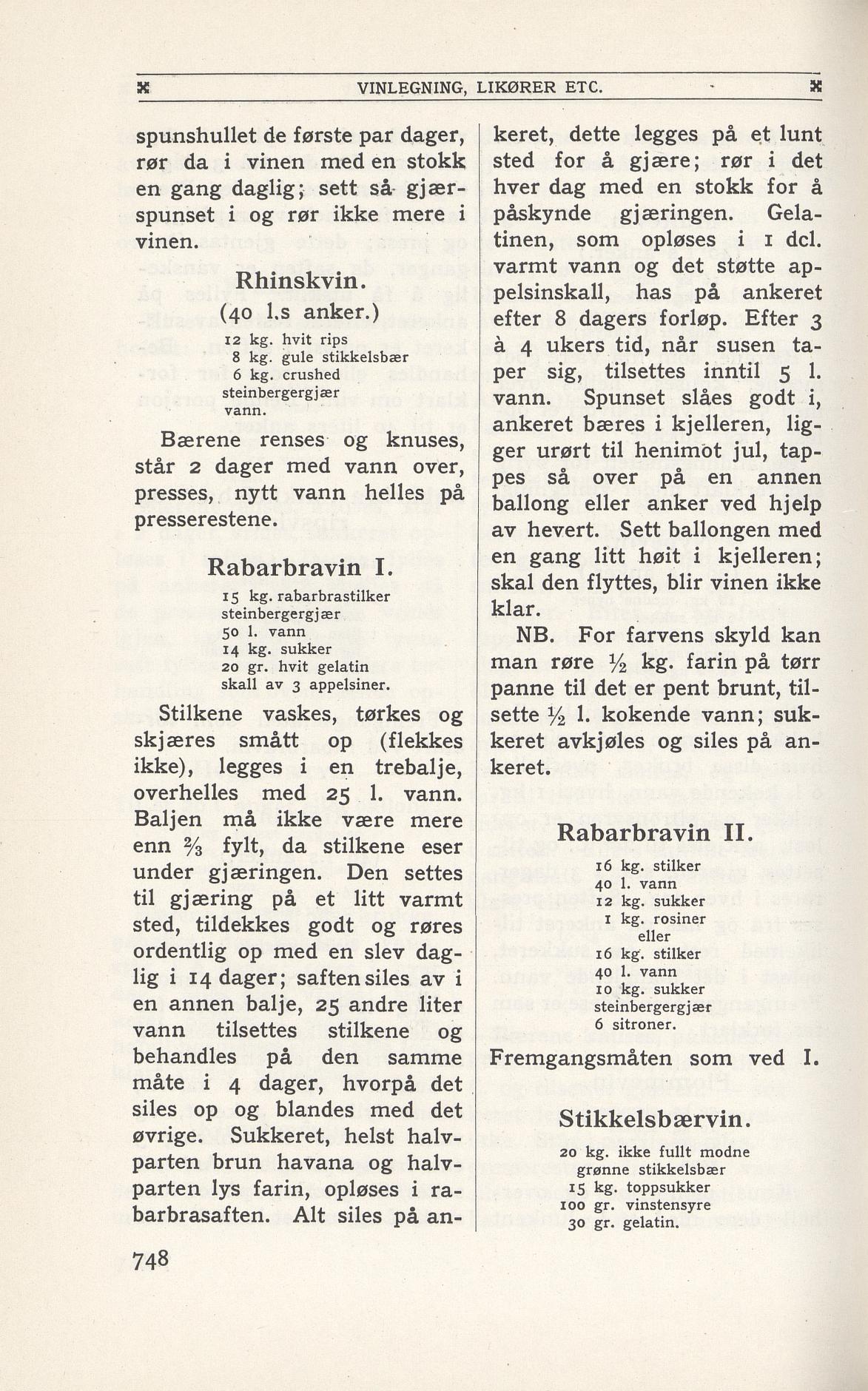
Original 1914 recipe
Verbatim from the first edition of the Big Cookbook.
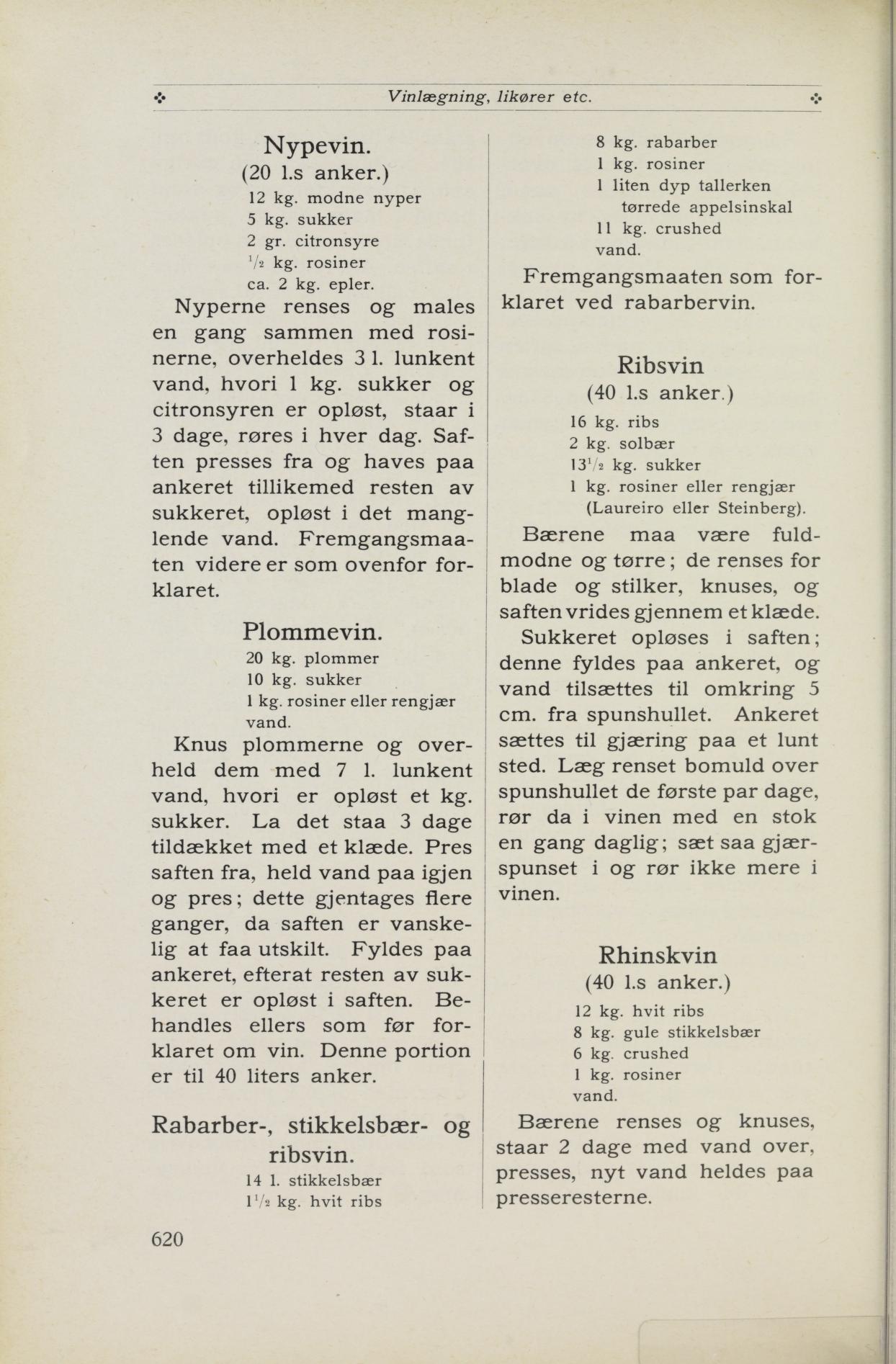
Homemade Norwegian "rhinskvin" (a light wine meant to imitate German Rhine wine) for a 40-liter cask from 12 kg white currants and 8 kg yellow gooseberries that are crushed, left 2 days in water, pressed twice, and fermented with 6 kg crushed sugar and 1 kg raisins following the same method as redcurrant wine.
Source: Henriette Schønberg Erken, Stor kokebok, 1914-utg. s. 620 (falt i det fri)
From the chapter "Winemaking, liqueurs, etc." in "Stor kokebok" (1914). A light homemade wine of white currants and yellow gooseberries, called "rhinskvin" because it was meant to imitate German Rhine wines. "Crushed" was the term of the day for crushed white refined sugar.
Clean and crush the berries
Clean the berries of leaves and stems and crush them.
Soak in water
Pour water over the berries and let stand for 2 days.
Press
Press out the juice, pour fresh water over the pressing residue, and press again.
Mix and fill the cask
Dissolve the sugar in the juice, fill it into a 40-liter cask together with the raisins, and top up with water to about 5 cm from the bunghole.
Fermentation
Set the cask in a warm place to ferment with clean cotton over the bunghole for the first couple of days, stir daily with a stick, and then insert the fermentation bung. Leave the wine undisturbed until it has finished fermenting and can be racked off clear.
Units and spelling have been modernized, "crushed" is explained as crushed white sugar, and the method has been divided into numbered steps with the cross-reference to redcurrant wine written out.
Original 1914 recipe
Verbatim from the first edition of the Big Cookbook.

Revised 1949 recipe
From the revised edition of the Big Cookbook.

Be the first to share your own version.
More dishes in the same category from the archive
Ingen kommentarer ennå. Bli den første til å dele!