Original 1914 recipe
Verbatim from the first edition of the Big Cookbook.
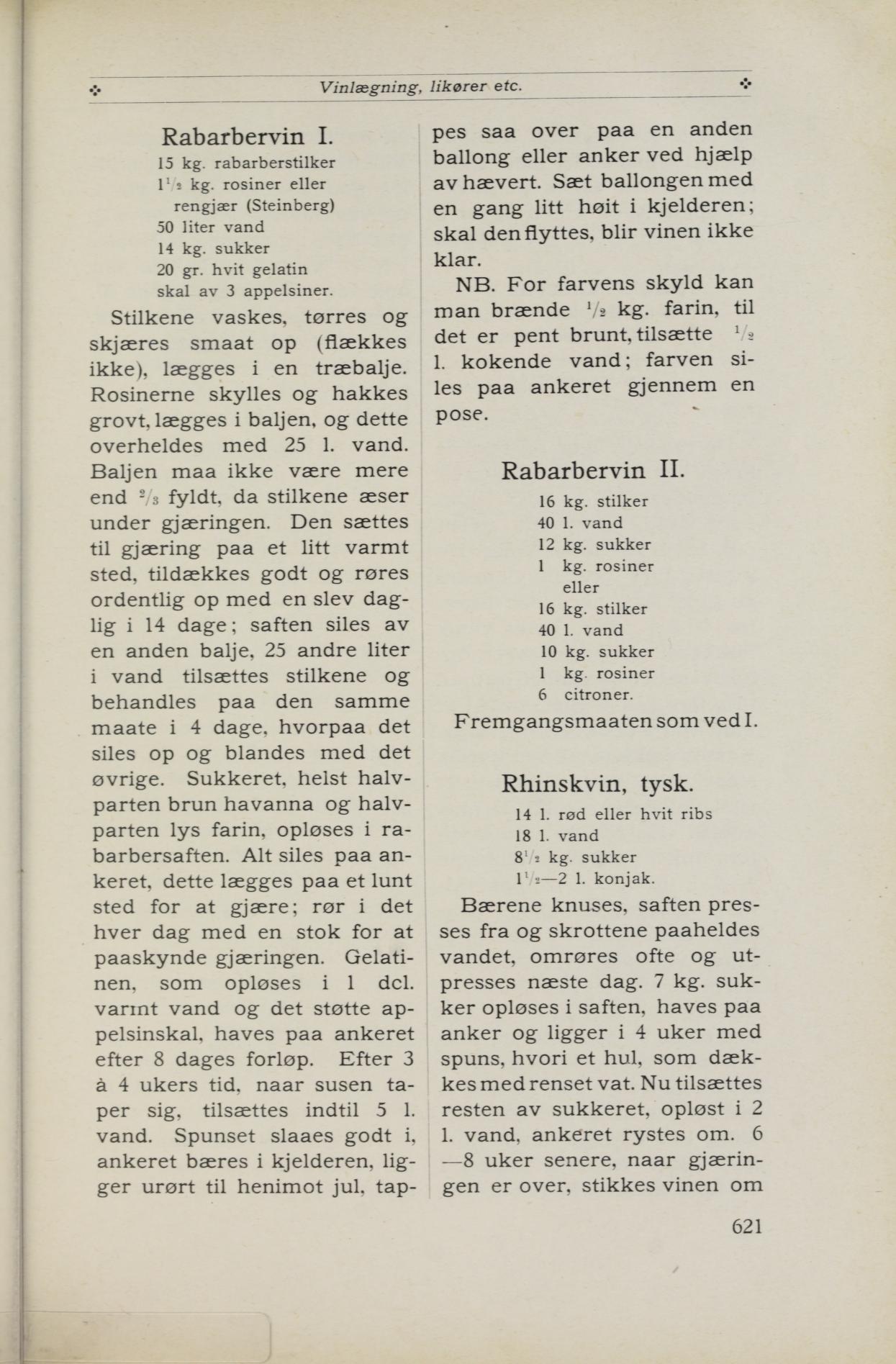
ProofreadPage 621
15 kg. rabarberstilker
1 1/2 kg. rosiner eller rengjær (Steinberg)
50 liter vand
14 kg. sukker
20 gr. hvit gelatin
skal av 3 appelsiner.
Stilkene vaskes, tørres og skjæres smaat op (flækkes ikke), lægges i en træbalje. Rosinerne skylles og hakkes grovt, lægges i baljen, og dette overheldes med 25 l. vand. Baljen maa ikke være mere end 2/3 fyldt, da stilkene æser under gjæringen. Den sættes til gjæring paa et litt varmt sted, tildækkes godt og røres ordentlig op med en slev daglig i 14 dage; saften siles av i en anden balje. 25 andre liter vand tilsættes stilkene og behandles paa den samme maate i 4 dage, hvorpaa det siles op og blandes med det øvrige. Sukkeret, helst halvparten brun havanna og halvparten lys farin, opløses i rabarbersaften. Alt siles paa ankeret, dette lægges paa et lunt sted for at gjære; rør i det hver dag med en stok for at paaskynde gjæringen. Gelatinen, som opløses i 1 del. varmt vand, og det støtte appelsinskal haves paa ankeret efter 8 dages forløp. Efter 3 a 4 ukers tid, naar susen taper sig, tilsættes indtil 5 l. vand. Spunset slaaes godt i, ankeret bæres i kjelderen, ligger urørt til henimot jul, tappes saa over paa en anden ballong eller anker ved hjælp av hævert. Sæt ballongen med en gang litt høit i kjelderen; skal den flyttes, blir vinen ikke klar.
NB. For farvens skyld kan man brænde 1/4 kg. farin, til det er pent brunt, tilsætte 1/2 l. kokende vand; farven siles paa ankeret gjennem en pose.