Skip to content

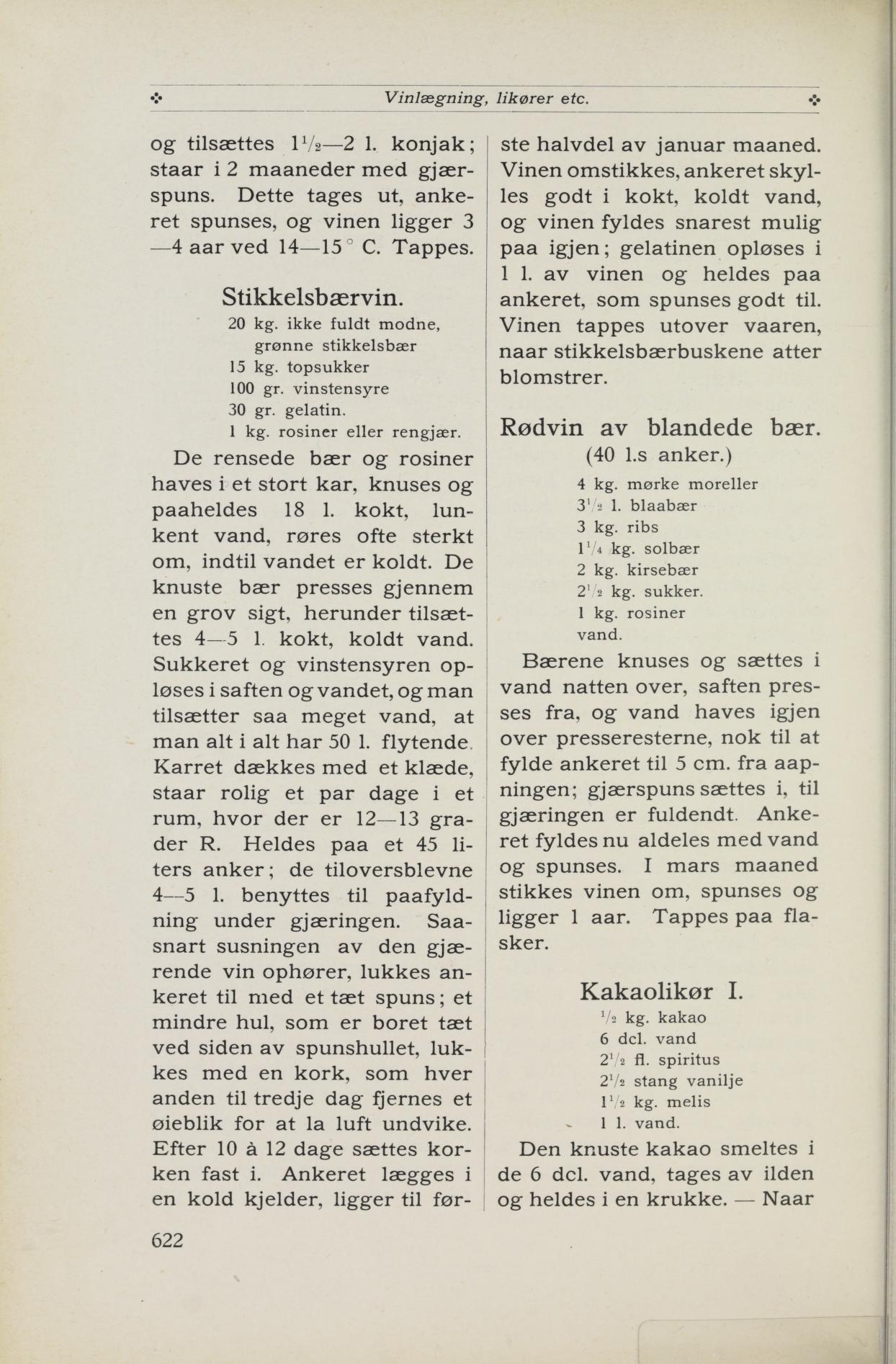
Red Wine from Mixed Berries (40-liter cask)

Mixed fruit wine from 1914 for a 40-liter cask: sweet cherries, bilberries, red currants, black currants, cherries, sugar, and raisins; the berries are crushed and set in water overnight, pressed, fermented with an airlock, racked in March, and aged one year.

Source: Henriette Schønberg Erken, Stor kokebok, 1914-utg. s. 622 (falt i det fri)

Be the first to rate

About the dish

A blended wine of Norwegian garden and forest berries, made for a 40-liter cask. Such blended wines used up the whole berry season and were part of the autumn stores in large households.

How to make it

  1. 1

    Set the berries in water

    Crush all the berries and set them in water overnight.

  2. 2

    Press the juice

    Press out the juice, and pour fresh water over the pressing residue — enough to fill the cask to within 5 cm of the opening. Add the sugar and raisins.

  3. 3

    Fermentation

    Fit a fermentation bung (airlock) and let the wine ferment until fermentation is complete.

  4. 4

    Topping up

    Fill the cask completely with water and close it with a tight bung.

  5. 5

    Racking and aging

    In March, rack the wine, top up the cask again, and let the wine rest for 1 year.

  6. 6

    Bottling

    Bottle the wine.

Changes from the original

The measurements have been kept but written with modern fractions and units (l, kg). "Gjærspuns" is explained as a fermentation bung/airlock, and the method has been divided into steps in modern Norwegian.

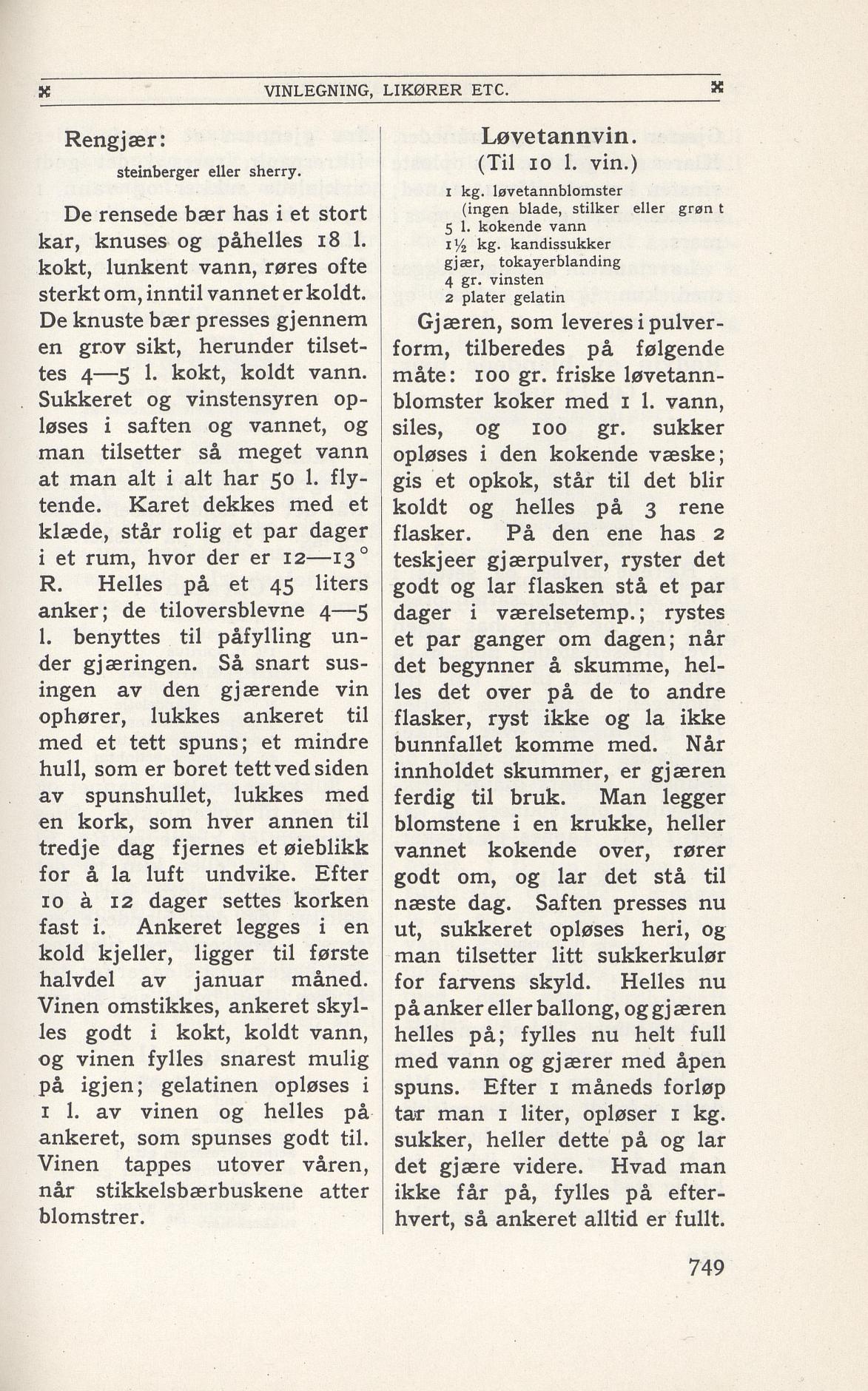
Tidsmaskin – hva endret seg?

Velg to utgaver og se hva Henriette Schønberg Erken la til, fjernet eller endret mellom dem.

1914 (korrekturlest, s. 622)1949 (korrekturlest, s. 749)~49% av teksten endretfjernetlagt til
Rødvin av blandede bær. (40 l.s anker.) 4 kg. mørke moreller 3½ l. blaabær blåbær 3 kg. ribs 1¼ rips 1¾ kg. solbær 2 kg. kirsebær 2½ kg. sukker 1 kg. rosiner vand. Bordeaux vingjær vann. Bærene knuses og sættes settes i vand vann natten over, saften presses fra, og vand haves vann has igjen over presseresterne, presserestene, nok til at fylde å fylle ankeret til 5 cm. fra aapningen; åpningen; gjærspuns sættes i, settes i til gjæringen er fuldendt. over. Ankeret fyldes fylles nu aldeles med vand vann og spunses. I mars maaned måned stikkes vinen om, spunses og ligger 1 aar. år. Tappes paa flasker.

Community interpretations

Be the first to share your own version.

See interpretations

Frequently asked questions

Which berries go into this red wine?
4 kg dark sweet cherries, 3½ l bilberries, 3 kg red currants, 1¼ kg black currants, and 2 kg cherries, plus 2½ kg sugar, 1 kg raisins, and water. The recipe is made for a 40-liter cask.
How long does it take before the wine is ready?
Allow around a year and a bit more: the berries stand in water overnight, then it ferments with an airlock until fermentation is complete. In March the wine is racked, bunged, and rests for 1 year before being bottled.
How much water is added, and how is the cask filled?
After the juice is pressed, water is added to the pressing residue — enough to fill the cask to within 5 cm of the opening. When fermentation is complete, the cask is filled completely with water and bunged.
Where does the recipe come from?
From Henriette Schønberg Erken's "Stor kokebok" (1914), page 622, in the chapter on winemaking and liqueurs.

Related recipes

More dishes in the same category from the archive

Read also

Kommentarer

Ingen kommentarer ennå. Bli den første til å dele!