Skip to content

Red Currant Wine

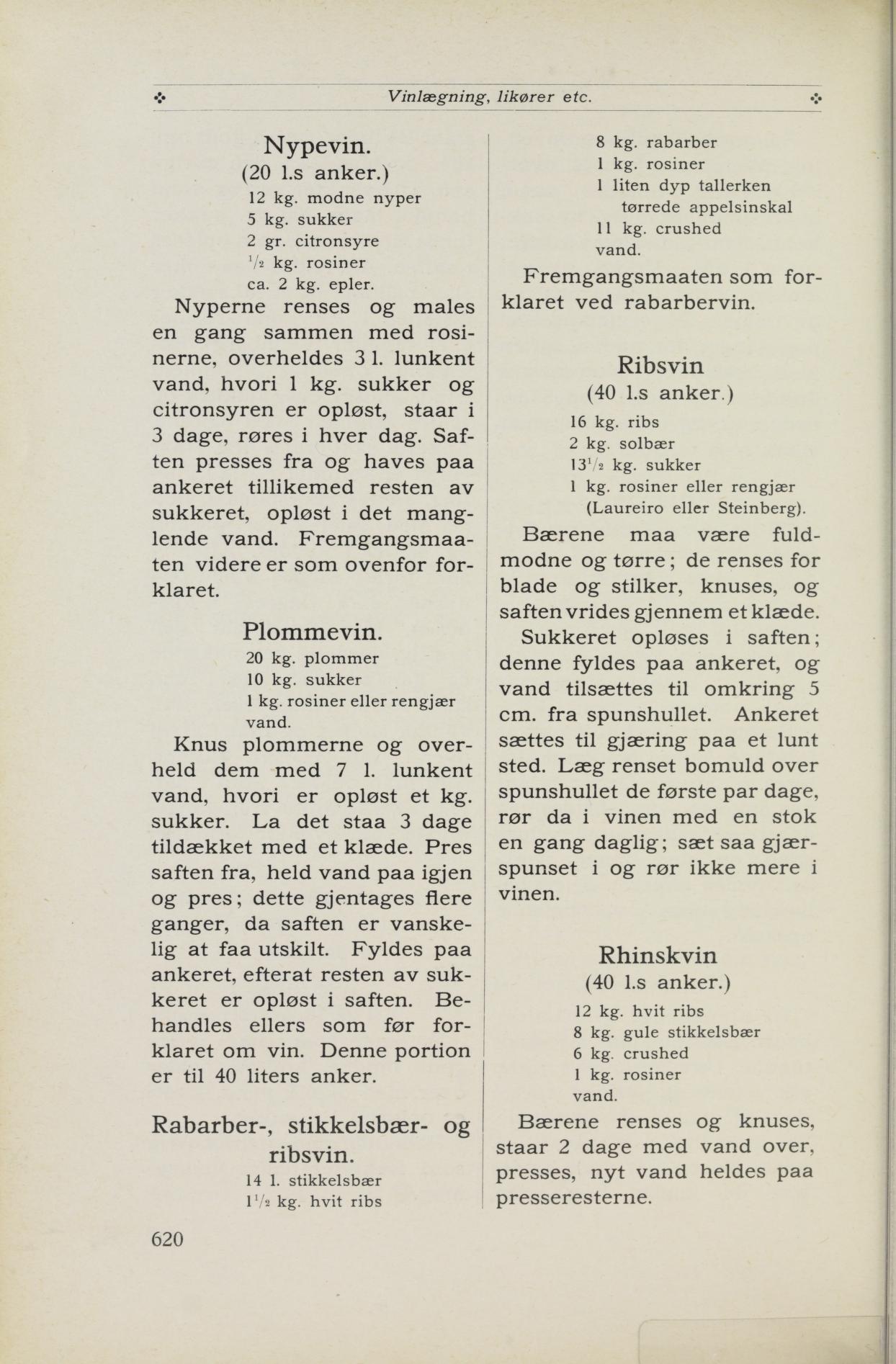
Red currant wine for a 40-liter cask: 16 kg red currants and 2 kg black currants are pressed, the juice is mixed with 13.5 kg sugar, filled into the cask with water and raisins or wine yeast, and fermented in a warm spot with cotton over the bunghole before a fermentation bung is fitted.

Source: Henriette Schønberg Erken, Stor kokebok, 1914-utg. s. 620 (falt i det fri)

Be the first to rate

About the dish

From the chapter "Winemaking, liqueurs etc." in "Stor kokebok" (1914). This is the main recipe for red currant wine, and several of the chapter's other fruit wines refer back to this method. Laureiro and Steinberg are names of the pure wine-yeast cultures of the day.

How to make it

  1. 1

    Clean the berries

    The berries must be fully ripe and dry. Clean them of leaves and stems.

  2. 2

    Press the juice

    Crush the berries and wring the juice out through a cloth.

  3. 3

    Mix with sugar

    Dissolve the sugar in the juice.

  4. 4

    Fill the cask

    Pour the juice into a 40-liter cask together with the raisins or wine yeast, and top up with water to about 5 cm from the bunghole.

  5. 5

    Fermentation

    Set the cask to ferment in a warm place. Lay clean cotton over the bunghole for the first couple of days and stir the wine with a stick once daily. Then fit the fermentation bung and stir the wine no more.

Changes from the original

Units and spelling are modernized ("ribs" → rips), and the method is broken into numbered steps. Otherwise the content is unchanged.

Tidsmaskin – hva endret seg?

Velg to utgaver og se hva Henriette Schønberg Erken la til, fjernet eller endret mellom dem.

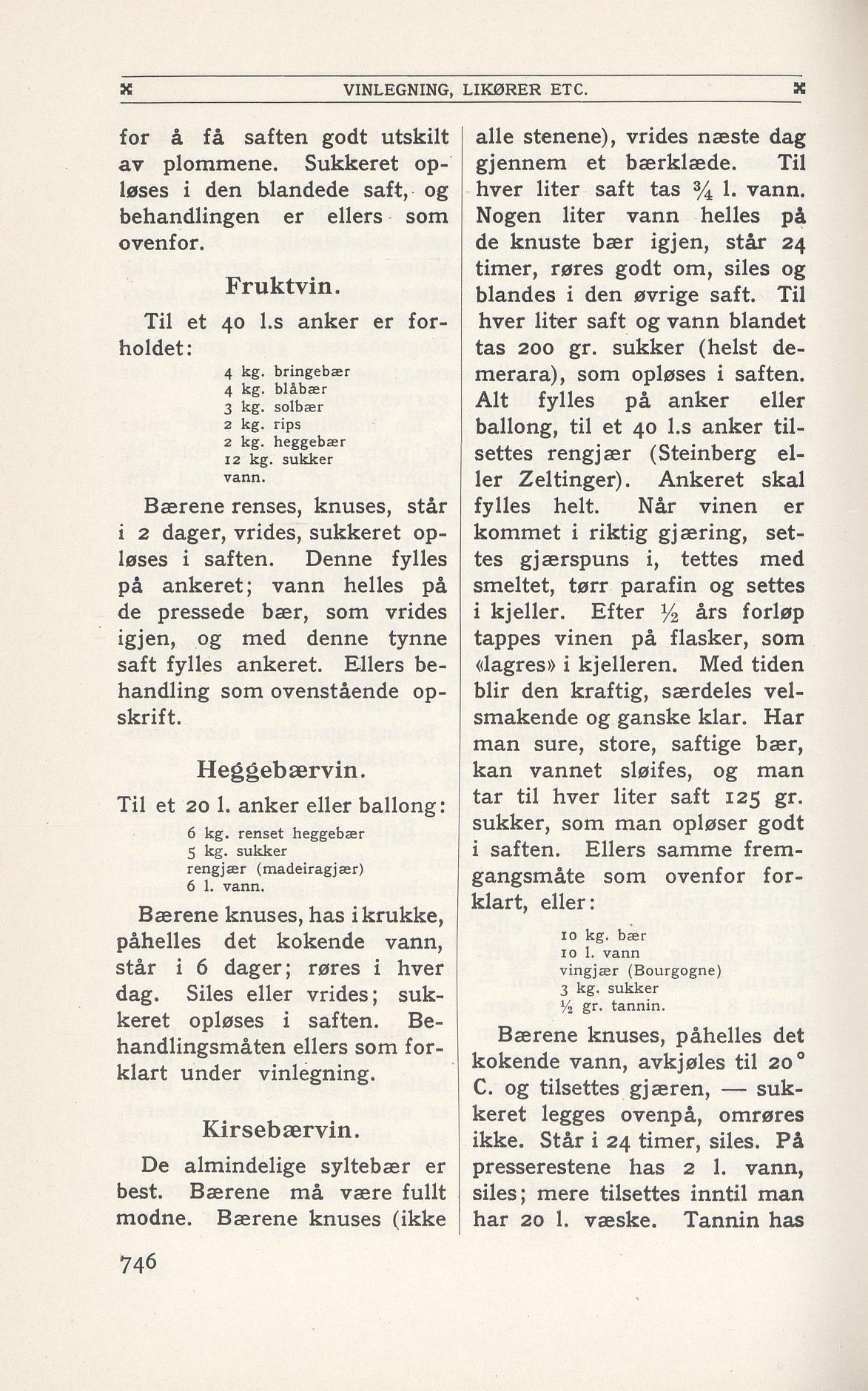
1914 (korrekturlest, s. 620)1949 (korrekturlest, s. 746)~73% av teksten endretfjernetlagt til
Ribsvin (40 l.s anker.) 16 kg. ribs rips 2 kg. solbær 13 1/2 kg. sukker 1 kg. rosiner eller rengjær (Laureiro eller Steinberg). Steinbergergjær. Bærene maa være fuldmodne fullmodne og tørre; de renses for blade og stilker, knuses, og saften vrides gjennem et klæde. Sukkeret opløses i saften; denne fyldes paa ankeret, og vand tilsættes til omkring 5 cm. fra spunshullet. Ankeret sættes til gjæring paa et lunt sted. Læg renset bomuld over spunshullet de første par dage, rør da i vinen med en stok en gang daglig; sæt saa gjærspunset i og rør ikke mere i vinen. Behandlingsmåten som forklart ved rabarbravin.
Community interpretations

Be the first to share your own version.

See interpretations

Frequently asked questions

How much fruit and sugar is needed for a 40-liter cask?
16 kg fully ripe red currants, 2 kg black currants, and 13½ kg sugar, plus 1 kg raisins or wine yeast (Laureiro or Steinberg).
How are the berries handled?
The berries must be fully ripe and dry. They are cleaned of leaves and stems, crushed, and the juice is wrung out through a cloth. The sugar is dissolved in the juice.
How is the cask filled, and how should it ferment?
The juice is filled into the cask and water is added to about 5 cm from the bunghole. The cask is set to ferment in a warm place. Lay clean cotton over the bunghole for the first couple of days and stir the wine with a stick once daily. Then fit the fermentation bung and stir no more.
How long does it take?
The recipe is figured for a long time – around half a year (about 180 days) from the start of fermentation to finished wine. The recipe is from Henriette Schønberg Erken's "Stor kokebok" (1914), p. 620.

Related recipes

More dishes in the same category from the archive

Read also

Kommentarer

Ingen kommentarer ennå. Bli den første til å dele!