Skip to content

Strawberry Cordial

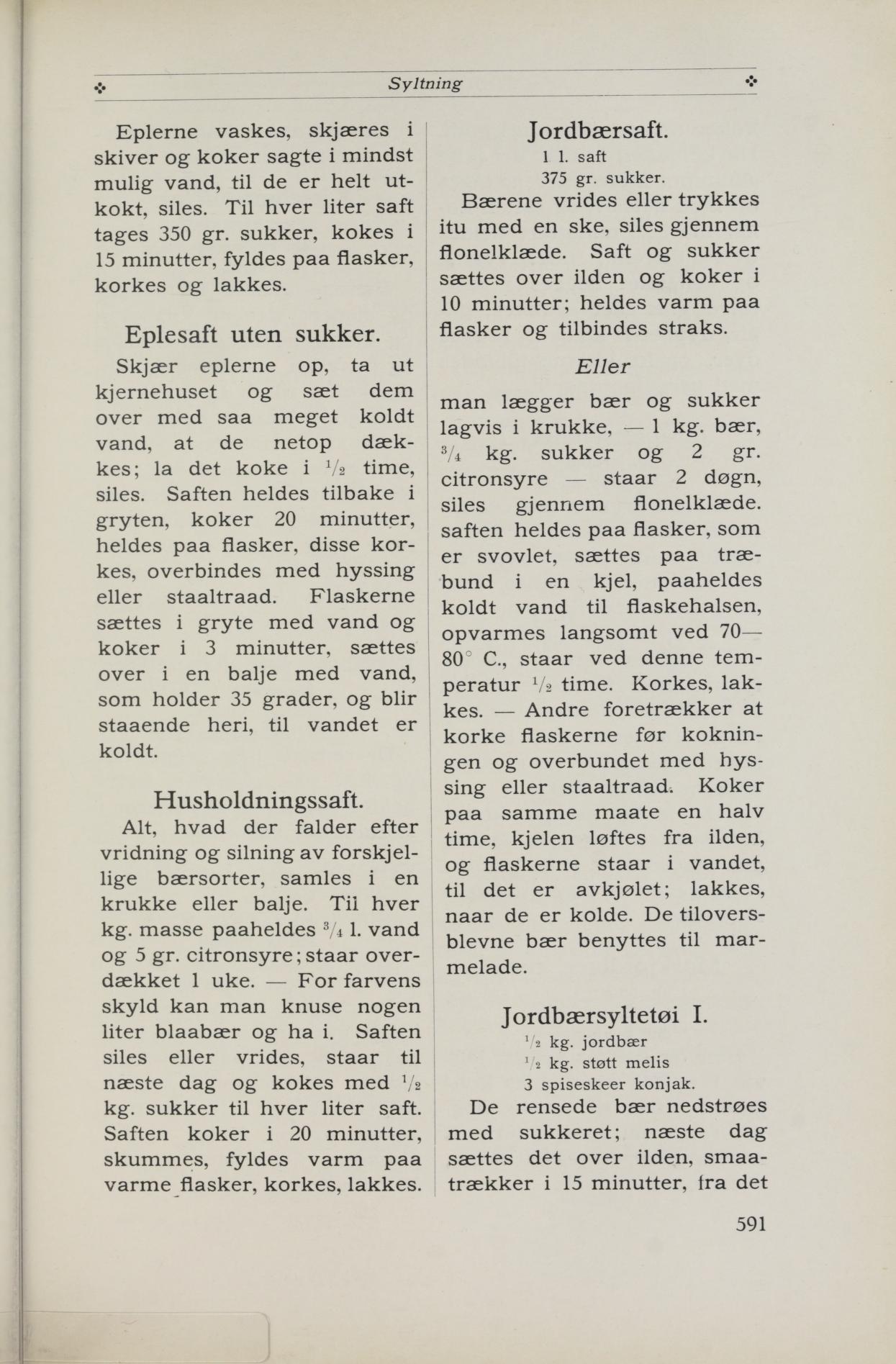
Strawberry cordial (saft) from Erken 1914 in two variants: juice strained through a flannel cloth is boiled 10 minutes with 375 g sugar per liter, or berries and sugar (1 kg / ¾ kg plus 2 g citric acid) steep for two days, are strained, and the juice is heat-treated at 70–80 °C for half an hour.

Source: Henriette Schønberg Erken, Stor kokebok, 1914-utg. s. 591 (falt i det fri)

Be the first to rate

About the dish

Erken gives two methods for strawberry cordial in the 1914 edition: a quick boiling method and a cold method where berries and sugar steep for two days before the juice is heat-treated at 70–80 °C (175 °F). Sulfuring bottles was common preservation at the time, but is not used today.

How to make it

  1. 1

    Press out the juice

    Wring the berries in a cloth or crush them with a spoon, and strain the juice through a flannel cloth or straining cloth.

  2. 2

    Boil the juice

    Measure the juice, add 375 g sugar per liter and boil for 10 minutes.

  3. 3

    Bottle

    Pour the juice hot into clean bottles and cover them at once.

  4. 4

    Alternatively: the cold method

    Layer 1 kg berries and 3/4 kg sugar in a jar with 2 g citric acid. Let stand for two days and then strain through a flannel cloth.

  5. 5

    Heat-treat

    Pour the juice into clean bottles, set them on a wooden base in a pot and pour in cold water up to the bottle necks. Warm slowly to 70–80 °C (175 °F) and hold this temperature for 30 minutes. Cork and seal with wax.

  6. 6

    Variant with corking before heating

    The bottles can also be corked and tied over with string or wire before heating. Warm the same way for half an hour, lift the pot off the heat and let the bottles stand in the water until it has cooled. Seal with wax when they are cold.

  7. 7

    Use the leftover berries

    The remaining berries are used for marmalade.

Changes from the original

Modern units (l, g, kg) and Norwegian spelling in the ingredient list. The flannel cloth is given as a cloth/straining cloth. Sulfuring the bottles is mentioned as a historical detail, but replaced by well-cleaned/scalded bottles in the steps.

Tidsmaskin – hva endret seg?

Velg to utgaver og se hva Henriette Schønberg Erken la til, fjernet eller endret mellom dem.

1914 (korrekturlest, s. 591)1949 (korrekturlest, s. 710)~60% av teksten endretfjernetlagt til
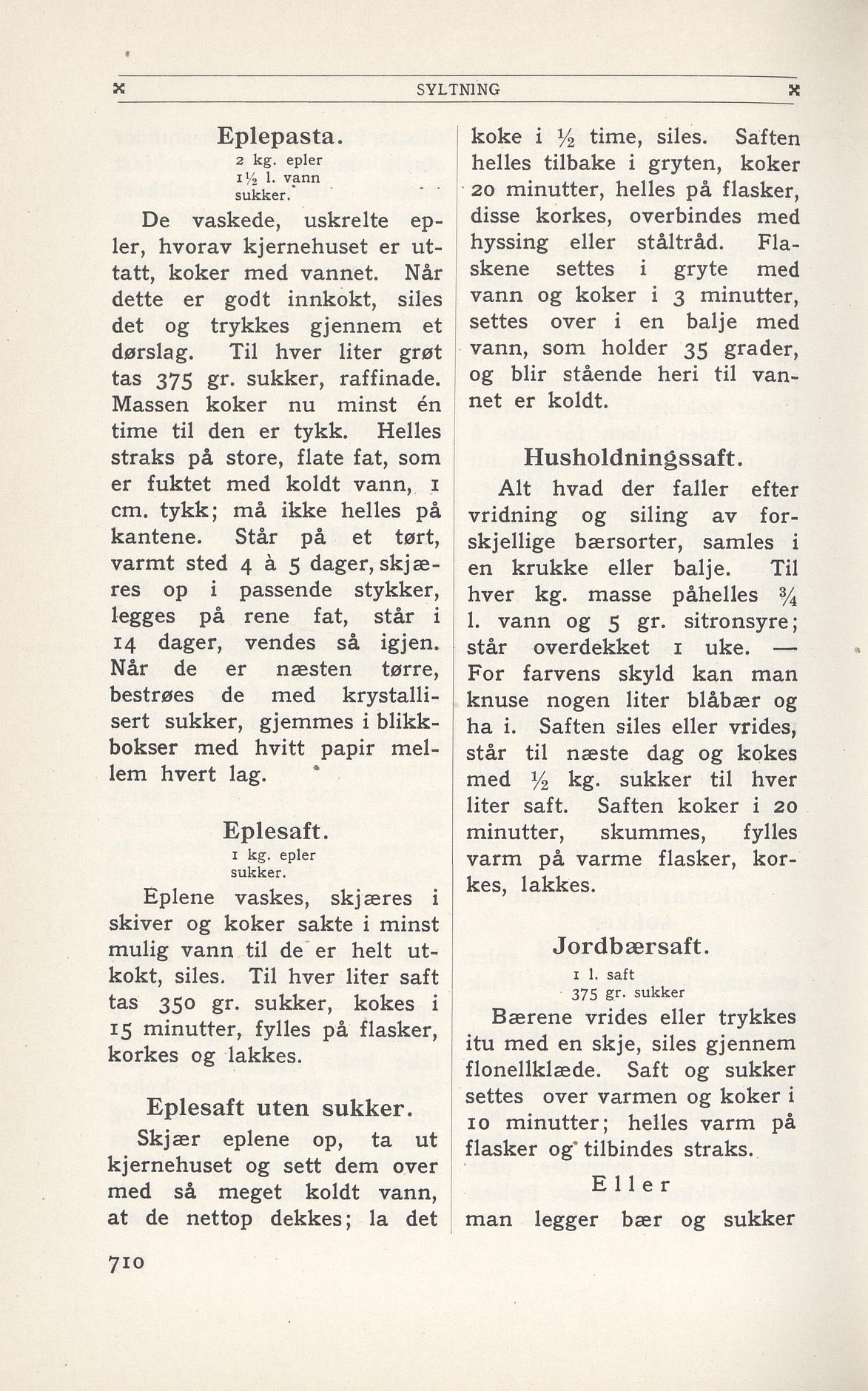
1 l. saft 375 gr. sukker Bærene vrides eller trykkes itu med en ske, skje, siles gjennem flonelklæde. flanellklæde. Saft og sukker sættes settes over ilden varmen og koker i 10 minutter; heldes helles varm paa flasker og tilbindes straks. Eller man lægger legger bær og sukker lagvis i krukke, — 1 kg. bær, ¾ kg. sukker og 2 gr. citronsyre sitronsyre staar står 2 døgn, siles gjennem flonelklæde. Saften heldes paa flasker, flanellklæde, saften helles på flasker som er svovlet, sættes paa træbund settes på trebunn i en kjel, paaheldes påhelles koldt vand vann til flaskehalsen, opvarmes langsomt ved 70—80 C, staar °C., står ved denne temperatur ½ ¾ time. Korkes, lakkes. — Andre foretrækker at foretrekker å korke flaskerne flaskene før kokningen kokingen og overbinde dem med hyssing eller staaltraad. ståltråd. Koker paa samme maate måte en halv time, kjelen løftes fra ilden, varmen, og flaskerne staar flaskene står i vandet, vannet til det er avkjølet; lakkes, naar avkjølt; lakkes når de er kolde. De tiloversblevne bær benyttes til marmelade. Bærene drysses ned om aftenen med sukkeret, kokes næste morgen over svak varme i 10 minutter, skummes. Bærene tas forsiktig op og legges i de opvarmede skrueglass; disse holdes varme i stekeovnen, mens saften koker videre i 15 minutter, helles over bærene. En teskje god konjakk has øverst i hvert glass, og lokkene skrues fast til. NB. Mens sausen koker inn, settes lokkene løselig på glassene. — Hvis bærene er meget store, tas god vekt av sukker.
Community interpretations

Be the first to share your own version.

See interpretations

Frequently asked questions

How much sugar should I use for the strawberry cordial?
In the boiled variant, 375 g sugar per liter of juice is used. In the uncooked variant, 1 kg berries and ¾ kg sugar are layered, together with 2 g citric acid.
How long should the juice boil?
The juice and sugar are boiled for 10 minutes, and poured hot into bottles that are covered at once.
What is the alternative to boiling the juice?
Berries and sugar are layered in a jar with citric acid and stand for 2 days. The juice is strained through a flannel cloth, poured into sulfured bottles set on a wooden base in a pot with cold water up to the bottle necks. Warm slowly to 70–80 °C and hold this temperature for ½ hour, cork and seal with wax.
How is the juice strained?
The berries are wrung or crushed with a spoon, and the juice is strained through a flannel cloth.

Related recipes

More dishes in the same category from the archive

Read also

Kommentarer

Ingen kommentarer ennå. Bli den første til å dele!