Skip to content

Rye Cakes

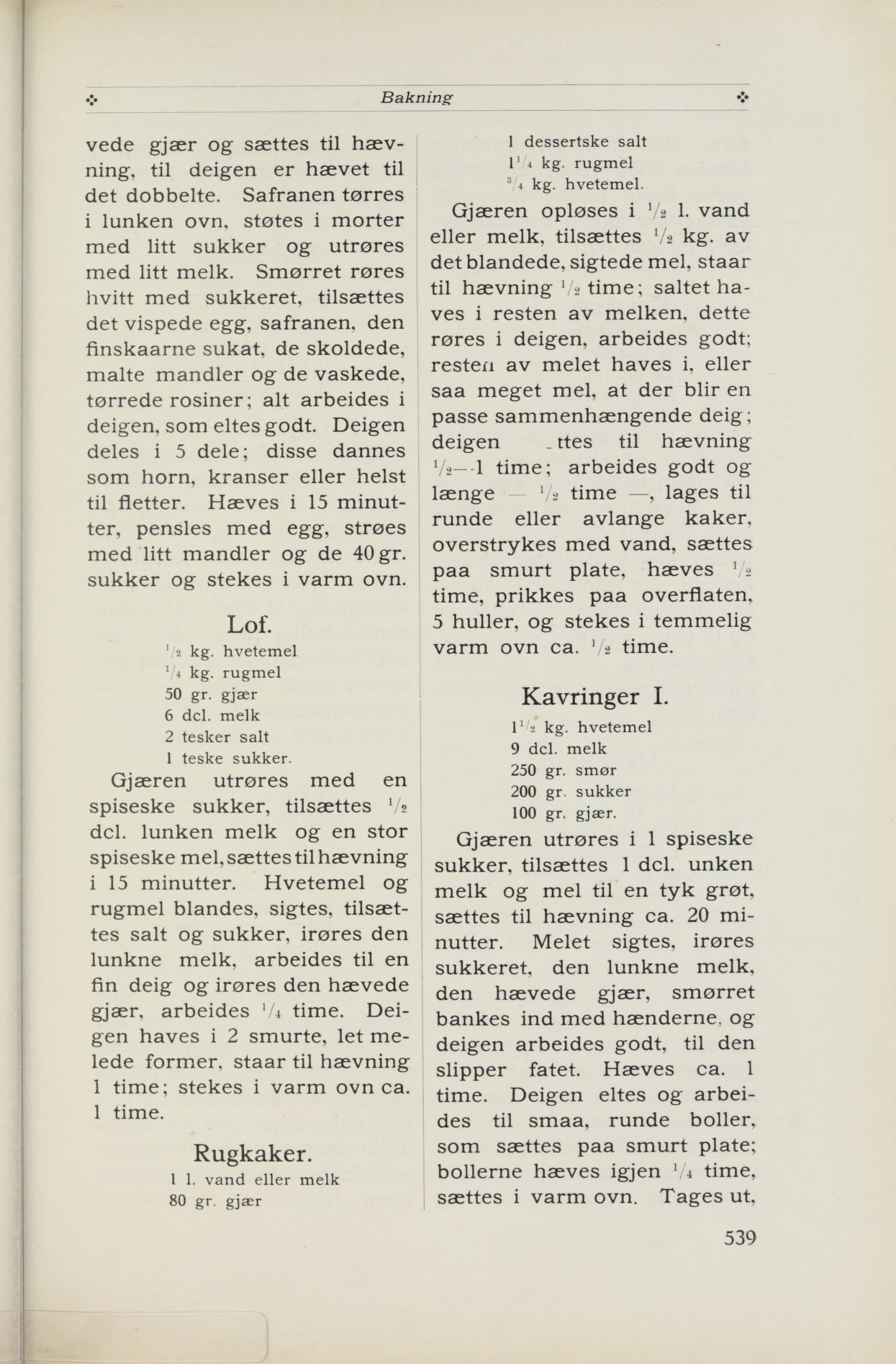
Rye cakes from Erken's "Stor kokebok" 1914: 1.25 kg rye flour and 250 g wheat flour set with 80 g yeast and 1 liter water or milk. The dough is proofed in two stages, shaped into round or oblong cakes, brushed with water, pricked with five holes and baked about 30 minutes in a fairly hot oven.

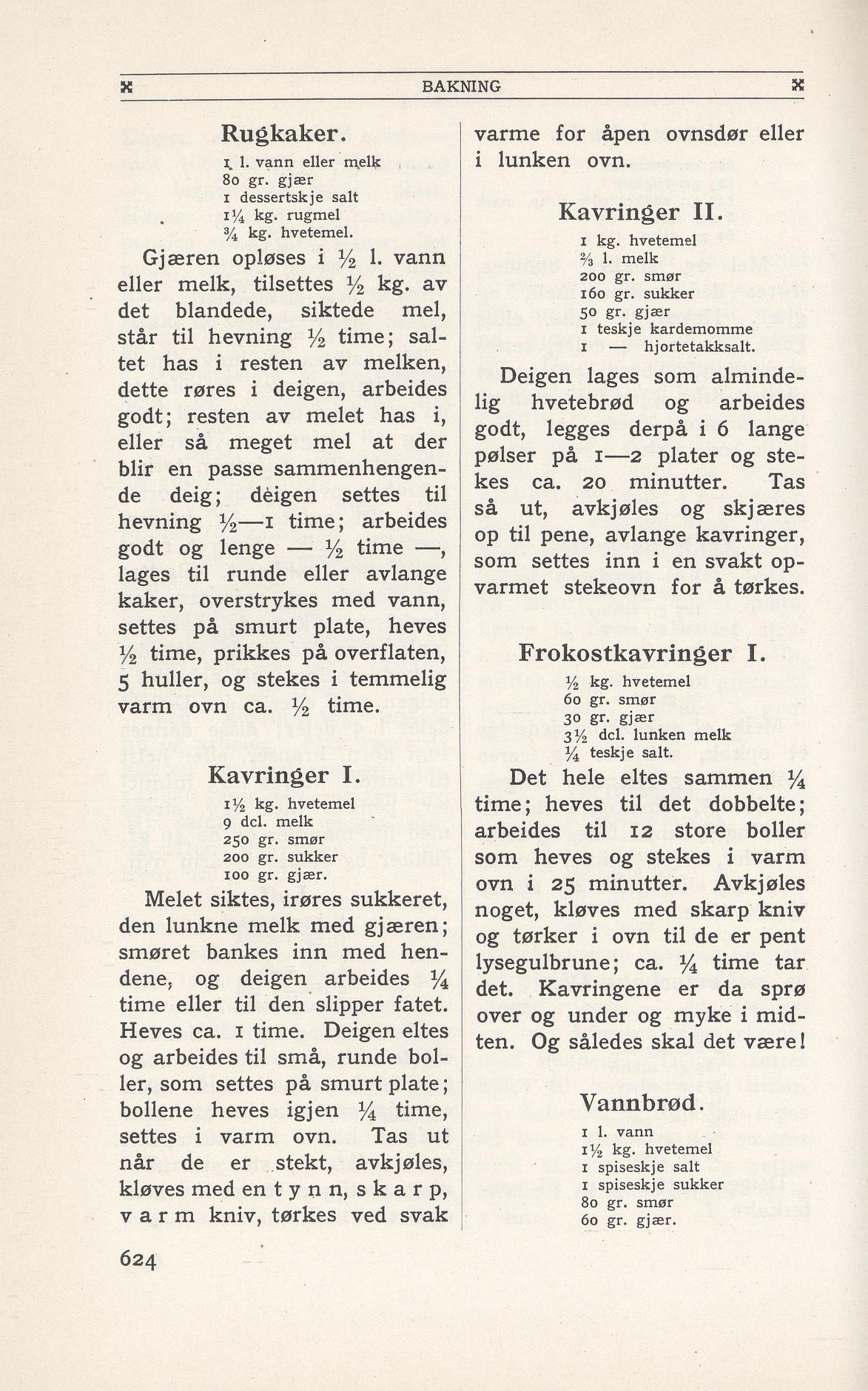
Source: Henriette Schønberg Erken, Stor kokebok, 1914-utg. s. 539 (falt i det fri)

Be the first to rate

About the dish

Flat rye cakes of coarse bread dough are among the simplest bread types in Erken's baking chapter. The dough can be set with water or milk, and the cakes are pricked with five holes before baking – an old hallmark of flatbread cakes from griddle baking.

How to make it

  1. 1

    Set the yeast

    Mix and sift the rye and wheat flour. Dissolve the yeast in ½ liter lukewarm water or milk, stir in about ½ kg of the flour mixture and let the pre-ferment rise for ½ hour.

  2. 2

    Make the dough

    Stir the salt into the rest of the liquid and stir this into the dough. Work it well, and add the rest of the flour, or enough flour that the dough becomes suitably cohesive.

  3. 3

    Proof

    Let the dough rise for ½–1 hour.

  4. 4

    Shape the cakes

    Work the dough well and long, about ½ hour, and shape round or oblong cakes. Brush them with water and place them on a greased baking sheet.

  5. 5

    Final proof and bake

    Let the cakes rise ½ hour, prick five holes in the surface and bake them in a fairly hot oven (about 220 °C (430 °F)) for about 30 minutes.

Changes from the original

Measurements have been converted to modern units (1 dessert spoon ≈ 2 tsp salt), "fairly hot oven" estimated at 220 °C (430 °F). Otherwise the method is unchanged.

Tidsmaskin – hva endret seg?

Velg to utgaver og se hva Henriette Schønberg Erken la til, fjernet eller endret mellom dem.

1914 (korrekturlest, s. 539)1949 (korrekturlest, s. 624)~33% av teksten endretfjernetlagt til
1 l. vand vann eller melk 80 gr. gjær 1 dessertske dessertskje salt kg. rugmel ¼ ¾ kg. hvetemel. Gjæren opløses i ½ l. vand vann eller melk, tilsættes tilsettes ½ kg. av det blandede, sigtede siktede mel, staar står til hævning hevning ½ time; saltet haves has i resten av melken, dette røres i deigen, arbeides godt; resten av melet haves has i, eller saa meget mel, mel at der blir en passe sammenhængende sammenhengende deig; deigen sættes settes til hævning hevning ½—1 time; arbeides godt og længe lenge — ½ time —, lages til runde eller avlange kaker, overstrykes med vand, sættes paa vann, settes på smurt plate, hæves heves ½ time, prikkes paa overflaten, 5 huller, og stekes i temmelig varm ovn ca. ½ time.
Community interpretations

Be the first to share your own version.

See interpretations

Frequently asked questions

How long does it take to make the rye cakes?
Count on about 3 hours in all: ½ hour to pre-ferment the yeast dough, ½–1 hour to rise the finished dough, ½ hour of kneading, ½ hour to rise the shaped cakes, and about ½ hour of baking.
Which flour and how much is used?
1¼ kg rye flour and ¼ kg wheat flour, with 1 liter water or milk, 80 g yeast and 1 dessert spoon of salt. The amount of flour is adjusted so the dough becomes suitably cohesive.
Why are the cakes pricked before baking?
The recipe says the cakes are brushed with water and pricked with 5 holes in the surface before they go into a fairly hot oven for about ½ hour – the holes keep the cakes from rising unevenly or becoming bumpy.
Where does the recipe come from?
From Henriette Schønberg Erken's "Stor kokebok" (1914), page 539.

Related recipes

More dishes in the same category from the archive

Read also

Kommentarer

Ingen kommentarer ennå. Bli den første til å dele!