Skip to content

Rye Bread, Scorched (grislet)

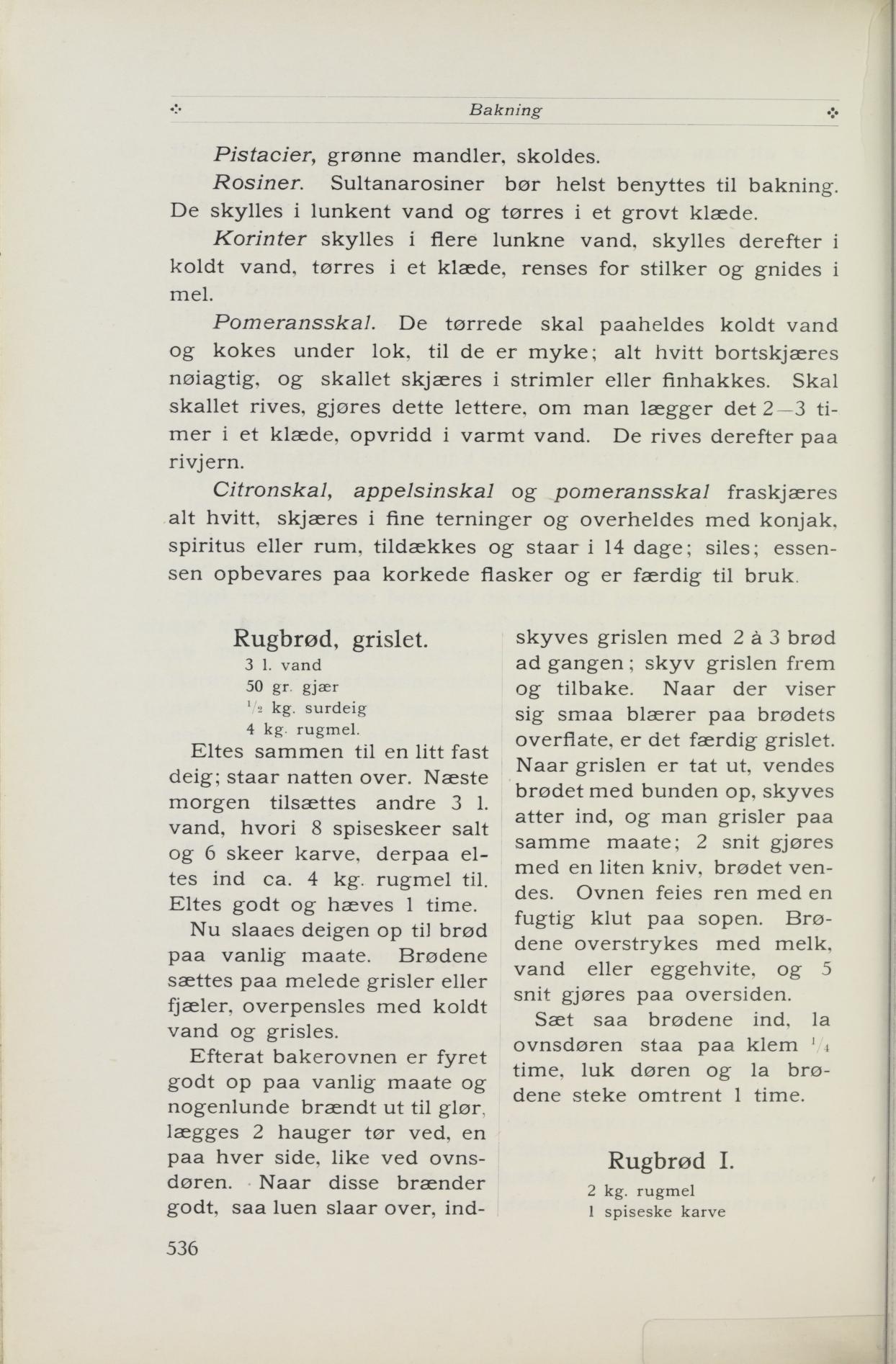
Erken's large batch of scorched sourdough rye bread (Norwegian grislet rugbrød): an evening sponge of 3 l water, yeast, sourdough and 4 kg rye flour, and the next morning 3 l water with salt and caraway plus 4 kg more rye flour. The loaves are browned ("scorched") in the flames from woodpiles at the bake oven door before baking about 1 hour.

Source: Henriette Schønberg Erken, Stor kokebok, 1914-utg. s. 536 (falt i det fri)

Be the first to rate

About the dish

The recipe belongs to Erken's large baking chapter and describes traditional bake-oven baking of sourdough rye bread, where the loaves are "scorched" – browned quickly in the open flames from two woodpiles at the oven door – before being set in to bake. This is a large batch intended for a household with its own bake oven.

How to make it

  1. 1

    Evening sponge

    Knead together 3 liters of water, the yeast, the sourdough and 4 kg rye flour into a somewhat firm dough. Let it stand overnight.

  2. 2

    The next morning

    Add a further 3 liters of water in which the salt and caraway have been stirred. Knead in about 4 kg more rye flour. Knead well and let the dough rise 1 hour.

  3. 3

    Shape the loaves

    Shape the dough into loaves in the usual way. Place the loaves on floured bread peels or boards, brush with cold water.

  4. 4

    Scorching in the bake oven

    Fire the bake oven well and let it burn down to embers. Lay two piles of dry wood, one on each side by the oven door. When these burn well and the flames leap over, slide in the peel with 2–3 loaves at a time and move it back and forth. When small blisters appear on the surface, the bread is finished scorching.

  5. 5

    Turn and scorch again

    Take out the peel, turn the loaf bottom side up, slide it back in and scorch it the same way. Make 2 cuts with a small knife and turn the loaf.

  6. 6

    Baking

    Sweep the oven clean with a damp cloth on the broom. Brush the loaves with milk, water or egg white and make 5 cuts on top. Put the loaves in, leave the oven door ajar for a quarter hour, then close the door and bake the loaves about 1 hour. In a modern oven: bake at 220 °C (430 °F) for 15 minutes, lower to 190 °C (375 °F) and bake a further 45 minutes or so.

Changes from the original

The quantity of sourdough was missing from the original text (OCR) and has been set to "as needed." Measures are converted to modern units (liters, dl, grams, tablespoons). Scorching in the bake oven is described, but a modern alternative with baking in a regular oven has been added. Baking time and temperature are given in modern form.

Tidsmaskin – hva endret seg?

Velg to utgaver og se hva Henriette Schønberg Erken la til, fjernet eller endret mellom dem.

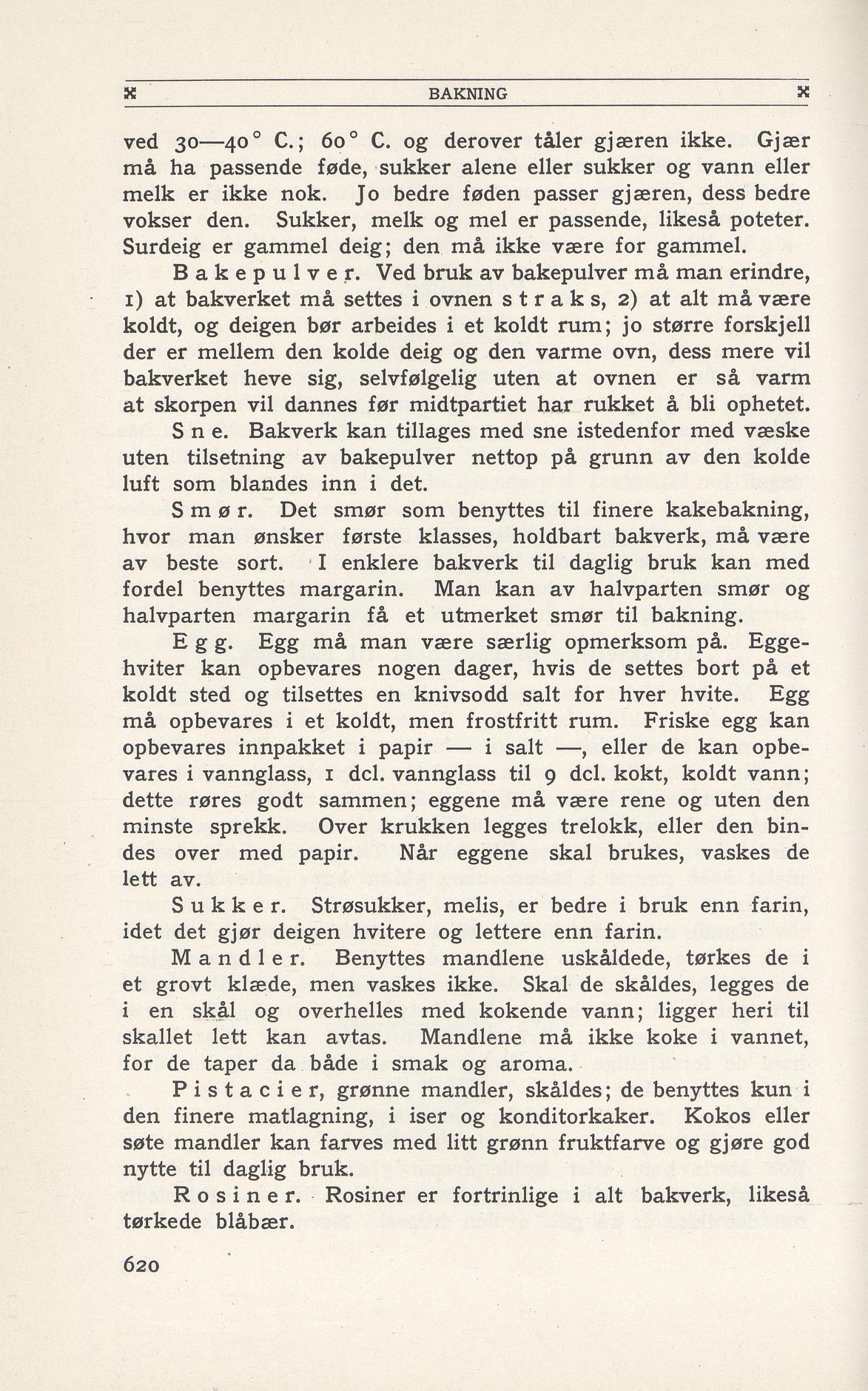
1914 (korrekturlest, s. 536)1949 (korrekturlest, s. 620)~52% av teksten endretfjernetlagt til
3 l. vand vann eller myse 50 gr. gjær 1/2 kg. surdeig 4 kg. rugmel. Eltes sammen til en litt fast deig; staar står natten over. Surdeigen opløses i vannet og siles i melet. Næste morgen tilsættes tilsettes andre 3 l. vand, vann eller myse, hvori 8 spiseskeer spiseskjeer salt og 6 skeer skjeer karve, derpaa derpå eltes ind inn ca. 4 kg. rugmel til. Eltes godt og hæves heves 1 time. Sett så brødene inn, la ovnsdøren stå på klem 1/2 time, lukk døren og la brødene steke omtrent 1 time. Nu slaaes slåes deigen op til brød paa vanlig maate. måte. Brødene sættes paa melede settes på melete grisler eller fjæler, fjeler, overpensles med koldt vand vann og grisles. Efterat bakerovnen er fyret fyrt godt op paa vanlig maate måte og nogenlunde brændt brent ut til glør, lægges legges 2 hauger tør tørr ved, en paa én på hver side, like ved ovnsdøren. Naar Når disse brænder brenner godt, saa luen slaar slår over, indskyves innskyves grislen med 2 å 3 brød ad gangen; skyv grislen frem og tilbake. Naar der Når det viser sig smaa små blærer paa brødets overflate, er det færdig ferdig grislet. Naar Når grislen er tat tatt ut, vendes brødet med bunden bunnen op, skyves atter ind, inn, og man grisler paa samme maate; måte; 2 snit snitt gjøres med en liten kniv, brødet vendes. Ovnen feies ren med en fugtig fuktig klut paa sopen. Brødene overstrykes med melk, vand vann eller eggehvite, og 5 snit snitt gjøres paa oversiden. Sæt saa brødene ind, la ovnsdøren staa paa klem ¼ time, luk døren og la brødene steke omtrent 1 time.
Community interpretations

Be the first to share your own version.

See interpretations

Frequently asked questions

Why must the dough stand overnight?
Because the bread is leavened with sourdough and only 50 g yeast. The first dough of 3 l water, yeast, sourdough and 4 kg rye flour is kneaded into a somewhat firm dough and stands overnight, so the sourdough has time to work. The next morning another 3 l water is added, salt, caraway and about 4 kg rye flour, and the dough rises 1 hour before shaping.
What does it mean that the bread is "scorched"?
The loaves are set on floured peels (bread paddles) or boards, brushed with cold water and "scorched," that is, pricked/dotted. The peel with 2–3 loaves at a time is slid into the oven and moved back and forth, so the loaves drop straight onto the oven floor.
How is the bake oven fired for this recipe?
The oven is fired up well in the usual way until it has more or less burned down to embers. Then two piles of dry wood are laid, one on each side right by the oven door. When these burn well so the flames leap over, the loaves are pushed in – they are ready for the next step when small blisters appear on the bread.
How much salt and caraway are used, and for how many loaves?
8 tablespoons of salt and 6 spoonfuls of caraway are stirred into the last 3 liters of water. The recipe is from Henriette Schønberg Erken's "Stor kokebok" (1914, p. 536) and makes a large batch – given as about 24 servings with roughly 8 kg rye flour in all.

Related recipes

More dishes in the same category from the archive

Read also

Kommentarer

Ingen kommentarer ennå. Bli den første til å dele!