Skip to content

Health Bread

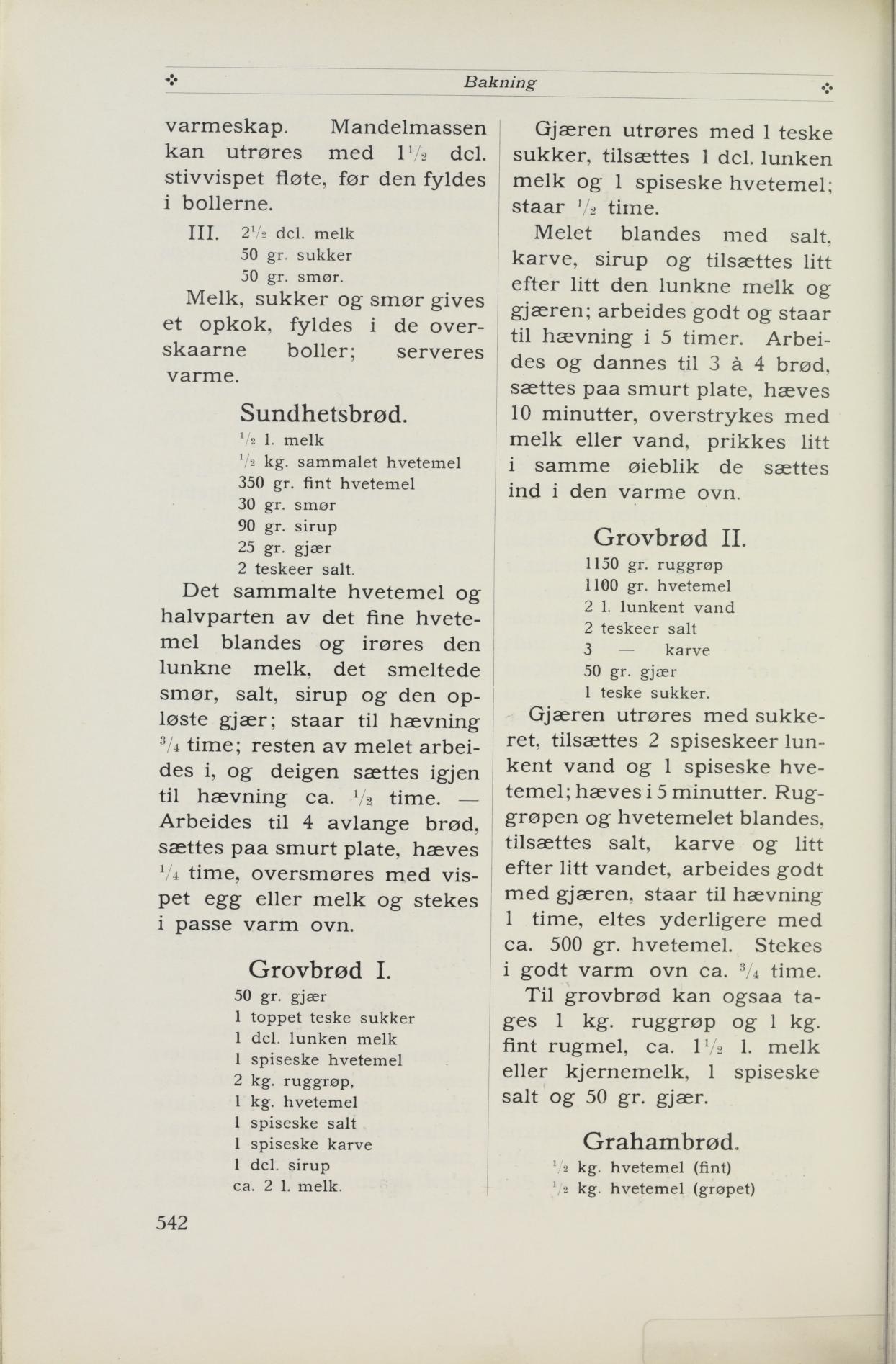
Erken's health bread from Stor kokebok (1914, p. 542): a hearty yeast bread of whole-wheat and fine wheat flour with milk, butter, syrup and yeast, shaped into four oblong loaves on a tray, brushed with egg or milk and baked in a moderate oven.

Source: Henriette Schønberg Erken, Stor kokebok, 1914-utg. s. 542 (falt i det fri)

Be the first to rate

About the dish

Health bread belongs among the "coarse" breads in Erken's baking chapter, where whole-wheat flour and syrup give a dark, mildly sweet loaf. Shaping four oblong loaves on a tray was common before loaf pans became universal.

How to make it

  1. 1

    Mix the flour

    Mix all the whole-wheat flour with half of the fine wheat flour in a mixing bowl.

  2. 2

    Stir in the liquids

    Stir in the lukewarm milk, the melted butter, the salt, the syrup and the yeast dissolved in a little of the milk.

  3. 3

    First rise

    Let the dough rise for about 45 minutes.

  4. 4

    Knead in the rest of the flour

    Work in the rest of the fine wheat flour and let the dough rise again for about 30 minutes.

  5. 5

    Shape the loaves

    Divide the dough into four and shape oblong loaves. Place them on a greased baking tray and let them proof for about 15 minutes.

  6. 6

    Brush and bake

    Brush the loaves with beaten egg or milk and bake them in a moderate oven, about 200 °C (390 °F), until fully baked and they sound hollow when you tap the underside (about 30–35 minutes).

Changes from the original

Unclear amounts in the OCR (milk and whole-wheat flour) were set to ½ l and ½ kg, which fits the rest of the recipe. Units are modernized (dl, g, tsp), "moderate oven" is given as about 200 °C (390 °F), and the rising times are kept from the original.

In stores now

Clean, minimally processed groceries matched to the ingredients — approximate prices.

Product data and prices via Kassalapp. Prices are updated daily and may vary.

Tidsmaskin – hva endret seg?

Velg to utgaver og se hva Henriette Schønberg Erken la til, fjernet eller endret mellom dem.

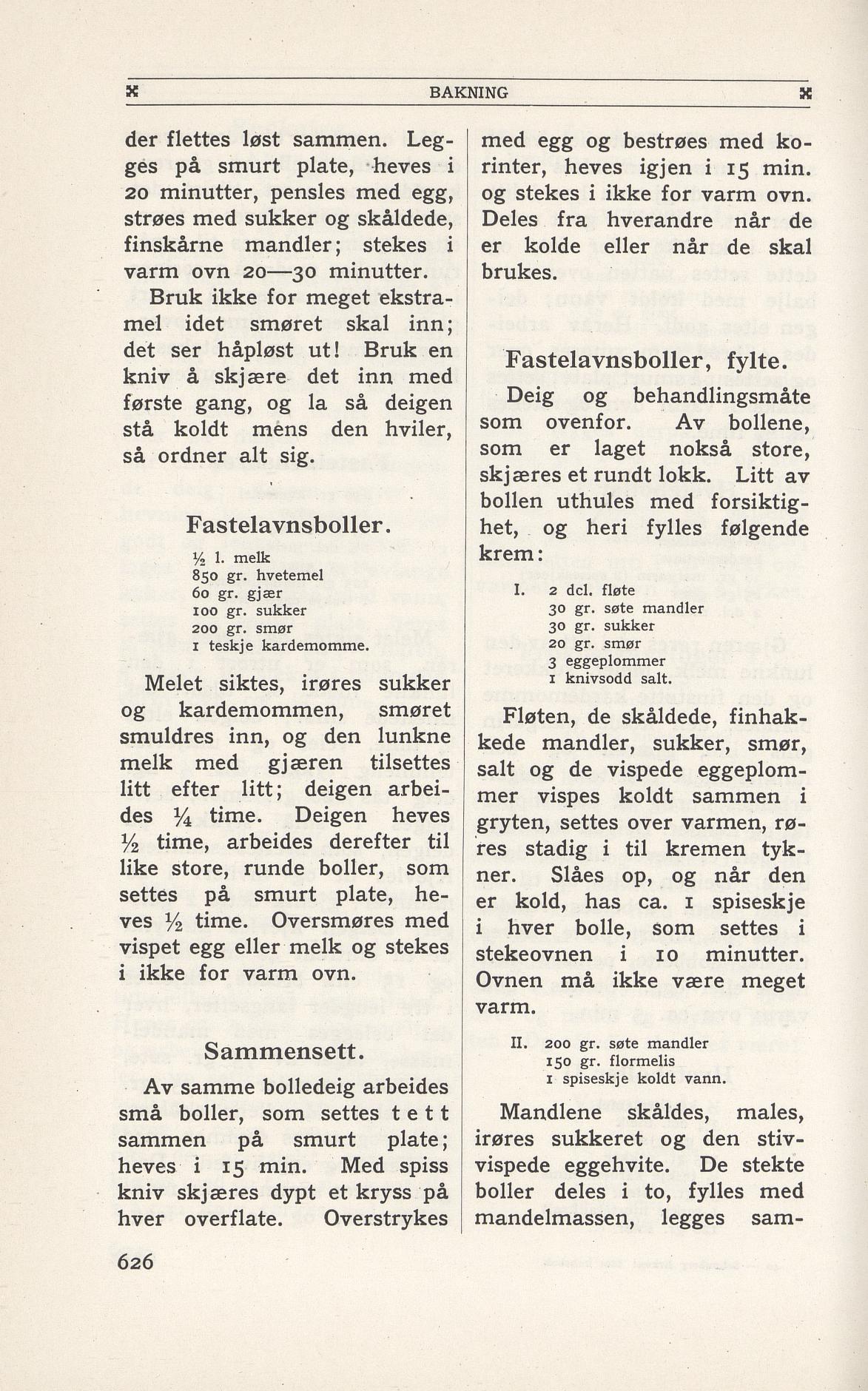
1914 (korrekturlest, s. 542)1949 (korrekturlest, s. 626)~52% av teksten endretfjernetlagt til
1/2 l. melk 1/2 kg. sammalet sammalt hvetemel 350 gr. fint hvetemel 30 gr. smør 90 gr. sirup 25 gr. gjær 2 teskeer salt. teskjeer salt Det sammalte hvetemel og halvparten av det fine hvetemel blandes og irøres den lunkne melk, melk med gjæren, det smeltede smør, salt, sirup smør og den opløste gjær; staar salt. Står til hævning hevning 3/4 time; resten av melet arbeides i, og deigen sættes settes igjen til hævning hevning ca. 1/2 time. — Arbeides til 4 avlange brød, sættes paa smurt plate, hæves 1/4 time, oversmøres med vispet egg eller melk og stekes i passe varm ovn.

Community interpretations

Be the first to share your own version.

See interpretations

Frequently asked questions

Why is the dough left to rise three times?
The recipe uses three rises: 3/4 hour after the first mixing (with half of the fine flour), about 1/2 hour after the rest of the flour is worked in, and 1/4 hour after the loaves are shaped on the tray. This gives the whole-grain dough time to swell for airier bread.
How many loaves does the recipe make?
The dough is worked into 4 oblong loaves that are placed on a greased tray and baked in a moderate oven. Count on about 3 hours total for rising and baking.
What gives the bread its color and shine?
Syrup (90 g) in the dough gives color and a little sweetness, and the loaves are brushed with beaten egg or milk before baking for shine.
What is the ratio between the flours?
1/2 kg whole-wheat flour and 350 g fine wheat flour. Half of the fine flour is stirred in first together with lukewarm milk, melted butter, salt, syrup and dissolved yeast; the rest is worked in after the first rise.

Related recipes

More dishes in the same category from the archive

Read also

Kommentarer

Ingen kommentarer ennå. Bli den første til å dele!