Skip to content

Sugar brine II

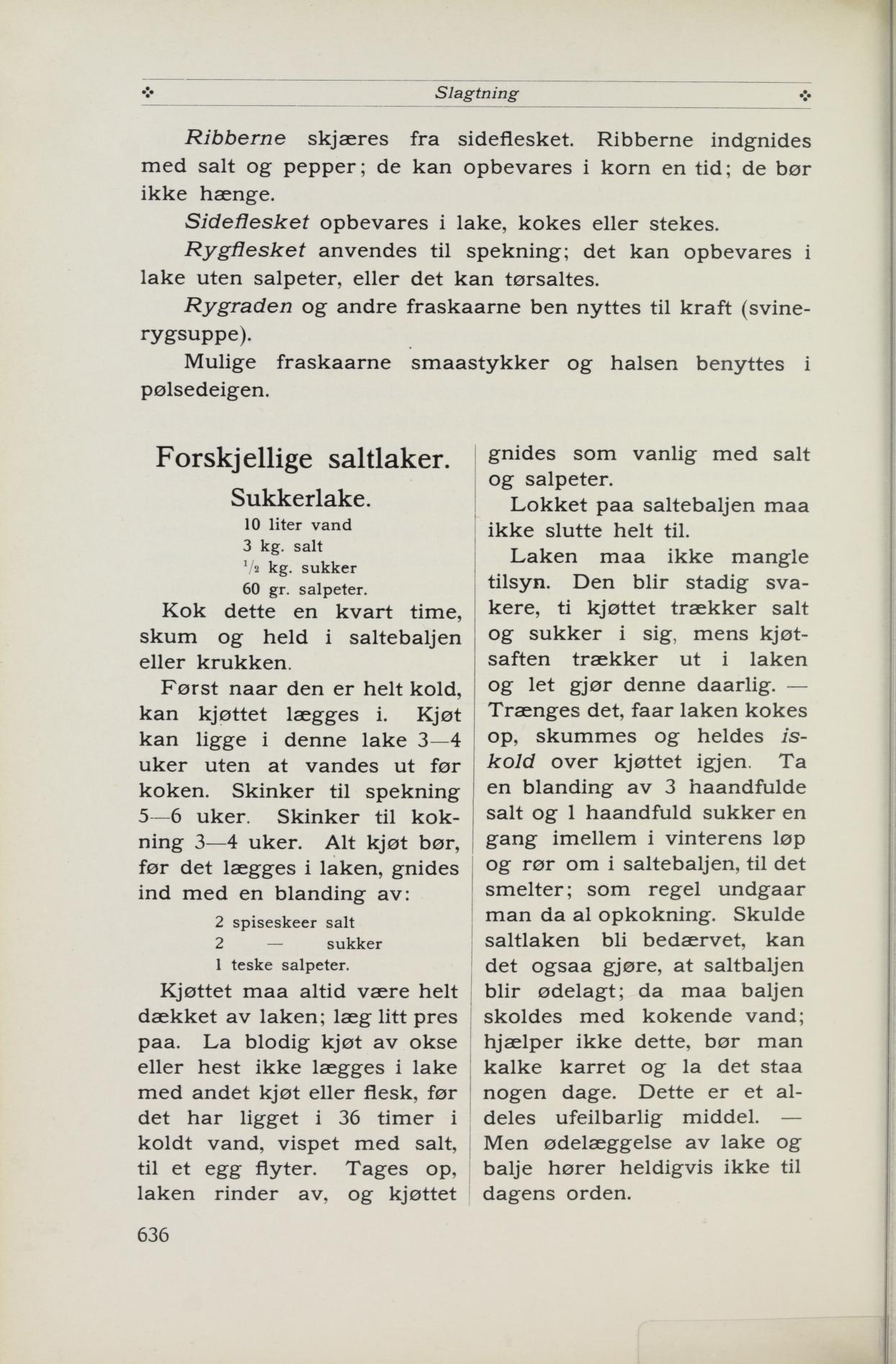
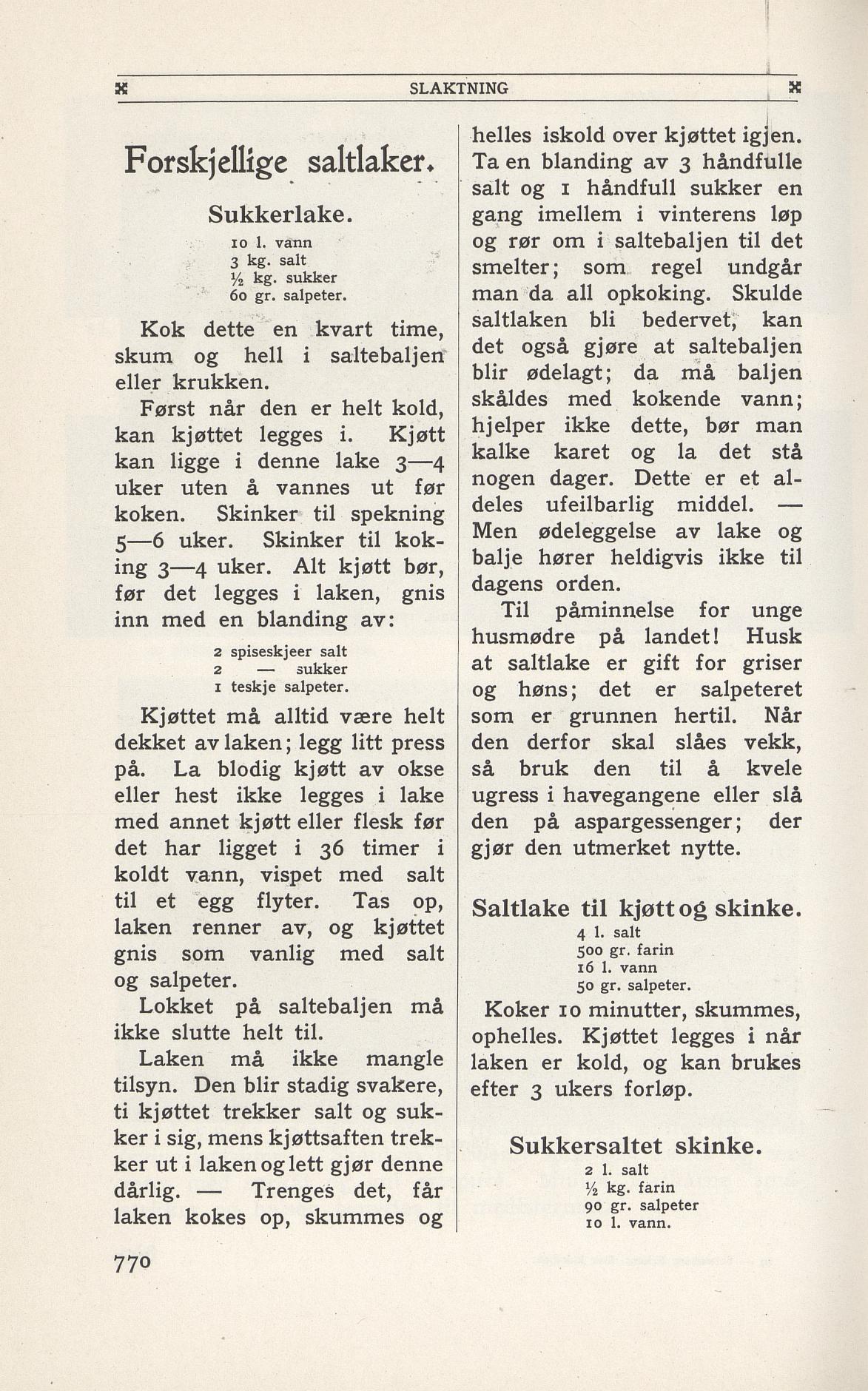
Sugar brine from Erken's slaughtering chapter: 10 l water, 3 kg salt, 500 g sugar, and 60 g saltpeter are boiled 15 minutes, skimmed, and cooled completely before the meat goes in. The meat is first rubbed with salt, sugar, and saltpeter. Curing time 3–6 weeks depending on whether the meat is to be cured or boiled. Includes advice on tending, topping up salt and sugar, and rescuing spoiled brine and curing vessels.

Source: Henriette Schønberg Erken, Stor kokebok, 1914-utg. s. 636 (falt i det fri)

Be the first to rate

About the dish

From the chapter on slaughtering, under the heading "Different curing brines." Sugar brine was the household's standard brine for preserving meat and ham through the winter, in an age without refrigerators. Erken gives detailed advice on tending the brine, which easily went bad from the meat juices.

How to make it

  1. 1

    Boil the brine

    Boil the water, salt, sugar, and saltpeter together for a quarter of an hour. Skim off and pour the brine into the curing vessel or crock.

  2. 2

    Cool completely

    Let the brine become completely cold before the meat is put in. Warm brine ruins the meat.

  3. 3

    Rub in the meat

    Mix 2 tbsp salt, 2 tbsp sugar, and 1 tsp saltpeter, and rub the meat well with the mixture before it is placed in the brine.

  4. 4

    Treat bloody meat first

    Bloody meat from beef or horse should not be placed in brine together with other meat or pork until it has lain 36 hours in cold water that has been whisked with salt until an egg floats. Take the meat up, let it drip off, and rub it with salt and saltpeter as usual.

  5. 5

    Place in brine under a weight

    Place the meat in the brine. It must always be completely covered; put a little weight on top. The lid of the curing vessel should not close completely tight.

  6. 6

    Curing time

    Meat can lie 3–4 weeks in the brine without being watered out before boiling. Hams for curing 5–6 weeks, hams for boiling 3–4 weeks.

  7. 7

    Tend the brine

    The brine steadily grows weaker because the meat draws salt and sugar into itself while the meat juices draw out. Stir in a mixture of 3 handfuls of salt and 1 handful of sugar from time to time through the winter, until it is dissolved; then you can usually avoid boiling up the brine.

  8. 8

    If the brine goes bad

    If necessary, boil up the brine, skim it, and pour it ice-cold over the meat again. If the brine spoils, the vessel can be ruined too; then scald it with boiling water, and if that does not help, lime the vessel and let it stand for a few days.

Changes from the original

Amounts are given in modern units (g/l/dl), saltpeter has been kept as in the original but should today be replaced by curing salt (a purchased salt blend) for food-safety reasons. The method has been divided into numbered steps and the language in the steps has been modernized.

Time machine – what changed?

Pick two editions and see what Henriette Schønberg Erken added, removed or changed between them.

Pick two different editions to see a comparison.

Community interpretations

Be the first to share your own version.

See interpretations →

Frequently asked questions

What is the sugar brine made of?
10 liters of water, 3 kg of salt, 1/2 kg of sugar, and 60 g of saltpeter. Boil the mixture for a quarter of an hour, skim off, and pour it into the curing tub or crock.
When can the meat be placed in the brine?
Only once the brine is completely cold. Before packing, the meat should be rubbed with 2 tablespoons of salt, 2 tablespoons of sugar, and 1 teaspoon of saltpeter. The meat must always be completely covered by the brine — put a little weight on top.
How long should the meat lie?
Meat can lie 3–4 weeks without being watered out before boiling. Hams for curing 5–6 weeks, hams for boiling 3–4 weeks.
What do you do with bloody meat from beef or horse?
It must not be placed in brine together with other meat or pork until it has lain 36 hours in cold water whisked with salt until an egg floats. Then it is taken up, the brine drains off, and the meat is rubbed as usual. The recipe is from Henriette Schønberg Erken's "Stor kokebok" (1914), p. 636.

Equipment for this dish

Advertisement

We may earn a commission if you buy through these links. It does not affect the price.

Related recipes

More dishes in the same category from the archive

Read also

Kommentarer

Ingen kommentarer ennå. Bli den første til å dele!