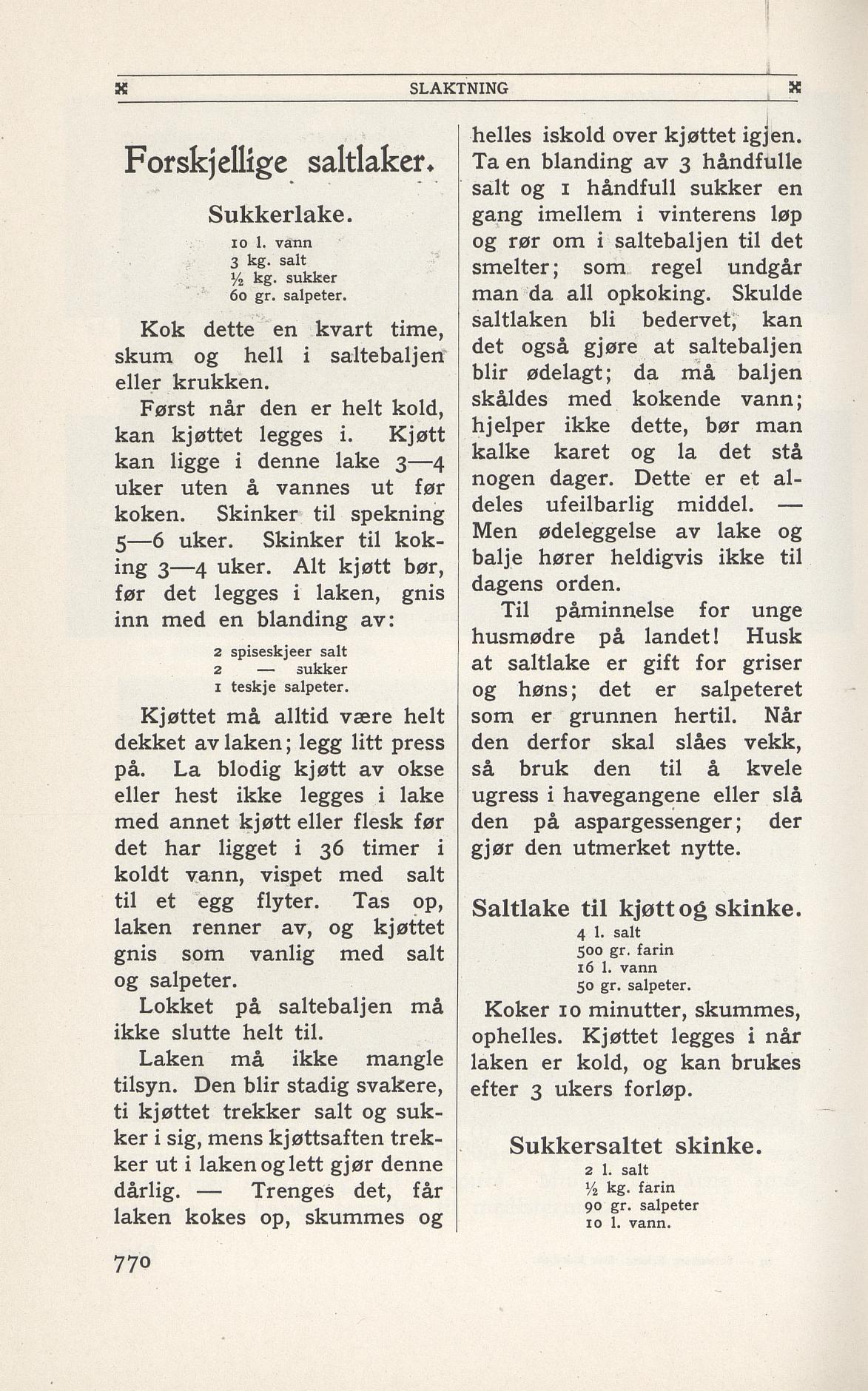
Original 1914 recipe
Verbatim from the first edition of the Big Cookbook.
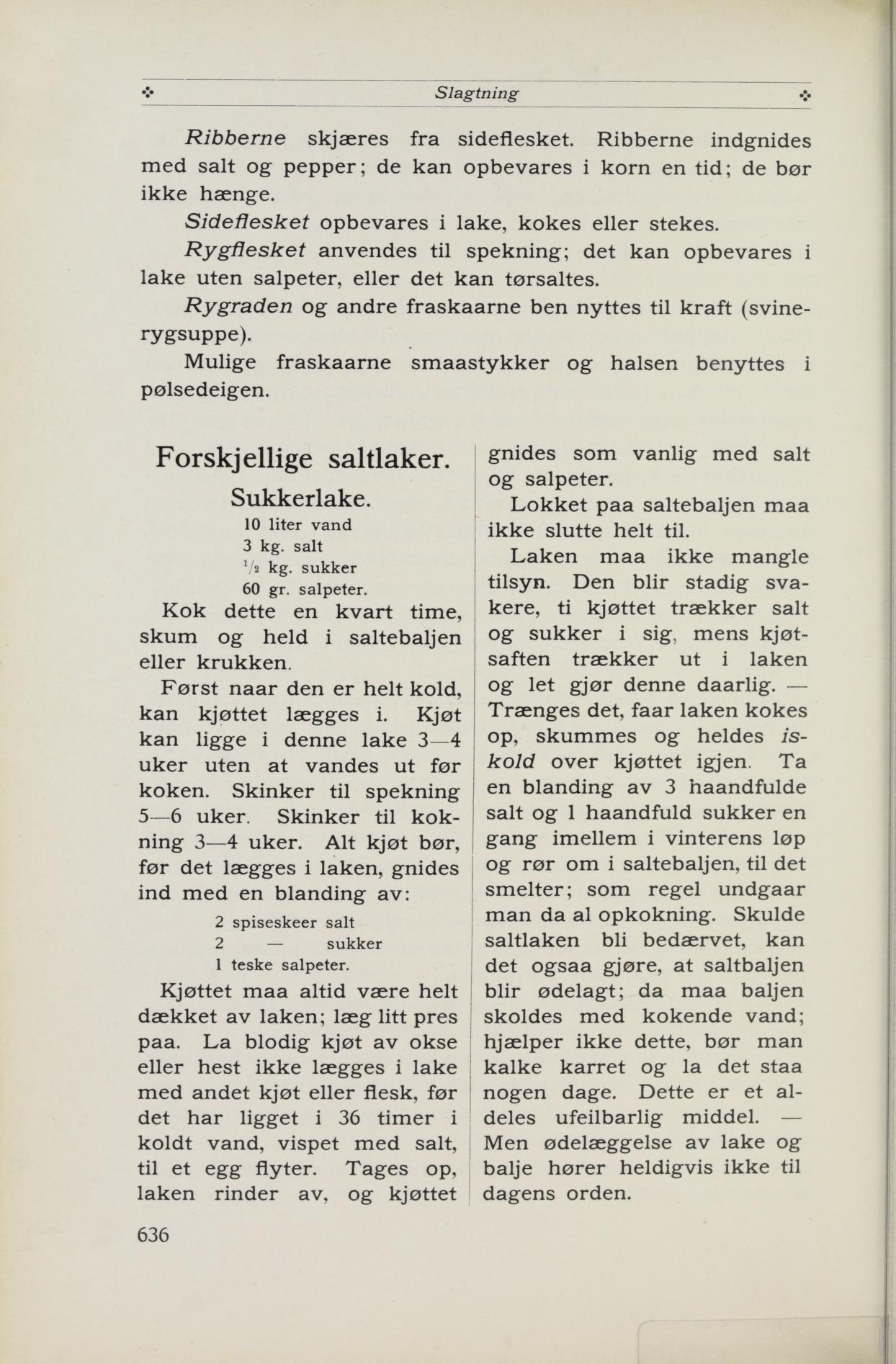
ProofreadPage 636
10 liter vand
3 kg. salt
1/2 kg. sukker
60 gr. salpeter.
Kok dette en kvart time, skum og held i saltebaljen eller krukken. Først naar den er helt kold, kan kjøttet lægges i. Kjøt kan ligge i denne lake 3—4 uker uten at vandes ut før koken. Skinker til spekning 5—6 uker. Skinker til kokning 3—4 uker. Alt kjøt bør, før det lægges i laken, gnides ind med en blanding av:
2 spiseskeer salt
2 — sukker
1 teske salpeter.
Kjøttet maa altid være helt dækket av laken; læg litt pres paa. La blodig kjøt av okse eller hest ikke lægges i lake med andet kjøt eller flesk, før det har ligget i 36 timer i koldt vand, vispet med salt, til et egg flyter. Tages op, laken rinder av, og kjøttet gnides som vanlig med salt og salpeter.
Lokket paa saltebaljen maa ikke slutte helt til.
Laken maa ikke mangle tilsyn. Den blir stadig svakere, ti kjøttet trækker salt og sukker i sig, mens kjøtsaften trækker ut i laken og let gjør denne daarlig. — Trænges det, faar laken kokes op, skummes og heldes iskold over kjøttet igjen. Ta en blanding av 3 haandfulde salt og 1 haandfuld sukker en gang imellem i vinterens løp og rør om i saltebaljen, til det smelter; som regel undgaar man da al opkokning. Skulde saltlaken bli bedærvet, kan det ogsaa gjøre, at saltbaljen blir ødelagt; da maa baljen skoldes med kokende vand; hjælper ikke dette, bør man kalke karret og la det staa nogen dage. Dette er et aldeles ufeilbarlig middel. — Men ødelæggelse av lake og balje hører heldigvis ikke til dagens orden.