Skip to content

Fried Potatoes (pommes de terre soufflées)

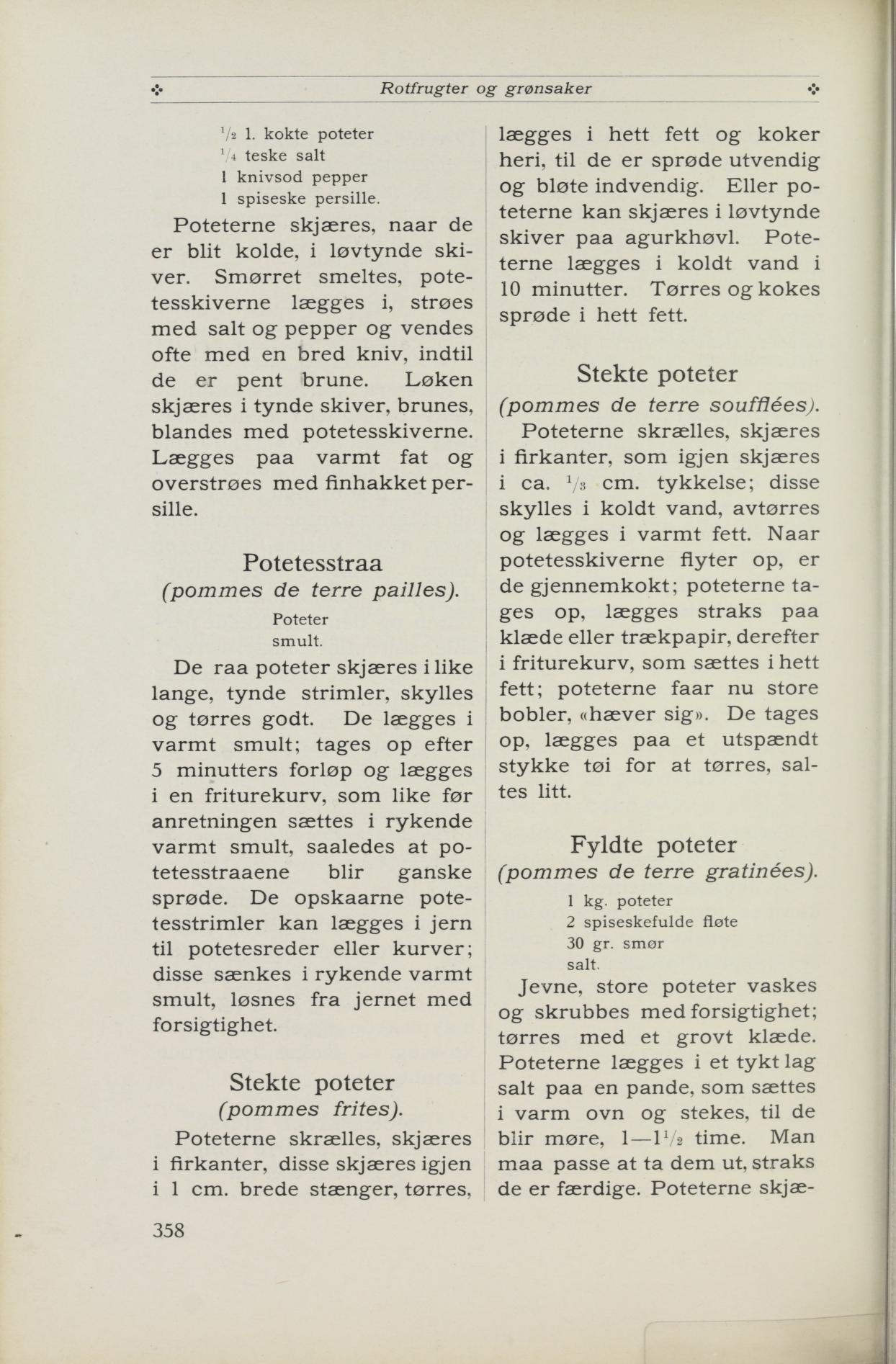
Pommes soufflées after Erken 1914: 3 mm thick potato slices are rinsed, dried and deep-fried first at moderate heat until they float up, then in smoking-hot fat so they puff up; salted and served at once.

Source: Henriette Schønberg Erken, Stor kokebok, 1914-utg. s. 358 (falt i det fri)

Be the first to rate

About the dish

Pommes soufflées was the very touchstone of the French-inspired festive kitchen: the potato slices should puff up like little pillows in the second frying. Erken describes the technique soberly and precisely, but the result requires both the right potato variety and temperature.

How to make it

  1. 1

    Cut the potatoes

    Peel the potatoes and cut them into squares, which are then cut into slices about 3 mm (⅛ cm) thick.

  2. 2

    Rinse and dry

    Rinse the slices in cold water and dry them well.

  3. 3

    First frying

    Put the slices in warm fat (about 150 °C (300 °F)). When the slices float up, they are cooked through. Take them up and place them at once on a cloth or blotting paper.

  4. 4

    Second frying

    Put the slices in a frying basket and lower them into smoking-hot fat (about 190 °C (375 °F)). The potatoes now form large bubbles and "rise."

  5. 5

    Serve

    Take them up, place them on a stretched-out piece of cloth to dry, salt lightly and serve at once.

Changes from the original

Quantities are estimated, as the original only mentions potatoes, fat and salt. Frying temperatures in degrees are added; lard can be replaced with neutral oil.

In stores now

Clean, minimally processed groceries matched to the ingredients — approximate prices.

Product data and prices via Kassalapp. Prices are updated daily and may vary.

Tidsmaskin – hva endret seg?

Velg to utgaver og se hva Henriette Schønberg Erken la til, fjernet eller endret mellom dem.

1914 (korrekturlest, s. 358)1949 (korrekturlest, s. 395)~54% av teksten endretfjernetlagt til
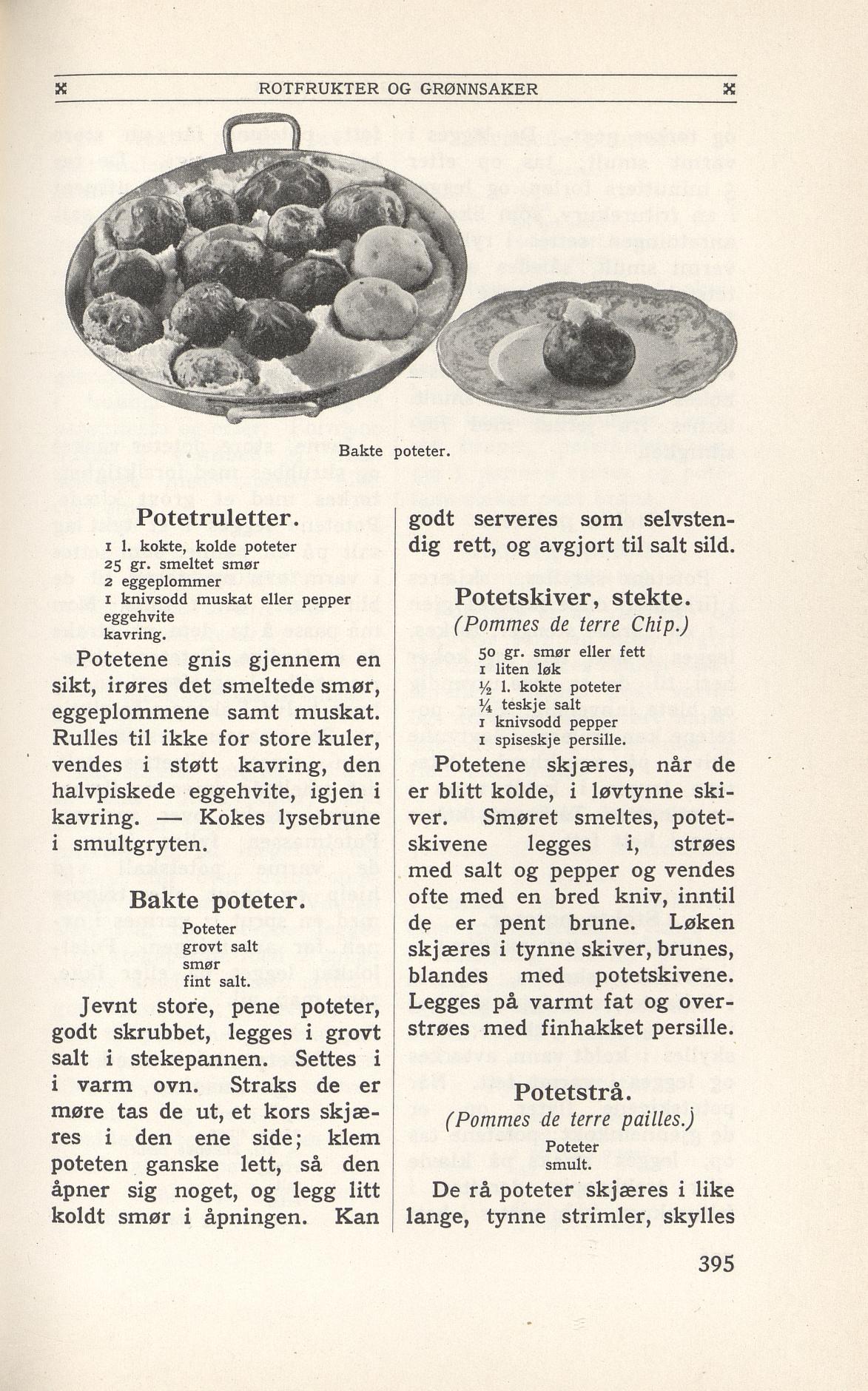
Poteter fett salt. Poteterne skrælles, (Pommes de terre soufflées.) Potetene skrelles, skjæres i firkanter, som igjen skjæres i ca. cm. tykkelse; disse skylles i koldt vand, avtørres vann, avtørkes og lægges legges i varmt fett. Naar potetesskiverne Når potetskivene flyter op, er de gjennemkokt; poteterne tages potetene tas op, lægges legges straks paa klæde eller trækpapir, trekkpapir, derefter i friturekurv, som sættes settes i hett fett; poteterne faar potetene får nu store bobler, «hæver «hever sig». De tages tas op, lægges paa legges på et utspændt utspent stykke tøi for at tørres, å tørkes, saltes litt.

Community interpretations

Be the first to share your own version.

See interpretations

Frequently asked questions

How thinly should the potatoes be cut?
The potatoes are peeled, cut into squares and then into slices about ⅛ cm thick — that is, very thin, even slices.
Why must the potatoes be fried twice?
The first frying in warm fat cooks the slices through – they are done when they float up. Then they are dried on cloth or blotting paper and lowered in a frying basket into hot fat, where they form large bubbles and "rise." It is this double frying that gives the soufflé effect.
What do you do with the potatoes after the last frying?
They are taken up and placed on a stretched-out piece of cloth to dry, and salted lightly before serving.
Where does the recipe come from?
From Henriette Schønberg Erken's Stor kokebok (1914), p. 358.

Related recipes

More dishes in the same category from the archive

Read also

Kommentarer

Ingen kommentarer ennå. Bli den første til å dele!