Skip to content

Fried Parsnips

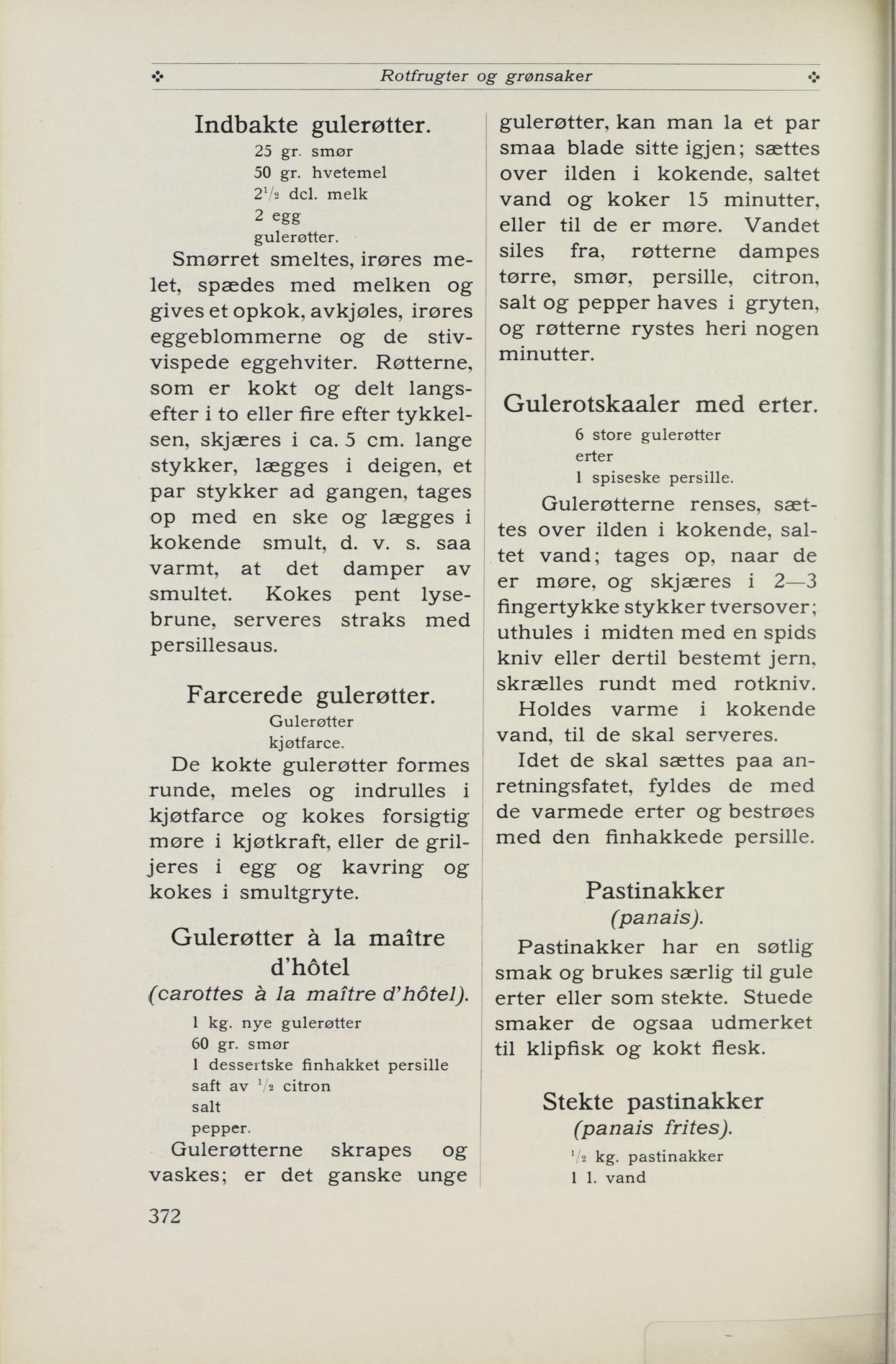
Parsnips boiled tender, halved lengthwise, breaded in egg white and rusk crumbs and fried light brown in butter or lard. With Erken's advice on breading. From Erken's Stor kokebok 1914, pp. 372–373.

Source: Henriette Schønberg Erken, Stor kokebok, 1914-utg. s. 372 (falt i det fri)

Be the first to rate

About the dish

The parsnip had a sweetish flavor and was used by Erken especially for yellow-pea dishes, or fried. The recipe also contains her practical advice on breading: put the rusk on kitchen paper, not on a plate.

How to make it

  1. 1

    Clean and boil

    Scrape and rinse the parsnips well, and boil them tender in boiling, salted water.

  2. 2

    Cut up

    Cut them in two lengthwise; if they are very long, split them across in two as well.

  3. 3

    Bread

    Turn them in egg white and then in crushed, sifted rusk. If you have no egg whites, you can turn them in a flour thickening or a little salted milk before the rusk.

  4. 4

    Fry

    Fry them light brown in butter, or deep-fry them in lard.

  5. 5

    Erken's advice

    Put the rusk on a piece of kitchen paper, not on a plate, so you can quickly toss the rusk over what is to be breaded; then it does not clump, and you use it twice as long. Carrots can be boiled and fried the same way.

Changes from the original

Measurements converted to modern units. "Rusk" is given as rusk dust/dry breadcrumbs, and "lard pot" as a deep-fryer with lard or neutral oil.

In stores now

Clean, minimally processed groceries matched to the ingredients — approximate prices.

Product data and prices via Kassalapp. Prices are updated daily and may vary.

Tidsmaskin – hva endret seg?

Velg to utgaver og se hva Henriette Schønberg Erken la til, fjernet eller endret mellom dem.

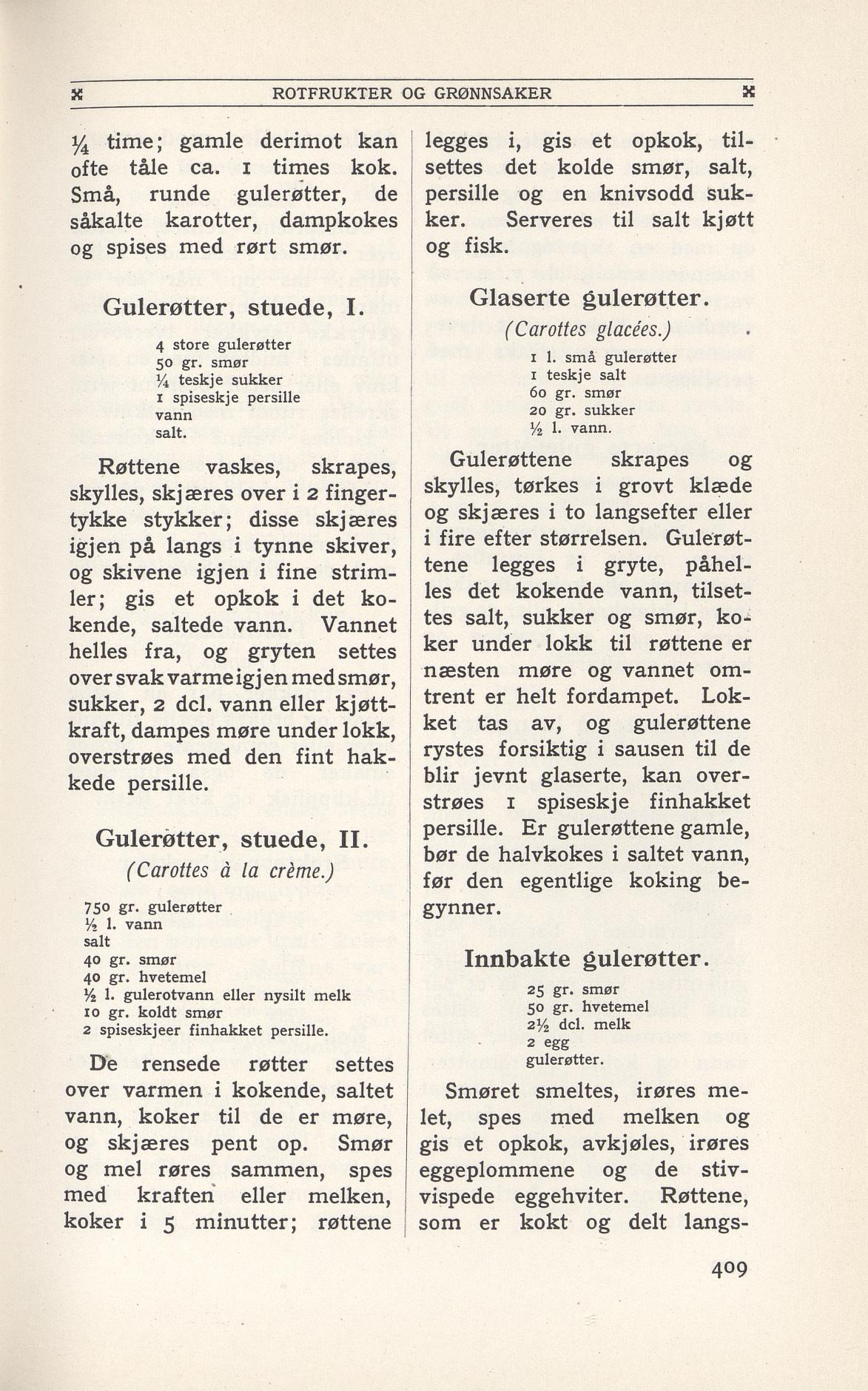
1914 (korrekturlest, s. 372)1949 (korrekturlest, s. 409)~78% av teksten endretfjernetlagt til
ca. 1/2 kg. pastinakker 1 ca. 1/2 l. vand vann salt eggehvite eggekvite kavring smør eller smult. Kok pastinakkerne pastinakkene i kokende, saltet vand, vann, efterat de er skrapet og skyllet godt; del dem langsefter i to; er de meget lange, kløves de ogsaa og så tversover i to. Vend dem i eggehvite saltet melk og støtt, sigtet siktet kavring og stek dem lysebrune i smør eller smultgryten. Findes ingen eggehviter staaende, maa man nøie sig med at vende dem i en meljevning, derefter i kavring. Akkurat det samme kan man gjøre med fisk og karbonader, som skal stekes; vend dem først i litt saltet melk, derefter i kavring, naar der er mangel paa eggehvite. Og saa ikke kavringen paa en tallerken eller fat! Ha den paa et kjøkkenpapir, saa man raskt kan slaa kavringen over den ting, som skal griljeres. Kavringen utnyttes paa denne maate dobbelt saa længe; paa tallerkenen blir den «grøtet» eller klumper sig sammen. Det er for det første ødselt, for det andet kan det, som skal griljeres, aldrig bli pent paa den vis. Gulerøtter kan kokes og stekes paa samme maate som pastinakrøtter. lyse brune, serveres straks.
Community interpretations

Be the first to share your own version.

See interpretations

Frequently asked questions

How do I prepare the parsnips before frying?
Scrape and rinse them well, boil them in 1 liter of boiling, salted water, and then cut them in two lengthwise. If they are very long, cut them across as well.
What do I do if I don't have egg white for breading?
Turn the parsnips in a flour thickening (or a little salted milk) first, and then in crushed, sifted rusk. The same trick can be used for fish and meat patties.
Does Schønberg Erken have any tip about the breading itself?
Yes – do not put the rusk on a plate or platter, but on kitchen paper. Then the breading goes faster and easier.
What are they fried in, and how much do I need?
They are fried light brown in butter or in the lard pot. The recipe is from Stor kokebok (1914, p. 372) and uses 1/2 kg parsnip for 4 servings.

Related recipes

More dishes in the same category from the archive

Read also

Kommentarer

Ingen kommentarer ennå. Bli den første til å dele!