Skip to content

Caramel Custard I (Karamellpudding I)

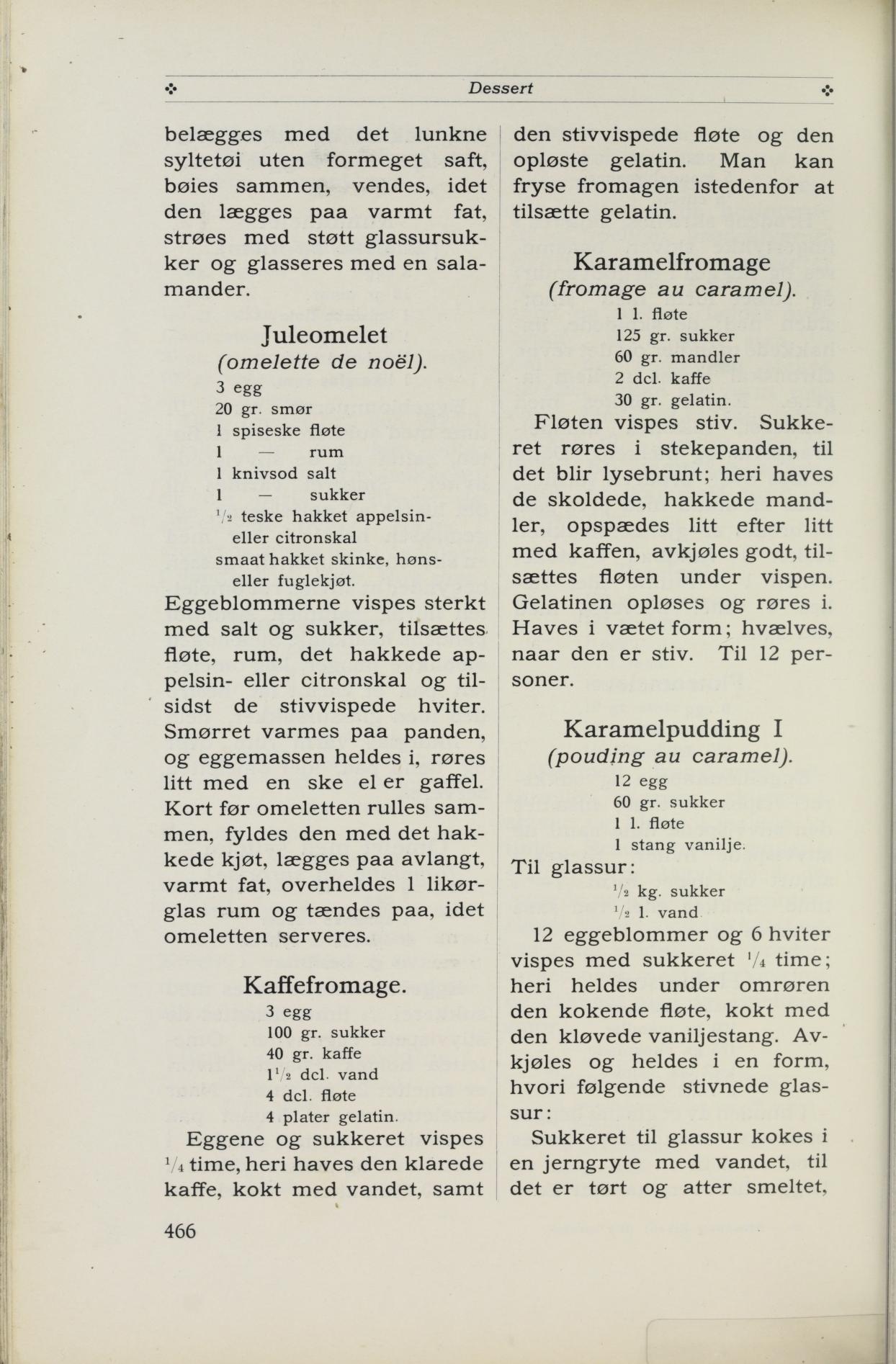
Caramel custard I (a Norwegian crème caramel) from Erken 1914: 12 egg yolks and 6 whites whisked with 60 g sugar, thinned with 1 liter boiling vanilla cream, poured into a mold set with caramel from 250 g sugar and water, baked in a water bath 1.5–2 hours. Make the day before, turn out cold. Serves 8–10.

Source: Henriette Schønberg Erken, Stor kokebok, 1914-utg. s. 466 (falt i det fri)

Be the first to rate

About the dish

The richest of Erken's caramel custards, made with whole cream and twelve eggs. It should ideally be made the day before serving and turned out cold — just like today's caramel custard.

How to make it

  1. 1

    Cook the caramel

    Boil the sugar and water in a heavy-bottomed pot until the water has boiled away and the sugar melts again. Take the pot off the heat as soon as the sugar is light brown.

  2. 2

    Line the mold with glaze

    Stir the caramel to the desired color (chestnut brown) and pour it immediately into the mold. Turn the mold quickly around until all the caramel has set on the inside.

  3. 3

    Whisk the eggs

    Whisk 12 egg yolks and 6 egg whites with the sugar for about a quarter of an hour.

  4. 4

    Boil the cream

    Bring the cream to a boil with the split vanilla bean and pour it into the egg mixture while stirring constantly. Let the mixture cool.

  5. 5

    Bake in a water bath

    Pour the mixture into the caramelized mold, place it in a roasting pan with water and bake in the oven at about 150 °C (300 °F) for 1½–2 hours until the custard has set.

  6. 6

    Turn out

    Let the custard become completely cold, preferably until the next day, before turning it out onto a platter and serving.

Changes from the original

The amount of water in the glaze is interpreted as 1/4 liter, following the pattern of the cookbook's other caramel glazes. Measurements are modernized, and the water bath is specified with an oven temperature as guidance.

In stores now

Clean, minimally processed groceries matched to the ingredients — approximate prices.

Product data and prices via Kassalapp. Prices are updated daily and may vary.

Tidsmaskin – hva endret seg?

Velg to utgaver og se hva Henriette Schønberg Erken la til, fjernet eller endret mellom dem.

1914 (korrekturlest, s. 466)1949 (korrekturlest, s. 533)~54% av teksten endretfjernetlagt til
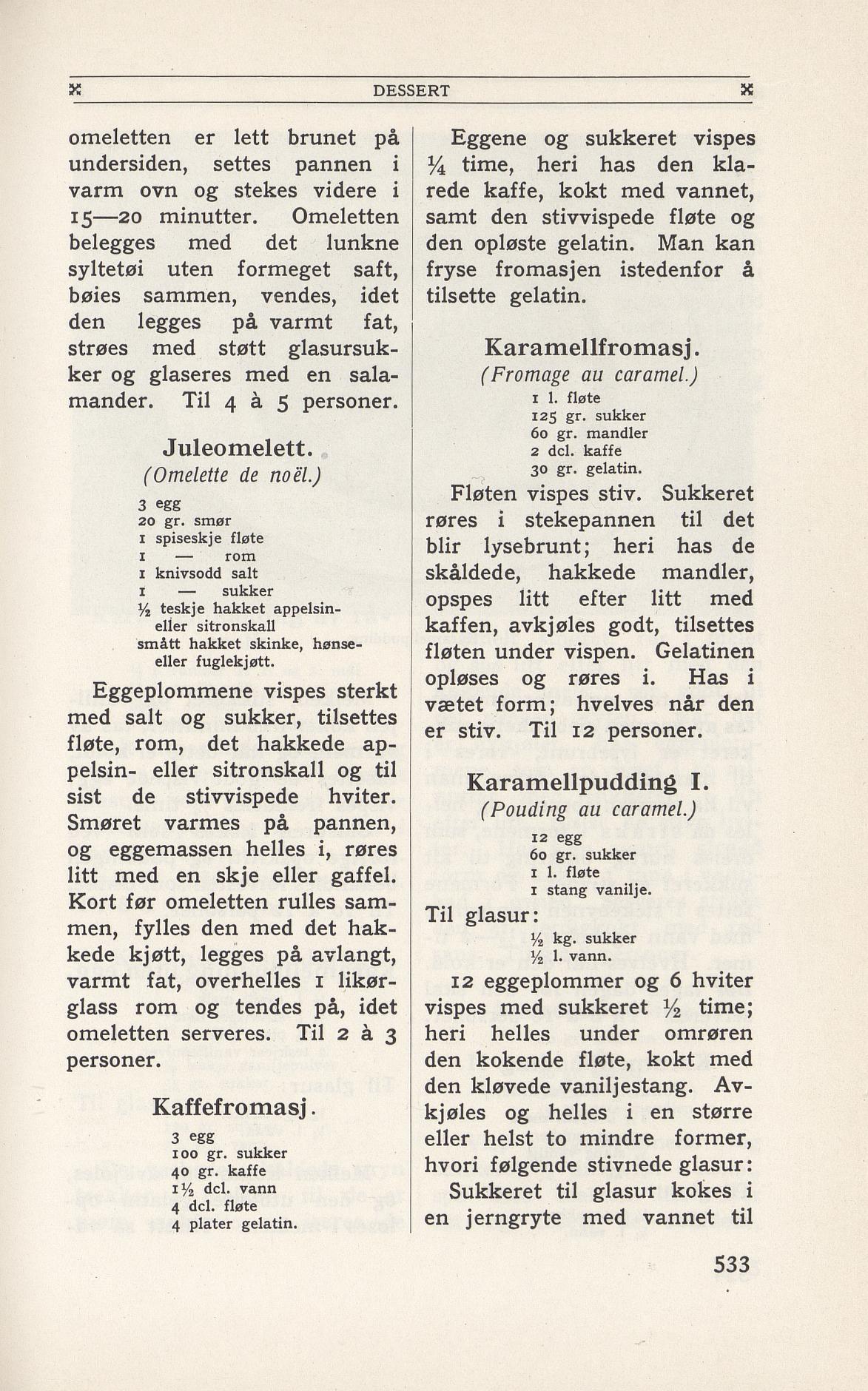
(Pouding au caramel.) 12 egg 60 gr. sukker 1 l. fløte 1 stang vanilje Til glassur: ¼ ½ kg. sukker ¼ ½ l. vand 12 eggeblommer og 6 hviter vispes med sukkeret ¼ time; heri heldes under omrøren den kokende fløte, kokt med den kløvede vaniljestang. Avkjøles og heldes i en form, hvori følgende stivnede glassur: vann. Sukkeret til glassur glasur kokes i en jerngryte med vandet, vannet til det er tørt og atter smeltet, tages tas av ilden, varmen øieblikkelig sukkeret er lysebrunt, røres i, i til man faar får den farve, farve man vil ha (kastanjebrunt), og heldes helles da straks i formen, formene, som dreies hurtig omkring, omkring til alt sukkeret er stivnet. Formen sættes Formene settes i stekeovnen i en pande panne med vand vann og koker 1½—2 i ½—2 timer. Hvælves, naar Hvelves når den er kold. Bør lages dagen før den skal serveres. Til 8 à å 10 personer.

Community interpretations

Be the first to share your own version.

See interpretations

Frequently asked questions

How long should the custard be baked?
The mold is placed in the oven in a pan of water (a water bath) and cooks for 1½–2 hours.
Why is the total time 20 hours?
Because the custard should be made the day before it is to be served. It must become completely cold before it is turned out, so the resting time makes up most of the total.
How many eggs are used, and how?
12 eggs: 12 egg yolks and 6 whites are whisked with 60 g sugar for a quarter of an hour, before the boiling cream (boiled with a split vanilla bean) is poured in while stirring.
How is the caramel glaze made?
1/4 kg sugar is boiled with 1/4 l water in an iron pot until it is dry and melts again. It is taken off the heat as soon as it is light brown, stirred to the desired chestnut-brown color and poured immediately into the mold, which is turned quickly around until the sugar has set.

Related recipes

More dishes in the same category from the archive

Read also

Kommentarer

Ingen kommentarer ennå. Bli den første til å dele!