Skip to content

Mixed-Grain Bread

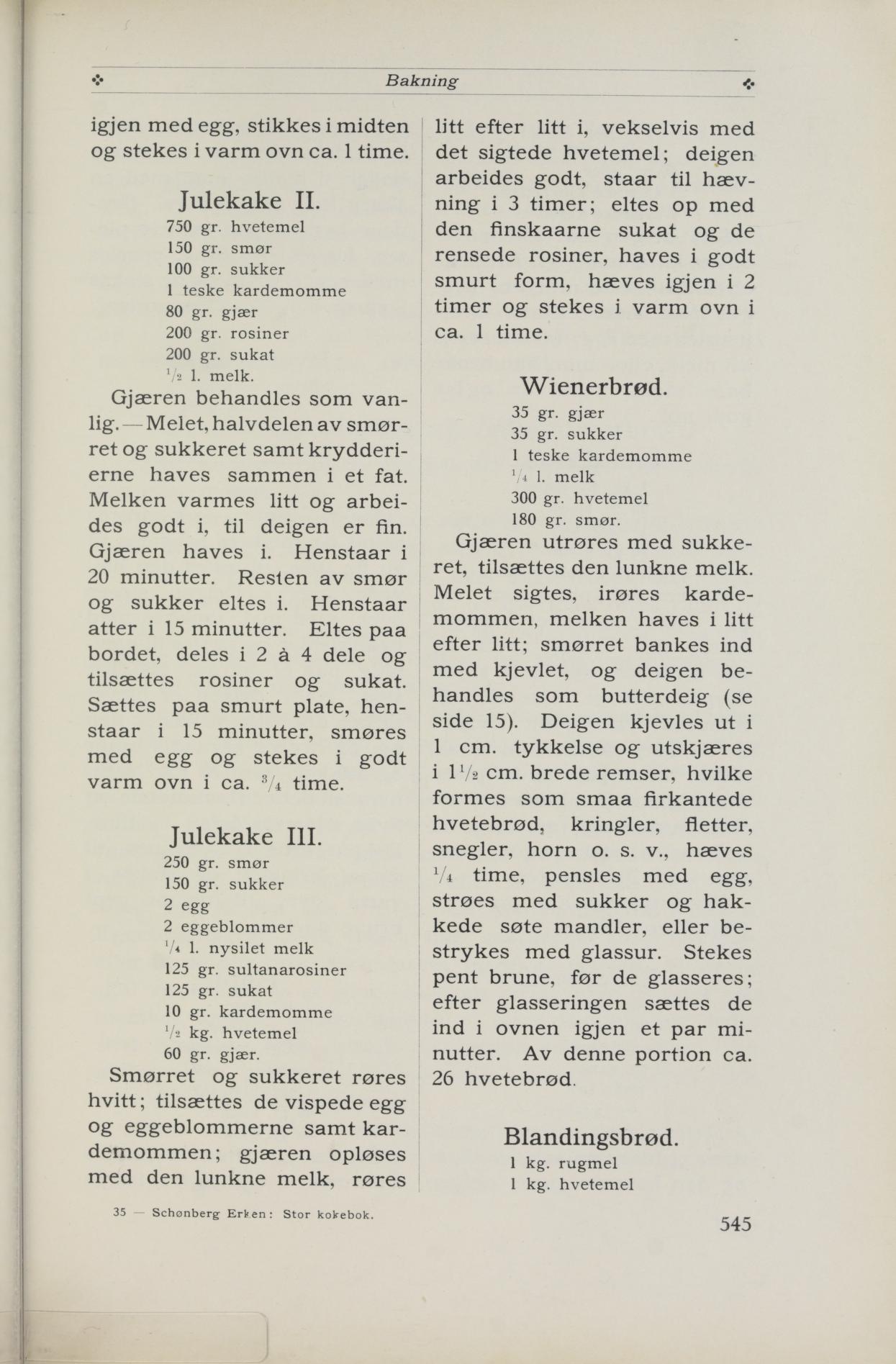
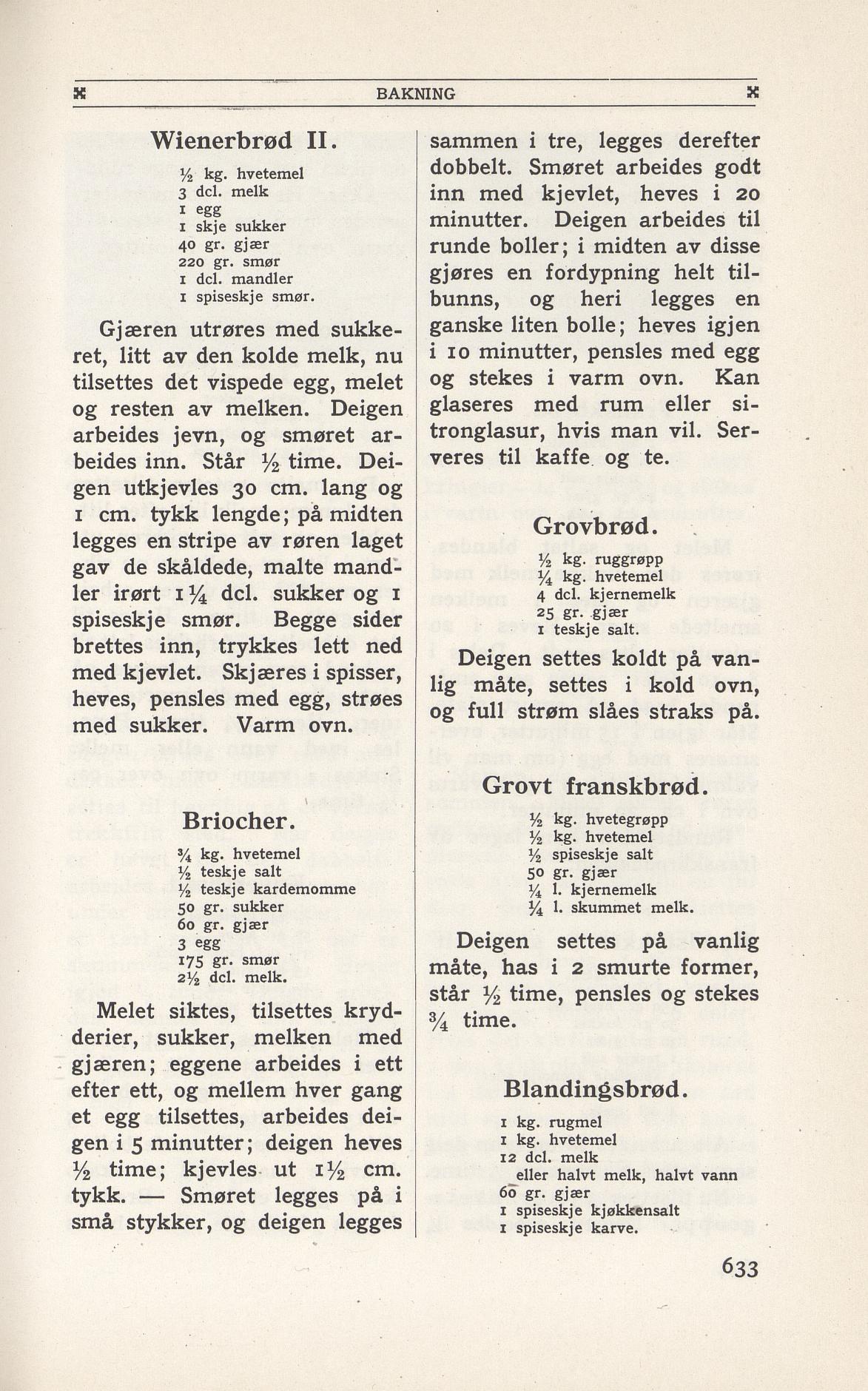
Everyday bread from Erken's Stor kokebok (1914) of 1 kg rye flour and 1 kg wheat flour, 12 dl milk (or milk and water), 60 g yeast, 1 tbsp salt and 1 tbsp caraway. The dough is set in the evening for a cold rise, shaped the next morning, brushed with egg and milk and baked. Baking time is not given in the source.

Source: Henriette Schønberg Erken, Stor kokebok, 1914-utg. s. 545 (falt i det fri)

Be the first to rate

About the dish

Mixed bread of half rye flour and half wheat flour with caraway was the everyday bread in Norwegian households. Here Erken uses a cold rise: the dough is set in the evening and shaped the next morning, which gives better flavor and suits the housewife's working day.

How to make it

  1. 1

    Set the dough in the evening

    Mix the rye flour, wheat flour, salt and caraway. Dissolve the yeast in the milk (or milk and water) and work everything into a supple dough.

  2. 2

    Cold rise

    Cover the dough and let it rise in a cool place overnight.

  3. 3

    Shape the loaves

    Knead the dough the next morning, shape the loaves and place them on a greased tray or in tins.

  4. 4

    Brushing

    Brush the loaves with egg beaten with a little milk — or just milk; water can also be used.

  5. 5

    Baking

    Bake the loaves in a good hot oven (200–220 °C (430 °F)) for about 45–60 minutes, until baked through and they sound hollow when tapped on the bottom.

Changes from the original

'12 dcl' has been entered as 12 dl. Tablespoons of salt and caraway have been kept as the measure. The source gives no baking time; a guideline estimate (about 45–60 minutes at 200–220 °C (430 °F)) has been added to the steps, along with a note that the cold rise takes place in a cool spot / the refrigerator.

In stores now

Clean, minimally processed groceries matched to the ingredients — approximate prices.

Product data and prices via Kassalapp. Prices are updated daily and may vary.

Tidsmaskin – hva endret seg?

Velg to utgaver og se hva Henriette Schønberg Erken la til, fjernet eller endret mellom dem.

1914 (korrekturlest, s. 545)1949 (korrekturlest, s. 633)~36% av teksten endretfjernetlagt til
1 kg. rugmel 1 kg. hvetemel 12 dcl. dl. melk eller halvt melk, halvt vand vann 60 gr. gjær 1 spiseske spiseskje kjøkkensalt 1 spiseske karve Sæt spiseskje karve. Sett deigen om aftenen — altsaa koldhævning. altså koldhevning. Brødene eltes op næste morgen, lægges paa legges på smurt plate, overpensles med egg, blandet med litt melk, eller man kan bruke bare melk; vand vann er ogsaa også godt nok.

Community interpretations

Be the first to share your own version.

See interpretations

Frequently asked questions

What does 'cold rising' mean in this recipe?
The dough is set in the evening and rises cold/slowly overnight. The next morning the loaves are kneaded, placed on a greased tray and baked. So the total time is around 12 hours, but most of it is rising time with no work.
Which flour and how much liquid are used?
Equal parts flour: 1 kg rye flour and 1 kg wheat flour. The liquid is 12 dl milk, or optionally half milk and half water. Plus 60 g yeast, 1 tablespoon salt and 1 tablespoon caraway.
What are the loaves brushed with?
Egg mixed with a little milk. You can also use just milk, and Schønberg Erken writes that water is good enough too.

Related recipes

More dishes in the same category from the archive

Read also

Kommentarer

Ingen kommentarer ennå. Bli den første til å dele!