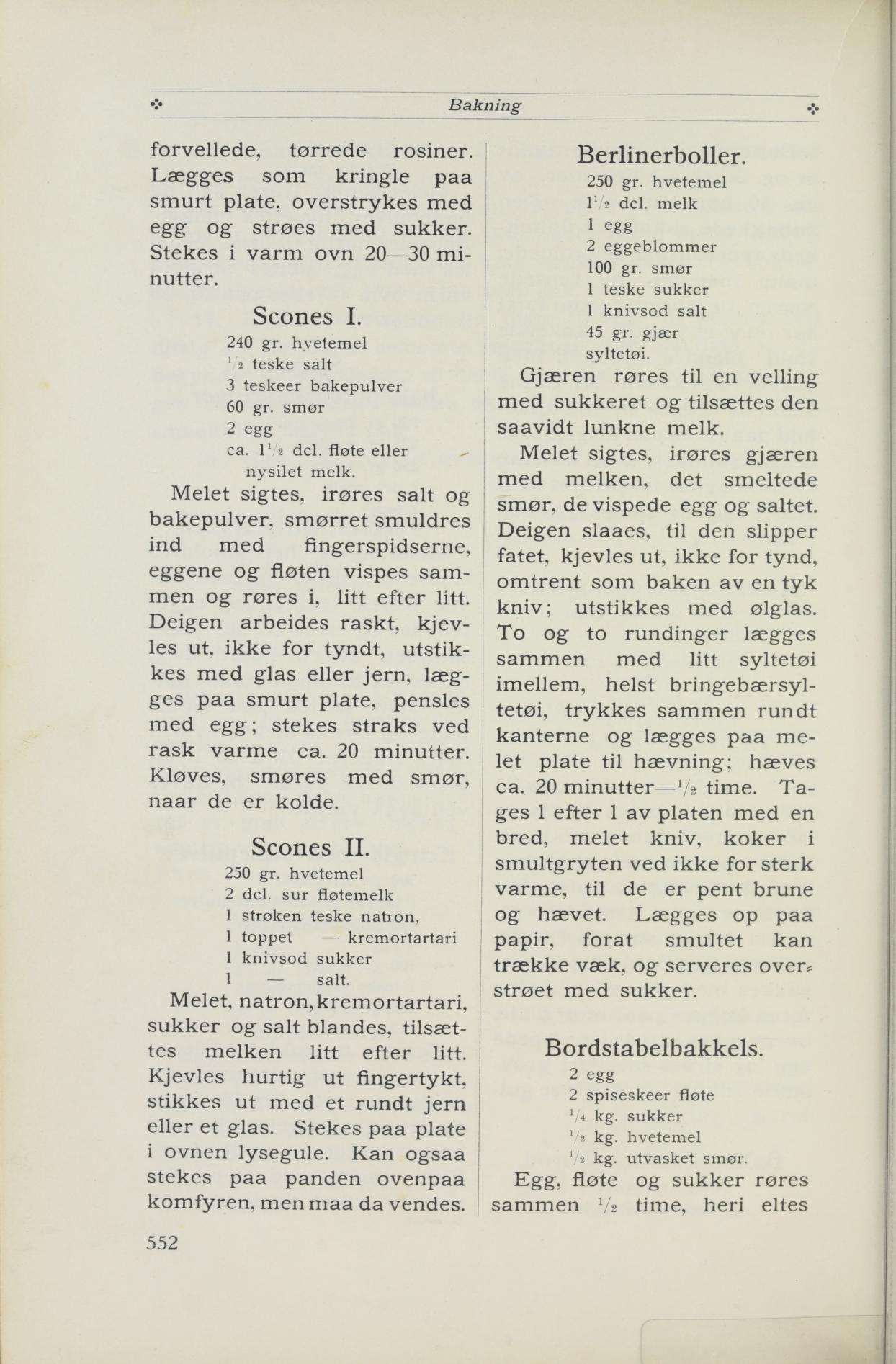
Erken's berlinerboller (Berlin jam doughnuts) from 1914: a yeast dough of 250 g flour, milk, egg, egg yolks, and butter, rolled out, cut with a glass, joined in pairs with raspberry jam, proofed, and fried in lard, served dusted with sugar.
Source: Henriette Schønberg Erken, Stor kokebok, 1914-utg. s. 552 (falt i det fri)
Be the first to rate
About the dish
In Erken's day, berlinerboller were a yeast pastry fried in lard and filled with jam — the forerunner of today's Berlin doughnut with vanilla cream or jam. The recipe appears in the "Baking" chapter alongside scones and other tea breads.
How to make it
1
Dissolve the yeast
Stir the yeast into a batter with the teaspoon of sugar, and thin with the barely lukewarm milk.
2
Make the dough
Sift the flour and stir in the yeast mixture, the melted butter, the whisked egg and egg yolks, and the salt.
3
Knead
Work the dough well until it comes away from the bowl.
4
Roll and cut out
Roll out the dough, not too thin — about as thick as the back of a thick knife. Cut out round pieces with a glass.
5
Fill
Join the round pieces two by two with a little jam between them, and press the edges firmly together.
6
Final proof
Place the buns on a floured tray and let them rise for 20–30 minutes.
7
Fry in lard
Lift the buns off the tray one by one with a broad, floured knife and fry them in lard or oil at about 170 °C (340 °F), not too hot, until nicely browned and risen. Turn them along the way.
8
Drain and serve
Place the buns on paper so the fat drains off, and serve them dusted with sugar.
Changes from the original
Measures are converted to modern units (dl, tsp, g). The old "knivsod" is interpreted as a knife-point/pinch. Lard for deep-frying is given as neutral frying oil or lard, with a modern temperature reference (about 170 °C (340 °F)). The yeast amount is kept as fresh yeast.
📖1914
Original 1914 recipe
Verbatim from the first edition of the Big Cookbook.
Foto: Faksimile: Nasjonalbiblioteket
ProofreadPage 552
250 gr. hvetemel
1 1/2 del. melk
1 egg
2 eggeblommer
100 gr. smør
1 teske sukker
1 knivsod salt
45 gr. gjær
syltetøi.
Gjæren røres til en velling med sukkeret og tilsættes den saavidt lunkne melk. Melet sigtes, irøres gjæren med melken, det smeltede smør, de vispede egg og saltet. Deigen slaaes, til den slipper fatet, kjevles ut, ikke for tynd, omtrent som baken av en tyk kniv; utstikkes med ølglas. To og to rundinger lægges sammen med litt syltetøi imellem, helst bringebærsyltetøi, trykkes sammen rundt kanterne og lægges paa melet plate til hævning; hæves ca. 20 minutter—1/2 time. Tages 1 efter 1 av platen med en bred, melet kniv, koker i smultgryten ved ikke for sterk varme, til de er pent brune og hævet. Lægges op paa papir, forat smultet kan trække væk, og serveres overstrøet med sukker.
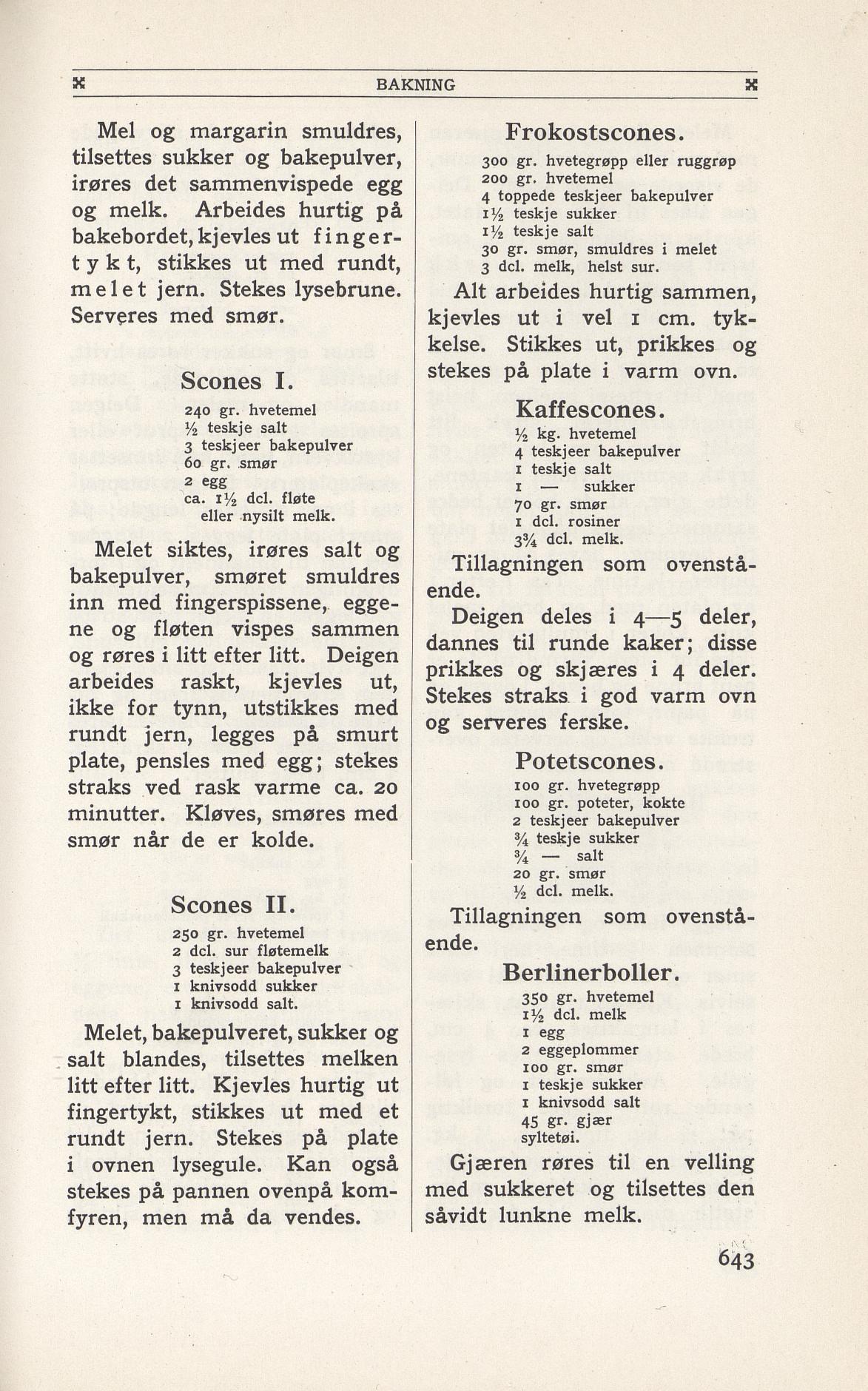
📖1949
Revised 1949 recipe
From the revised edition of the Big Cookbook.
Foto: Faksimile: Nasjonalbiblioteket
ProofreadPage 643
350 gr. hvetemel
1½ del. melk
1 egg
2 eggeplommer
100 gr. smør
¼ teskje sukker
1 knivsodd salt
45 gr. gjær
syltetøi.
Melet siktes, irøres gjæren med melken, det smeltede smør, de vispede egg og saltet. Deigen slåes til den slipper fatet, kjevles ut, ikke for tynn, omtrent som baken av en tykk kniv; bruk så lite ekstra mel som mulig, utstikkes med glass eller rundt jern. To og to rundinger legges sammen med litt syltetøi imellem, helst bringebærsyltetøi, stryk litt kaldt vann om kanten og trykk sammen rundt kantene, dette gjør, at de holder bedre sammen, legges på melet plate til hevning; heves ca. 20 minutter — ½ time. Tas 1 efter 1 av platen med en bred, melet kniv, koker i smultgryten ved ikke for sterk varme til de er pent brune og hevet. Legges opp på papir, forat smultet kan trekke vekk, og serveres overstrødd med sukker.
In stores now
Clean, minimally processed groceries matched to the ingredients — approximate prices.
1914 (korrekturlest, s. 552) → 1949 (korrekturlest, s. 643)~50% av teksten endretfjernetlagt til
250 350 gr. hvetemel 1 1/2 1½ del. melk 1 egg 2 eggeblommer eggeplommer 100 gr. smør 1 teske ¼ teskje sukker 1 knivsod knivsodd salt 45 gr. gjær syltetøi. Gjæren røres til en velling med sukkeret og tilsættes den saavidt lunkne melk. Melet sigtes, siktes, irøres gjæren med melken, det smeltede smør, de vispede egg og saltet. Deigen slaaes, slåes til den slipper fatet, kjevles ut, ikke for tynd, tynn, omtrent som baken av en tyk tykk kniv; bruk så lite ekstra mel som mulig, utstikkes med ølglas. glass eller rundt jern. To og to rundinger lægges legges sammen med litt syltetøi imellem, helst bringebærsyltetøi, trykkes stryk litt kaldt vann om kanten og trykk sammen rundt kanterne og lægges paa kantene, dette gjør, at de holder bedre sammen, legges på melet plate til hævning; hæves hevning; heves ca. 20 minutter—1/2 minutter — ½ time. Tages Tas 1 efter 1 av platen med en bred, melet kniv, koker i smultgryten ved ikke for sterk varme, varme til de er pent brune og hævet. Lægges op paa hevet. Legges opp på papir, forat smultet kan trække væk, trekke vekk, og serveres overstrøet overstrødd med sukker.
Henriette Schønberg Erken recommends raspberry jam, but other jam can be used. Only a small dab is placed between two cut-out rounds of dough, which are pressed firmly together along the edge.
How long should the buns rise before deep-frying?
About 20 minutes to half an hour, on a floured surface. They are then lifted off one by one with a broad, floured knife and fried in the pot of lard.
How thick should the dough be rolled out, and what are the buns cut out with?
The dough is rolled out about as thick as the back of a thick knife — not too thin. The rounds are cut out with a beer glass.
What must I watch for when frying in lard?
The heat must not be too strong; the buns are fried until nicely browned. Heat that is too strong gives a dark crust before they are cooked through.