Skip to content

Bordstabelbakkels (Stacked Christmas Cakes)

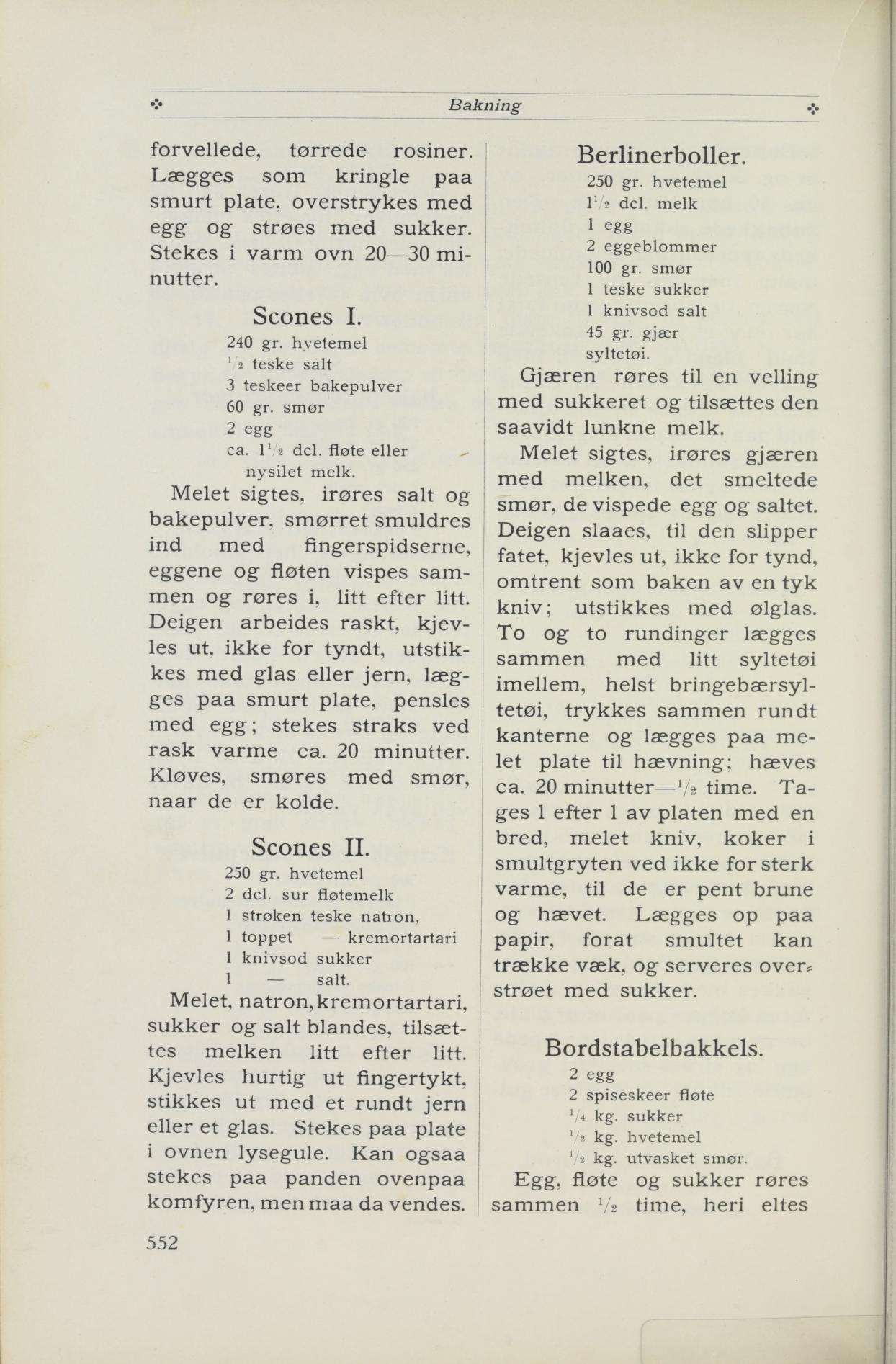
Erken's bordstabelbakkels are a classic Norwegian stacked Christmas cake: a tender base of egg, cream, sugar, butter and flour rolled thin and cut into 4 cm wide bars, baked pale golden and topped with an almond meringue of ground almonds, powdered sugar and stiffly beaten egg whites, dried at low heat.

Source: Henriette Schønberg Erken, Stor kokebok, 1914-utg. s. 552 (falt i det fri)

Be the first to rate

About the dish

Bordstabelbakkels is a classic Norwegian Christmas cake that is stacked in tall piles on the cake platter. Erken's version has a tender base of washed butter and a layer of almond meringue that is dried in the oven.

How to make it

  1. 1

    Beat the batter

    Beat the eggs, cream and sugar together for half an hour until the mixture is light and airy.

  2. 2

    Knead in butter and flour

    Knead in the butter and the sifted flour alternately until you have a smooth dough.

  3. 3

    Roll out and cut

    Roll the dough out thin and cut it into oblong bars, about 4 cm wide.

  4. 4

    Bake the bases

    Bake the bars pale golden at about 190 °C (375 °F), and let them cool slightly.

  5. 5

    Make the almond mixture

    Mix the blanched, ground almonds with the powdered sugar and gently fold in the stiffly beaten egg whites.

  6. 6

    Top and dry

    Spread the almond mixture gently onto the cakes and dry them in the oven at very low heat, about 100 °C (210 °F), until the topping is firm and pale.

Changes from the original

Measurements have been converted to grams and modern units, and the fractions in the unclear original column have been interpreted according to traditional proportions (1/4 kg sugar, 1/2 kg flour, 1/4 kg butter). "Washed butter" has been replaced with unsalted butter. Baking temperatures are estimated: about 190 °C (375 °F) for the bases and about 100 °C (210 °F) for drying the almond topping.

In stores now

Clean, minimally processed groceries matched to the ingredients — approximate prices.

Product data and prices via Kassalapp. Prices are updated daily and may vary.

Tidsmaskin – hva endret seg?

Velg to utgaver og se hva Henriette Schønberg Erken la til, fjernet eller endret mellom dem.

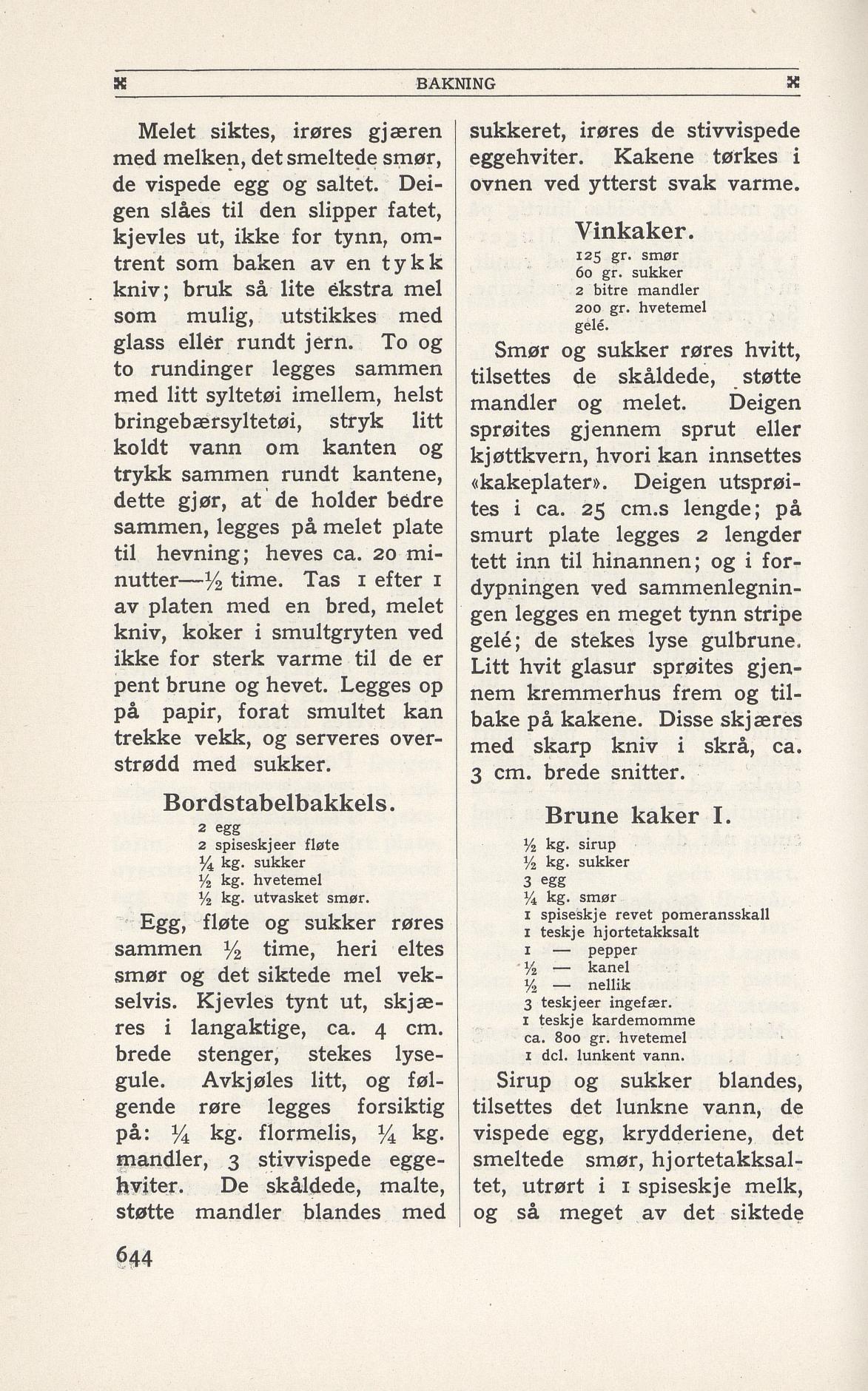
1914 (korrekturlest, s. 552)1949 (korrekturlest, s. 644)~39% av teksten endretfjernetlagt til
2 egg 2 spiseskeer spiseskjeer fløte 1/4 ¾ kg. sukker 1/2 ¾ kg. hvetemel 1/4 ¾ kg. utvasket smør. Egg, fløte og sukker røres sammen 1/2 ½ time, heri eltes smør og det sigtede siktede mel vekselvis. Kjevles tyndt tynt ut, skjæres i langagtige, langaktige, ca. 4 cm. brede stænger, stenger, stekes lysegule. lyse gule. Avkjøles litt, og følgende røre lægges forsigtig paa: 1/4 legges forsiktig på: ¾ kg. flormelis, 1/4 ¾ kg. mandler, 3 stivvispede eggehviter. De skoldede, skåldede, malte, støtte mandler blandes med sukkeret, irøres de stivvispede eggehviter. Kakerne tørres Kakene tørkes i ovnen ved yderst ytterst svak varme.

Community interpretations

Be the first to share your own version.

See interpretations

Frequently asked questions

Why should the dough be beaten so long?
The eggs, cream and sugar are beaten together for half an hour to work air and good structure into the dough. Then washed butter and sifted flour are kneaded in alternately.
How are the cakes shaped?
The dough is rolled out thin and cut into oblong bars, about 4 cm wide. These are baked pale golden.
How is the topping made, and how are the cakes dried?
The bars are cooled slightly before the almond mixture is gently spread on: 1/4 kg powdered sugar is mixed with 1/4 kg blanched, ground almonds, and 3 stiffly beaten egg whites are folded in. The cakes are then dried in the oven at very low heat.
What is "washed butter"?
It is butter that has been kneaded/washed in cold water to remove the salt and buttermilk – a common practice in finer baked goods in Schønberg Erken's "Stor kokebok" of 1914.

Related recipes

More dishes in the same category from the archive

Read also

Kommentarer

Ingen kommentarer ennå. Bli den første til å dele!