Skip to content

Blackberry Cordial

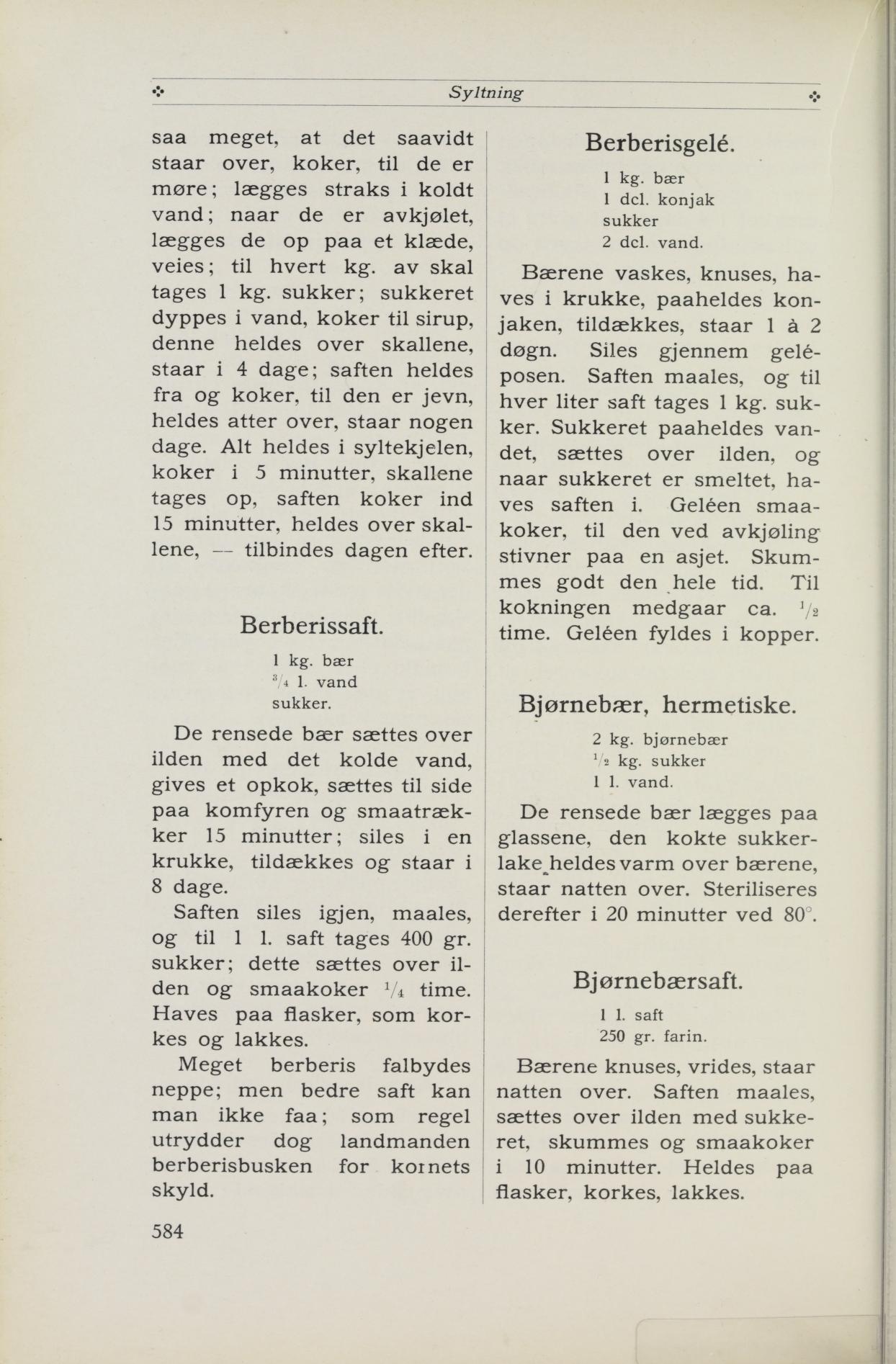
Blackberry cordial from Erken (1914): the juice is wrung from crushed blackberries and left overnight, then boiled 10 minutes with 250 g sugar per liter of juice and bottled.

Source: Henriette Schønberg Erken, Stor kokebok, 1914-utg. s. 584 (falt i det fri)

Be the first to rate

About the dish

This simple cordial is given by the amount of juice, not the amount of berries — a common practice with Erken, since the juice content of berries varies with season and ripeness.

How to make it

  1. 1

    Press the berries

    Crush the blackberries and wring the juice out through a cloth. Let the juice stand overnight.

  2. 2

    Boil the juice

    Measure the juice and set it over the heat with the sugar. Skim well and let it simmer for 10 minutes.

  3. 3

    Bottle

    Pour the juice hot into clean bottles, seal well, and store cool and dark.

Changes from the original

"Farin" is interpreted as ordinary white sugar. Measurements have been kept, and bottling is described with modern bottles and sealing.

Tidsmaskin – hva endret seg?

Velg to utgaver og se hva Henriette Schønberg Erken la til, fjernet eller endret mellom dem.

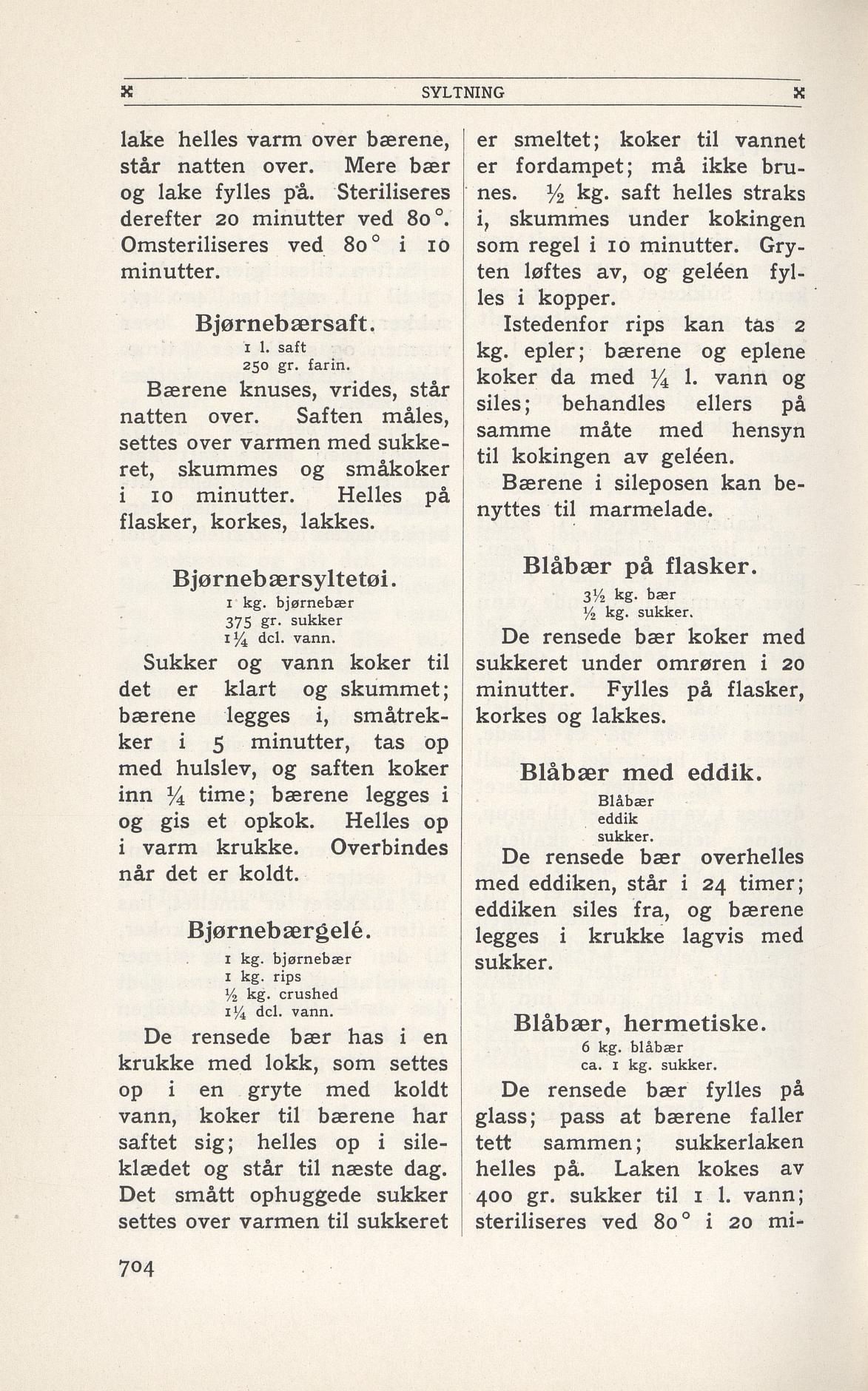
1914 (korrekturlest, s. 584)1949 (korrekturlest, s. 704)~42% av teksten endretfjernetlagt til
1 1. l. saft 250 gr. farin. Bærene knuses, vrides, staar står natten over. Saften maales, sættes måles, settes over ilden varmen med sukkeret, skummes og smaakoker småkoker i 10 minutter. Heldes paa Helles på flasker, korkes, lakkes.

Community interpretations

Be the first to share your own version.

See interpretations

Frequently asked questions

How much sugar should I use?
250 grams of granulated sugar per liter of juice. Always measure the juice after the berries have been wrung out, so the amount of sugar is right.
Why must the juice stand overnight?
After the berries are crushed and wrung, the juice should stand overnight (about 12 hours) so the sediment settles and the juice becomes clearer before it is boiled.
How long should the juice boil?
The juice is set over the fire with the sugar, skimmed, and simmered for 10 minutes. Then it is poured hot into bottles, which are corked and sealed.
Why are the bottles sealed with wax?
Sealing wax over the cork was the way bottles were made airtight in 1914 (the recipe is from Schønberg Erken's Great Cookbook, p. 584) to keep out air and bacteria. Today you can use clean bottles with tight screw caps.

Related recipes

More dishes in the same category from the archive

Read also

Kommentarer

Ingen kommentarer ennå. Bli den første til å dele!