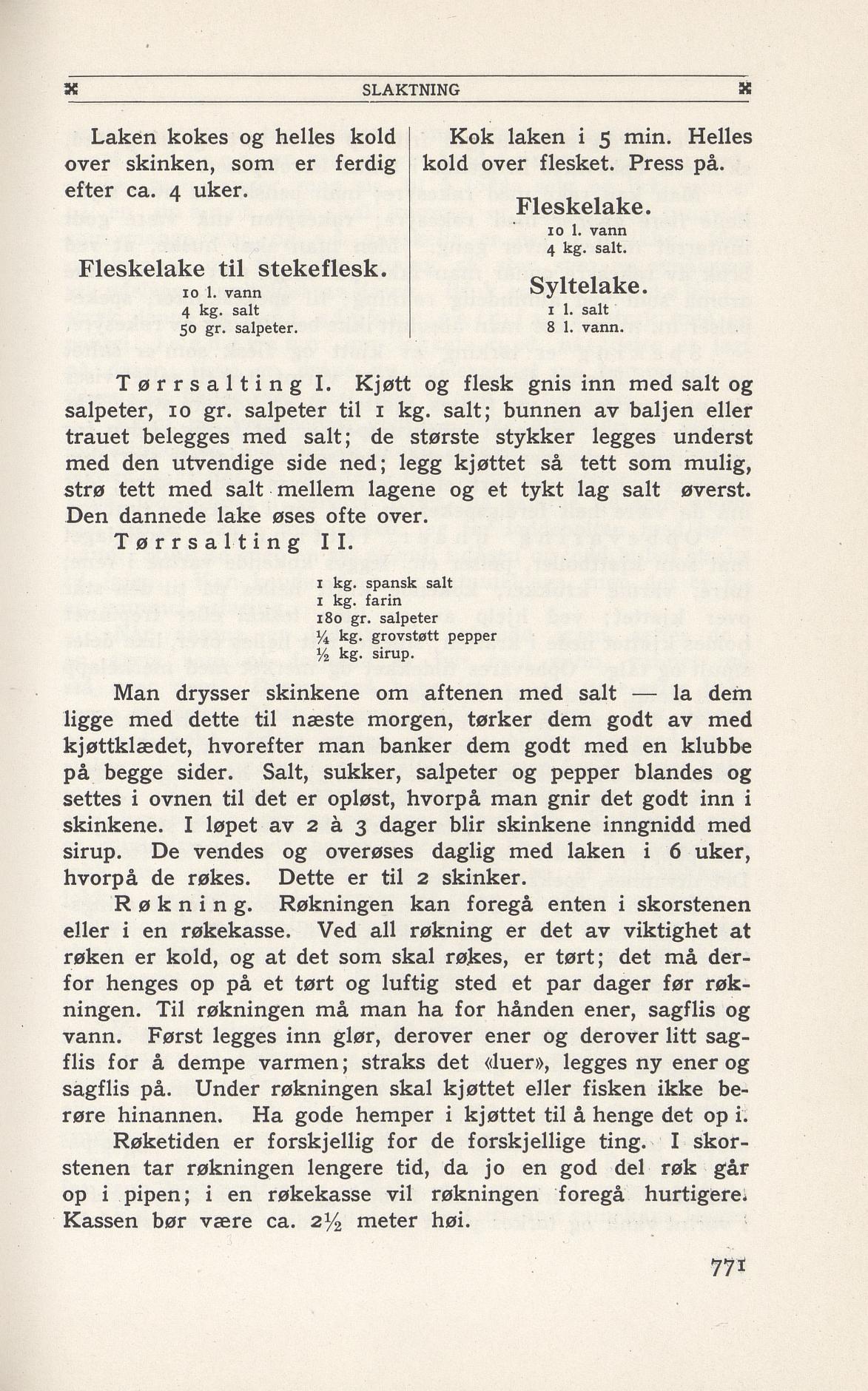
Original 1914 recipe
Verbatim from the first edition of the Big Cookbook.
Dry-salting of meat and pork: rub with salt mixed with saltpeter (10 g per kg salt), pack tightly in layers in a salting tub with salt between the layers, and frequently ladle the brine that forms over the meat.
Source: Henriette Schønberg Erken, Stor kokebok, 1914-utg. s. 637 (falt i det fri)
Dry-salting was the oldest and simplest method of preserving meat and pork after the autumn slaughter. Saltpeter (sodium nitrate) was used to give the meat a red color and prevent spoilage.
Mix the salt
Mix the salt and saltpeter, 10 g saltpeter to 1 kg salt.
Rub in the meat
Rub the meat and pork thoroughly with the salt mixture.
Pack in the tub
Cover the bottom of the tub or trough with salt. Place the largest pieces at the bottom with the outer side down, and pack the meat as tightly as possible.
Sprinkle salt
Sprinkle plenty of salt between the layers and lay a thick layer of salt on top.
Ladle over the brine
Frequently ladle the brine that forms over the meat.
The ratio of 10 g saltpeter to 1 kg salt has been kept; the quantities are given per kilo of salt. The method has been divided into numbered steps and the language modernized.
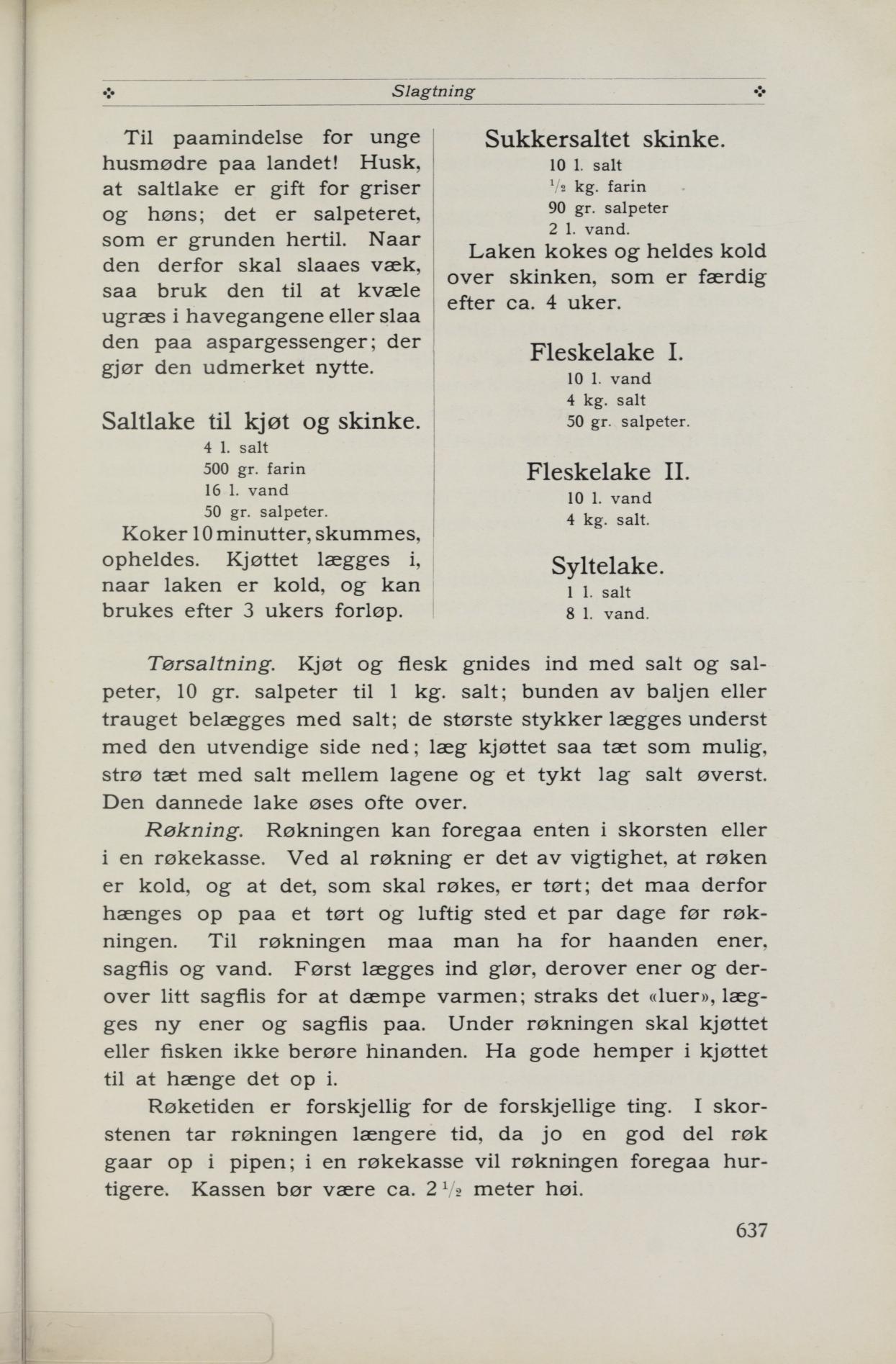
Original 1914 recipe
Verbatim from the first edition of the Big Cookbook.

Revised 1949 recipe
From the revised edition of the Big Cookbook.

Be the first to share your own version.
More dishes in the same category from the archive
Ingen kommentarer ennå. Bli den første til å dele!