Skip to content

Stuffing Sausages

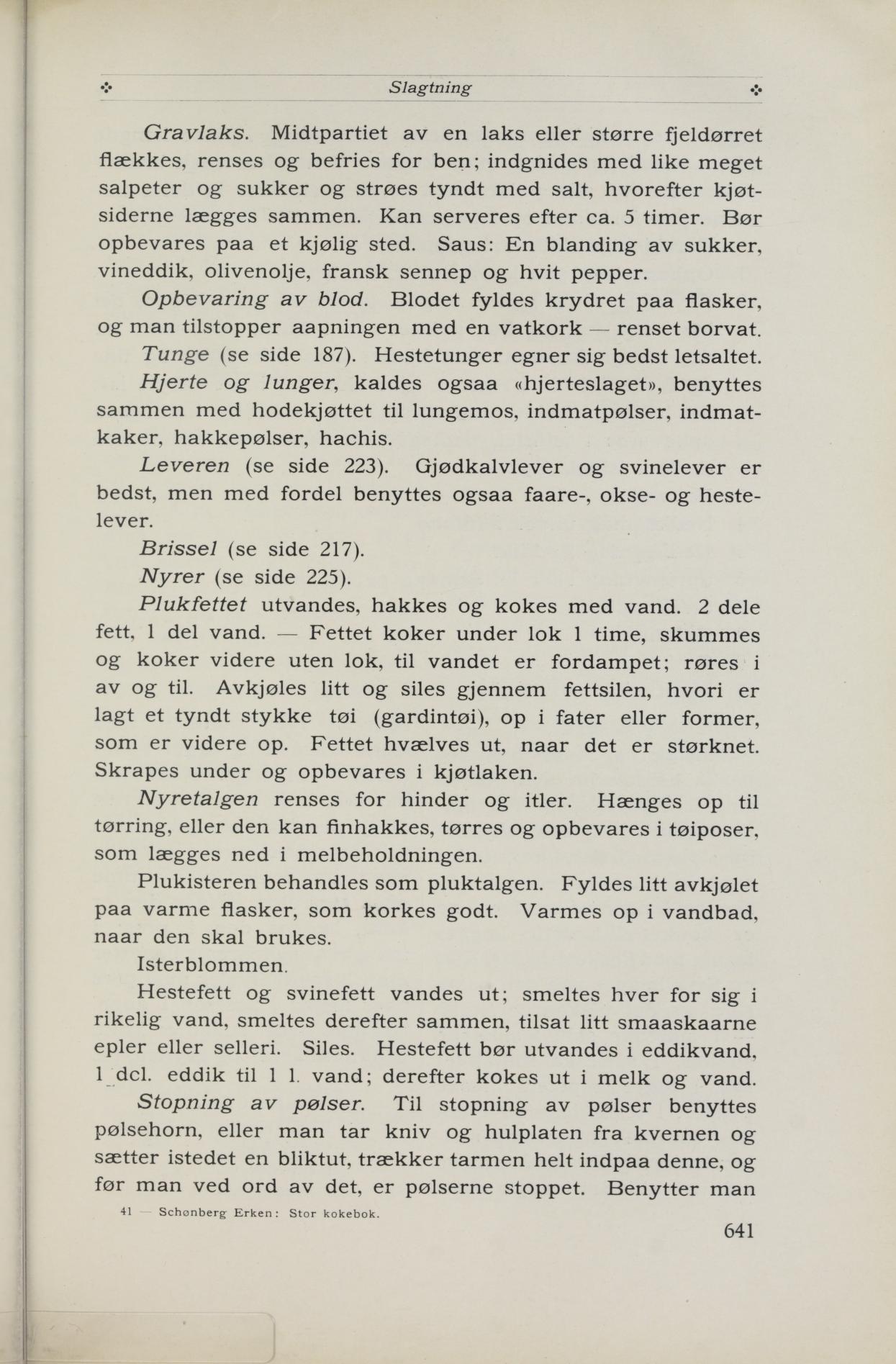
Erken's instructions for stuffing sausages: use a sausage horn or fit a tin nozzle onto the meat grinder in place of the knife and plate, draw the casing onto the nozzle and fill. With the grinder method the sausages are divided and tied afterward; with the sausage horn (used for sausages with diced pork fat) the casings are divided beforehand.

Source: Henriette Schønberg Erken, Stor kokebok, 1914-utg. s. 641 (falt i det fri)

Be the first to rate

About the dish

A practical technique explanation in the butchering chapter, placed just before Erken's long series of sausage recipes. She describes both the traditional sausage horn and the use of the meat grinder with a tin nozzle.

How to make it

  1. 1

    Choose the tool

    Use a sausage horn, or remove the knife and plate from the meat grinder and fit a tin nozzle (sausage funnel) in their place.

  2. 2

    Fit the casing

    Draw the casing all the way onto the horn or nozzle.

  3. 3

    Stuff the sausages

    Fill the forcemeat evenly into the casing. Make sure no air pockets form.

  4. 4

    Divide up

    If you use the grinder with a tin nozzle, divide the sausages into suitable lengths after stuffing by tying them off. If you use a sausage horn — which is used for all sausages with small pork-fat cubes — divide the casings into suitable lengths beforehand.

Changes from the original

Modernized language; the tin nozzle on the meat grinder corresponds to today's sausage horn/sausage funnel for grinders. No quantities are given, as this is a working instruction.

Time machine – what changed?

Pick two editions and see what Henriette Schønberg Erken added, removed or changed between them.

Modernised → 1914 (proofread, p. 641)~86% of the text changedremovedadded
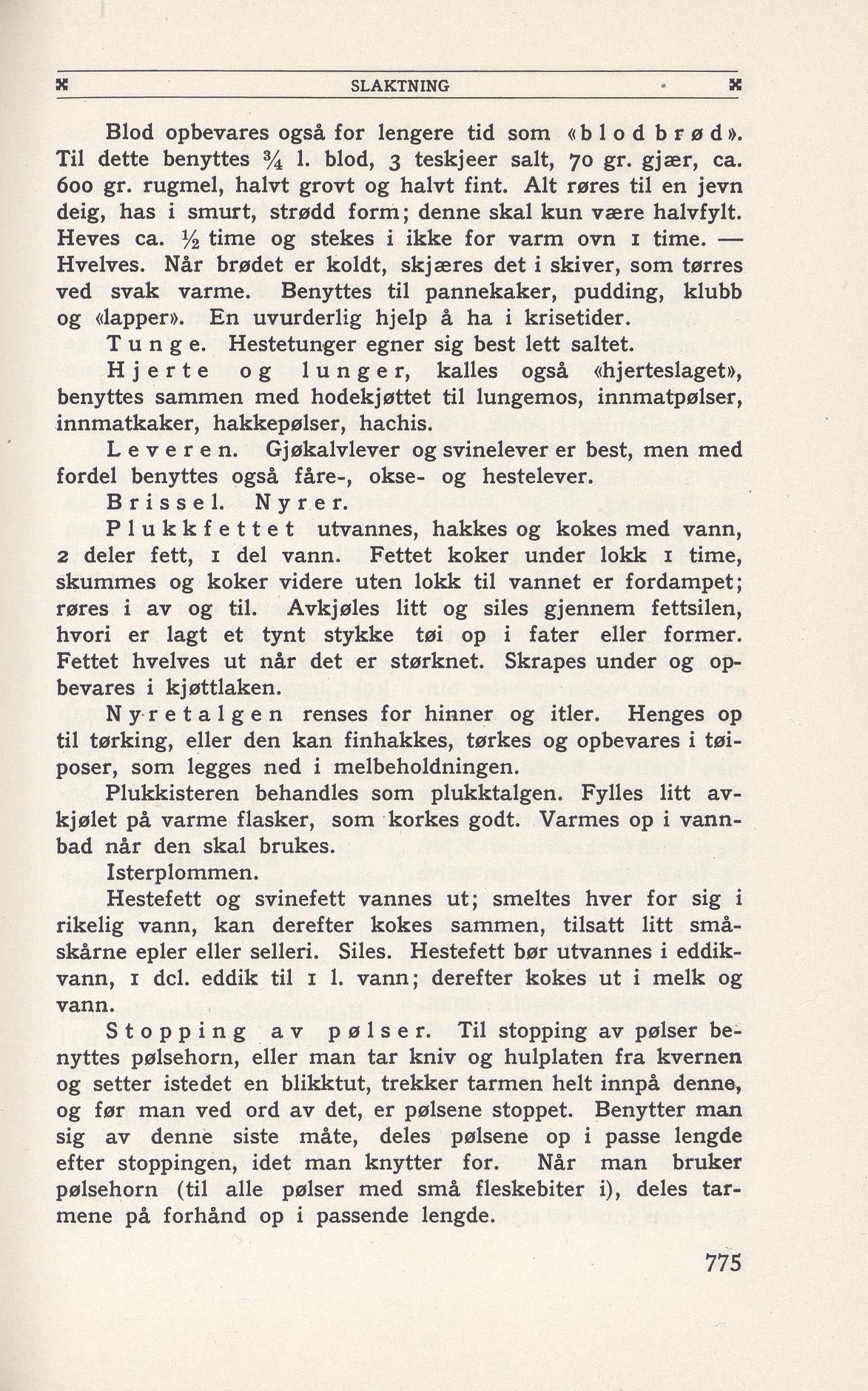
Pølsehorn eller bliktut, tarmer, pølsefarse (etter valgt oppskrift). rensede tarmer (lagt i lunkent vann før bruk). Bruk Til stopning av pølser benyttes pølsehorn, eller ta kniven man tar kniv og hullplaten av kjøttkvernen hulplaten fra kvernen og sett på sætter istedet en blikktut (pølsetrakt) i stedet.. Trekk bliktut, trækker tarmen helt inn på hornet eller tuten.. Fyll farsen jevnt inn i tarmen. Pass på at det ikke blir luftlommer.. Bruker du kvern med blikktut, indpaa denne, og før man ved ord av det, er pølserne stoppet. Benytter man sig av denne sidste maate, deles pølsene pølserne op i passe lengder etter stoppingen ved å knyte længde efter stopningen, idet man knytter for. Bruker du Naar man bruker pølsehorn — som brukes til (til alle pølser med små flesketerninger i — smaa fleskebiter i), deles tarmene paa forhaand op i passende lengder på forhånd. længde.

Note on Modernised

Modernisert språk; blikktut på kjøttkvernen tilsvarer dagens pølsehorn/pølsetrakt til kvern. Ingen mengder er oppgitt, da dette er en arbeidsanvisning.

Community interpretations

Be the first to share your own version.

See interpretations →

Frequently asked questions

What equipment do I need to stuff sausages?
Either a sausage horn, or the grinder: you remove the knife and plate and fit a tin nozzle instead. The casing is drawn all the way onto the nozzle/horn.
When should the casings be divided into suitable lengths?
If you use a tin nozzle on the grinder, you stuff first and divide afterward, tying them off. If you use a sausage horn, the casings are divided into suitable lengths beforehand.
When is a sausage horn the right choice?
A sausage horn is used for all sausages that have small pork-fat cubes in the forcemeat.
Where does this method come from?
From Henriette Schønberg Erken's "Stor kokebok" of 1914, page 641, in the chapter on butchering, sausages, and forcemeats.

Equipment for this dish

Advertisement

We may earn a commission if you buy through these links. It does not affect the price.

Related recipes

More dishes in the same category from the archive

Read also

Kommentarer

Ingen kommentarer ennå. Bli den første til å dele!