Skip to content

Lemon and Carrot Marmalade

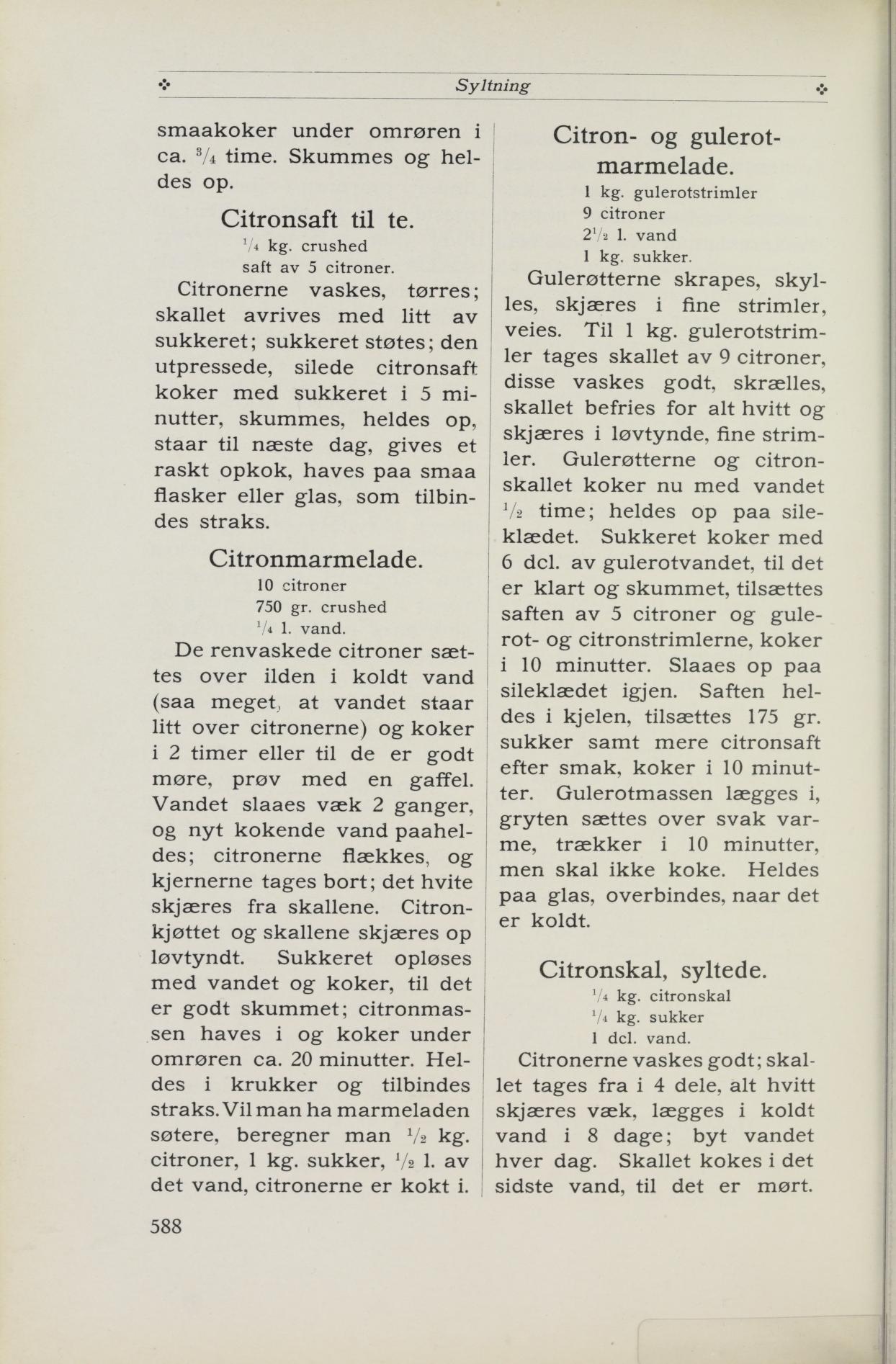
Marmalade of carrot strips and paper-thin lemon peel cooked in water, a sugar syrup made from the carrot water, lemon juice, brief boiling and steeping before filling into jars.

Source: Henriette Schønberg Erken, Stor kokebok, 1914-utg. s. 588 (falt i det fri)

Be the first to rate

About the dish

A thrifty and inventive marmalade in which carrot replaces fruit, as was common in Norwegian households. Lemon peel and lemon juice provide acidity and aroma, and the result resembles orange marmalade.

How to make it

  1. 1

    Prepare the carrots

    Scrape the carrots, rinse them, cut them into fine strips, and weigh out 1 kg.

  2. 2

    Prepare the lemon peel

    Wash 9 lemons well, peel them, cut away all the white from the peel, and cut the peel into paper-thin, fine strips.

  3. 3

    Cook with water

    Cook the carrot strips and the lemon peel with the water for half an hour and pour everything into a straining cloth.

  4. 4

    Cook the sugar syrup

    Cook 750 g sugar with 6 dl of the carrot water until the syrup is clear and well skimmed.

  5. 5

    Cook the strips

    Add the juice of 5 lemons along with the carrot and lemon strips and cook for 10 minutes. Pour into the straining cloth again.

  6. 6

    Cook the juice

    Pour the juice back into the pan, add 175 g sugar and more lemon juice to taste, and cook for 10 minutes.

  7. 7

    Let steep

    Add the carrot mixture, set the pan over low heat, and let it steep for 10 minutes without boiling.

  8. 8

    Fill into jars

    Pour the marmalade into jars and seal them when it is cold.

Changes from the original

The sugar amount in the narrow ingredient column is unclear in the OCR and set to ¾ kg ("crushed" = crushed sugar). Measures are modernized (parts → dl), and the method is divided into steps.

In stores now

Clean, minimally processed groceries matched to the ingredients — approximate prices.

Product data and prices via Kassalapp. Prices are updated daily and may vary.

Tidsmaskin – hva endret seg?

Velg to utgaver og se hva Henriette Schønberg Erken la til, fjernet eller endret mellom dem.

1914 (korrekturlest, s. 588)1949 (korrekturlest, s. 707)~46% av teksten endretfjernetlagt til
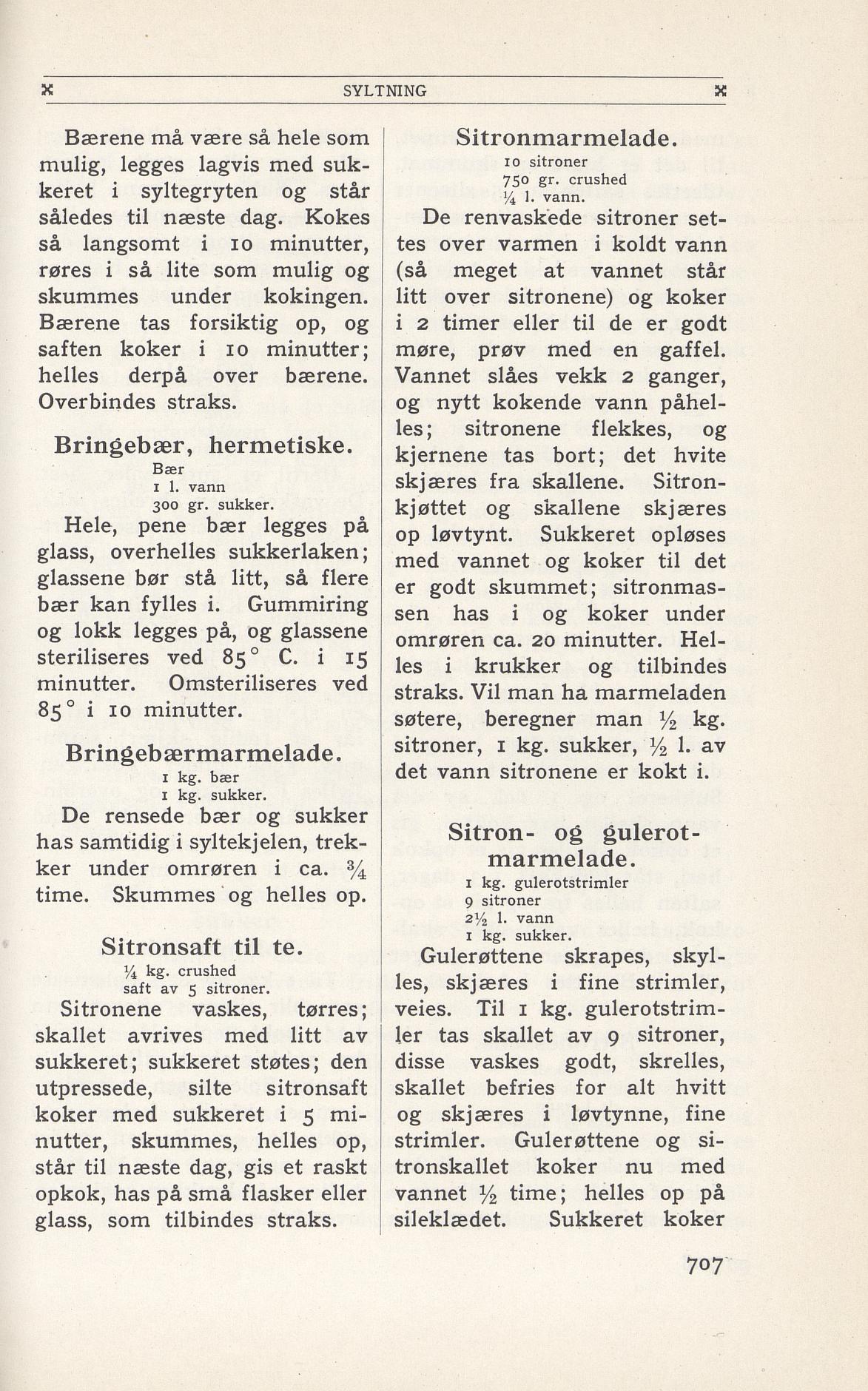
1 kg. gulerotstrimler 9 citroner 2½ sitroner 2 1/2 l. vand ¾ vann 1 kg. crushed (sukker) saft av 5 citroner. Gulerøtterne sukker. Gulerøttene skrapes, skylles, skjæres i fine strimler, veies. Til 1 kg. gulerotstrimler tages tas skallet av 9 citroner, sitroner, disse vaskes godt, skrælles, skrelles, skallet befries for alt hvitt og skjæres i løvtynde, løvtynne, fine strimler. Gulerøtterne Gulerøttene og citronskallet sitronskallet koker nu med vandet ½ vannet 1/2 time; heldes helles op paa sileklædet. Sukkeret koker med 6 del. dd. av gulerotvandet, gulerotvannet, til det er klart og skummet, tilsættes tilsettes saften av 5 citroner sitroner og gulerot- og citronstrimlerne, sitronstrmlene, koker i 10 minutter. Slaaes Slåes op paa sileklædet igjen. Saften heldes helles i kjelen, tilsættes tilsettes 175 gr. sukker samt mere citronsaft sitronsaft efter smak, koker i 10 minutter. Gulerotmassen lægges legges i, gryten sættes settes over svak varme, trækker varmen, trekker i 10 minutter, men skal ikke koke. Heldes paa glas, overbindes, naar Helles på glass, overbindes når det er koldt.

Community interpretations

Be the first to share your own version.

See interpretations

Frequently asked questions

How long does the marmalade take to cook?
About 110 minutes in all. The carrot strips and lemon peel are cooked ½ hour in 2½ liters water, then the strips are cooked 10 minutes in the sugar syrup, and the juice is cooked another 10 minutes after straining.
How is the lemon peel treated?
The peel of 9 well-washed lemons is peeled off, all the white membrane is removed, and the peel is cut into paper-thin, fine strips.
How much sugar and lemon juice is needed?
¾ kg sugar (crushed) is cooked with 6 deciliters of the carrot water, together with the juice of 5 lemons. To the strained juice, another 175 g sugar and more lemon juice to taste are added.
Where does the recipe come from?
From Henriette Schønberg Erken's "Stor kokebok" from 1914, page 588.

Related recipes

More dishes in the same category from the archive

Read also

Kommentarer

Ingen kommentarer ennå. Bli den første til å dele!