Skip to content

Salmi of Reindeer Fillets (chaud-froid of reindeer)

Cold festive dish: fried, pressed reindeer fillets are dipped in a gelatin-set game sauce (chaud-froid) with olives, mushrooms, and truffle, arranged with tomato slices and Italian salad.

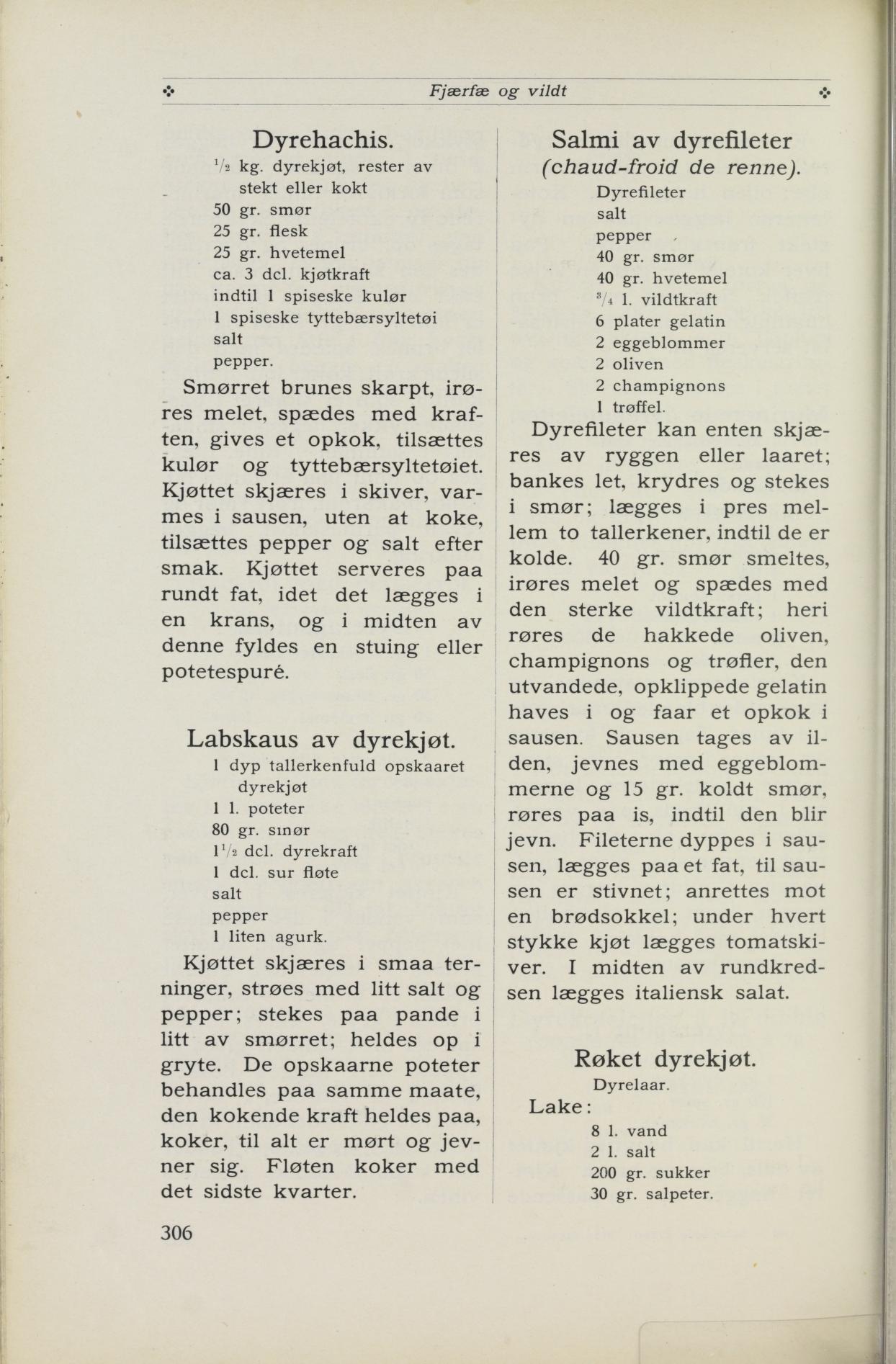
Source: Henriette Schønberg Erken, Stor kokebok, 1914-utg. s. 306 (falt i det fri)

Be the first to rate

About the dish

A French-inspired cold preparation (chaud-froid) from the festive-food chapter: fried reindeer fillets are coated in a gelatin-reinforced game sauce and garnished on a platter with tomato and Italian salad.

How to make it

  1. 1

    Fry the fillets

    Cut fillets from the saddle or leg, pound them lightly, season with salt and pepper, and fry them in butter.

  2. 2

    Press cold

    Press the fillets between two plates until they are completely cold.

  3. 3

    Make the sauce

    Melt 40 g butter, stir in the flour, and thin with the strong game stock. Stir in the chopped olives, mushroom, and truffle. Add the soaked, snipped gelatin and bring the sauce to a boil.

  4. 4

    Enrich and chill

    Take the sauce off the heat, enrich it with the egg yolks and 15 g cold butter, and stir it over ice until it becomes smooth and begins to thicken.

  5. 5

    Coat the fillets

    Dip the fillet slices in the sauce and place them on a platter until the sauce has set.

  6. 6

    Arrange

    Arrange the meat pieces against a bread base with tomato slices under each piece, and place Italian salad in the center of the ring.

Changes from the original

Gelatin sheets kept as a number of sheets; game stock given in deciliters. The amount of butter for enriching (15 g cold butter) is listed as a separate ingredient. The quantity of fillets is estimated.

In stores now

Clean, minimally processed groceries matched to the ingredients — approximate prices.

Product data and prices via Kassalapp. Prices are updated daily and may vary.

Time machine – what changed?

Pick two editions and see what Henriette Schønberg Erken added, removed or changed between them.

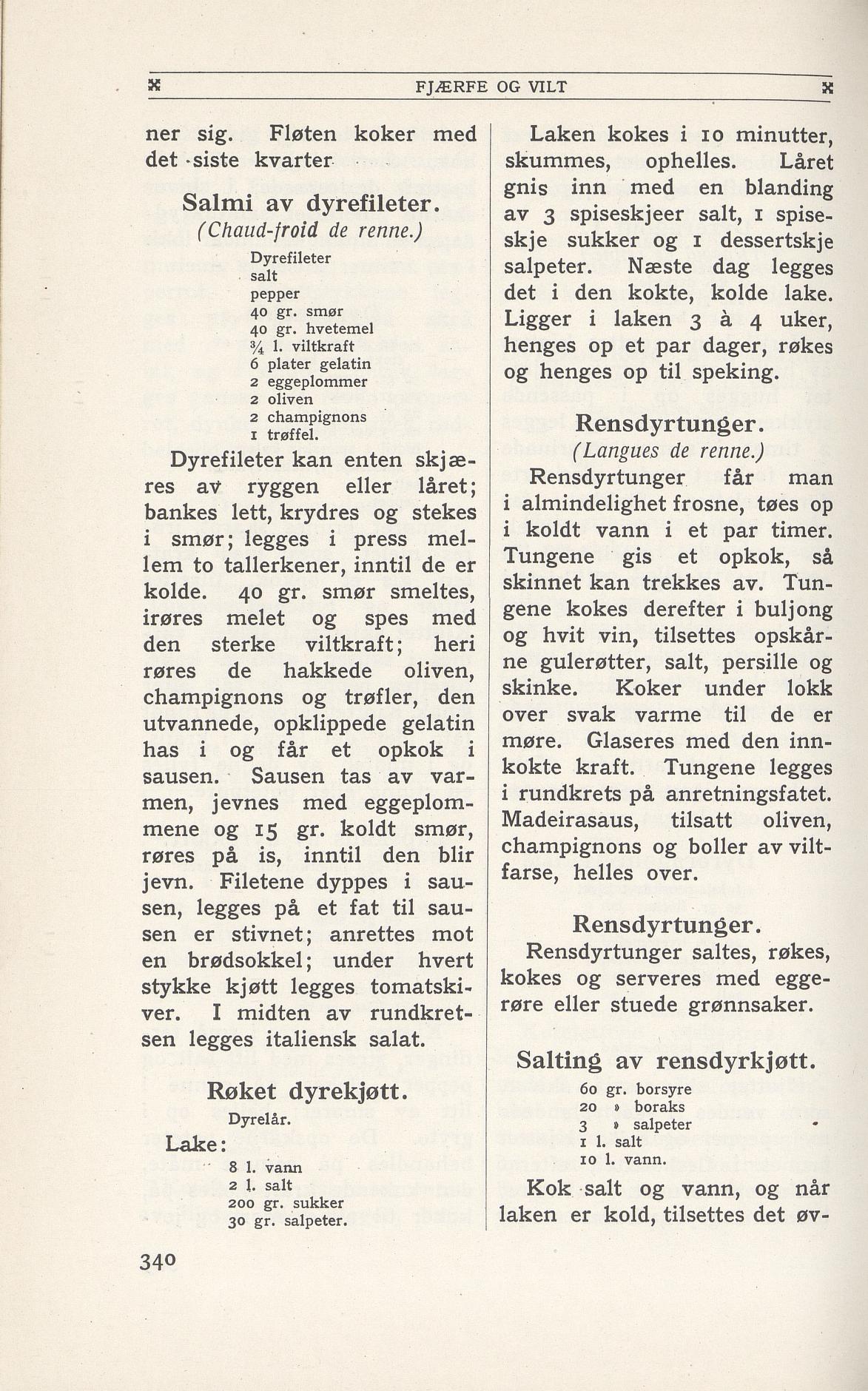
1949 (proofread, p. 340) → 1914 (proofread, p. 306)~47% of the text changedremovedadded
Dyrefileter salt pepper 40 gr. smør 40 gr. hvetemel 3/4 l. vildtkraft 6 plater gelatin 2 eggeblommer 2 oliven 2 champignons 1 trøffel. Dyrefileter kan enten skjæres av ryggen eller låret; laaret; bankes lett, let, krydres og stekes i smør; legges lægges i press mellom pres mellem to tallerkener, inntil indtil de er kolde. 40 gr. smør smeltes, irøres melet og spes spædes med den sterke viltkraft; vildtkraft; heri røres de hakkede oliven, champignons og trøfler, den utvannede, utvandede, opklippede gelatin has haves i og får faar et opkok i sausen. Sausen tas tages av varmen, ilden, jevnes med eggeplommene eggeblommerne og 15 gr. koldt smør, røres på paa is, inntil indtil den blir jevn. Filetene Fileterne dyppes i sausen, legges på lægges paa et fat fat, til sausen er stivnet; anrettes mot en brødsokkel; under hvert stykke kjøtt legges kjøt lægges tomatskiver. I midten av rundkretsen legges rundkredsen lægges italiensk salat.

Community interpretations

Be the first to share your own version.

See interpretations →

Frequently asked questions

Which part of the reindeer is used for the fillets?
The fillets are cut either from the saddle or the leg. They are pounded lightly, seasoned with salt and pepper, and fried in butter.
Why are the fillets pressed between two plates?
So that they become firm and even as they cool. They must be completely cold before being dipped in the sauce, otherwise the gelatin sauce will not set.
How is the chaud-froid sauce made?
40 g butter is melted, 40 g wheat flour is stirred in and thinned with 3/4 l strong game stock. Chopped olives, mushrooms, and truffle are stirred in, along with 6 soaked, snipped gelatin sheets that are brought to a boil. The sauce is taken off the heat, enriched with 2 egg yolks and 15 g cold butter, and stirred over ice until smooth.
How is the dish arranged?
The fillets are dipped in the sauce and placed on a platter until the sauce has set, then arranged against a bread base. The recipe is from Henriette Schønberg Erken's Stor kokebok (1914), p. 306, and serves 6.

Related recipes

More dishes in the same category from the archive

Read also

Kommentarer

Ingen kommentarer ennå. Bli den første til å dele!