Skip to content

Saffron Bread

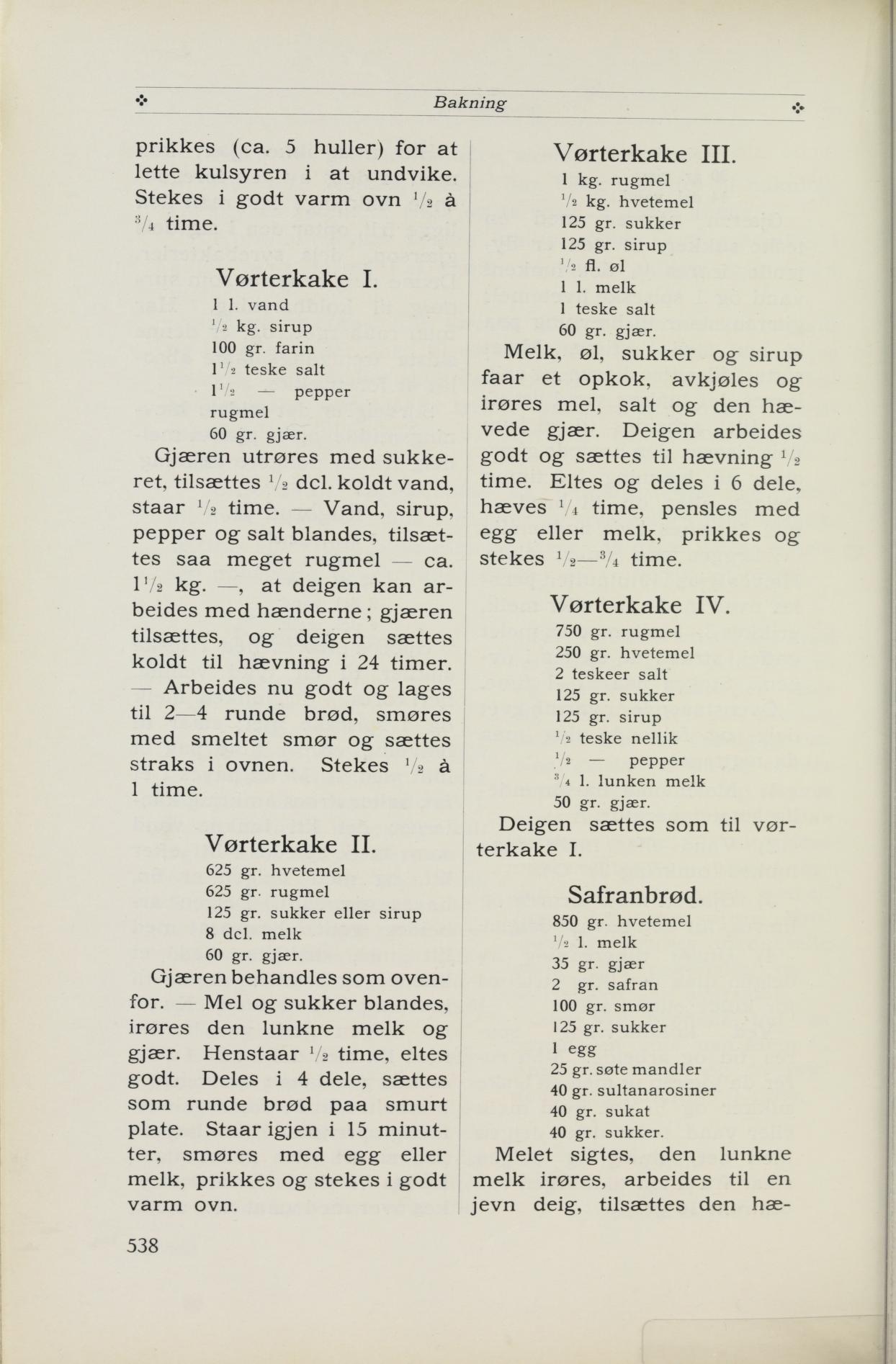
Saffron bread: a wheat dough with milk and yeast raised to double size, then worked with butter creamed with sugar, egg, saffron, candied peel, almonds and raisins; divided into 5, shaped as braids, brushed, sprinkled with almonds and sugar and baked in a hot oven.

Source: Henriette Schønberg Erken, Stor kokebok, 1914-utg. s. 538 (falt i det fri)

Be the first to rate

About the dish

Saffron bread belongs to festive Christmas baking and has long traditions in the Nordic countries. Erken lets the dough rise first and works in butter, saffron, candied peel, almonds and raisins afterward.

How to make it

  1. 1

    Make the dough

    Sift the flour, stir in the lukewarm milk and work to a smooth dough. Add the stirred, risen yeast.

  2. 2

    Proof

    Set the dough to rise until it is double in size.

  3. 3

    Prepare the saffron

    Dry the saffron in a lukewarm oven, pound it in a mortar with a little sugar and stir it out in a little milk.

  4. 4

    Cream the butter mixture

    Cream the butter with the sugar until white. Add the beaten egg, the saffron, finely cut candied peel, blanched and ground almonds, and the washed, dried raisins.

  5. 5

    Work in and shape

    Work the mixture into the dough and knead well. Divide the dough into 5 parts and shape horns, wreaths, or preferably braids.

  6. 6

    Final proof and bake

    Let the braids rise 15 minutes, brush with egg, sprinkle with a little almonds and the 40 g sugar, and bake in a hot oven, about 200 °C (390 °F), for 20–25 minutes.

Changes from the original

Amounts given in modern units; baking time and temperature have been estimated since the original only says "hot oven." The saffron can today be grated/crushed directly and put in warm milk.

In stores now

Clean, minimally processed groceries matched to the ingredients — approximate prices.

Product data and prices via Kassalapp. Prices are updated daily and may vary.

Tidsmaskin – hva endret seg?

Velg to utgaver og se hva Henriette Schønberg Erken la til, fjernet eller endret mellom dem.

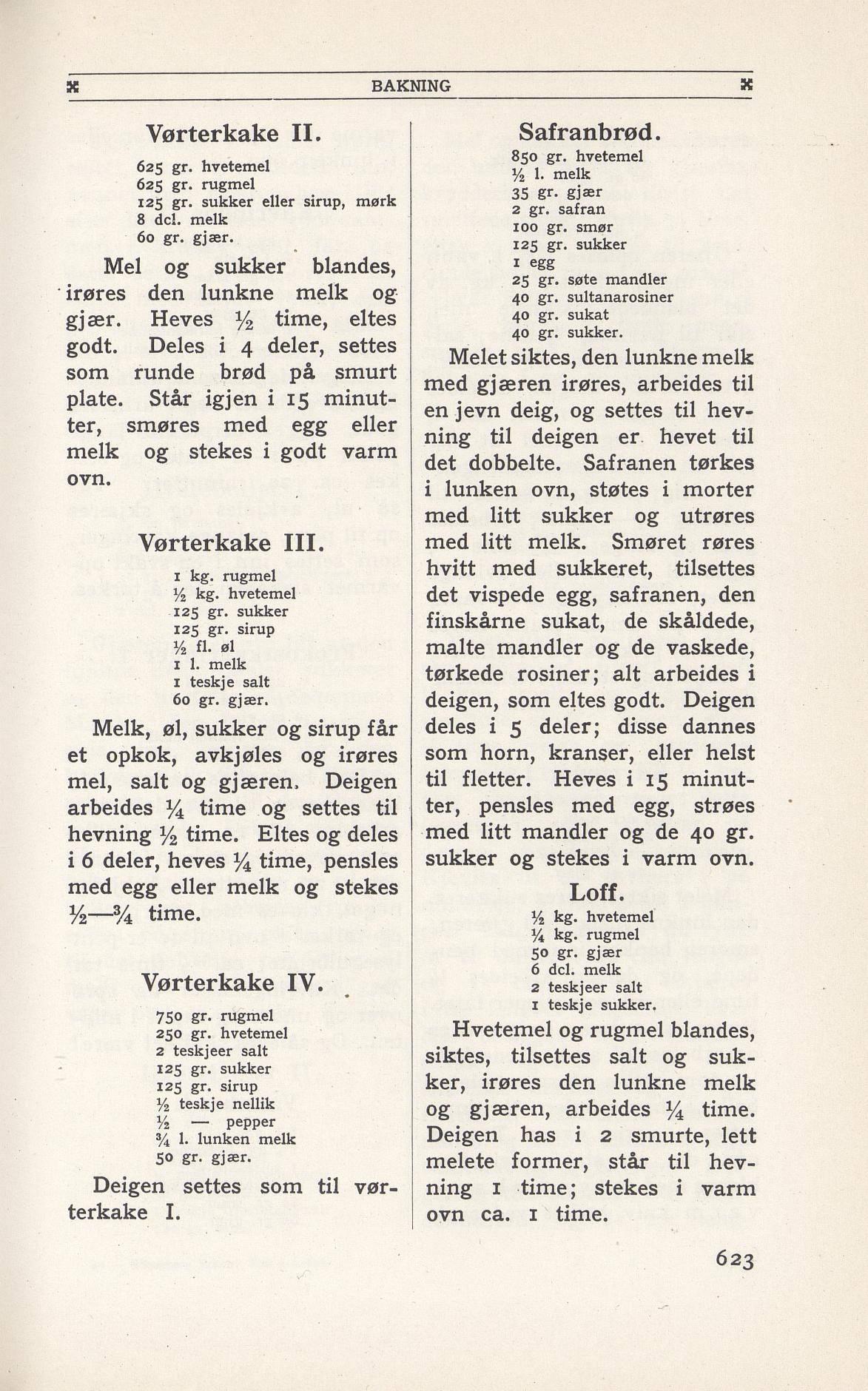
1914 (korrekturlest, s. 538)1949 (korrekturlest, s. 623)~22% av teksten endretfjernetlagt til
850 gr. hvetemel 1/2 1⁄2 l. melk 35 gr. gjær 2 gr. safran 100 gr. smør 125 gr. sukker 1 egg 25 gr. søte mandler 40 gr. sultanarosiner 40 gr. sukat 40 gr. sukker. Melet sigtes, siktes, den lunkne melk med gjæren irøres, arbeides til en jevn deig, tilsættes den hævede gjær og sættes settes til hævning, hevning til deigen er hævet hevet til det dobbelte. Safranen tørres tørkes i lunken ovn, støtes i morter med litt sukker og utrøres med litt melk. Smørret Smøret røres hvitt med sukkeret, tilsættes tilsettes det vispede egg, safranen, den finskaarne finskårne sukat, de skoldede, skåldede, malte mandler og de vaskede, tørrede tørkede rosiner; alt arbeides i deigen, som eltes godt. Deigen deles i 5 dele; deler; disse dannes som horn, kranser kranser, eller helst til fletter. Hæves Heves i 15 minutter, pensles med egg, strøes med litt mandler og de 40 gr. sukker og stekes i varm ovn.

Community interpretations

Be the first to share your own version.

See interpretations

Frequently asked questions

How do I prepare the saffron?
The saffron is dried in a lukewarm oven, pounded in a mortar with a little sugar and stirred out with a little milk before it is worked into the dough.
How many loaves does the recipe yield, and in what shapes?
The dough is divided into 5 parts shaped into horns, wreaths, or preferably braids. The recipe is meant for about 20 servings.
How does the proofing work?
The dough with flour, lukewarm milk and yeast is raised to double size. After the butter, sugar, egg, saffron, candied peel, almonds and raisins are kneaded in and the loaves are shaped, they rise for 15 minutes before brushing. Total time about 3 hours.
Where does the recipe come from?
From Henriette Schønberg Erken's "Stor kokebok" (1914), page 538.

Related recipes

More dishes in the same category from the archive

Read also

Kommentarer

Ingen kommentarer ennå. Bli den første til å dele!