Skip to content

Potato Straws (pommes de terre pailles)

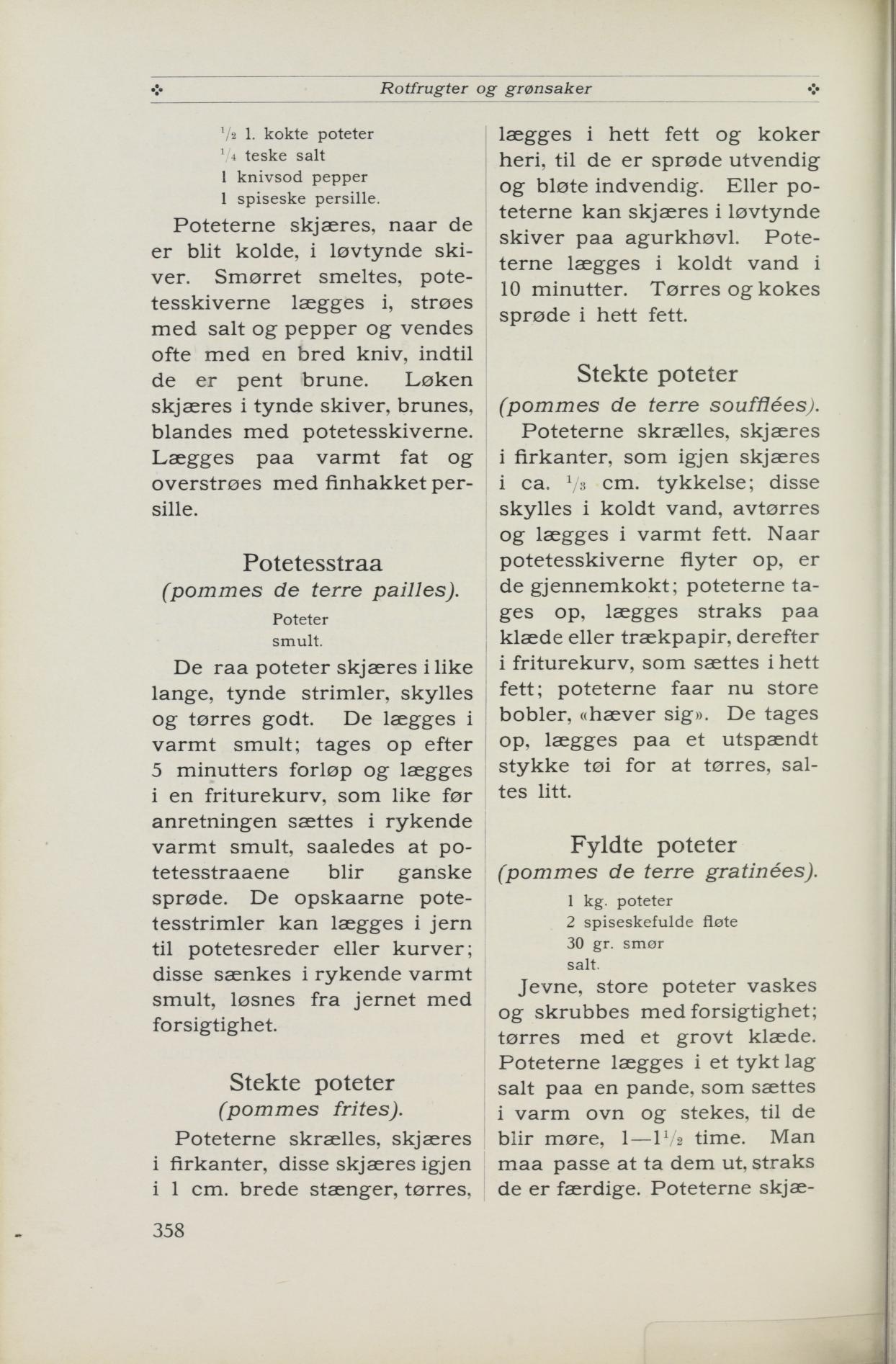
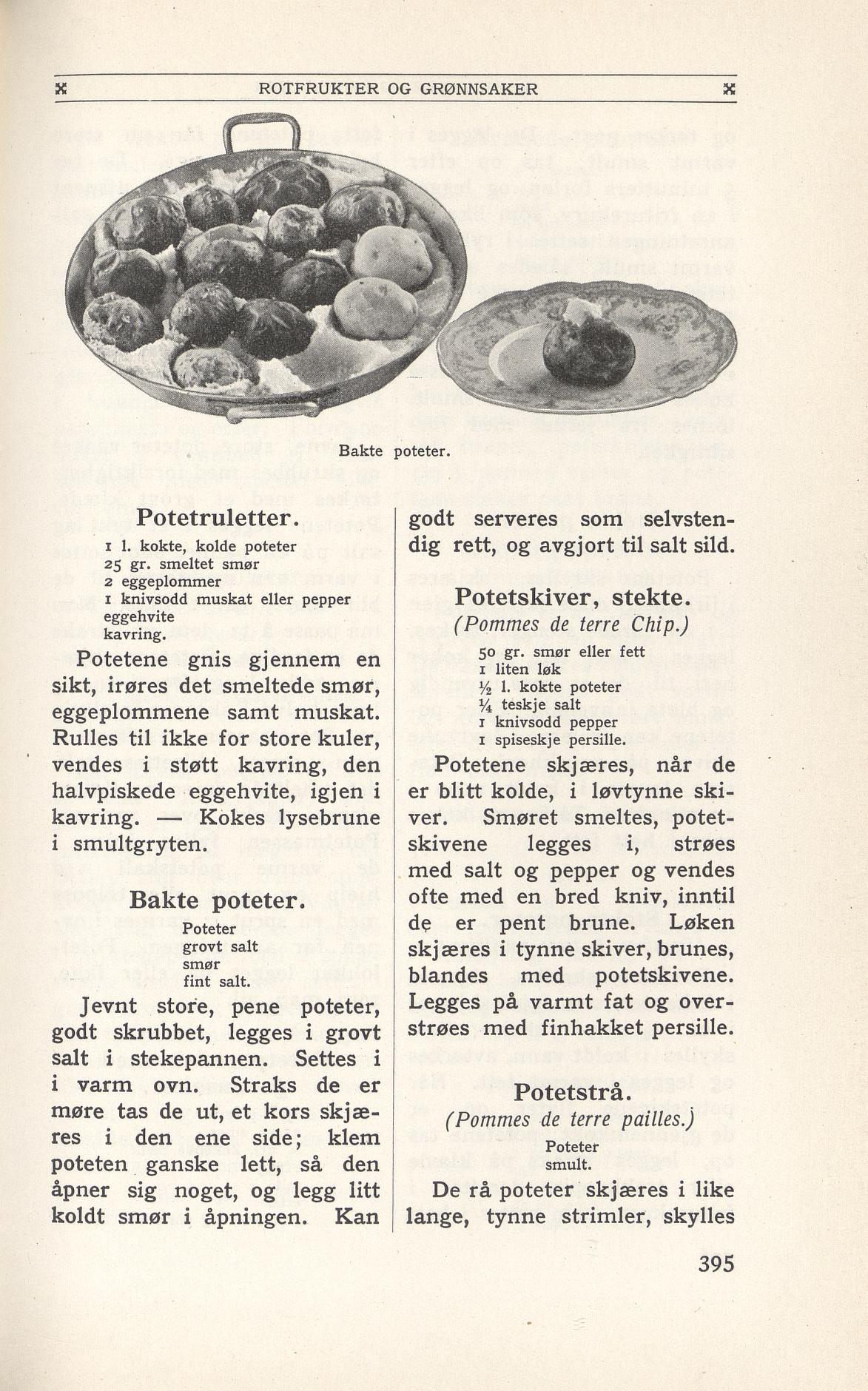
Potato straws from Erken's Stor kokebok 1914: raw potatoes are cut into thin strips, pre-fried 5 minutes in hot lard, and finish-fried crisp just before serving; they can also be shaped in a potato basket iron into nests and baskets.

Source: Henriette Schønberg Erken, Stor kokebok, 1914-utg. s. 358 (falt i det fri)

Be the first to rate

About the dish

Erken's French-inspired potato garnish for roasts and poultry. "Pommes pailles" – thin potato straws – were pre-fried in two rounds, a technique still used to make them crisp. The same strips could be shaped in special potato irons into nests and baskets to serve as serving vessels.

How to make it

  1. 1

    Cut the potatoes

    Peel the potatoes and cut them into equally long, thin strips (2–3 mm). Rinse the strips well in cold water and dry them thoroughly in a cloth.

  2. 2

    Pre-fry

    Heat lard or oil to about 150 °C (300 °F). Add the potato straws and let them fry for about 5 minutes without taking on color. Take them out and let them drain on absorbent paper.

  3. 3

    Finish-fry

    Just before serving, place the straws in a frying basket and lower them into smoking-hot fat (about 190 °C (375 °F)) until they are completely crisp and light brown.

  4. 4

    Nests and baskets

    If you want potato nests or baskets, place the cut strips in a potato basket iron and lower it into the smoking-hot fat. Loosen carefully from the iron.

  5. 5

    Serve

    Sprinkle a little salt over and serve at once.

Changes from the original

Amounts are estimated, as the original only gives "potatoes, lard." Lard is given with neutral frying oil as an alternative, and temperatures in degrees have been added for the modern kitchen.

In stores now

Clean, minimally processed groceries matched to the ingredients — approximate prices.

Product data and prices via Kassalapp. Prices are updated daily and may vary.

Time machine – what changed?

Pick two editions and see what Henriette Schønberg Erken added, removed or changed between them.

Modernised → 1914 (proofread, p. 358)~89% of the text changedremovedadded
800 g Poteter smult. De raa poteter (faste, rå). 1 l smult eller nøytral frityrolje (til fritering). 1 ts salt (til strøing). Skrell potetene og skjær dem skjæres i like lange, tynde strimler (2–3 mm). Skyll strimlene godt i kaldt vann og tørk dem grundig i et klede.. Varm smult eller olje til ca. 150 °C. Legg i potetstråene strimler, skylles og la dem frityre tørres godt. De lægges i ca. varmt smult; tages op efter 5 minutter uten å ta farge. Ta dem opp minutters forløp og la dem renne av på trekkpapir.. Rett før servering legges stråene lægges i en friturekurv og senkes friturekurv, som like før anretningen sættes i rykende varmt fett (ca. 190 °C) smult, saaledes at potetesstraaene blir ganske sprøde. De opskaarne potetesstrimler kan lægges i jern til de er helt sprø og lysebrune.. Vil man ha potetreder potetesreder eller kurver, legges de oppskårne strimlene i et potetjern som senkes kurver; disse sænkes i det rykende varme fettet. Løsne forsiktig varmt smult, løsnes fra jernet.. Strø litt salt over og server straks. jernet med forsigtighet.

Note on Modernised

Mengder er anslått da originalen bare oppgir «poteter, smult». Smult er angitt med nøytral frityrolje som alternativ, og temperaturer i grader er lagt til for moderne kjøkken.

Community interpretations

Be the first to share your own version.

See interpretations →

Frequently asked questions

Why are the potato straws fried twice?
The first round in hot lard for about 5 minutes cooks the strips through. Just before plating they are lowered into smoking-hot lard in a frying basket, so they become completely crisp.
How should the potatoes be prepared?
Raw potatoes are cut into equally long, thin strips, rinsed, and dried well before going into the lard – dry strips are important for a crisp result.
Can you make potato nests from the same recipe?
Yes. The cut strips are placed in an iron for potato nests or baskets, which is lowered into smoking-hot lard; the nests are then carefully loosened from the iron.
What fat is used?
The recipe uses lard, as was common in Henriette Schønberg Erken's "Stor kokebok" of 1914 (p. 358).

Related recipes

More dishes in the same category from the archive

Read also

Kommentarer

Ingen kommentarer ennå. Bli den første til å dele!