Original 1914 recipe
Verbatim from the first edition of the Big Cookbook.
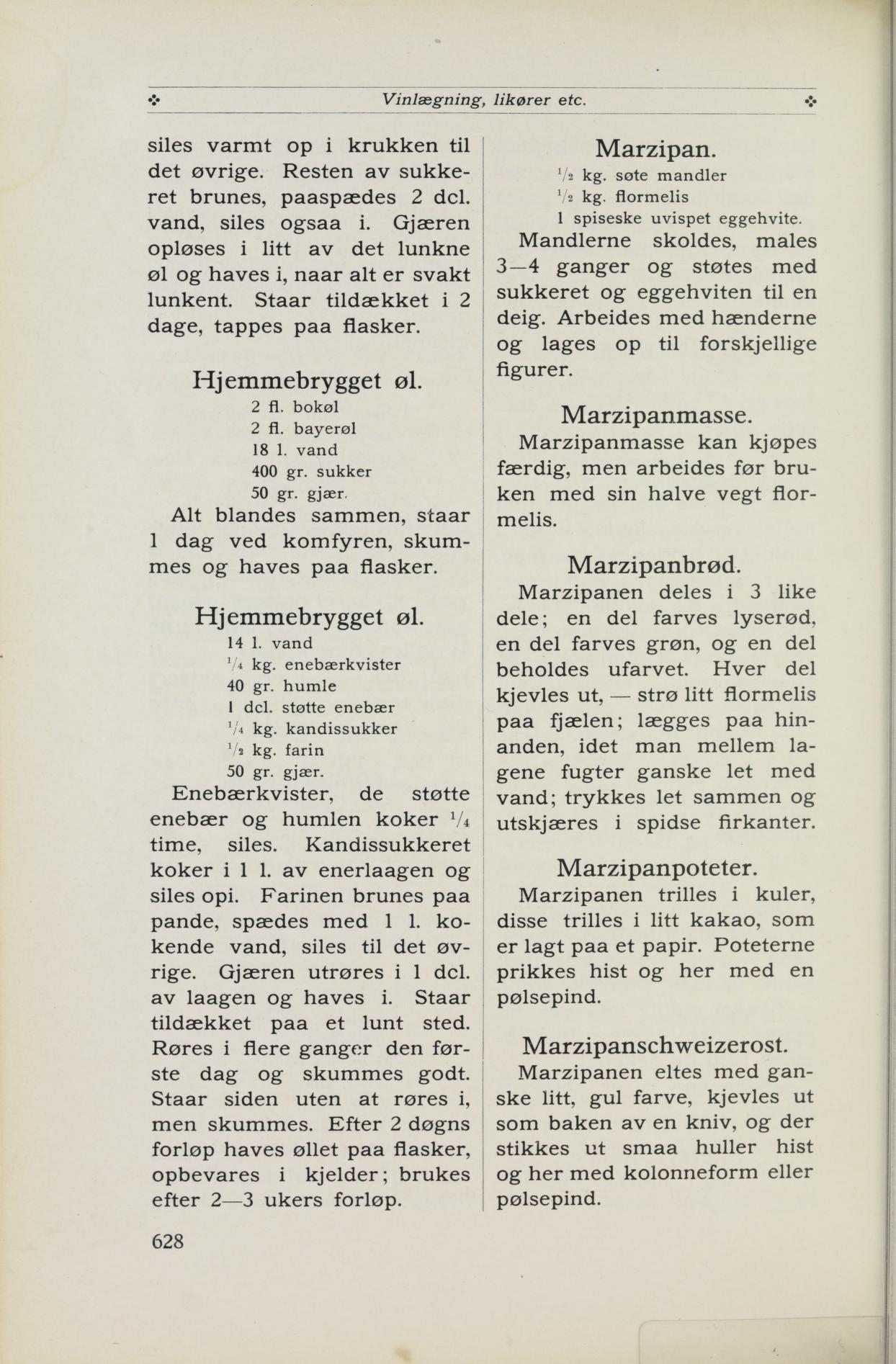
ProofreadPage 628
Marzipanen eltes med ganske litt gul farve, kjevles ut som baken av en kniv, og der stikkes ut smaa huller hist og her med kolonneform eller pølsepind.
Marzipan Swiss cheese from Erken 1914: marzipan is tinted faintly yellow, rolled out to the thickness of a knife's back, and given small punched holes, used as a cheese imitation and as topping on marzipan open sandwiches.
Source: Henriette Schønberg Erken, Stor kokebok, 1914-utg. s. 628 (falt i det fri)
A witty marzipan imitation of holey Swiss cheese, used among other things as «topping» on marzipan open sandwiches in the recipe that follows.
Color the paste
Knead the marzipan with just a little yellow coloring, so it takes on a cheese color.
Roll out
Roll the paste out as thick as the back of a knife (about 3–4 mm).
Punch holes
Punch out small holes here and there with a small round cutter, a straw, or a skewer, so it looks like Swiss cheese.
«Rolled out like the back of a knife» is interpreted as a thickness corresponding to a knife's back, about 3–4 mm. The column cutter has been replaced with a small round cutter or straw.
Original 1914 recipe
Verbatim from the first edition of the Big Cookbook.
Note til Modernisert
«Kjevles ut som baken av en kniv» er tolket som tykkelse tilsvarende en knivrygg, ca. 3—4 mm. Kolonneform er erstattet med liten rund utstikker eller sugerør.
Be the first to share your own version.
More dishes in the same category from the archive
Ingen kommentarer ennå. Bli den første til å dele!