Skip to content

Meat sausages

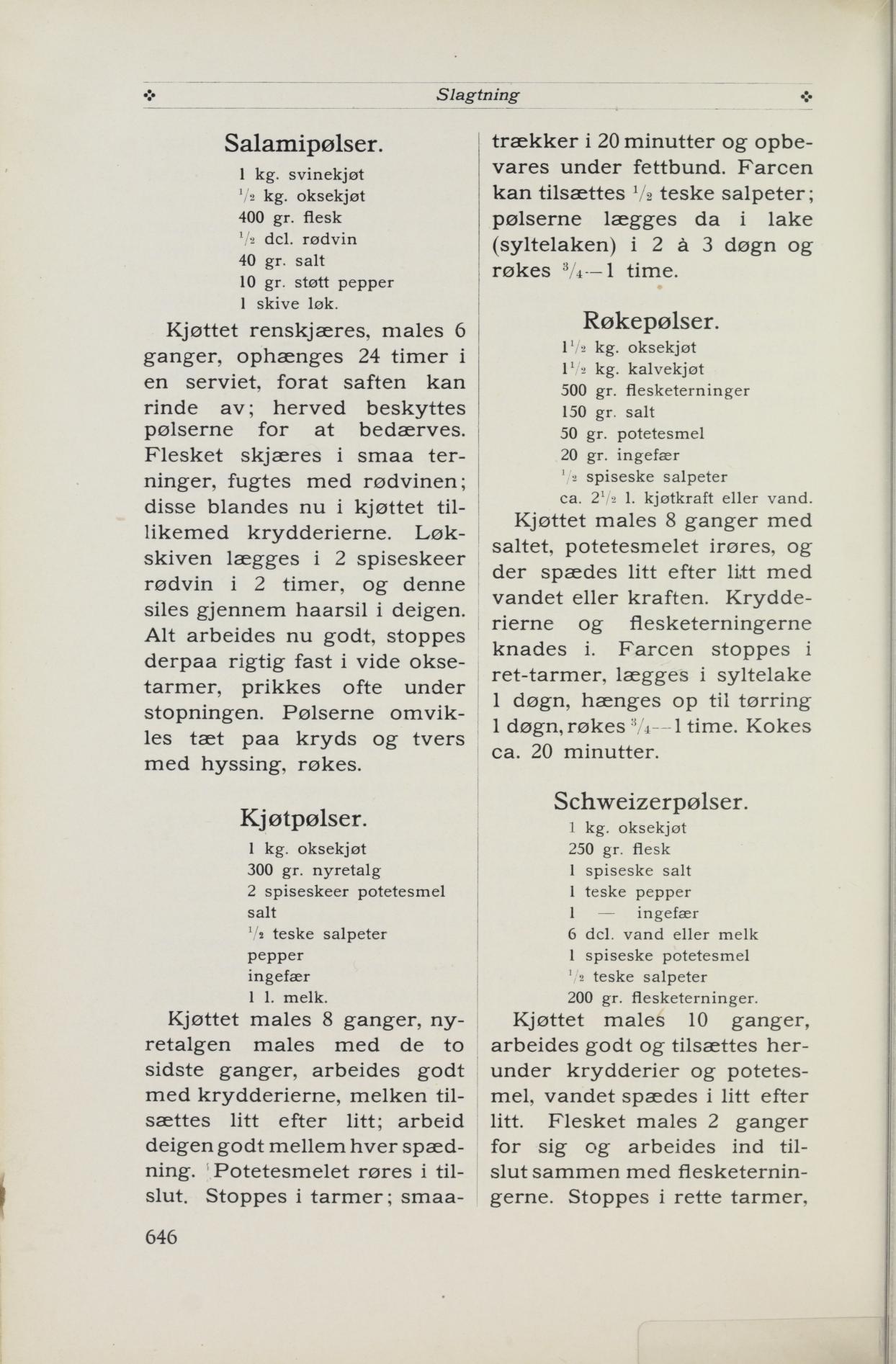
Erken's meat sausages from 1914: beef ground 10 times with spices, potato starch and water, with ground pork and pork cubes, stuffed into casings, rubbed with salt and saltpeter, hung for one day, smoked 1–2 hours and boiled.

Source: Henriette Schønberg Erken, Stor kokebok, 1914-utg. s. 646 (falt i det fri)

Be the first to rate

About the dish

From the butchering chapter of 'Stor kokebok' (1914). Meat sausages of beef and pork were rubbed with salt and saltpeter, hung to dry and smoked before boiling.

How to make it

  1. 1

    Grinding

    Grind the meat 10 times.

  2. 2

    Forcemeat

    Work the forcemeat well and add the spices and potato starch along the way. Thin in the water or milk a little at a time.

  3. 3

    Pork

    Grind the pork 2 times separately and work it in at the end together with the pork cubes.

  4. 4

    Stuffing

    Stuff the forcemeat into large-bowel casings.

  5. 5

    Salting

    Rub the sausages with 3 tablespoons salt and 1 teaspoon saltpeter.

  6. 6

    Drying, smoking and boiling

    Hang the sausages for 1 day, smoke them 1–2 hours and boil them.

Changes from the original

Measures are modernized (g, dl, tablespoon, teaspoon). The ingredient list in the original lacks amounts for salt, pepper and ginger; here the salt for rubbing is given as it appears in the method, while spices are given to taste. 'Straight bowels' is explained as large-bowel casings.

In stores now

Clean, minimally processed groceries matched to the ingredients — approximate prices.

Product data and prices via Kassalapp. Prices are updated daily and may vary.

Time machine – what changed?

Pick two editions and see what Henriette Schønberg Erken added, removed or changed between them.

1914 (proofread, p. 646) → Modernised~80% of the text changedremovedadded
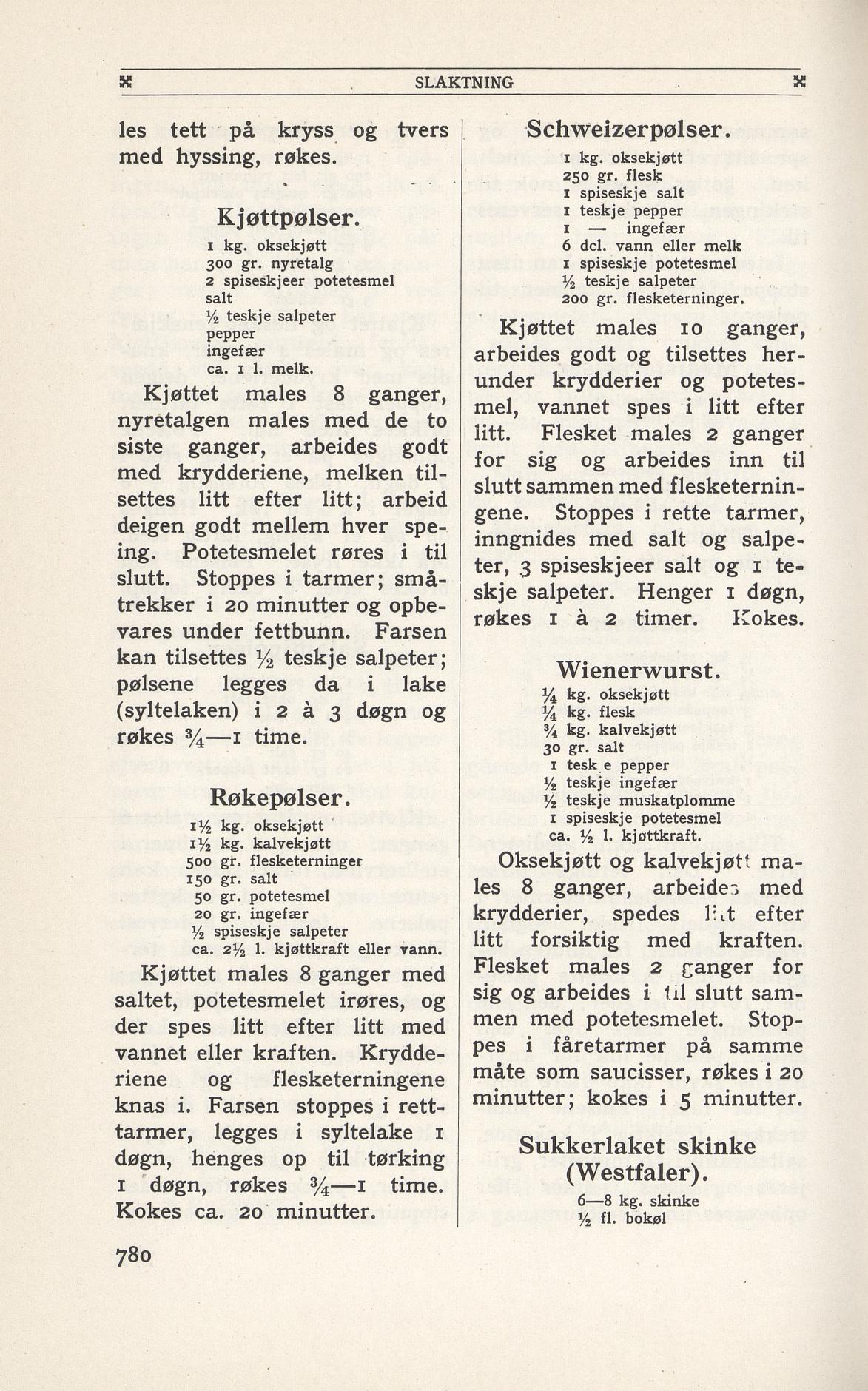
1 kg. oksekjøt kg oksekjøtt. 250 gr. g flesk (kvernes 2 ganger for seg). 200 gr. flesketerninger g flesketerninger. salt (i farsen, etter smak). pepper (etter smak). ingefær ½ teske (etter smak). 0,5 teskje salpeter (i farsen). 1 spiseske potetesmel spiseskje potetmel. 6 del. vand dl vann eller melk. Kjøttet males 3 spiseskjeer salt (til innngnidning av pølsene). 1 teskje salpeter (til innngnidning av pølsene). endetarmer (til stopping). Kvern kjøttet 10 ganger, arbeides ganger.. Arbeid farsen godt og tilsættes herunder tilsett krydderier og potetesmel, vandet spædes i potetmel underveis. Sped inn vannet eller melken litt efter litt. Flesket males etter litt.. Kvern fleskene 2 ganger for sig seg og arbeides ind tilslut arbeid dem inn til slutt sammen med flesketerningerne. Stoppes fleseterningene.. Stopp farsen i rette tarmer, indgnides endetarmer.. Gni pølsene inn med salt og salpeter, 3 spiseskeer spiseskjeer salt og 1 teske salpeter. Hænger teskje salpeter.. Heng pølsene 1 døgn, røkes 1 á 2 timer. Kokes. røk dem 1–2 timer og kok dem.

Note on Modernised

Mål er modernisert (g, dl, spiseskje, teskje). Ingredienslisten i originalen mangler mengder for salt, pepper og ingefær; her er saltet til innngnidning oppgitt slik det står i fremgangsmåten, mens krydder etter smak er angitt. «Rette tarmer» er forklart som endetarmer.

Community interpretations

Be the first to share your own version.

See interpretations →

Frequently asked questions

How many times should the meat be ground?
The beef is ground 10 times and worked well together with spices and potato starch. The pork is ground 2 times separately and worked in at the end together with the pork cubes.
Why does the recipe take so long?
Even though working the forcemeat goes quickly, the sausages must hang for 1 day after they are stuffed into the casings and rubbed with salt and saltpeter. Then they are smoked 1–2 hours and boiled.
How much salt and saltpeter are used for rubbing?
In addition to the salt in the forcemeat (and ½ teaspoon saltpeter), 3 tablespoons salt and 1 teaspoon saltpeter are used to rub the finished, stuffed sausages.
What kind of liquid is used in the forcemeat?
6 deciliters of water or milk, thinned in a little at a time while the forcemeat is worked. The recipe is from Henriette Schønberg Erken's 'Stor kokebok' (1914), p. 646.

Equipment for this dish

Advertisement

We may earn a commission if you buy through these links. It does not affect the price.

Related recipes

More dishes in the same category from the archive

Read also

Kommentarer

Ingen kommentarer ennå. Bli den første til å dele!