Skip to content

Liver Sausage

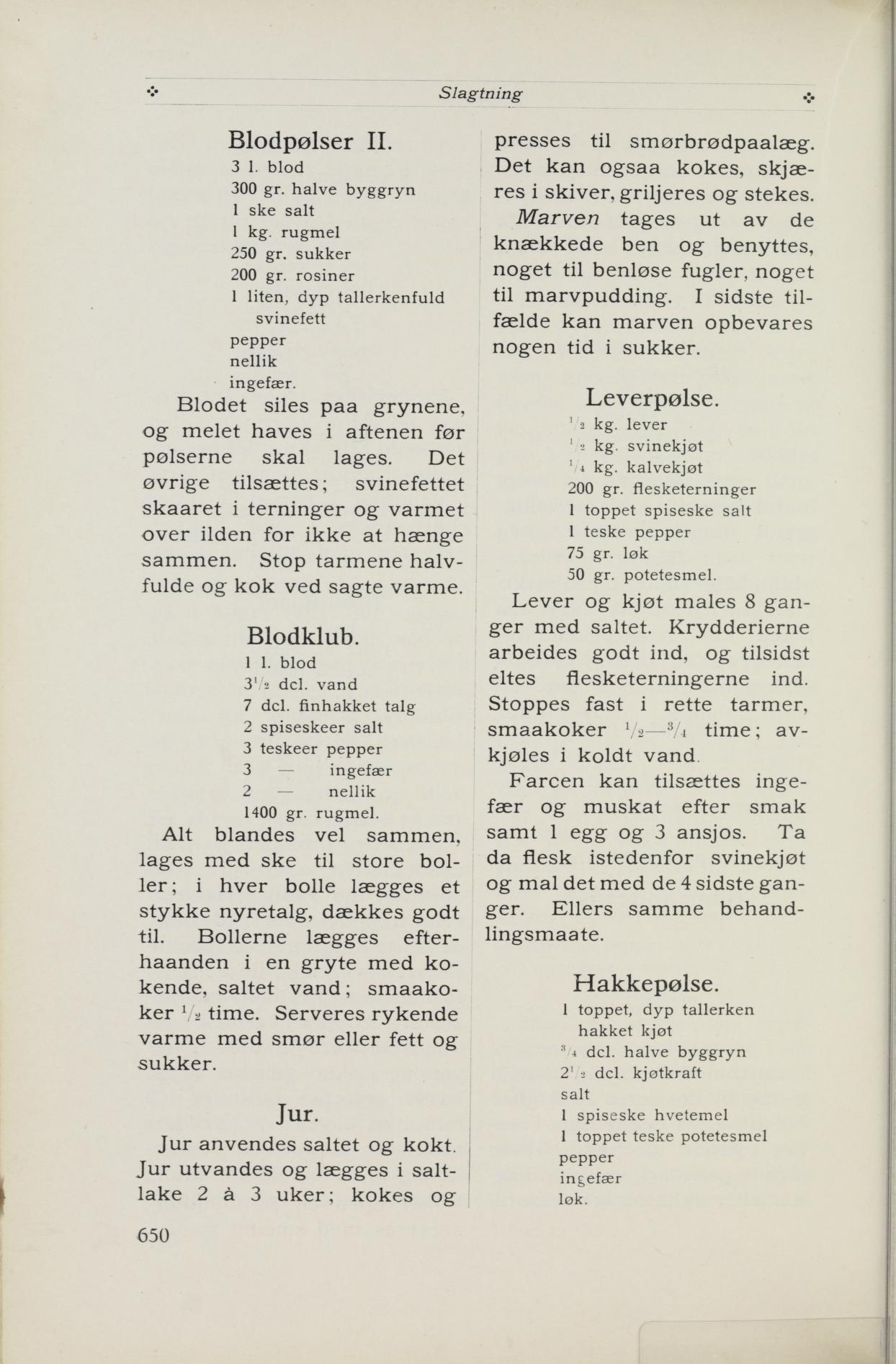
Liver sausage from Erken 1914: liver, pork, and veal ground many times with salt, seasoned with pepper and potato flour, pork cubes worked in, stuffed firmly into casing and gently boiled 30–45 minutes, cooled in cold water. A variant adds egg, anchovy, ginger, and nutmeg.

Source: Henriette Schønberg Erken, Stor kokebok, 1914-utg. s. 650 (falt i det fri)

Be the first to rate

About the dish

Liver sausage was one of the most important ways to use liver from the home slaughter. Erken stresses that the forcemeat is ground many times to become completely fine, and that the pork fat cubes are kneaded in last to give structure.

How to make it

  1. 1

    Grind the forcemeat

    Grind the liver, pork, veal, and onion together with the salt several times through the fine plate (the original says eight times) until the forcemeat is completely fine.

  2. 2

    Season

    Work the pepper and potato flour well into the forcemeat. For the variant, add ginger, nutmeg, one egg, and three anchovy fillets, and use pork fat instead of pork – grind it in during the last rounds.

  3. 3

    The pork fat cubes

    Finally, knead in the pork fat cubes.

  4. 4

    Fill and boil

    Stuff the forcemeat firmly into straight casings and tie them off. Let the sausages gently boil for 30–45 minutes without a rolling boil.

  5. 5

    Cool

    Cool the sausages in cold water.

Changes from the original

Unclear OCR amounts are interpreted as 1/2 kg liver and 1/4 kg of each type of meat. "Potetesmel" is potato flour, "flesk" is fresh/salted pork belly fat. Measures are modernized, and a meat grinder replaces "grinding" 8 times (4–5 times through the fine plate is enough with a modern grinder).

In stores now

Clean, minimally processed groceries matched to the ingredients — approximate prices.

Product data and prices via Kassalapp. Prices are updated daily and may vary.

Tidsmaskin – hva endret seg?

Velg to utgaver og se hva Henriette Schønberg Erken la til, fjernet eller endret mellom dem.

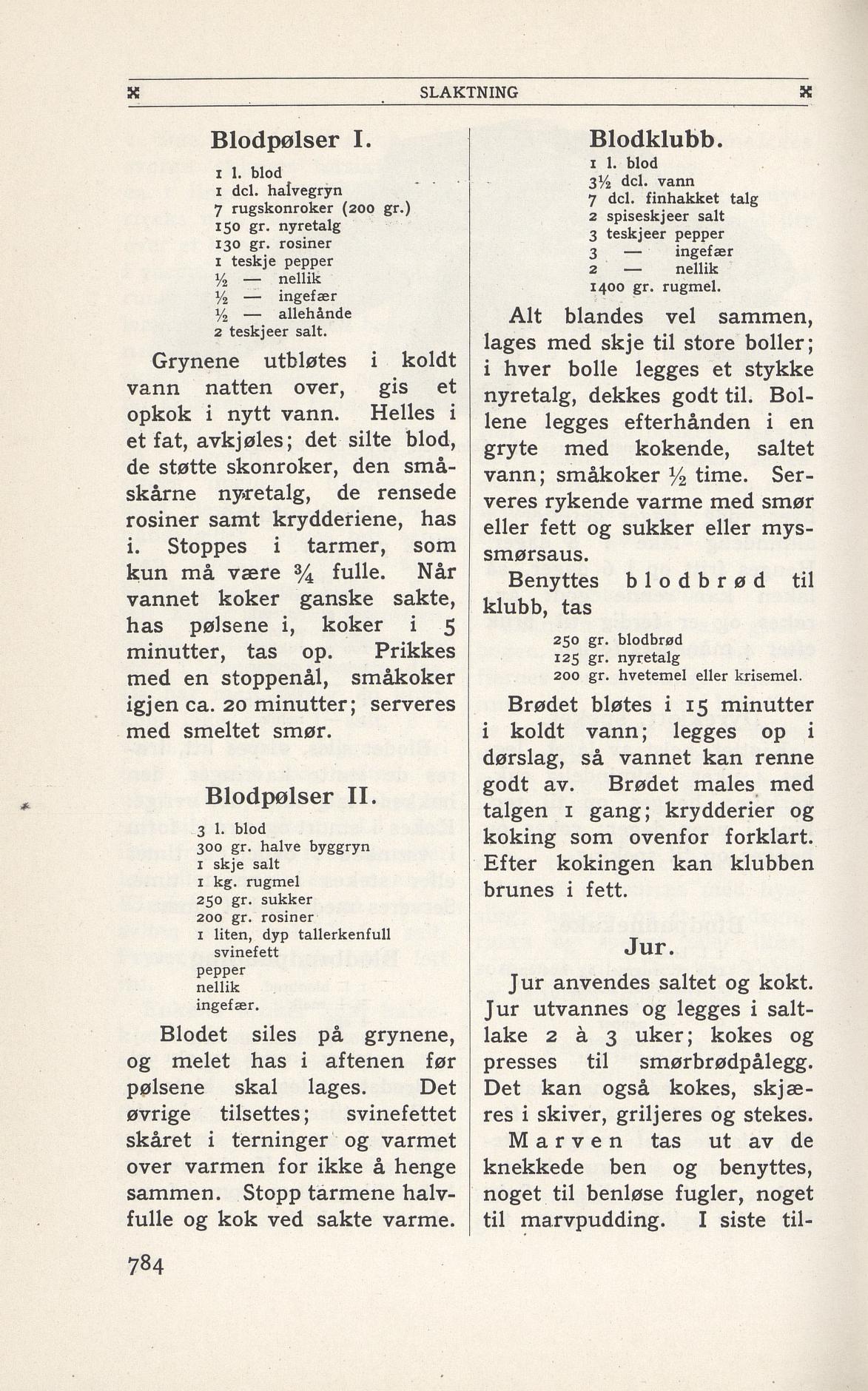
1914 (korrekturlest, s. 650)1949 (korrekturlest, s. 784)~56% av teksten endretfjernetlagt til
INGREDIENSER: 1/2 kg. lever 1/4 1/2 kg. svinekjøt svinekjøtt 1/4 kg. kalvekjøt kalvekjøtt 200 gr. flesketerninger 1 toppet spiseske spiseskje salt 1 teske teskje pepper 75 gr. løk 50 gr. potetesmel. FRAMGANGSMÅTE: Den utvannede innmat skjæres op og males 2 ganger med salt, mel og løk, tilsettes krydderier. Dannes til runde kaker, som meles og stekes i smør eller fett. Serveres med brun saus. Lever og kjøt kjøtt males 8 3 ganger med saltet. Krydderierne Krydderiene arbeides godt ind, inn, og tilsidst til sist eltes flesketerningerne ind. flesketerningene inn. Stoppes fast i rette tarmer, smaakoker 1/2 — 3/4 tarmere, småkoker 1/2—3/4 time; avkjøles i koldt vand. Farcen vann. Farsen kan tilsættes tilsettes ingefær og muskat efter smak samt 1 egg og 3 ansjos. Ta da flesk istedenfor svinekjøt svinekjøtt og mal det med de 4 sidste siste ganger. Ellers samme behandlingsmaate. behandlingsmåte.
Community interpretations

Be the first to share your own version.

See interpretations

Frequently asked questions

How long should the liver sausage boil?
The sausages gently boil for 1/2–3/4 hour (30–45 minutes). They must not come to a rolling boil. Afterward they are cooled in cold water.
Why is the meat and liver ground 8 times?
Repeated grinding – 8 times together with the salt – gives a completely fine and even forcemeat that binds well. The seasoning is then worked in well, and the pork fat cubes are kneaded in at the very end so they hold their shape.
What ingredients are needed, and is there a variant?
The base forcemeat is 1/2 kg liver, 1/4 kg pork, 1/4 kg veal, 200 g pork fat cubes, 1 heaped tablespoon salt, 1 teaspoon pepper, 75 g onion, and 50 g potato flour. In a variant, ginger and nutmeg to taste, 1 egg, and 3 anchovies are added, and pork fat is used instead of pork – the pork fat is then ground in during the last 4 rounds.
How are the sausages filled?
The forcemeat is stuffed firmly into straight casings before boiling. The recipe is from Henriette Schønberg Erken's "Stor kokebok" (1914), p. 650, and makes about 8 servings.

Related recipes

More dishes in the same category from the archive

Read also

Kommentarer

Ingen kommentarer ennå. Bli den første til å dele!