Skip to content

Lye for Fish (Lutefisk)

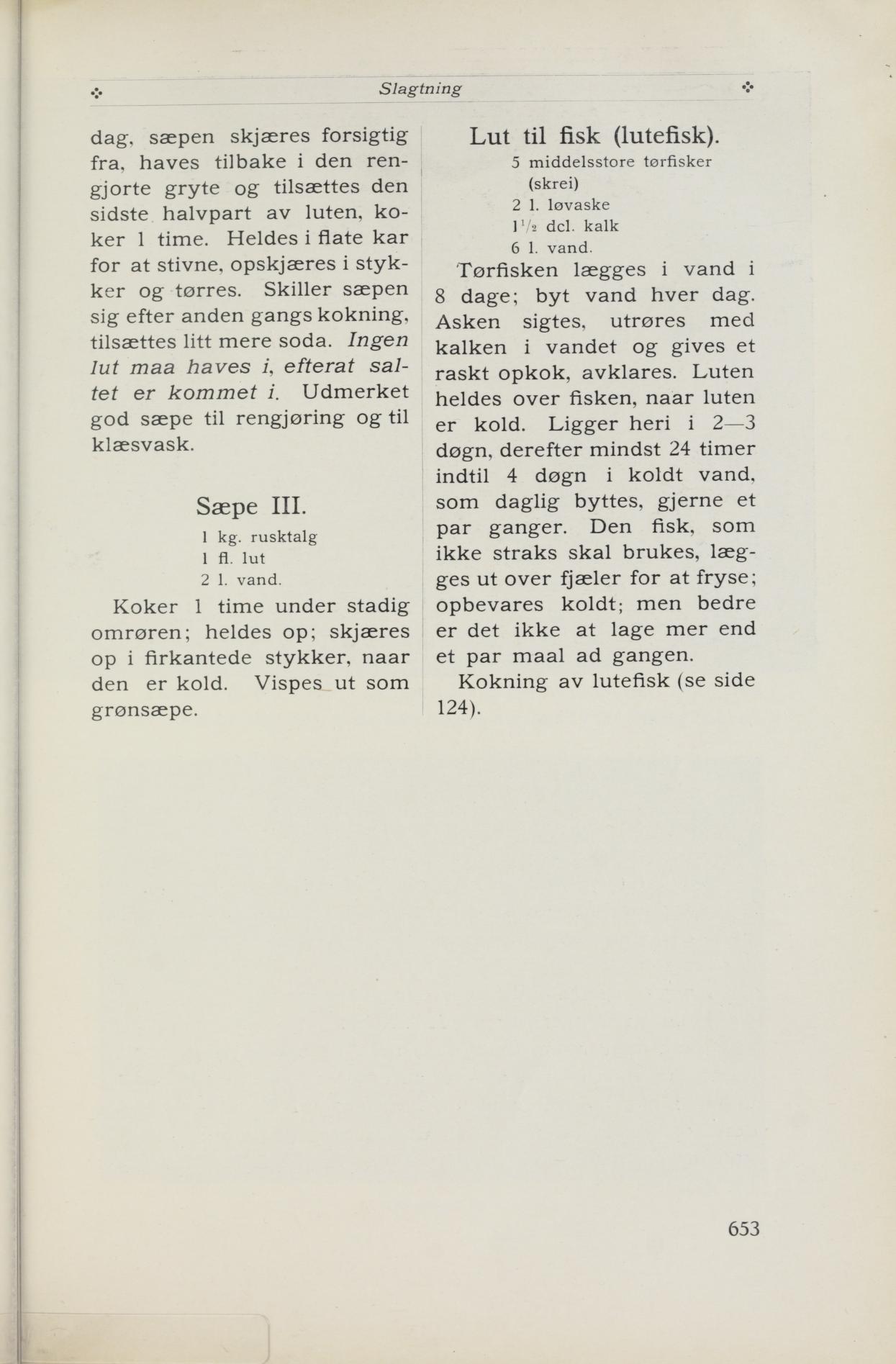
Erken's 1914 recipe for homemade lye of sifted hardwood ash and slaked lime boiled in water, used to treat soaked stockfish (cod) into lutefisk: 8 days of soaking, 2–3 days in cold lye, then 1–4 days of freshening in cold water.

Source: Henriette Schønberg Erken, Stor kokebok, 1914-utg. s. 653 (falt i det fri)

Be the first to rate

About the dish

From the chapter on slaughtering and household management, where Erken also gives recipes for soap and lye. Here lye is made from hardwood ash (birch ash) and lime to steep stockfish in — homemade lutefisk as was common before ready-made lye became a store item.

How to make it

  1. 1

    Soak the stockfish

    Place the stockfish in cold water for 8 days. Change the water every day.

  2. 2

    Boil the lye

    Sift the ash. Stir the ash together with the lime into the 6 liters of water, bring it to a quick boil and let it clarify (stand until the sediment has settled, then pour off the clear lye). Be careful — the lye is strongly caustic.

  3. 3

    Place the fish in lye

    Pour the clear lye over the fish only once the lye is completely cold. Let the fish lie in the lye for 2–3 days.

  4. 4

    Freshen in water

    Take the fish out of the lye and place it in cold water for at least 24 hours and up to 4 days. Change the water daily, ideally a couple of times a day.

  5. 5

    Storage

    Fish not to be used at once is laid out on boards to freeze and kept cold. Even so, it is best not to make more than a couple of meals' worth at a time.

  6. 6

    Cooking

    Cook the lutefisk as usual (see Erken's directions for cooking lutefisk).

Changes from the original

Measures are converted to modern units (1 1/2 del. = 1.5 dl). "Løvaske" is specified as clean ash of deciduous wood and "kalk" as slaked lime. The method is broken into numbered steps; warnings about handling the lye carefully are kept as the original assumes. Note that making lye at home requires great care.

Tidsmaskin – hva endret seg?

Velg to utgaver og se hva Henriette Schønberg Erken la til, fjernet eller endret mellom dem.

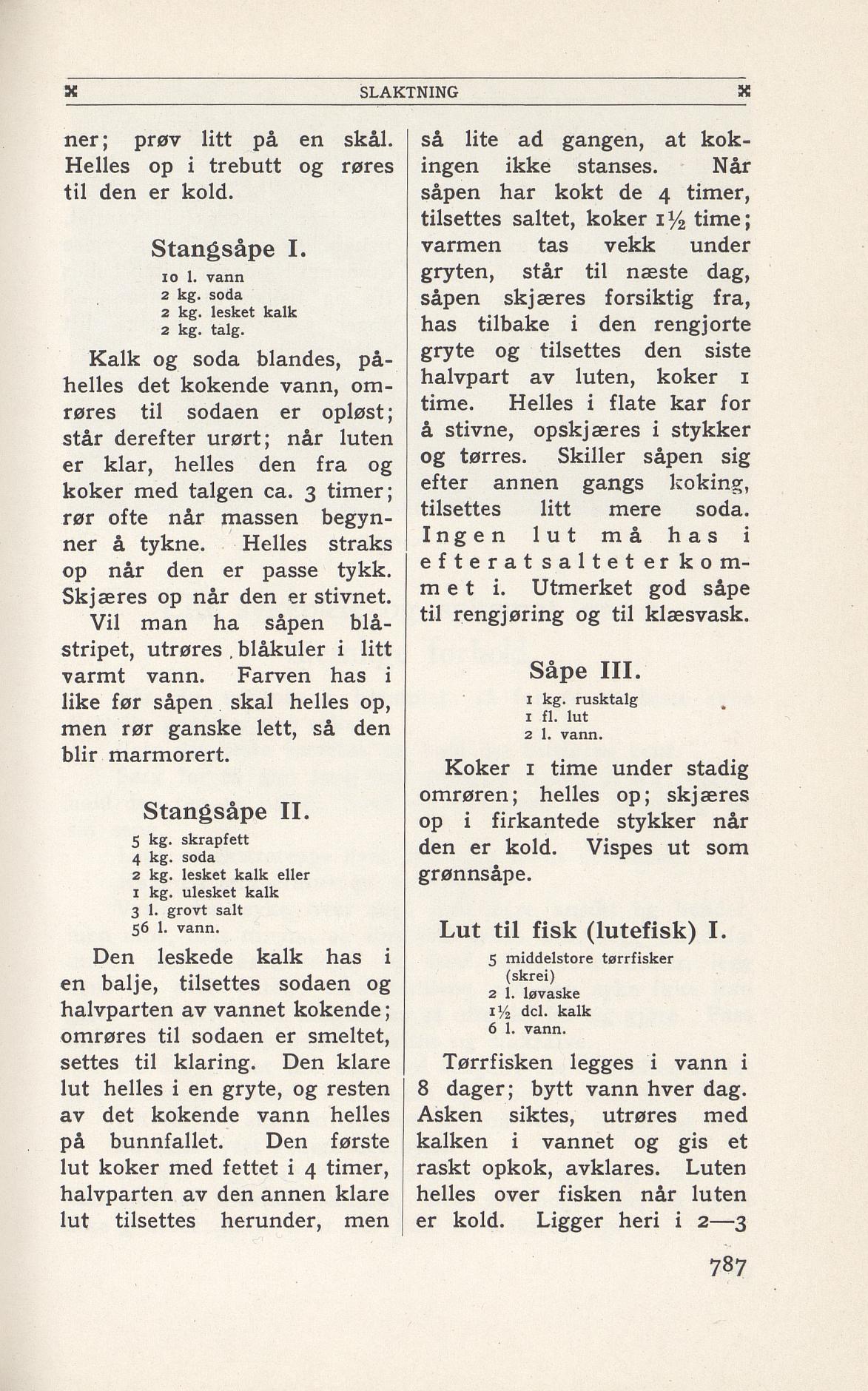
1914 (korrekturlest, s. 653)1949 (korrekturlest, s. 787)~46% av teksten endretfjernetlagt til
5 middelsstore tørfisker middelstore tørrfisker (skrei) 2 l. løvaske 1 1/2 del. kalk 6 l. vand. Tørfisken lægges vann. Tørrfisken legges i vand vann i 8 dage; byt vand dager; bytt vann hver dag. Asken sigtes, siktes, utrøres med kalken i vandet vannet og gives gis et raskt opkok, avklares. Luten heldes helles over fisken, naar fisken når luten er kold. Ligger heri i 2—3 døgn, derefter mindst minst 24 timer indtil inntil 4 døgn i koldt vand, vann, som daglig byttes, gjerne et par ganger. Den fisk, fisk som ikke straks skal brukes, lægges legges ut over fjæler fjeler for at å fryse; opbevares koldt; men bedre er det å ikke at lage mer end enn til et par maal mål ad gangen. Kokning av lutefisk (se side 124).
Community interpretations

Be the first to share your own version.

See interpretations

Frequently asked questions

How long does the whole process take?
Figure on around two weeks: 8 days soaking the stockfish in water (with a daily water change), then 2–3 days in the lye, and finally at least 24 hours and up to 4 days in cold water changed daily, ideally a couple of times.
What does the lye consist of?
2 liters of hardwood ash and 1 1/2 deciliters of lime stirred into 6 liters of water. The ash is sifted, mixed with lime and water, given a quick boil and clarified. The lye must be cold before it is poured over the fish.
How much fish does the recipe make, and how is it stored?
The recipe uses 5 medium-sized stockfish (skrei cod) and is reckoned for about 10 servings. Fish not to be used at once is laid out on boards to freeze and kept cold – but Schønberg Erken does not recommend making more than a couple of meals' worth at a time.
Where does the recipe come from?
From Henriette Schønberg Erken's "Stor kokebok" (1914), page 653, under salting and preserving. The actual cooking of the lutefisk is described on page 124 of the same book.

Related recipes

More dishes in the same category from the archive

Read also

Kommentarer

Ingen kommentarer ennå. Bli den første til å dele!