Skip to content

Veal fricandeau (fricandeau de veau)

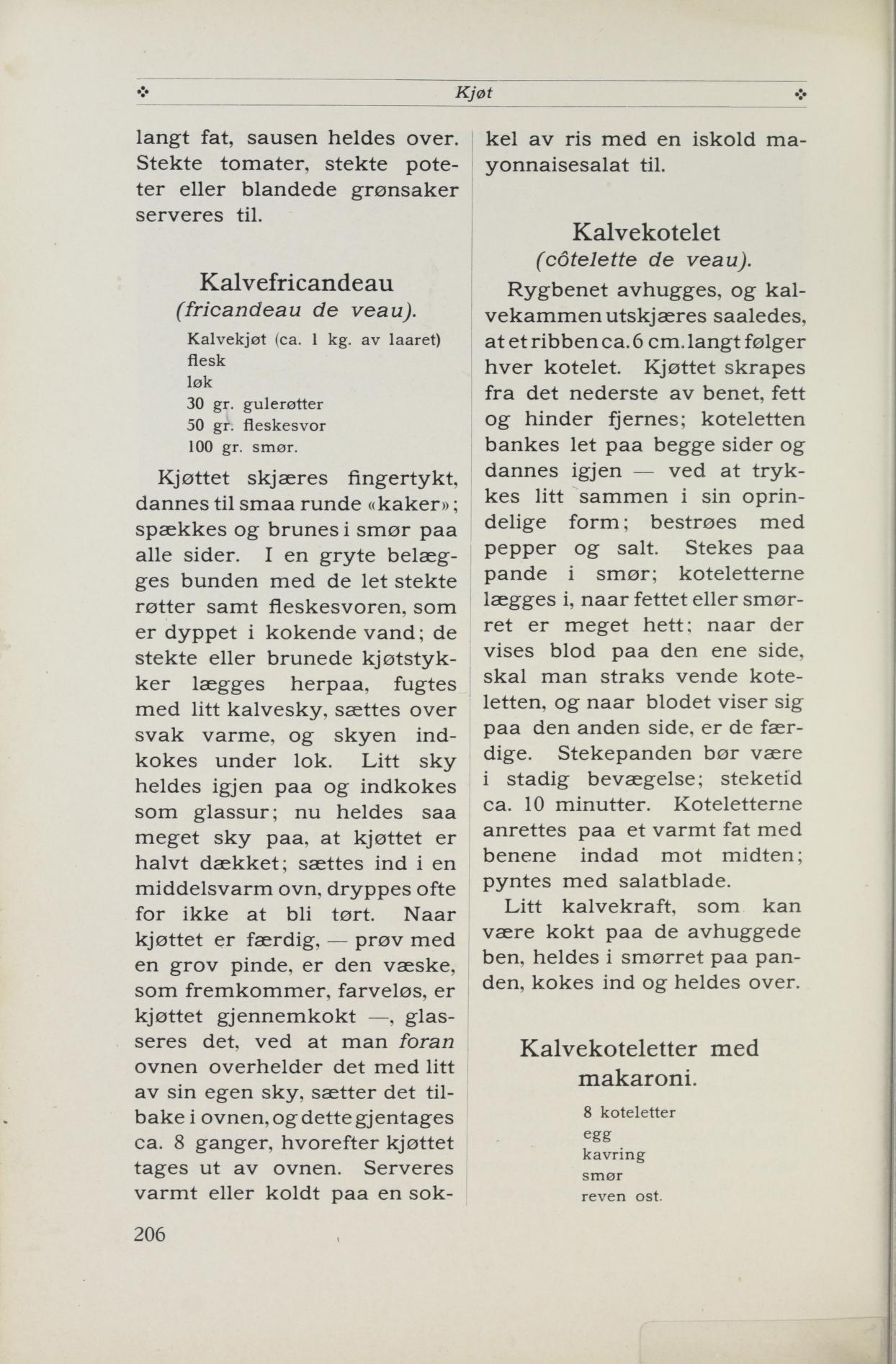
Erken's fricandeau of veal leg: finger-thick slices of meat are formed into round cakes, larded, browned in butter, and cooked in a pot on a bed of carrot, onion, and pork rind, with veal stock reduced and used to glaze the meat repeatedly in the oven. Served hot or cold on a rice base with ice-cold mayonnaise salad.

Source: Henriette Schønberg Erken, Stor kokebok, 1914-utg. s. 206 (falt i det fri)

Be the first to rate

About the dish

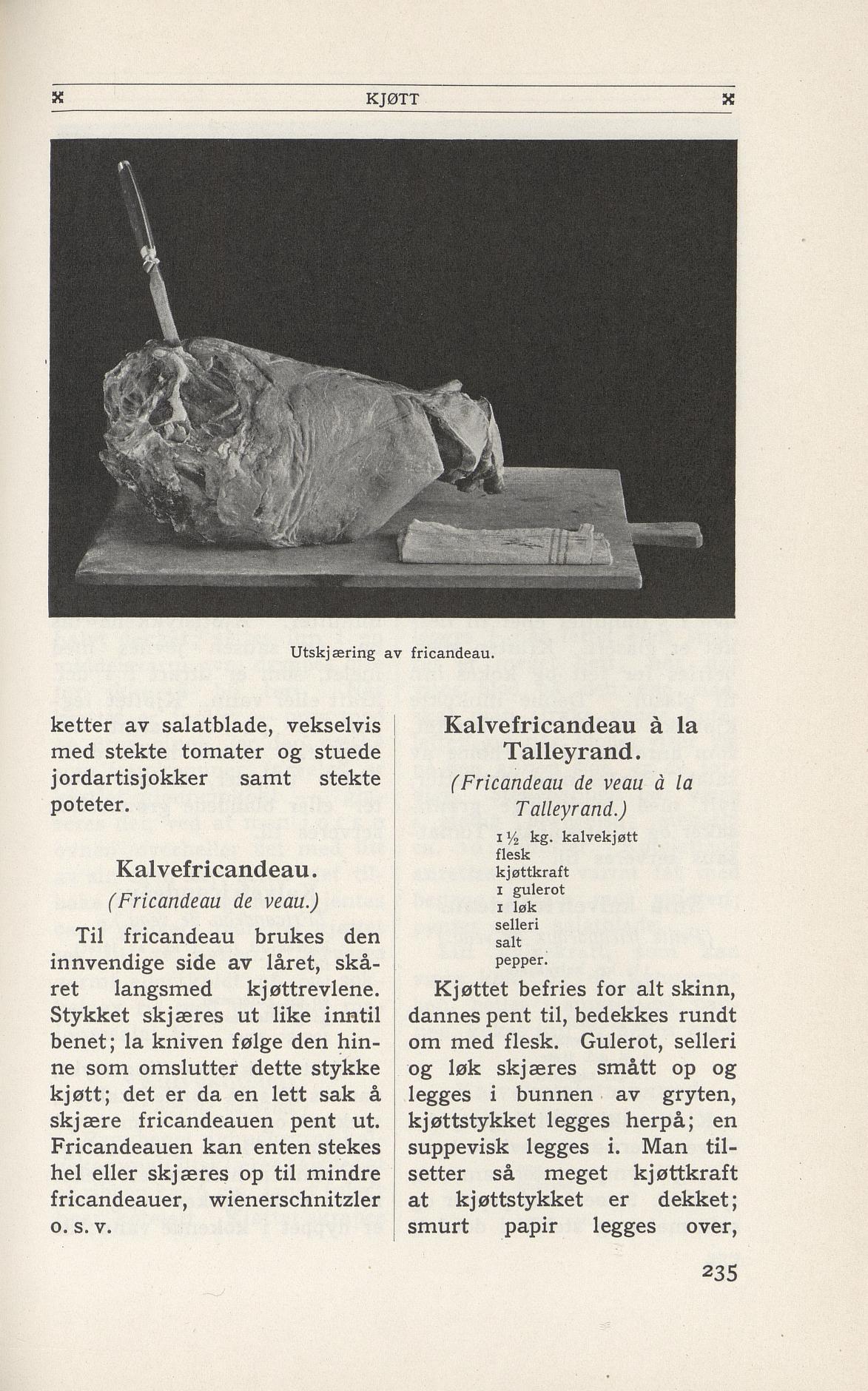
Fricandeau is a classic French-inspired cut of veal that is larded and glazed. Erken presents it as a festive dish that can be served both hot and cold, with a rice base and ice-cold mayonnaise salad – typical of the plating culture of the full kitchen around 1914.

How to make it

  1. 1

    Prepare the meat

    Cut the veal into finger-thick slices and form them into small round "cakes". Lard them with strips of fatback and season with salt and pepper.

  2. 2

    Brown the meat

    Brown the pieces of meat in butter on all sides in a pan.

  3. 3

    Arrange in the pot

    Lightly fry the onion and carrot in the butter. Place them in the bottom of a pot together with the pork rind that has been dipped in boiling water. Lay the browned pieces of meat on top.

  4. 4

    Reduce the jus

    Moisten with a little veal stock, set the pot over low heat, and reduce the jus, covered. Add a little more stock and reduce to a glaze.

  5. 5

    Baking in the oven

    Add enough stock that the meat is half covered, and place the pot in a moderately hot oven, about 175 °C (345 °F). Baste often with the stock so the meat does not dry out. Allow about 1 hour.

  6. 6

    Test whether the meat is done

    Pierce the meat with a coarse skewer; if the liquid that comes out is colorless, the meat is cooked through.

  7. 7

    Glaze

    Bring the pot to the front of the oven and spoon the meat's own jus over it, then return it to the oven. Repeat about 8 times, until the meat is shiny and glazed.

  8. 8

    Serve

    Arrange the meat, hot or cold, on a base of rice, and serve ice-cold mayonnaise salad alongside.

Changes from the original

Amounts are converted to modern measures (grams/deciliters), "flesk" is specified as fatback/fatty pork belly for larding, and "kalvesky" is described as veal stock. The oven temperature is given numerically (about 175 °C (345 °F)), and the cooking time is estimated, since the original does not state it.

In stores now

Clean, minimally processed groceries matched to the ingredients — approximate prices.

Product data and prices via Kassalapp. Prices are updated daily and may vary.

Time machine – what changed?

Pick two editions and see what Henriette Schønberg Erken added, removed or changed between them.

Pick two different editions to see a comparison.

Community interpretations

Be the first to share your own version.

See interpretations →

Frequently asked questions

Which part of the calf is used?
About 1 kg veal from the leg. The meat is cut finger-thick and formed into small round "cakes", which are larded with pork and browned in butter on all sides.
How do I know the meat is done?
Pierce the meat with a coarse skewer: if the liquid that comes out is colorless, the meat is done. Total preparation takes around 2.5 hours.
What is placed in the bottom of the pot?
Lightly fried root vegetables (30 g carrots, onion) and pork rind dipped in boiling water. The pieces of meat are placed on top, moistened with veal jus, and the jus is reduced in several stages to a glaze before the dish is placed in a moderately hot oven.
Where does the recipe come from?
From Henriette Schønberg Erken's "Stor kokebok" (1914), page 206.

Related recipes

More dishes in the same category from the archive

Read also

Kommentarer

Ingen kommentarer ennå. Bli den første til å dele!