Erken's fricandeau of veal leg: finger-thick slices of meat are formed into round cakes, larded, browned in butter, and cooked in a pot on a bed of carrot, onion, and pork rind, with veal stock reduced and used to glaze the meat repeatedly in the oven. Served hot or cold on a rice base with ice-cold mayonnaise salad.
Source: Henriette Schønberg Erken, Stor kokebok, 1914-utg. s. 206 (falt i det fri)
Be the first to rate
About the dish
Fricandeau is a classic French-inspired cut of veal that is larded and glazed. Erken presents it as a festive dish that can be served both hot and cold, with a rice base and ice-cold mayonnaise salad – typical of the plating culture of the full kitchen around 1914.
How to make it
1
Prepare the meat
Cut the veal into finger-thick slices and form them into small round "cakes". Lard them with strips of fatback and season with salt and pepper.
2
Brown the meat
Brown the pieces of meat in butter on all sides in a pan.
3
Arrange in the pot
Lightly fry the onion and carrot in the butter. Place them in the bottom of a pot together with the pork rind that has been dipped in boiling water. Lay the browned pieces of meat on top.
4
Reduce the jus
Moisten with a little veal stock, set the pot over low heat, and reduce the jus, covered. Add a little more stock and reduce to a glaze.
5
Baking in the oven
Add enough stock that the meat is half covered, and place the pot in a moderately hot oven, about 175 °C (345 °F). Baste often with the stock so the meat does not dry out. Allow about 1 hour.
6
Test whether the meat is done
Pierce the meat with a coarse skewer; if the liquid that comes out is colorless, the meat is cooked through.
7
Glaze
Bring the pot to the front of the oven and spoon the meat's own jus over it, then return it to the oven. Repeat about 8 times, until the meat is shiny and glazed.
8
Serve
Arrange the meat, hot or cold, on a base of rice, and serve ice-cold mayonnaise salad alongside.
Changes from the original
Amounts are converted to modern measures (grams/deciliters), "flesk" is specified as fatback/fatty pork belly for larding, and "kalvesky" is described as veal stock. The oven temperature is given numerically (about 175 °C (345 °F)), and the cooking time is estimated, since the original does not state it.
📖1914
Original 1914 recipe
Verbatim from the first edition of the Big Cookbook.
Foto: Faksimile: Nasjonalbiblioteket
ProofreadPage 206
Kalvekjøt (ca. 1 kg. av laaret)
flesk
løk
30 gr. gulerøtter
50 gr. fleskesvor
100 gr. smør.
Kjøttet skjæres fingertykt, dannes til smaa runde «kaker»; spækkes og brunes i smør paa alle sider. I en gryte belægges bunden med de let stekte røtter samt fleskesvoren, som er dyppet i kokende vand; de stekte eller brunede kjøtstykker lægges herpaa, fugtes med litt kalvesky, sættes over svak varme, og skyen indkokes under lok. Litt sky heldes igjen paa og indkokes som glassur; nu heldes saa meget sky paa, at kjøttet er halvt dækket; sættes ind i en middelsvarm ovn, dryppes ofte for ikke at bli tørt. Naar kjøttet er færdig, — prøv med en grov pinde, er den væske, som fremkommer, farveløs, er kjøttet gjennemkokt —, glasseres det ved at man foran ovnen overhelder det med litt av sin egen sky, sætter det tilbake i ovnen, og dette gjentages ca. 8 ganger, hvorefter kjøttet tages ut av ovnen. Serveres varmt eller koldt paa en sokkel av ris med en iskold mayonnaisesalat til.
📖1949
Revised 1949 recipe
From the revised edition of the Big Cookbook.
Foto: Faksimile: Nasjonalbiblioteket
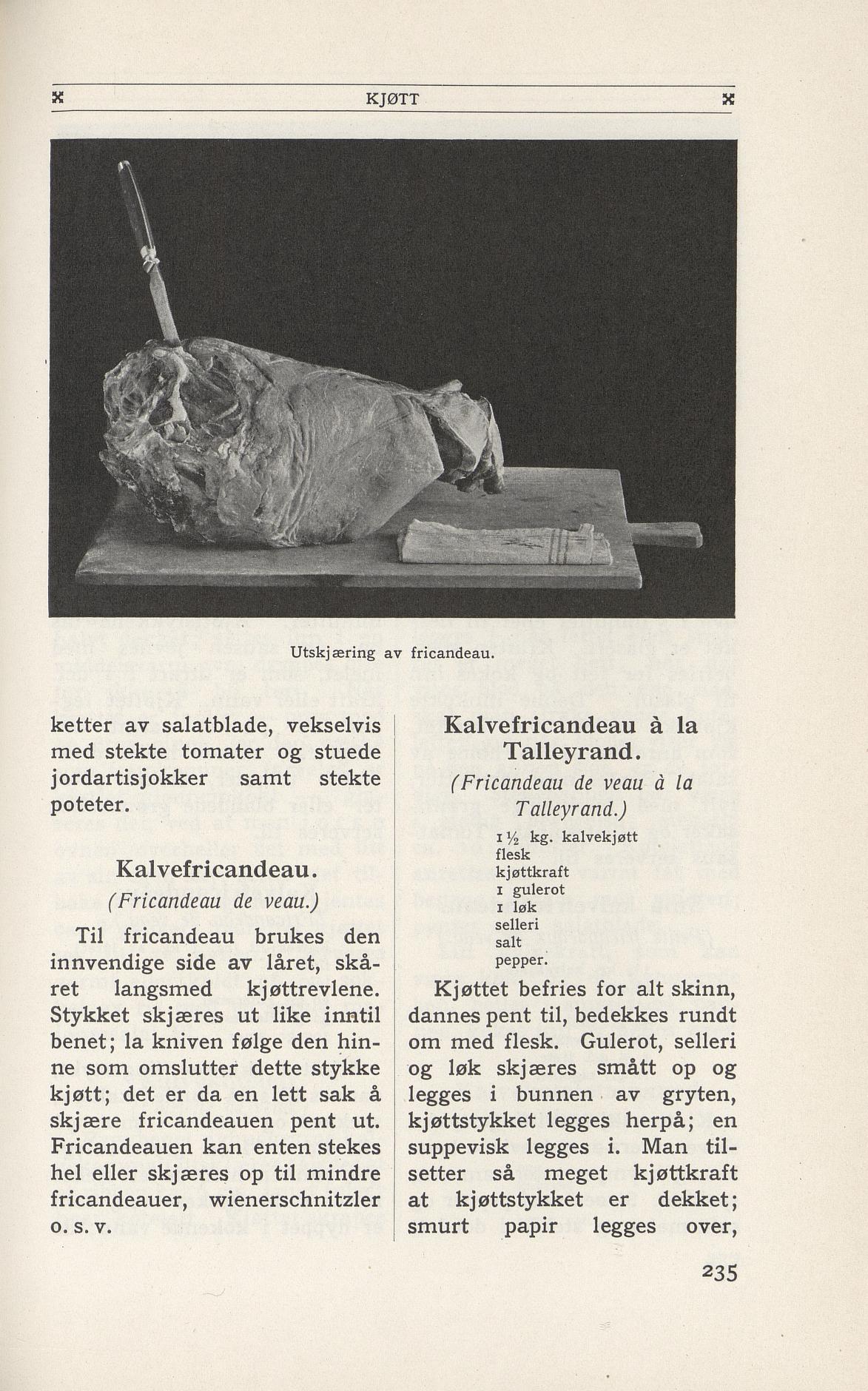
ProofreadPage 235
Til fricandeau brukes den innvendige side av låret, skåret langsmed kjøttrevlene. Stykket skjæres ut like inntil benet; la kniven følge den hinne som omslutter dette stykke kjøtt; det er da en lett sak å skjære fricandeauen pent ut.
Fricandeauen kan enten stekes hel eller skjæres op til mindre fricandeauer, wienerschnitzler o. s. v.
Kjøttet befries for alt skinn, dannes pent til, bedekkes rundt om med flesk. Gulerot, selleri og løk skjæres smått op og legges i bunnen av gryten, kjøttstykket legges herpå; en suppevisk legges i. Man tilsteller så meget kjøttkraft at kjøttstykket er dekket; smurt papir legges over, og det småtrekker over svak varme 1—1½ time; dryppes hvert tiende minutt. Fricandeauen tas op, legges i en stekepanne, som settes i varm ovn i 5 minutter eller til fleskelet er glasert. Kraften siles, befries for fett og kokes inn til glasur. Denne innkokte kjøttskyv helles over kjøttet, som anrettes på en høide av salat. Pyntes med tarteletter, fylt med forskjellige grønnsaker og stuet spinat. Tomatsaus serveres til.
In stores now
Clean, minimally processed groceries matched to the ingredients — approximate prices.
1914 (korrekturlest, s. 206) → 1949 (korrekturlest, s. 235)~94% av teksten endretfjernetlagt til
Kalvekjøt (ca. 1 kg. Til fricandeau brukes den innvendige side av laaret) flesk løk 30 gr. gulerøtter 50 gr. fleskesvor 100 gr. smør. Kjøttet låret, skåret langsmed kjøttrevlene. Stykket skjæres fingertykt, dannes til smaa runde «kaker»; spækkes og brunes i smør paa alle sider. I en gryte belægges bunden med de let stekte røtter samt fleskesvoren, ut like inntil benet; la kniven følge den hinne som omslutter dette stykke kjøtt; det er dyppet i kokende vand; de stekte da en lett sak å skjære fricandeauen pent ut. Fricandeauen kan enten stekes hel eller brunede kjøtstykker lægges herpaa, fugtes skjæres op til mindre fricandeauer, wienerschnitzler o. s. v. Kjøttet befries for alt skinn, dannes pent til, bedekkes rundt om med litt kalvesky, sættes over svak varme, flesk. Gulerot, selleri og skyen indkokes under lok. Litt sky heldes igjen paa løk skjæres smått op og indkokes som glassur; nu heldes saa meget sky paa, at kjøttet er halvt dækket; sættes ind legges i bunnen av gryten, kjøttstykket legges herpå; en middelsvarm ovn, dryppes ofte for ikke suppevisk legges i. Man tilsteller så meget kjøttkraft at bli tørt. Naar kjøttet kjøttstykket er færdig, — prøv med dekket; smurt papir legges over, og det småtrekker over svak varme 1—1½ time; dryppes hvert tiende minutt. Fricandeauen tas op, legges i en grov pinde, er den væske, stekepanne, som fremkommer, farveløs, er kjøttet gjennemkokt —, glasseres det ved at man foran ovnen overhelder det med litt av sin egen sky, sætter det tilbake settes i ovnen, og dette gjentages ca. 8 ganger, hvorefter kjøttet tages ut av ovnen. Serveres varmt varm ovn i 5 minutter eller koldt paa til fleskelet er glasert. Kraften siles, befries for fett og kokes inn til glasur. Denne innkokte kjøttskyv helles over kjøttet, som anrettes på en sokkel høide av ris salat. Pyntes med en iskold mayonnaisesalat tarteletter, fylt med forskjellige grønnsaker og stuet spinat. Tomatsaus serveres til.
About 1 kg veal from the leg. The meat is cut finger-thick and formed into small round "cakes", which are larded with pork and browned in butter on all sides.
How do I know the meat is done?
Pierce the meat with a coarse skewer: if the liquid that comes out is colorless, the meat is done. Total preparation takes around 2.5 hours.
What is placed in the bottom of the pot?
Lightly fried root vegetables (30 g carrots, onion) and pork rind dipped in boiling water. The pieces of meat are placed on top, moistened with veal jus, and the jus is reduced in several stages to a glaze before the dish is placed in a moderately hot oven.
Where does the recipe come from?
From Henriette Schønberg Erken's "Stor kokebok" (1914), page 206.