Skip to content

Veal sweetbread with horseradish

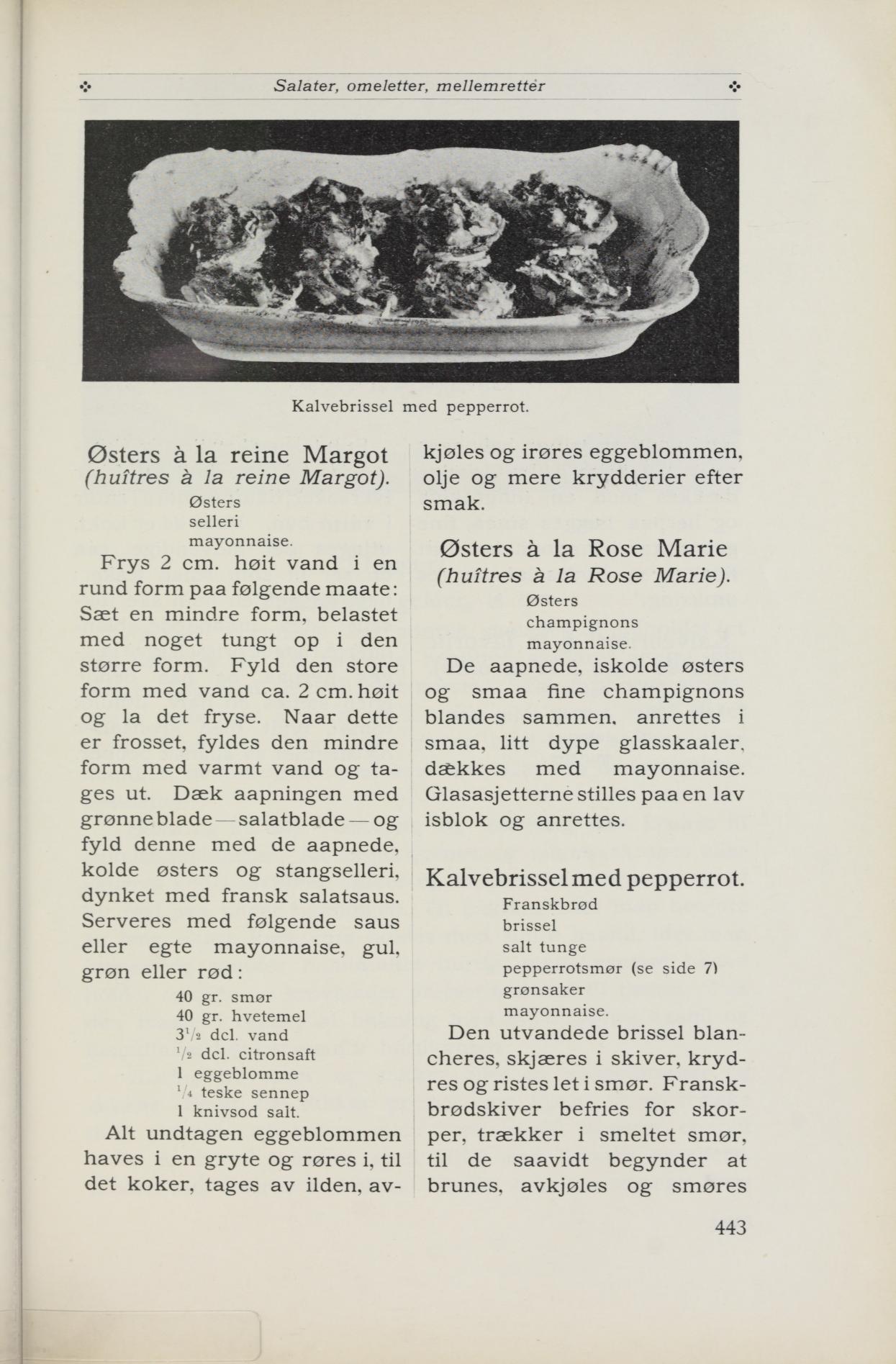
An intermediate course from Erken 1914: soaked, blanched, and lightly browned veal sweetbread is placed on butter-fried white bread with horseradish butter, covered with salted tongue and small vegetables in mayonnaise, and garnished with finely cut lettuce.

Source: Henriette Schønberg Erken, Stor kokebok, 1914-utg. s. 443 (falt i det fri)

Be the first to rate

About the dish

A small, decorative intermediate course built as a cold canapé on toasted white bread. Veal sweetbread was a highly regarded delicacy in 1914 and required long soaking before preparation. Erken here refers to her own recipe for horseradish butter.

How to make it

  1. 1

    Prepare the sweetbread

    Soak the sweetbread well in cold water. Blanch it, and cut it into slices.

  2. 2

    Brown the sweetbread

    Season the sweetbread slices and brown them lightly in butter. Let them cool.

  3. 3

    Toast the bread

    Cut the crusts off the bread slices and let them soak in melted butter until they just begin to brown. Cool.

  4. 4

    Build up

    Spread the bread slices with horseradish butter and place a sweetbread slice on top. Cover with a slice of salted tongue.

  5. 5

    Top and garnish

    Mix the small, fine vegetables with mayonnaise and place the mixture on top. Arrange a little finely cut lettuce around and serve cold.

Changes from the original

Amounts are not given in the original and are estimated for four servings. "Franskbrød" is rendered as white bread, and the measurements are modernized. The method is divided into numbered steps; the soaking time is specified.

In stores now

Clean, minimally processed groceries matched to the ingredients — approximate prices.

Product data and prices via Kassalapp. Prices are updated daily and may vary.

Tidsmaskin – hva endret seg?

Velg to utgaver og se hva Henriette Schønberg Erken la til, fjernet eller endret mellom dem.

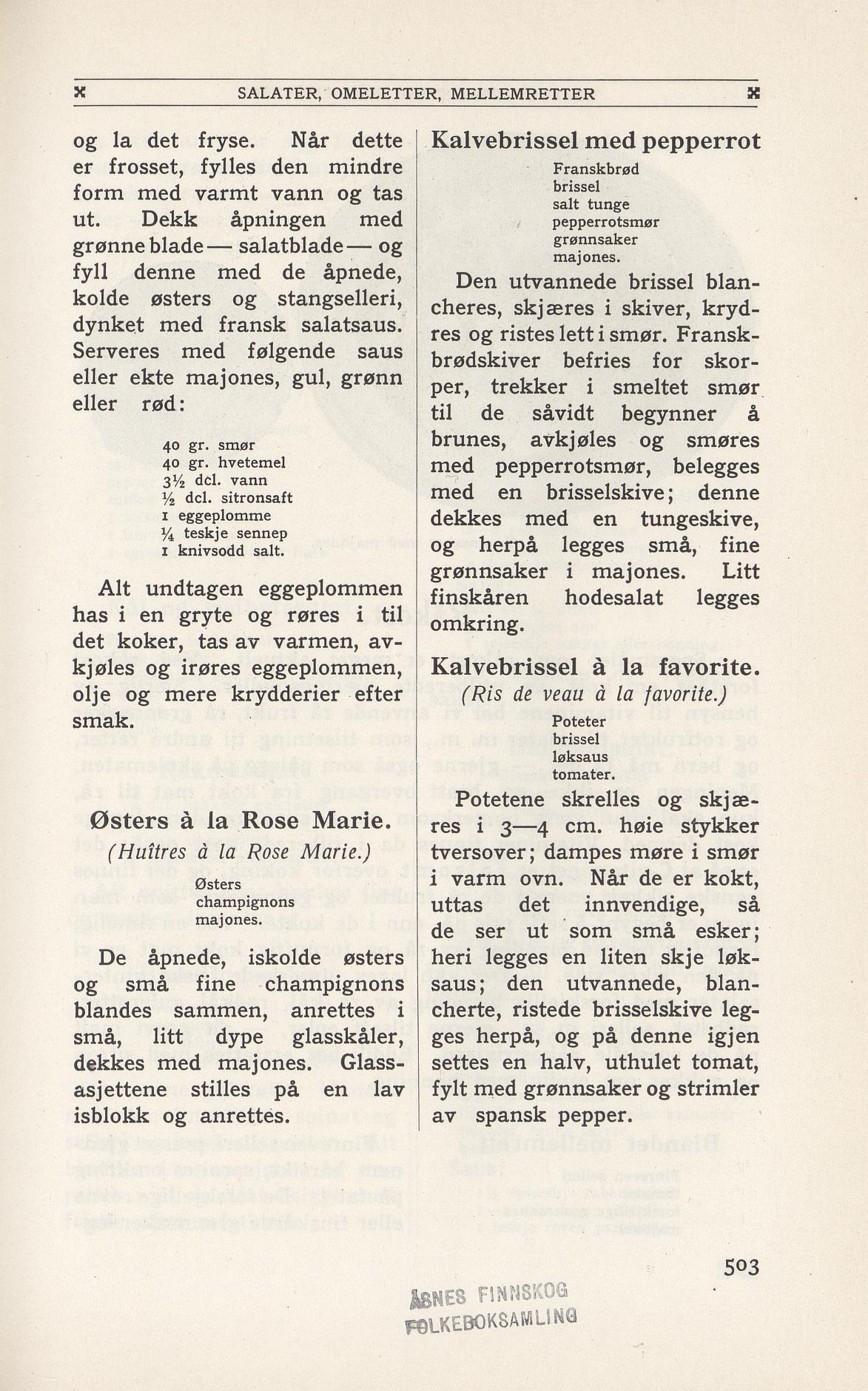
1914 (korrekturlest, s. 443)1949 (korrekturlest, s. 503)~58% av teksten endretfjernetlagt til
Franskbrød brissel salt tunge pepperrotsmør (se side 7) grønsaker mayonnaise. Den utvandede utvannede brissel blancheres, skjæres i skiver, krydres og ristes let lett i smør. Franskbrødskiver befries for skorper, trækker trekkes i smeltet smør, smør til de saavidt begynder at såvidt begynner å brunes, avkjøles og smøres med pepperrotsmør, belægges belegges med en brisselskive; denne dækkes dekkes med en tungeskive tungeskive, og herpaa lægges smaa, herpå legges små, fine grønsaker grønnsaker i mayonnaise. majones. Litt finskaaren finskåren hodesalat lægges legges omkring. Franskbrød brissel salt tunge pepperrotsmør grønnsaker majones.

Community interpretations

Be the first to share your own version.

See interpretations

Frequently asked questions

Why does the dish take so long when the preparation itself is quick?
Because the sweetbread must be soaked (placed in cold water) before it is blanched. The soaking accounts for most of the roughly 4 hours; the frying and assembly go quickly.
How are the sweetbread canapés made?
The soaked sweetbread is blanched, cut into slices, seasoned, and lightly browned in butter. Crustless white bread slices are soaked in melted butter until they just begin to brown, cooled, and spread with horseradish butter. Place a sweetbread slice on top, then a slice of salted tongue, and finally small, fine vegetables in mayonnaise.
What is served with it?
A little finely cut lettuce is arranged around the canapés. The horseradish butter is a separate recipe in the book (p. 7). The dish is an intermediate course for 4 from Henriette Schønberg Erken's "Stor kokebok" (1914), p. 443.

Related recipes

More dishes in the same category from the archive

Read also

Kommentarer

Ingen kommentarer ennå. Bli den første til å dele!