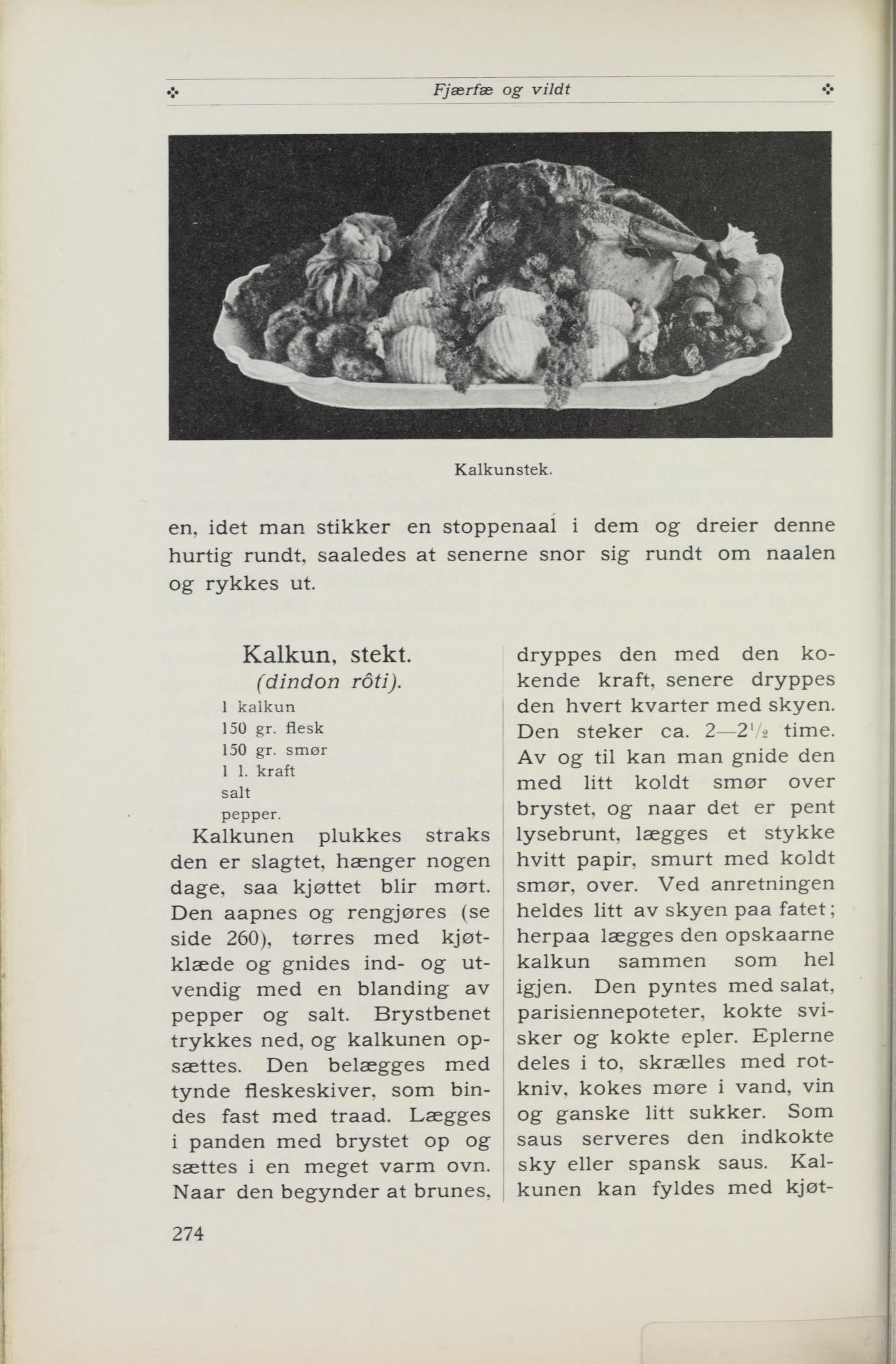
Erken's basic recipe for whole roast turkey (1914): aged, seasoned, and barded with pork fat slices, roasted 2–2½ hours in a hot oven with basting stock and juices, served with lettuce, pommes parisienne, prunes, cooked apples, and reduced pan juices or espagnole sauce. Includes a forcemeat of giblets, pork, pork fat, white bread, onion, parsley, and egg to stuff under the neck skin.
Source: Henriette Schønberg Erken, Stor kokebok, 1914-utg. s. 274 (falt i det fri)
Be the first to rate
About the dish
A classic whole roast turkey from the chapter on poultry and game. Erken assumes the bird is hung for a few days after slaughter so the meat tenderizes, and that it is barded with thin slices of pork fat before roasting. Finally she gives a recipe for a forcemeat of giblets, pork, and pork fat to stuff the neck skin.
How to make it
1
Aging and cleaning
Pluck the turkey immediately after slaughter and let it hang for a few days so the meat becomes tender. Open and clean it, and wipe it with a damp meat cloth.
2
Season and truss
Rub the turkey inside and out with a mixture of salt and pepper. Press the breastbone down and truss the bird. Lay thin slices of pork fat over the breast and tie them on with string.
3
Roasting
Place the turkey in a roasting pan or skillet breast up and put it in a very hot oven (about 225 °C (435 °F)). When it begins to brown, baste it with boiling stock; then baste it with the pan juices every quarter hour. Lower the heat to about 175 °C (345 °F).
4
Watch the browning
Roast about 2–2½ hours (internal temperature about 75 °C (165 °F) in the thickest part of the thigh). Rub the breast now and then with a little cold butter, and lay a sheet of white paper greased with cold butter over it when the breast is nicely light brown.
5
Plating
Pour a little of the pan juices onto the platter, carve the turkey, and reassemble the pieces as a whole bird again. Garnish with lettuce, pommes parisienne, cooked prunes, and cooked apples — the apples are halved, peeled, and cooked tender in water, wine, and a very little sugar. Serve reduced pan juices or espagnole sauce with it.
6
Forcemeat for stuffing (optional)
Scrape the gizzard, liver, and heart and grind them together with an equal weight of pork and half as much pork fat as the giblets weighed. Soak 100 g white bread in water and squeeze it lightly. Stir the bread together with the meat, a pinch of onion, and 1 tbsp finely chopped parsley.
7
Stuff the turkey
Work the forcemeat well and add 2 beaten eggs a little at a time; season with salt and pepper and stir to a fine paste. Lay the turkey breast down, loosen the skin at the neck to form a pocket, and fill the forcemeat in here before roasting. Bread forcemeat or potato forcemeat can be used instead.
Changes from the original
Measures are converted to modern units (dl, grams, tablespoons), "flesk" is specified as thin slices of salt pork belly/bacon, and the stock/bouillon is clarified. Roasting time is given with a recommended internal temperature in addition to Erken's time. The forcemeat has been separated out as its own optional step.
📖1914
Original 1914 recipe
Verbatim from the first edition of the Big Cookbook.
Foto: Faksimile: Nasjonalbiblioteket
ProofreadPage 274
1 kalkun
150 gr. flesk
150 gr. smør
1 l. kraft
salt
pepper
Kalkunen plukkes straks den er slagtet, hænger nogen dage, saa kjøttet blir mørt. Den aapnes og rengjøres (se side 260), tørres med kjøtklæde og gnides ind- og utvendig med en blanding av pepper og salt. Brystbenet trykkes ned, og kalkunen opsættes. Den belægges med tynde fleskeskiver, som bindes fast med traad. Lægges i panden med brystet op og sættes i en meget varm ovn. Naar den begynder at brunes, dryppes den med den kokende kraft, senere dryppes den hvert kvarter med skyen. Den steker ca. 2—2 1/2 time. Av og til kan man gnide den med litt koldt smør over brystet, og naar det er pent lysebrunt, lægges et stykke hvitt papir, smurt med koldt smør, over. Ved anretningen heldes litt av skyen paa fatet; herpaa lægges den opskaarne kalkun sammen som hel igjen. Den pyntes med salat, parisiennepoteter, kokte svisker og kokte epler. Eplerne deles i to, skrælles med rotkniv, kokes møre i vand, vin og ganske litt sukker. Som saus serveres den indkokte sky eller spansk saus.
Kalkunen kan fyldes med kjøtfarce, brødfarce eller potetesfarce. Til kjøtfarcen skrapes kraasen, leveren og hjertet og hakkes eller males sammen med samme vegt svinekjøt og halvt saa meget flesk, som indmaten veiet. 100 gr. franskbrød utbløtes i vand og trykkes let av. Brødet røres sammen med kjøttet, en knivsod løk og 1 spiseske finhakket persille. Arbeides godt sammen og tilsættes litt efter litt 2 egg, som er vispet sammen; pepper og salt haves i efter smak; røres til en fin deig. Kalkunen lægges med brystet nedad, skindet ved halsen løsnes, derved fremkommer en aapning som en pose, og heri fyldes farcen.
In stores now
Clean, minimally processed groceries matched to the ingredients — approximate prices.
1914 (korrekturlest, s. 274) → Modernisert~78% av teksten endretfjernetlagt til
1 stk kalkun (ca. 4–5 kg, renset). 150 gr. g flesk (i tynne skiver, f.eks. salt sideflesk eller bacon). 150 gr. smør g smør. 1 l. l kraft (kokende, av kalkunhals og krås). salt (etter smak). pepper Kalkunen plukkes (etter smak). salat, parisiennepoteter, kokte svisker og kokte epler (til pynt). innkokt sky eller spansk saus (til servering). 1 porsjon kråse, lever og hjerte fra kalkunen (til kjøttfarse (valgfritt)). svinekjøtt (samme vekt som innmaten). flesk (halvparten så mye som innmaten veide). 100 g loff (til farsen, uten skorpe). 1 knivsodd løk (finhakket). 1 ss persille (finhakket). 2 stk egg (sammenvispet). Plukk kalkunen straks etter slakting og la den er slagtet, hænger nogen dage, saa henge noen dager slik at kjøttet blir mørt. Den aapnes Åpne og rengjøres (se side 260), tørres rens den, tørk av med kjøtklæde og gnides ind- et fuktig kjøttklede.. Gni kalkunen inn- og utvendig med en blanding av pepper salt og salt. Brystbenet trykkes ned, pepper. Trykk brystbeinet ned og kalkunen opsættes. Den belægges med tynde fleskeskiver, som bindes bind opp fuglen. Legg tynne fleskeskiver over brystet og bind dem fast med traad. Lægges tråd.. Legg kalkunen i panden langpanne eller stekepanne med brystet op opp og sættes sett den inn i en meget varm ovn. Naar ovn (ca. 225 °C). Når den begynder at begynner å brunes, dryppes den med den kokende kraft, senere kraft; deretter dryppes den hvert kvarter med skyen. Den steker skyen hvert kvarter. Senk varmen til ca. 2—2 1/2 time. Av 175 °C.. Stek i ca. 2–2½ time (kjernetemperatur ca. 75 °C i lårets tykkeste del). Gni av og til kan man gnide den brystet med litt koldt smør over brystet, kaldt smør, og naar det er pent lysebrunt, lægges legg et stykke ark hvitt papir, papir smurt med koldt smør, over. Ved anretningen heldes kaldt smør over når brystet er pent lysebrunt.. Hell litt av skyen paa fatet; herpaa lægges den opskaarne kalkun på fatet, skjær kalkunen opp og legg stykkene sammen som hel fugl igjen. Den pyntes Pynt med salat, parisiennepoteter, kokte svisker og kokte epler. Eplerne epler – epler deles i to, skrælles med rotkniv, skrelles og kokes møre i vand, vann, vin og ganske litt sukker. Som saus serveres den indkokte Server innkokt sky eller spansk saus. Kalkunen kan fyldes med kjøtfarce, brødfarce eller potetesfarce. Til kjøtfarcen skrapes kraasen, leveren saus til.. Skrap kråse, lever og hjertet hjerte og hakkes eller males kvern dem sammen med samme vegt svinekjøt vekt svinekjøtt og halvt saa meget flesk, halvparten så mye flesk som indmaten veiet. innmaten veide. Bløt 100 gr. franskbrød utbløtes g loff i vand vann og trykkes let klem lett av. Brødet røres Rør brødet sammen med kjøttet, en knivsod knivsodd løk og 1 spiseske ss finhakket persille. Arbeides persille.. Arbeid farsen godt sammen og tilsættes tilsett litt efter etter litt 2 egg, som er vispet sammen; sammenvispede egg; smak til med salt og pepper og salt haves i efter smak; røres rør til en fin deig. Kalkunen lægges Legg kalkunen med brystet nedad, skindet ned, løsne huden ved halsen løsnes, derved fremkommer en aapning som slik at det dannes en pose, og heri fyldes farcen. fyll farsen inn her før steking. Brødfarse eller potetfarse kan brukes i stedet.
Note til Modernisert
Mål er omregnet til moderne enheter (dl, gram, spiseskjeer), «flesk» er angitt som tynne skiver salt sideflesk/bacon, og kraft/buljong er presisert. Steketid er angitt med anbefalt kjernetemperatur i tillegg til Erkens tidsangivelse. Farsen er skilt ut som eget, valgfritt trinn.
About 2–2 1/2 hours in the oven. It is put in a very hot oven breast up, and basted with boiling stock when it begins to brown, then with the pan juices every quarter hour.
Why should the turkey hang for a few days before roasting?
It is plucked immediately after slaughter and hung for a few days so the meat becomes tender. Then it is opened and cleaned, wiped with a meat cloth, and rubbed inside and out with pepper and salt.
What is the purpose of the pork fat slices and the paper?
Thin slices of pork fat (150 g) are tied over the breast with string to keep the meat juicy. When the breast is nicely light brown, a piece of greased white paper is laid over it so it does not get too dark.
What do I need for the recipe?
1 turkey, 150 g pork fat, 150 g butter, 1 liter stock, salt, and pepper. The recipe is from Henriette Schønberg Erken's "Stor kokebok" (1914), p. 274, and serves 8.