Skip to content

Jewish Cookies II

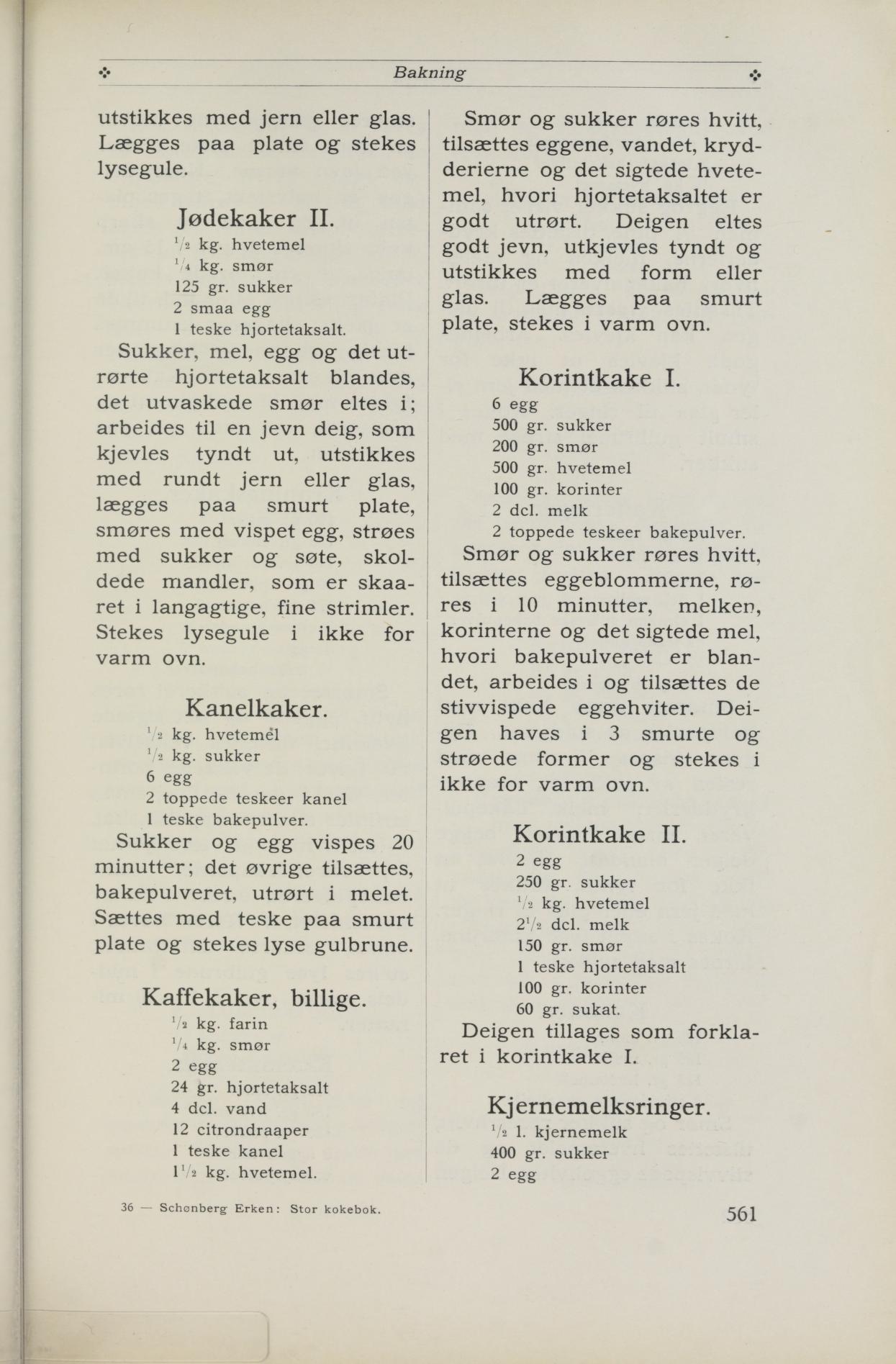
Jewish Cookies II (jødekaker) from Erken's Stor kokebok 1914: a crisp cut-out cookie of 1 kg flour, 250 g butter, 125 g sugar, 2 eggs and baker's ammonia (hartshorn), brushed with egg and sprinkled with sugar and slivered almonds, baked pale yellow.

Source: Henriette Schønberg Erken, Stor kokebok, 1914-utg. s. 561 (falt i det fri)

Be the first to rate

About the dish

Jewish cookies (jødekaker) are among the most traditional of Norwegian cookies, recognized by their topping of cinnamon sugar or – as in Erken's variant II here – sugar and finely slivered almonds. The recipe appears in the "Baking" chapter of Stor kokebok from 1914.

How to make it

  1. 1

    Mix the dough

    Dissolve the baker's ammonia in a spoonful of water. Mix the sugar, flour, eggs and the dissolved baker's ammonia.

  2. 2

    Knead in the butter

    Work the soft butter into the flour mixture and knead the dough smooth and pliable. Let it rest in the cold for half an hour if you like.

  3. 3

    Roll and cut out

    Roll the dough out thin and cut out round cookies with a cutter or a glass. Place them on a greased or parchment-lined baking sheet.

  4. 4

    Brush and sprinkle

    Brush the cookies with beaten egg and sprinkle with sugar and the finely slivered almonds.

  5. 5

    Bake

    Bake the cookies pale yellow in a not-too-hot oven, about 170 °C (340 °F), for 8–10 minutes. Cool on a rack.

Changes from the original

Measurements converted to modern units (dl/grams/tsp). Baker's ammonia is kept (still available) with baking powder as an alternative. "Washed butter" is replaced by ordinary unsalted butter. Oven temperature is given in degrees.

In stores now

Clean, minimally processed groceries matched to the ingredients — approximate prices.

Product data and prices via Kassalapp. Prices are updated daily and may vary.

Tidsmaskin – hva endret seg?

Velg to utgaver og se hva Henriette Schønberg Erken la til, fjernet eller endret mellom dem.

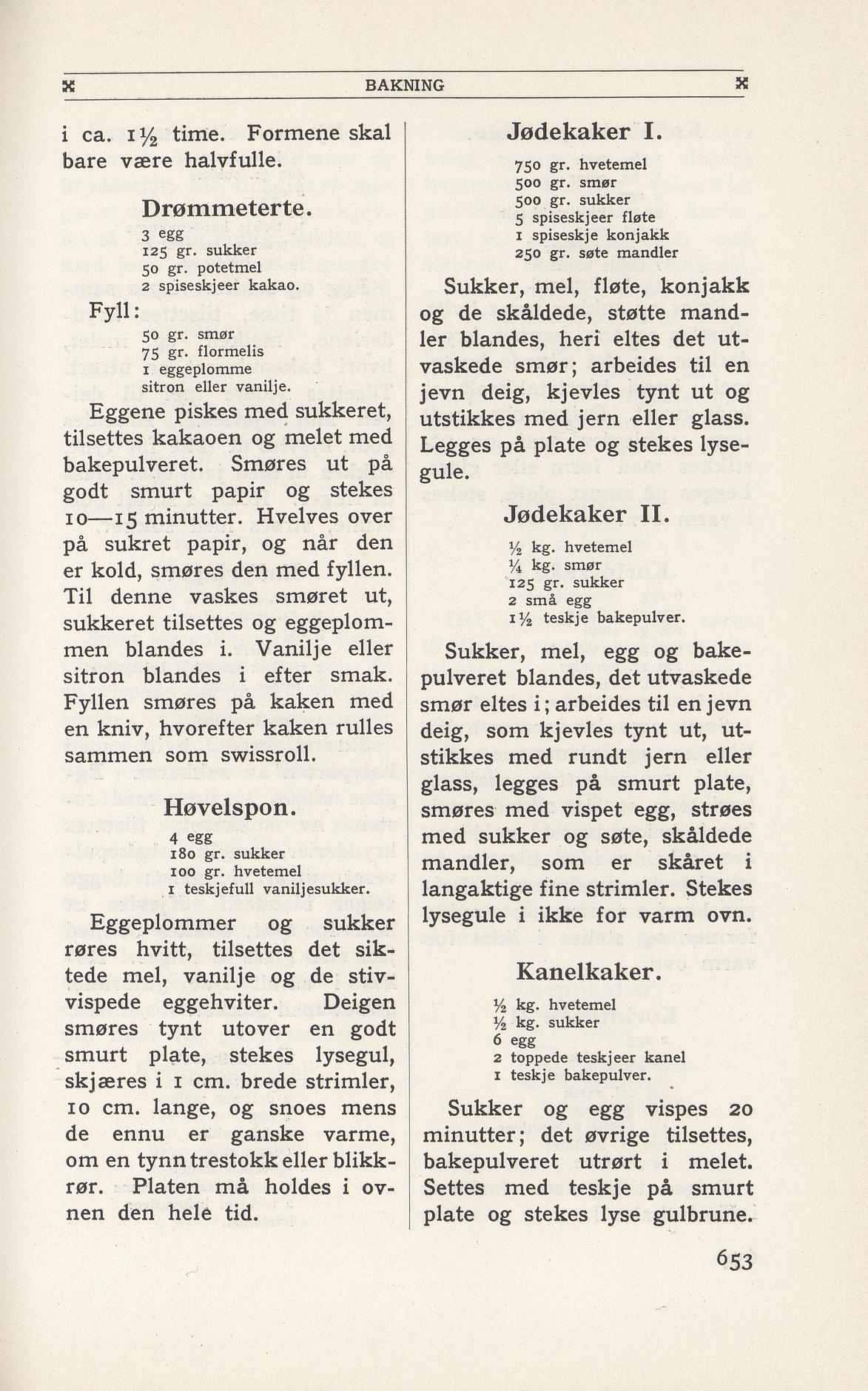
1914 (korrekturlest, s. 561)1949 (korrekturlest, s. 653)~84% av teksten endretfjernetlagt til
1 Jødekaker II. 1/2 kg. hvetemel 1/4 kg. smør 125 gr. sukker 2 smaa små egg 1 teske hjortetaksalt. Sukker, mel, egg 1/2 teskje bakepulver. Sukker og det utrørte hjortetaksalt blandes, egg vispes 20 minutter; det utvaskede smør eltes i; arbeides til en jevn deig, som kjevles tyndt ut, utstikkes øvrige tilsettes, bakepulveret utrørt i melet. Settes med rundt jern eller glas, lægges paa teskje på smurt plate, smøres med vispet egg, strøes med sukker plate og søte, skoldede mandler, som er skaaret i langagtige, fine strimler. Stekes lysegule i ikke for varm ovn. stekes lyse gulbrune.
Community interpretations

Be the first to share your own version.

See interpretations

Frequently asked questions

What is baker's ammonia, and can I use something else?
Baker's ammonia (hartshorn) is an old leavening agent (ammonium carbonate) that makes cookies crisp. It is still sold in stores. In the recipe 1 teaspoon is dissolved in a little liquid/egg before being mixed into the dough. Baking powder gives a different, less crisp result.
Why should the butter be "washed"?
In 1914 butter was often salted and contained buttermilk. Washing it in cold water removed the salt and milk residue so the cookies kept better. With today's unsalted butter you can skip this.
How should the cookies be baked?
Roll the dough thin, cut out with a round cutter or glass, place on a greased sheet, brush with beaten egg and sprinkle with sugar and finely slivered, blanched sweet almonds. Bake them pale yellow in a not-too-hot oven – keep an eye on them, thin cookies brown quickly.
How many cookies does the recipe make?
With 1 kg of wheat flour the dough gives about 60 cookies, depending on how thin you roll and how large a cutter you use. The dough can be halved.

Related recipes

More dishes in the same category from the archive

Read also

Kommentarer

Ingen kommentarer ennå. Bli den første til å dele!