Skip to content

Graham bread

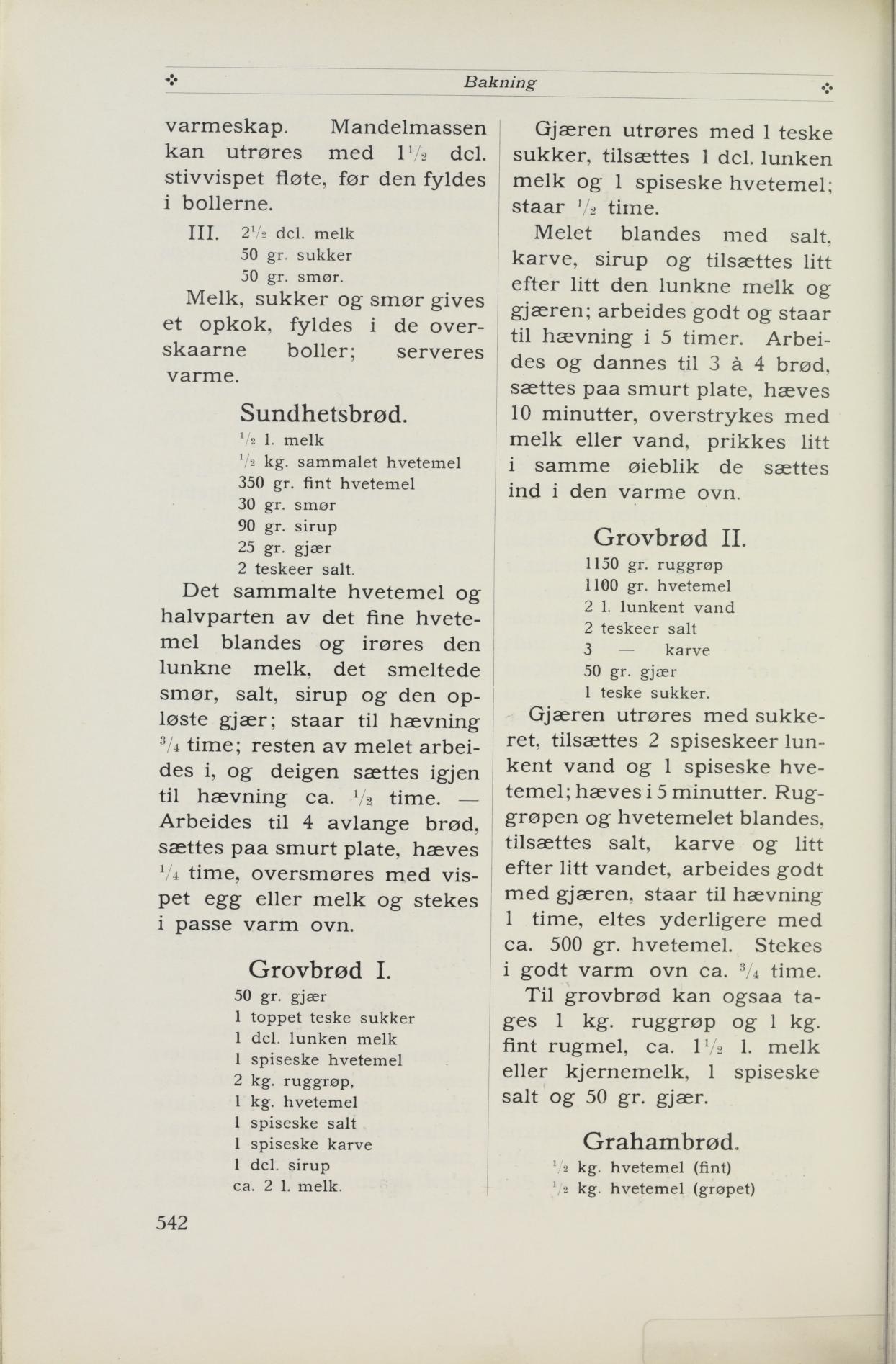
Graham bread from Erken's Stor kokebok (1914, pp. 542–543): a pan loaf of equal parts fine and coarse (cracked) wheat flour with about 2 l milk, salt and yeast; the dough rises overnight, is punched down, filled ¾ full into greased pans, proofed ½ hour, brushed with milk, pricked and baked 1 hour.

Source: Henriette Schønberg Erken, Stor kokebok, 1914-utg. s. 542 (falt i det fri)

Be the first to rate

About the dish

Graham bread was one of the new "health breads" around 1900, named after the American Sylvester Graham who advocated coarse, unsifted flour. Erken lets the dough stand overnight in a temperate place and bakes it in greased pans.

How to make it

  1. 1

    Set the yeast

    Stir the yeast with the sugar, add ¼ dl lukewarm milk and 1 heaping tbsp wheat flour. Let stand until the yeast has risen.

  2. 2

    Make the dough

    Sift the flour, stir in the salt, the slightly lukewarm milk and the risen yeast. Work the dough well.

  3. 3

    Rise overnight

    Let the dough stand overnight in a temperate place.

  4. 4

    Fill the pans

    Punch the dough down well with a spoon the next morning and fill it into greased bread pans that must only be ¾ full. Let proof for about 30 minutes.

  5. 5

    Bake

    Brush the loaves with milk, prick them with a fork and bake in the oven at about 190 °C (375 °F) for 1 hour.

Changes from the original

The flour quantities lack numbers in the OCR text; they have been set to 1 kg of each type, which fits with about 2 l milk. Units are modernized (kg, l, dl, tbsp, tsp). The oven temperature is given as about 190 °C (375 °F).

Tidsmaskin – hva endret seg?

Velg to utgaver og se hva Henriette Schønberg Erken la til, fjernet eller endret mellom dem.

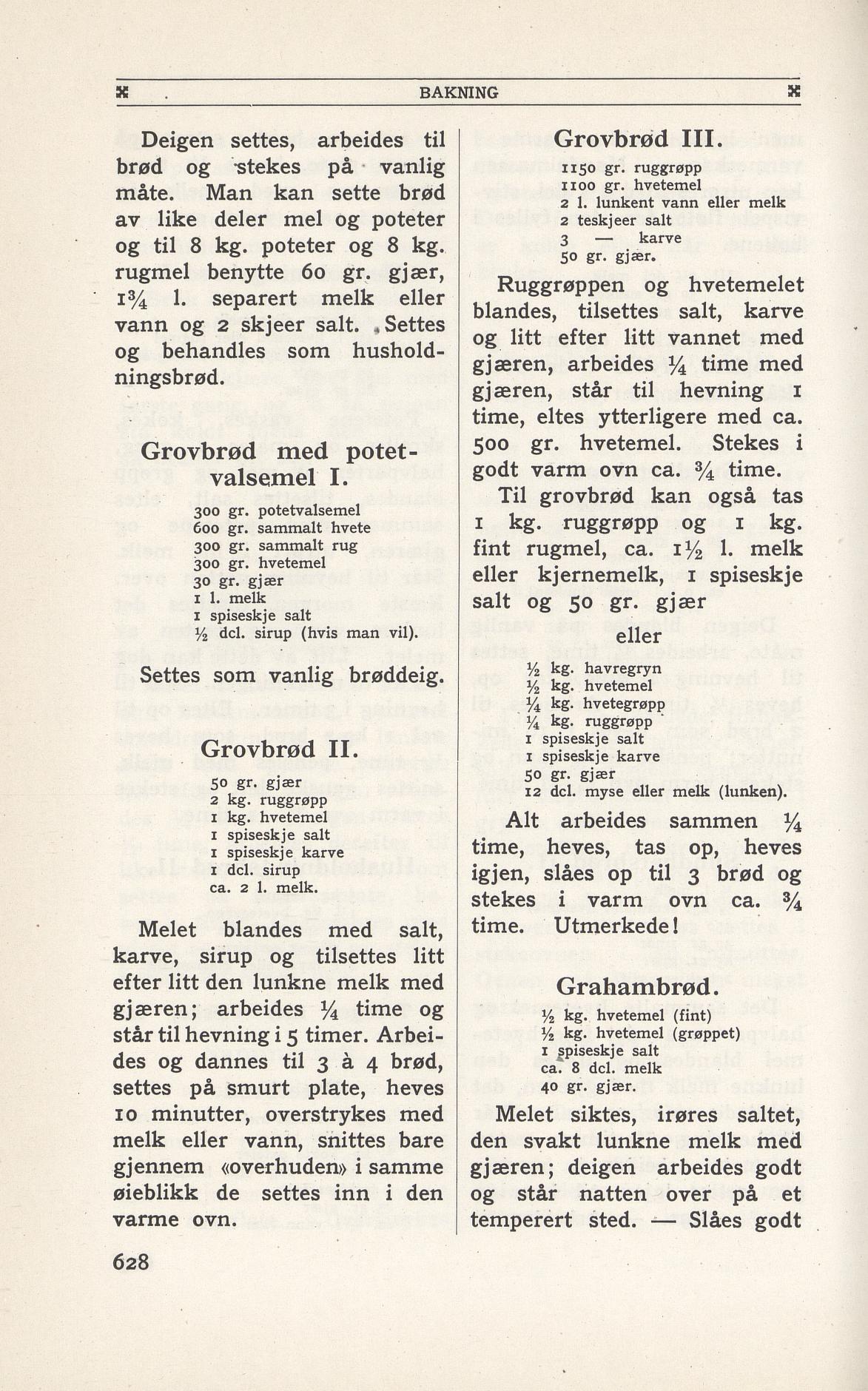
1914 (korrekturlest, s. 542)1949 (korrekturlest, s. 628)~63% av teksten endretfjernetlagt til
1 1/2 kg. hvetemel (fint) 1 1/2 kg. hvetemel (grøpet) ca. 2 l. melk (grøppet) 1 spiseske spiseskje salt 50 gr. gjær 1 toppet teske sukker 1/4 del. lunken melk 1 toppet spiseske hvetemel. Gjæren utrøres med sukkeret, tilsættes 1/4 ca. 8 del. lunken melk og 1 toppet spiseske hvetemel. 40 gr. gjær. Melet sigtes, siktes, irøres saltet, den svakt lunkne melk og den opgaaede gjær; med gjæren; deigen arbeides godt og staar står natten over paa et tempereret temperert sted. Slaaes — Slåes godt med ske skje næste morgen, fyldes fylles i smurte former, former som kun maa være 3/4 fulde; fulle; disse sættes settes til hævning hevning 1/2 time, strykes over med melk, prikkes derefter melk og stekes i ovnen 1 time.

Community interpretations

Be the first to share your own version.

See interpretations

Frequently asked questions

What kind of flour is used in this graham bread?
Half fine wheat flour (1 kg) and half cracked wheat flour (1 kg), that is, coarsely ground wheat. The flour is sifted before the salt and liquid are stirred in.
How long does the rising take?
The dough stands overnight in a temperate place. The next morning it is punched down well with a spoon, filled into greased pans (only 3/4 full) and proofed 1/2 hour before baking.
How long are the loaves baked, and what does one do right before they go in?
The loaves are brushed with milk and pricked, then baked in the oven for 1 hour.
Where does the recipe come from?
From Henriette Schønberg Erken's "Stor kokebok" from 1914, page 542.

Related recipes

More dishes in the same category from the archive

Read also

Kommentarer

Ingen kommentarer ennå. Bli den første til å dele!