Skip to content

Goose in Aspic

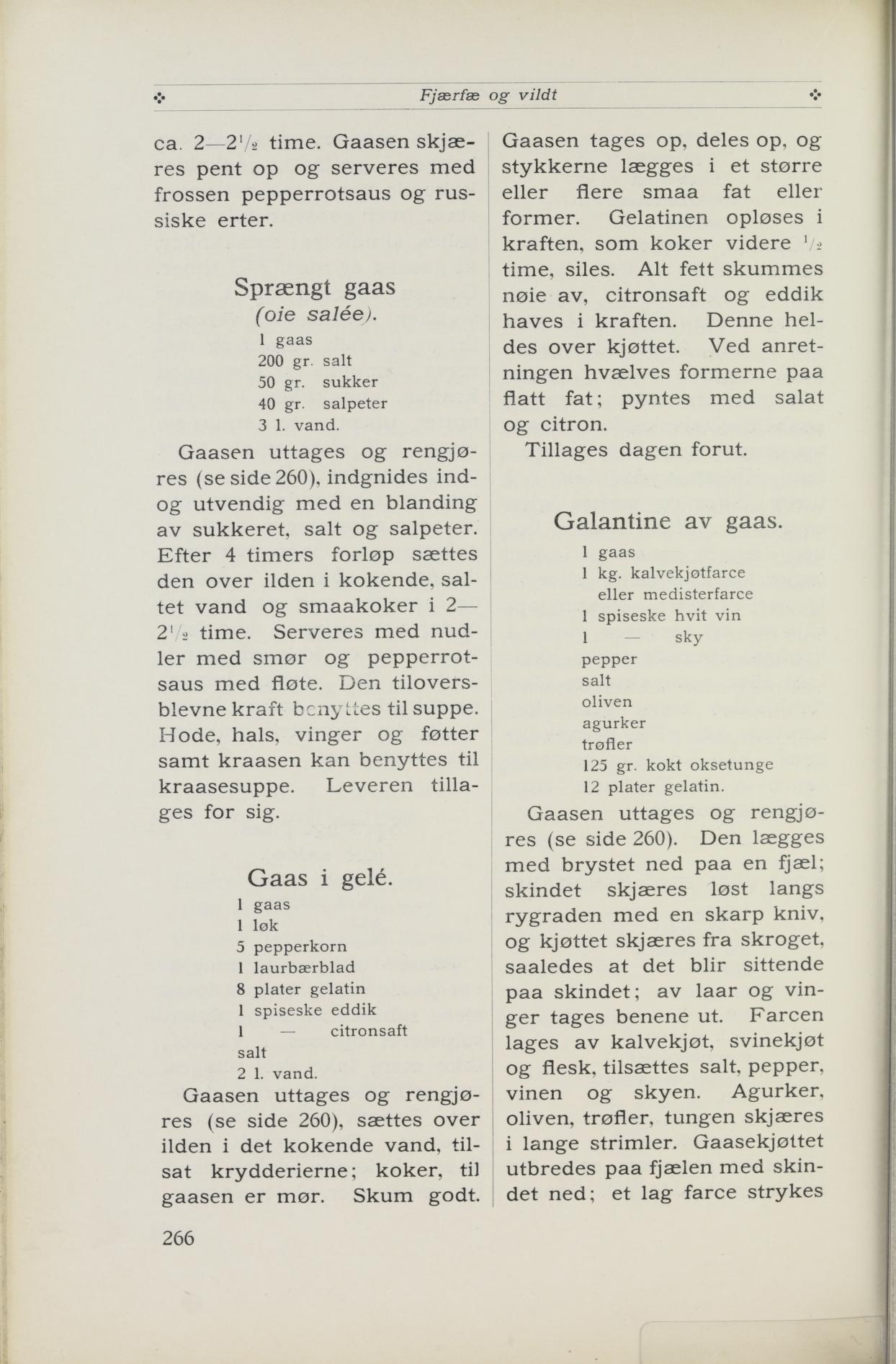
Goose in aspic from Erken's Stor kokebok: the goose is boiled tender in 2 liters of water with onion, peppercorns and bay leaf, cut up and placed in molds. The stock is reduced, 8 sheets of gelatin are added, it is strained, degreased and seasoned with lemon juice and vinegar before being poured over the meat to set. Served turned out with salad and lemon.

Source: Henriette Schønberg Erken, Stor kokebok, 1914-utg. s. 266 (falt i det fri)

Be the first to rate

About the dish

Cold poultry in aspic was a natural part of the bourgeois cold table around 1914. The goose is boiled tender with onion and spices, the meat is placed in molds and covered with the degreased, lemon-flavored stock that sets into a clear aspic. Erken uses sheet gelatin, which was a standard household product at the time.

How to make it

  1. 1

    Boil the goose

    Clean the goose and place it in boiling water together with the onion, peppercorns, bay leaf and salt. Boil until the goose is tender, skimming well along the way.

  2. 2

    Cut up the meat

    Lift out the goose, cut it up and place the pieces in a large platter or in several small molds.

  3. 3

    Reduce and strain the stock

    Let the stock continue to boil for half an hour. Soften the gelatin in cold water, squeeze it out and dissolve it in the hot stock. Strain the stock and carefully skim off all the fat.

  4. 4

    Season and pour over

    Stir the lemon juice and vinegar into the stock, season with salt, and pour it over the meat. Set in a cold place until the aspic is completely firm, preferably overnight.

  5. 5

    Plating

    Turn the molds out onto a flat platter and garnish with fine salad and lemon slices.

Changes from the original

Quantities are given in modern units, and the sheet gelatin is given with an approximate weight (8 sheets ≈ 16 g). It has been specified that the gelatin should be softened in cold water before being dissolved in the hot stock, and that the dish must set in a cold place for several hours.

In stores now

Clean, minimally processed groceries matched to the ingredients — approximate prices.

Product data and prices via Kassalapp. Prices are updated daily and may vary.

Tidsmaskin – hva endret seg?

Velg to utgaver og se hva Henriette Schønberg Erken la til, fjernet eller endret mellom dem.

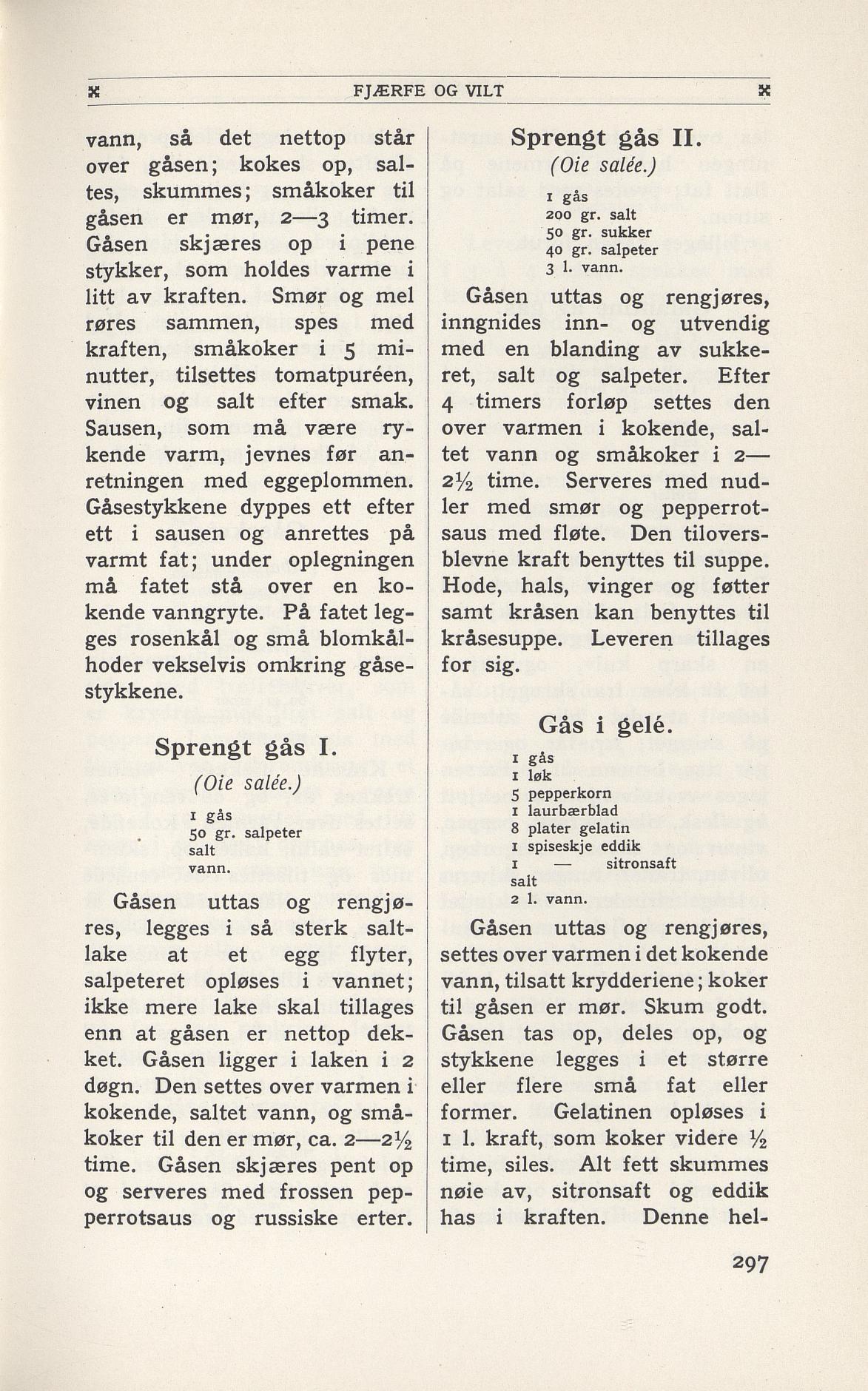
1914 (korrekturlest, s. 266)1949 (korrekturlest, s. 297)~49% av teksten endretfjernetlagt til
1 gaas gås 1 løk 5 pepperkorn 1 laurbærblad 8 plater gelatin 1 spiseske spiseskje eddik 1 — citronsaft 1—sitronsaft salt 2 l. vand. Gaasen uttages vann. Gåsen uttas og rengjøres (se side 260), sættes rengjøres, settes over ilden varmen i det kokende vand, tilsat krydderierne; koker, vann, tilsatt krydderiene; koker til gaasen gåsen er mør. Skum godt. Gaasen tages Gåsen tas op, deles op, og stykkerne lægges stykkene legges i et større eller flere smaa små fat eller former. Gelatinen opløses i kraften, 1 l. kraft, som koker videre ½ time, siles. Alt fett skummes nøie av, citronsaft sitronsaft og eddik haves has i kraften. Denne heldes helles over kjøttet. Ved anretningen hvælves formerne paa hvelves formene på flatt fat; pyntes med salat og citron. sitron. Tillages dagen forut.
Community interpretations

Be the first to share your own version.

See interpretations

Frequently asked questions

How long does the dish take?
Allow around 7 hours in all (420 minutes). The goose is boiled tender in 2 liters of water with spices, the stock is boiled a further half hour after the gelatin is dissolved, and then the aspic must set in the molds.
How is the stock seasoned?
1 onion, 5 peppercorns, 1 bay leaf and salt. Finally, 1 tablespoon of vinegar and lemon juice are added to the strained stock before it is poured over the meat.
How much gelatin is needed, and how does the aspic turn out clear?
8 sheets of gelatin are dissolved in the stock. Skim well during boiling, strain the stock and carefully skim off all the fat — otherwise the aspic will be cloudy and greasy.
How is goose in aspic served?
The meat pieces are placed in one large or several small dishes/molds with the stock over them. At plating, the molds are turned out onto a flat platter and garnished with salad and lemon. The recipe is from Henriette Schønberg Erken's "Stor kokebok" (1914), p. 266, and makes 8 servings.

Related recipes

More dishes in the same category from the archive

Read also

Kommentarer

Ingen kommentarer ennå. Bli den første til å dele!