Poor Man's Cookies I (fattigmannsbakkels, a traditional Norwegian deep-fried Christmas cookie; Erken 1914), a large and rich batch: 30 egg yolks, 250 g sugar, 1 l heavy cream, about 2 kg wheat flour, 1 dl cognac, cardamom, and lemon zest. Yolks and sugar are beaten ½ hour, stiffly whipped cream, cognac, spices, and flour folded in. The dough is chilled until the next day, rolled very thin, cut out, and fried pale yellow in about 2 kg lard. Up to 10 egg whites can be added for a cheaper result.
Source: Henriette Schønberg Erken, Stor kokebok, 1914-utg. s. 556 (falt i det fri)
Be the first to rate
About the dish
Erken's richest poor man's cookie recipe — with a full 30 egg yolks and a liter of heavy cream. She herself notes that the cookies are expensive, but "fine and delicate," and that up to 10 egg whites can be added to economize. The dough must be made the evening before and rested cold, or it becomes hard to roll thin enough.
How to make it
1
Beat egg yolks and sugar
Beat the egg yolks with the sugar until very pale and airy — the original says half an hour.
2
Mix the dough
Whip the cream stiff and fold it in. Add the cognac, cardamom, and lemon zest. Sift the flour and work it in bit by bit — use as little flour as possible, and hold back enough for rolling out.
3
Let the dough rest
Chill the dough overnight; it should be made the evening before rolling out.
4
Roll and cut out
Roll the dough very thin, a bit at a time (not too large sheets at once), and cut out poor man's diamonds with a wheel or cutter. Pull one end through the slit in the middle.
5
Fry in fat
Fry the cookies nicely pale yellow in hot lard or frying fat, about 180 °C (355 °F). Take them up and set them to drain on kitchen paper (originally a sheet of flatbread, blotting paper, or clean hay).
6
Note
If you want to economize, up to 10 egg whites can be added to the dough; then the cookies are cheaper, but not quite as fine.
Changes from the original
"Red-wine glass of cognac" is set to about 1 dl. "Uttrinses" is explained as cutting out with a poor man's cutter/wheel. Lard is kept for frying, but can be replaced with neutral frying oil or coconut fat; about 2 kg of fat is needed. Draining on flatbread/blotting paper is modernized to kitchen paper.
📖1914
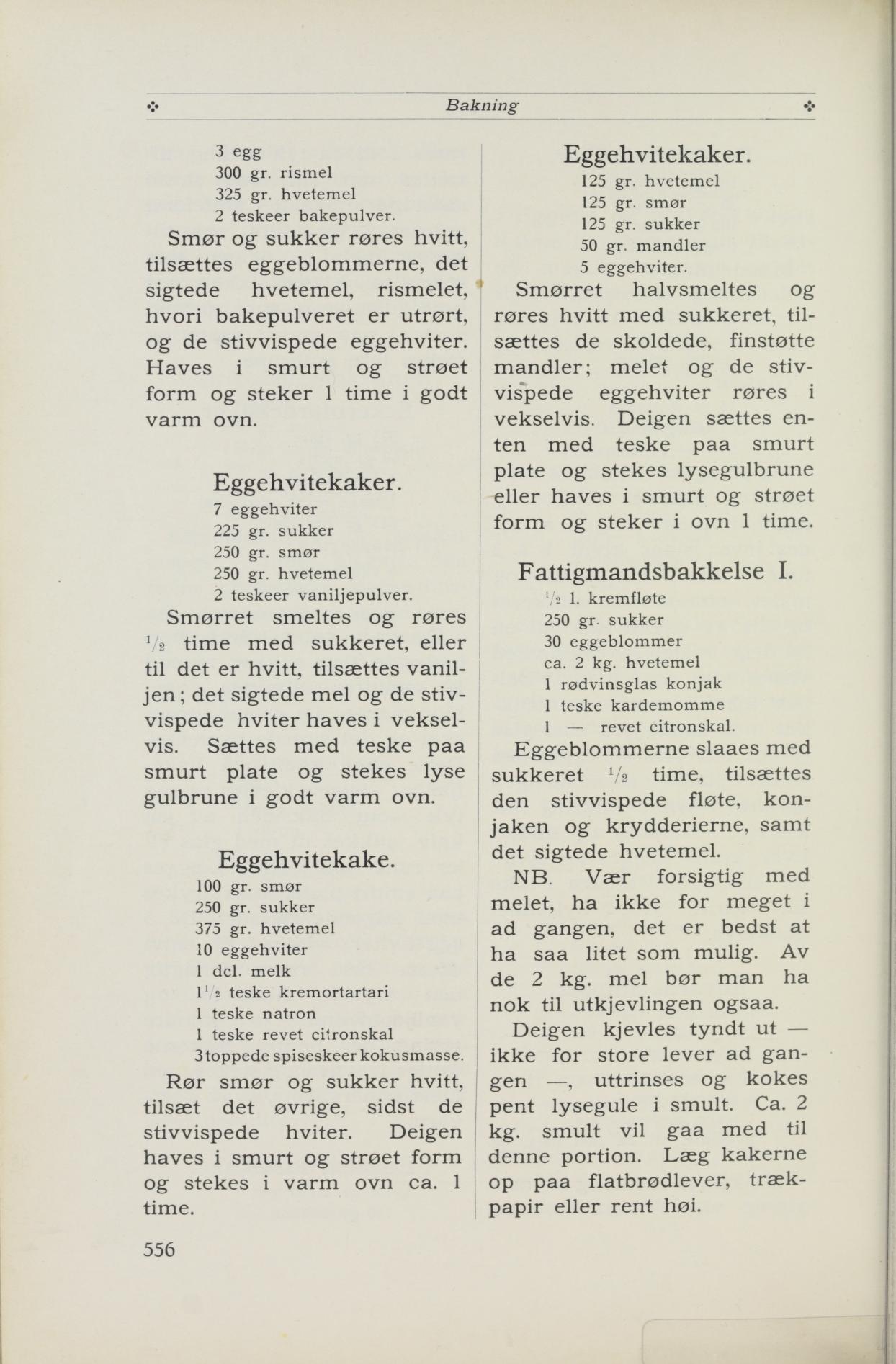
Original 1914 recipe
Verbatim from the first edition of the Big Cookbook.
Foto: Faksimile: Nasjonalbiblioteket
ProofreadPage 556
1 l. kremfløte
250 gr. sukker
30 eggeblommer
ca. 2 kg. hvetemel
1 rødvinsglas konjak
1 teske kardemomme
1 teske revet citronskal.
Eggeblommerne slaaes med sukkeret ½ time, tilsættes den stivvispede fløte, konjaken og krydderierne, samt det sigtede hvetemel.
NB. Vær forsigtig med melet, ha ikke for meget i ad gangen, det er bedst at ha saa litet som mulig. Av de 2 kg. mel bør man ha nok til utkjevlingen ogsaa.
Deigen kjevles tyndt ut — ikke for store lever ad gangen —, uttrinses og kokes pent lysegule i smult. Ca. 2 kg. smult vil gaa med til denne portion. Læg kakerne op paa flatbrødlever, trækpapir eller rent høi.
Disse kaker er dyre, men fine og skjøre; den, som vil, kan ta indtil 10 hviter med; billigere blir de, men langtfra saa gode.
NB. Deigen bør sættes aftenen før utkjevlingen.
📖1949
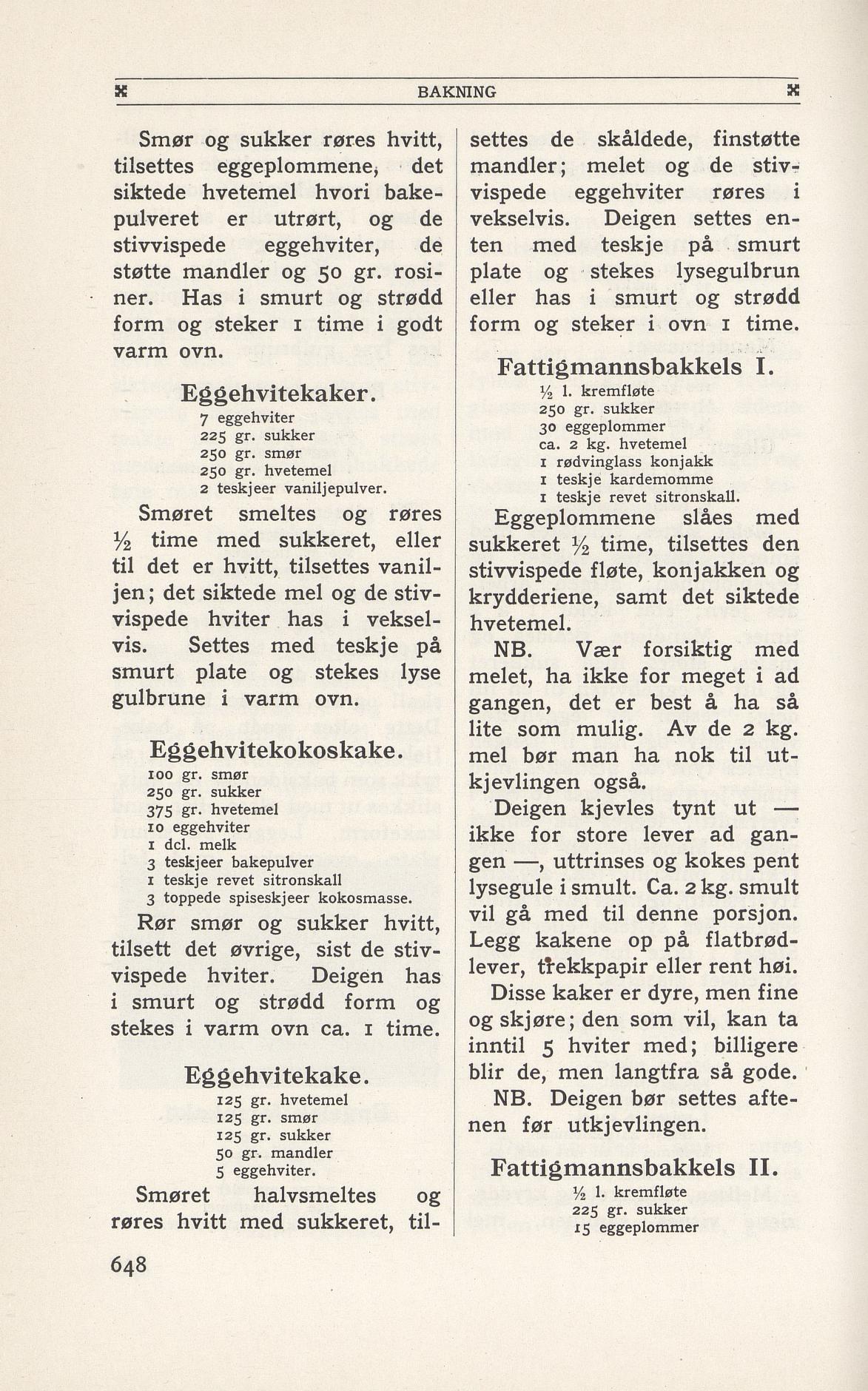
Revised 1949 recipe
From the revised edition of the Big Cookbook.
Foto: Faksimile: Nasjonalbiblioteket
ProofreadPage 648
y 2 1. kremfløte
250 gr. sukker
30 eggeplommer
ca. 2 kg. hvetemel
1 rødvinglass konjakk
1 teskje kardemomme
1 teskje revet sitronskall.
Eggeplommene slåes med sukkeret y 2 time, tilsettes den stivvispede fløte, konjakken og krydderiene, samt det siktede hvetemel.
NB. Vær forsiktig med melet, ha ikke for meget i adgangen, det er best å ha så lite som mulig. Av de 2 kg. mel bør man ha nok til utkjevlingen også.
Deigen kjevles tynt ut – ikke for store lever ad gangen –, uttrinses og kokes pent lysegule i smult. Ca. 2 kg. smult vil gå med til denne porsjon.
Legg kakene op på flatbrød, leverbaner, thekkpapir eller rent høi.
Disse kaker er dyre, men fine og skjøre; den som vil, kan ta inntil 5 hviter med; billigere blir de, men langtfra så gode.
NB. Deigen bør settes aftenen før utkjevlingen.
In stores now
Clean, minimally processed groceries matched to the ingredients — approximate prices.
Modernised → 1949 (proofread, p. 648)~87% of the text changedremovedadded
1 l y 2 1. kremfløte (stivpisket). 250 g sukker. gr. sukker 30 stk eggeplommer. eggeplommer ca. 2 kg kg. hvetemel (ca., inkludert mel til utkjevling). 1 dl rødvinglass konjakk (1 rødvinsglass). 1 ts teskje kardemomme (støtt). 1 ts teskje revet sitronskall. 2 kg smult eller nøytralt frityrfett (til koking). Pisk eggeplommene Eggeplommene slåes med sukkeret svært lyst og luftig – originalen sier en halv time.. Stivpisk fløten og vend y 2 time, tilsettes den inn. Tilsett konjakk, kardemomme og sitronskall. Sikt melet stivvispede fløte, konjakken og arbeid krydderiene, samt det inn litt om litt – bruk siktede hvetemel. NB. Vær forsiktig med melet, ha ikke for meget i adgangen, det er best å ha så lite mel som mulig, og hold av mulig. Av de 2 kg. mel bør man ha nok til utkjevlingen.. Sett deigen kaldt over natten; den bør lages kvelden før utkjevlingen.. Kjevle deigen svært tynt, litt om litt (ikke utkjevlingen også. Deigen kjevles tynt ut – ikke for store leiver om gangen), lever ad gangen –, uttrinses og skjær ut fattigmannsruter med hjul eller jern. Trekk den ene enden gjennom sprekken i midten.. Kok kakene kokes pent lysegule i varmt smult. Ca. 2 kg. smult eller frityrfett, ca. 180 °C. Ta dem opp og legg dem vil gå med til avrenning denne porsjon. Legg kakene op på kjøkkenpapir (originalt flatbrødleiv, trekkpapir flatbrød, leverbaner, thekkpapir eller reint høy).. Vil man spare, rent høi. Disse kaker er dyre, men fine og skjøre; den som vil, kan ta inntil 10 eggehviter tas med i deigen; da 5 hviter med; billigere blir kakene billigere, de, men ikke like fine. langtfra så gode. NB. Deigen bør settes aftenen før utkjevlingen.
Note on Modernised
«Rødvinsglas konjak» er satt til ca. 1 dl. «Uttrinses» er forklart som utskjæring med fattigmannsjern/hjul. Smult er beholdt som fritering, men kan erstattes av nøytral frityrolje eller kokosfett; ca. 2 kg fett trengs. Avkjøling på flatbrødleiv/trekkpapir er modernisert til kjøkkenpapir.
The recipe gives about 2 kg of wheat flour, but Schønberg Erken warns: don't add too much at a time, and use as little as possible. Of the 2 kg there should also be enough left for rolling out.
Why does the recipe take so long?
The egg yolks and sugar are to be beaten together for half an hour, and the dough should rest cold (preferably overnight) before it is rolled thin, cut, and fried. About 14 hours in all, including rest time.
What are the cookies fried in, and how much is needed?
They are fried in lard until they are nicely pale yellow — about 2 kg of lard is used for this batch (about 80 cookies). Set the cookies on a sheet of flatbread, blotting paper, or clean hay to draw off the fat.
Can I use egg whites too?
Yes, the 1914 original notes that whoever wishes may add up to 10 whites in addition to the 30 egg yolks. Otherwise the cookies are fine and delicate, but costly.