Skip to content

Shrovetide Buns (fastelavnsboller)

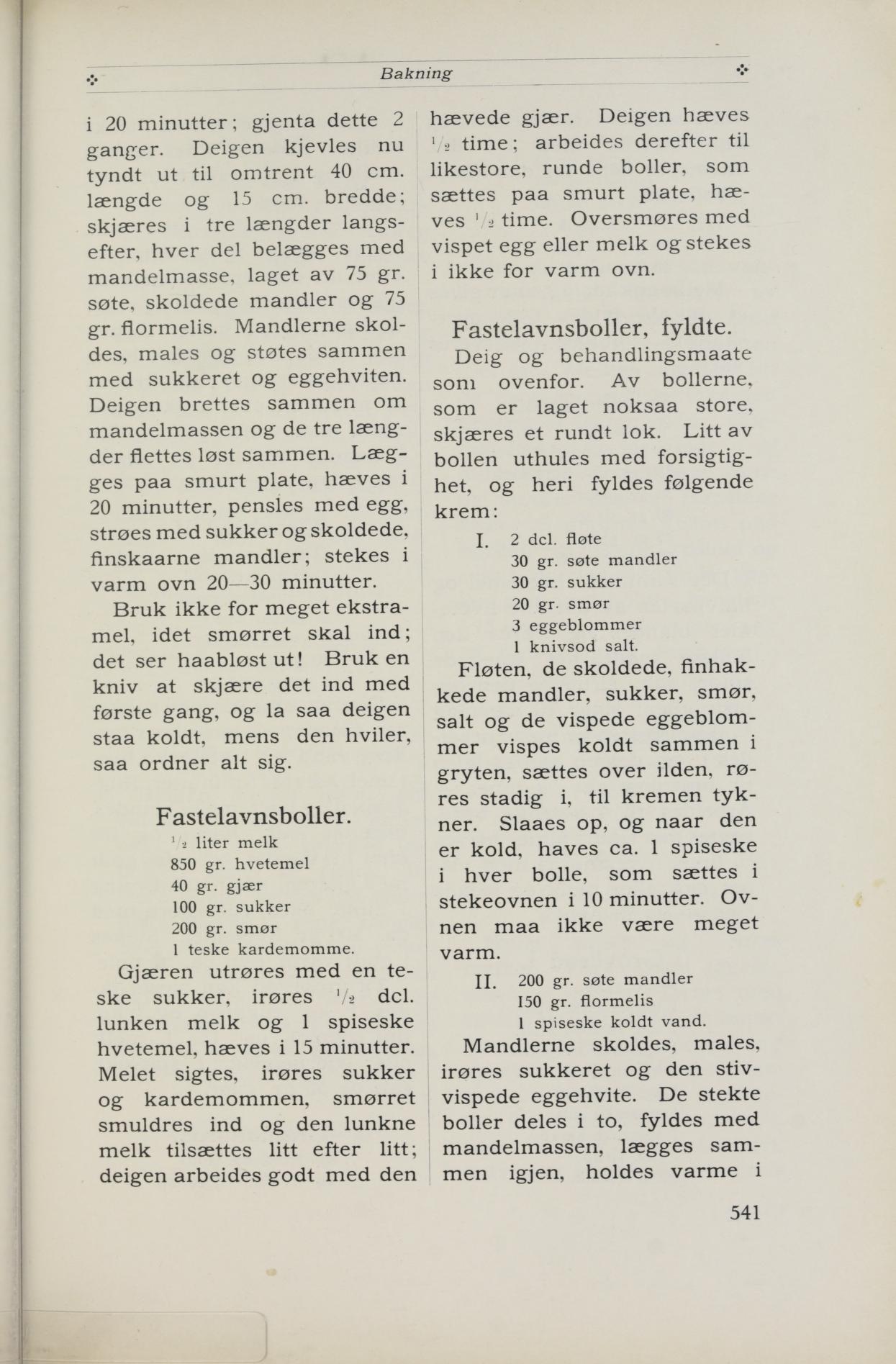
Erken's basic recipe for Shrovetide buns (fastelavnsboller, Norwegian Lenten buns) from 1914: a wheat dough with 850 g flour, 5 dl milk, 200 g butter, 100 g sugar, cardamom, and 40 g yeast, risen twice, shaped into round buns, brushed, and baked in a moderate oven.

Source: Henriette Schønberg Erken, Stor kokebok, 1914-utg. s. 541 (falt i det fri)

Be the first to rate

About the dish

Shrovetide buns belonged to Shrove Sunday and were one of the great holiday bakes in Norwegian homes. Erken first gives a simple sweet-bun dough with cardamom, which then forms the basis for the filled Shrovetide buns.

How to make it

  1. 1

    Stir out the yeast

    Stir the yeast together with 1 teaspoon of sugar, 1/2 dl of lukewarm milk, and 1 tablespoon of wheat flour. Let the pre-mixture rise for 15 minutes.

  2. 2

    Mix the dry ingredients

    Sift the flour and mix in the sugar and cardamom. Rub the butter into the flour mixture.

  3. 3

    Knead the dough

    Add the lukewarm milk little by little together with the risen yeast mixture, and work the dough well until smooth and supple.

  4. 4

    First rise

    Let the dough rise, covered, for about 30 minutes.

  5. 5

    Shape the buns

    Work the dough and divide it into equal-sized round buns. Place them on a greased or parchment-lined tray.

  6. 6

    Second rise

    Let the buns rise for about 30 minutes.

  7. 7

    Bake

    Brush with beaten egg or milk and bake in a not-too-hot oven, about 200 °C (390 °F), for 12–15 minutes until the buns are golden.

Changes from the original

Deciliter and teaspoon measures have been converted to modern units (1 del. = 1 dl). Fresh yeast is kept as in the original, with dry yeast as an alternative in the note. The baking temperature and time are estimated from "not-too-hot oven," as the original gives no degrees.

In stores now

Clean, minimally processed groceries matched to the ingredients — approximate prices.

Product data and prices via Kassalapp. Prices are updated daily and may vary.

Tidsmaskin – hva endret seg?

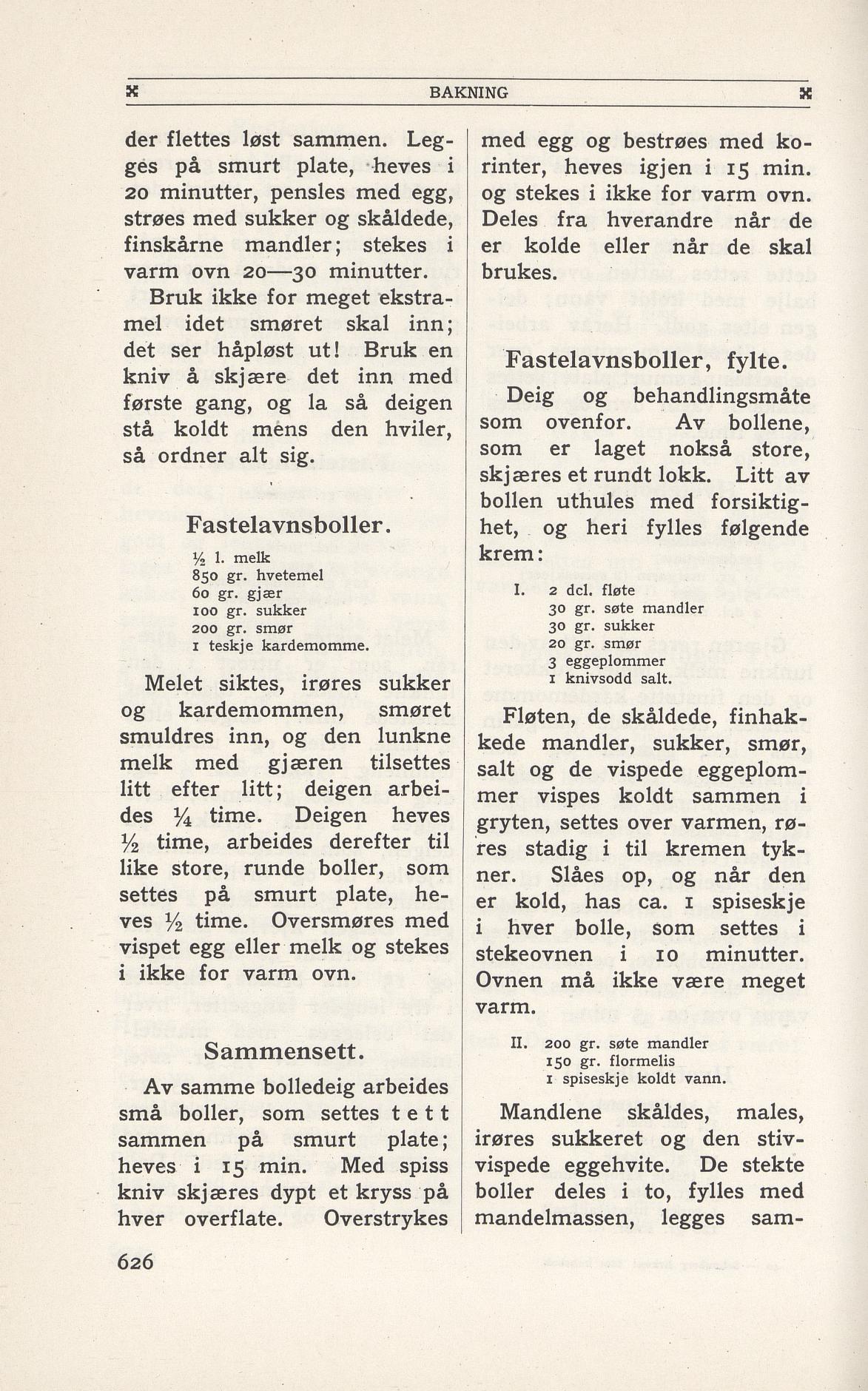
Velg to utgaver og se hva Henriette Schønberg Erken la til, fjernet eller endret mellom dem.

1914 (korrekturlest, s. 541)1949 (korrekturlest, s. 626)~53% av teksten endretfjernetlagt til
1/2 liter 4 l. melk 850 gr. hvetemel 40 60 gr. gjær 100 gr. sukker 200 gr. smør 1 teske kardemomme. Gjæren utrøres med en teske sukker, irøres 1/2 del. lunken melk og 1 spiseske hvetemel, hæves i 15 minutter. teskje kardemomme Melet sigtes, siktes, irøres sukker og kardemommen, smørret smøret smuldres ind inn, og den lunkne melk tilsættes med gjæren tilsettes litt efter litt; deigen arbeides godt med den hævede gjær. 3/4 time. Deigen hæves heves 1/2 time; time, arbeides derefter til likestore, like store, runde boller, som sættes paa settes på smurt plate, hæves heves 1/2 time. Oversmøres med vispet egg eller melk og stekes i ikke for varm ovn.
Community interpretations

Be the first to share your own version.

See interpretations

Frequently asked questions

How long does the rising take in total?
About an hour and a quarter: 15 minutes for the yeast mixture (pre-rise), 30 minutes for the dough, and 30 minutes for the shaped buns on the tray.
How do I get the butter into the dough?
The butter (200 g) is rubbed into the sifted flour together with the sugar and cardamom, before the lukewarm milk is added little by little and the dough is worked well with the risen yeast.
What oven temperature and glaze are recommended?
The buns are brushed with beaten egg or milk and baked in a "not-too-hot oven," that is, moderate heat, so they have time to bake through without becoming too dark.
How many buns does the recipe make?
The recipe from Henriette Schønberg Erken's "Stor kokebok" (1914, p. 541) is figured for about 20 equal-sized round buns.

Related recipes

More dishes in the same category from the archive

Read also

Kommentarer

Ingen kommentarer ennå. Bli den første til å dele!