Skip to content

Berries Preserved in Water

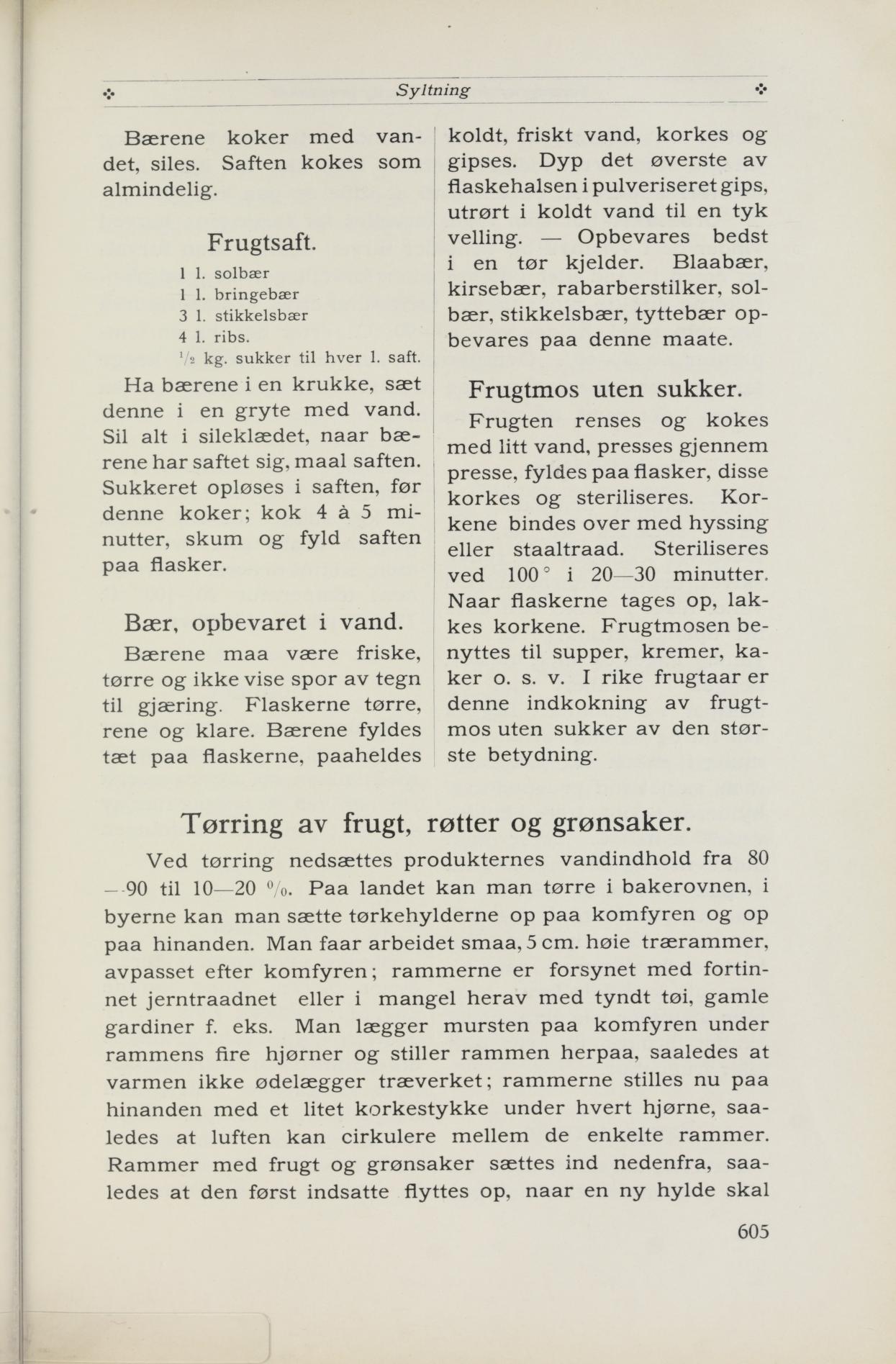
A method for keeping fresh berries in water: clean, dry bottles are packed tightly with sound berries, filled with cold water, corked, and sealed with a plaster slurry, then stored in a dry cellar. Suitable for blueberries, cherries, rhubarb, black currants, gooseberries, and lingonberries.

Source: Henriette Schønberg Erken, Stor kokebok, 1914-utg. s. 605 (falt i det fri)

Be the first to rate

About the dish

This simple sugar-free preserving method was common before canning and freezers became widespread. The berries are kept fresh underwater in airtight bottles, sealed with cork and plaster.

How to make it

  1. 1

    Choose the berries

    Use only fresh, dry berries with no trace of fermentation.

  2. 2

    Prepare the bottles

    Make sure the bottles are dry, clean, and ready.

  3. 3

    Fill the bottles

    Pack the berries tightly into the bottles and pour over cold, fresh water.

  4. 4

    Seal

    Insert the cork. Stir powdered plaster into cold water to a thick slurry and dip the top of the bottle neck into the plaster.

  5. 5

    Storage

    Store the bottles in a dry cellar.

Changes from the original

Modernized language in the method. The plaster seal is kept as the original describes, but a modern alternative of tight-sealing preserving jars is noted; the original gives no quantities, so the ingredients are listed without measures.

Time machine – what changed?

Pick two editions and see what Henriette Schønberg Erken added, removed or changed between them.

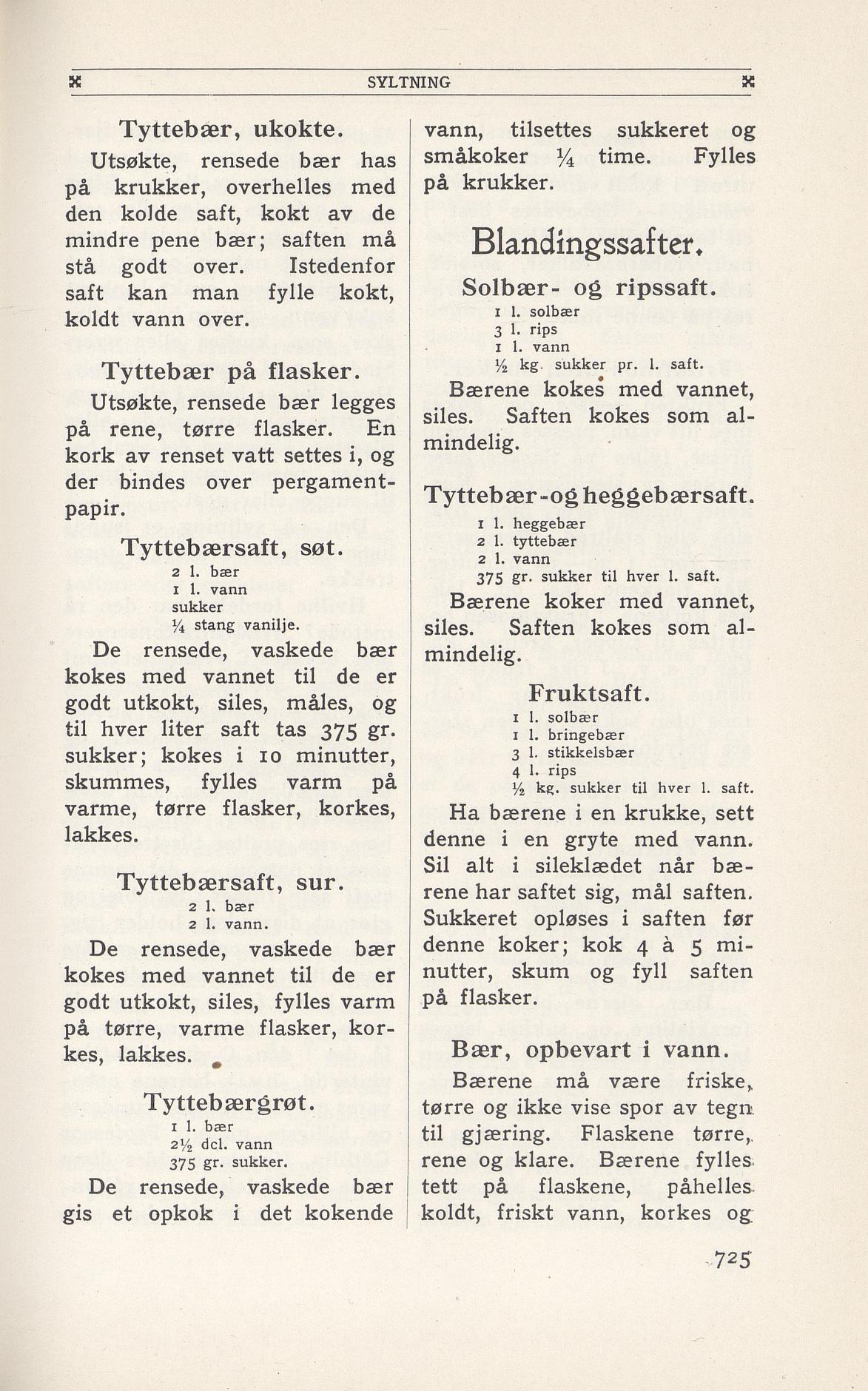
Modernised → 1949 (proofread, p. 725)~95% of the text changedremovedadded
friske bær (blåbær, kirsebær, rabarbrastilker, solbær, stikkelsbær eller tyttebær). kaldt, friskt vann. korker (til flaskene). pulverisert gips (til forsegling; kan erstattes av tettsluttende patentglass). Bruk bare friske, tørre bær uten spor av gjæring.. Sørg for at flaskene er tørre, rene og klare.. Fyll Ha bærene tett i flaskene og hell over kaldt, friskt vann.. Sett i kork. Rør pulverisert gips ut en krukke, sett denne i kaldt vann til en tykk velling og dypp den øverste delen av flaskehalsen gryte med vann. Sil alt i gipsen.. Oppbevar flaskene sileklædet når bærene har saftet sig, mål saften. Sukkeret opløses i en tørr kjeller. saften før denne koker; kok 4 å 5 minutter, skum og fyll saften på flasker.

Note on Modernised

Modernisert språk i fremgangsmåten. Gipsforsegling er beholdt slik originalen beskriver, men det er nevnt at moderne alternativ er tettsluttende patentglass; ingen mengder er oppgitt i originalen, så ingrediensene står uten mål.

Community interpretations

Be the first to share your own version.

See interpretations →

Frequently asked questions

Which berries can be preserved this way?
The recipe mentions blueberries, cherries, rhubarb stalks, black currants, gooseberries, and lingonberries. Rhubarb is bottled as stalks.
How do I go about it?
The berries must be fresh, dry, and free of any sign of fermentation, and the bottles dry, clean, and ready. Pack the berries tightly into the bottles, pour over cold, fresh water, cork, and seal: dip the top of the bottle neck into powdered plaster stirred into cold water to a thick slurry.
Where should the bottles be stored?
Best in a dry cellar, according to Schønberg Erken's "Stor kokebok" (1914), p. 605.

Related recipes

More dishes in the same category from the archive

Read also

Kommentarer

Ingen kommentarer ennå. Bli den første til å dele!