Skip to content

Opening a Lobster

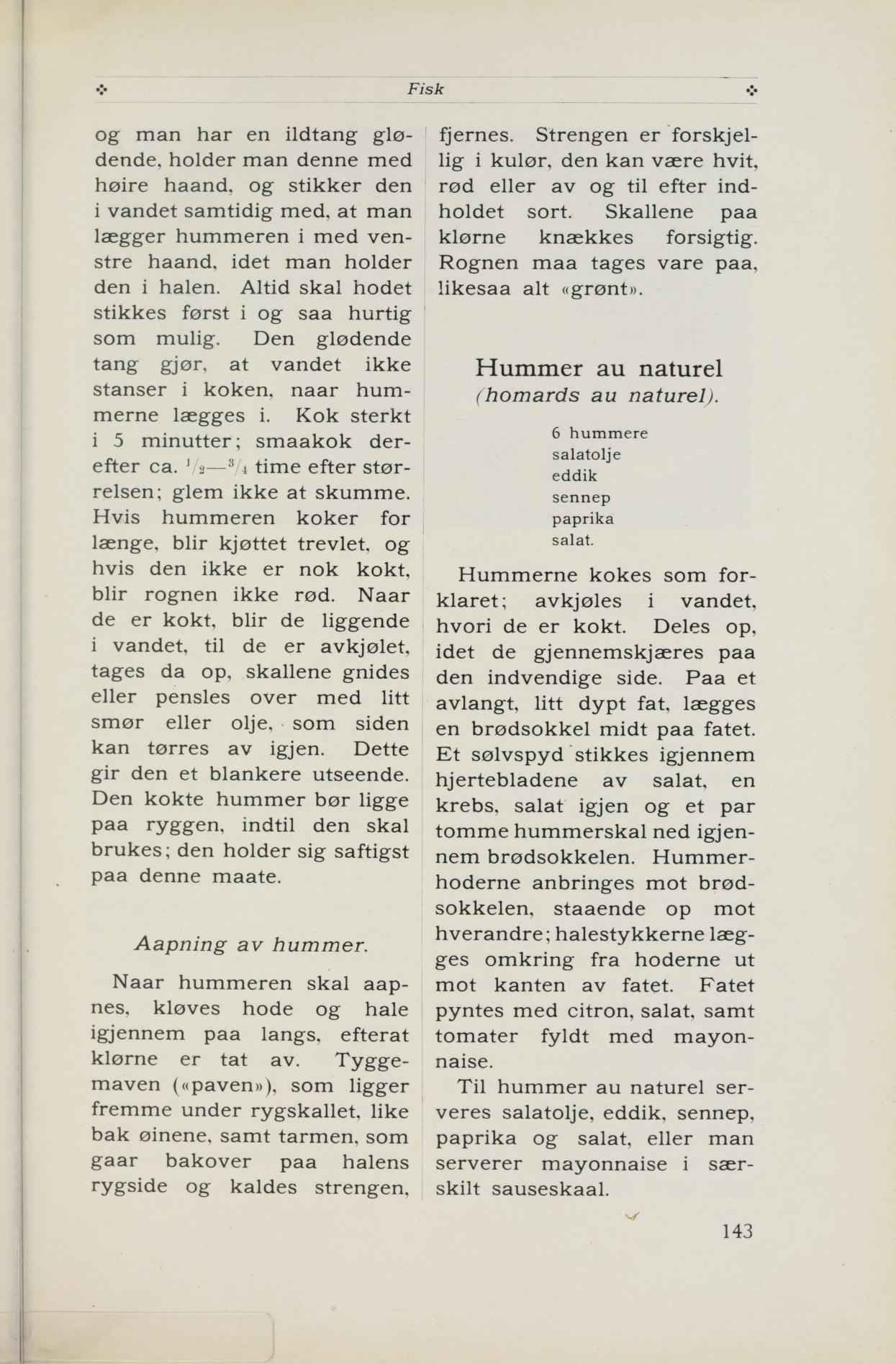
Erken's 1914 instructions for opening a boiled lobster: the claws are removed, the head and tail are split lengthwise, the chewing stomach (the 'pope') behind the eyes and the intestine (the 'string') are removed, the claws are cracked gently, and the roe and 'green' are saved.

Source: Henriette Schønberg Erken, Stor kokebok, 1914-utg. s. 143 (falt i det fri)

Be the first to rate

About the dish

A short technical section in the fish chapter, placed right after Erken's instructions for boiling lobster. Lobster was festive fare in bourgeois homes, and the book assumes the cook handles the animal all the way from its live state to plating.

How to make it

  1. 1

    Remove the claws

    Twist or break the claws off the boiled, cooled lobster.

  2. 2

    Split the lobster

    Lay the lobster on its back and split the head and tail lengthwise with a heavy knife.

  3. 3

    Remove the stomach and intestine

    Remove the chewing stomach (the 'pope'), which lies at the front under the shell, just behind the eyes, and remove the intestine (the 'string') that runs backward along the top of the tail. The string may be white, red, or black depending on its contents.

  4. 4

    Crack the claws

    Crack the shells of the claws gently so the meat can be removed whole.

  5. 5

    Save the roe and the green

    Collect all the roe and all the 'green' (the liver); it is used for butters, sauces, and garnish.

Changes from the original

No ingredients are given in the original; the technique is rendered as steps in modern language. The technical terms 'chewing stomach (pope)' and 'string' are explained as the gizzard/stomach and the intestine.

Tidsmaskin – hva endret seg?

Velg to utgaver og se hva Henriette Schønberg Erken la til, fjernet eller endret mellom dem.

1914 (korrekturlest, s. 143)1949 (korrekturlest, s. 172)~42% av teksten endretfjernetlagt til
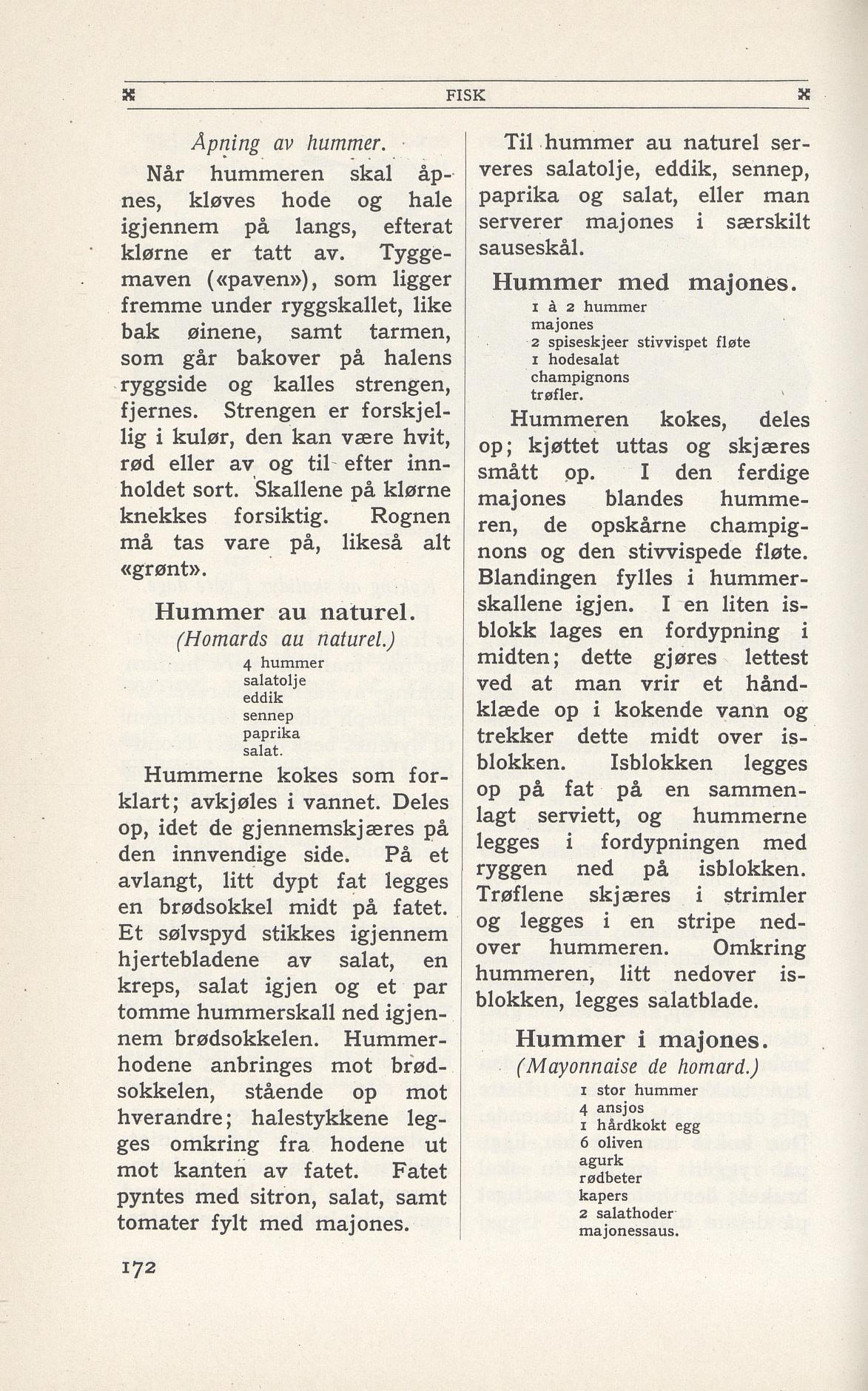
Naar Når hummeren skal aapnes, åpnes, kløves hode og hale igjennem paa langs, efterat klørne er tat tatt av. Tyggemaven Tyggemayen («paven»), som ligger fremme under rygskallet, ryggskallet, like bak øinene, samt tarmen, som gaar går bakover paa halens rygside ryggside og kaldes kalles strengen, fjernes. Strengen er forskjellig i kulør, den kan være hvit, rød eller av og til efter indholdet innholdet sort. Skallene paa klørne knækkes forsigtig. knekkes forsiktig. Rognen maa tages må tas vare paa, likesaa på, likeså alt «grønt».

Community interpretations

Be the first to share your own version.

See interpretations

Frequently asked questions

How do I open a boiled lobster properly?
First remove the claws. Then split the head and tail lengthwise. Crack the shells of the claws gently so the meat can be removed whole.
What must be removed before serving?
The chewing stomach (the 'pope'), which lies at the front under the shell just behind the eyes, and the intestine (the 'string') that runs backward along the top of the tail. The string may be white, red, or black depending on its contents.
Should I throw away the roe and the green?
No. According to Schønberg Erken (Stor kokebok 1914, p. 143), the roe should be saved, as should all the 'green'; it is often used in sauces and butters for lobster dishes.

Related recipes

More dishes in the same category from the archive

Read also

Kommentarer

Ingen kommentarer ennå. Bli den første til å dele!