Skip to content

Water Bread

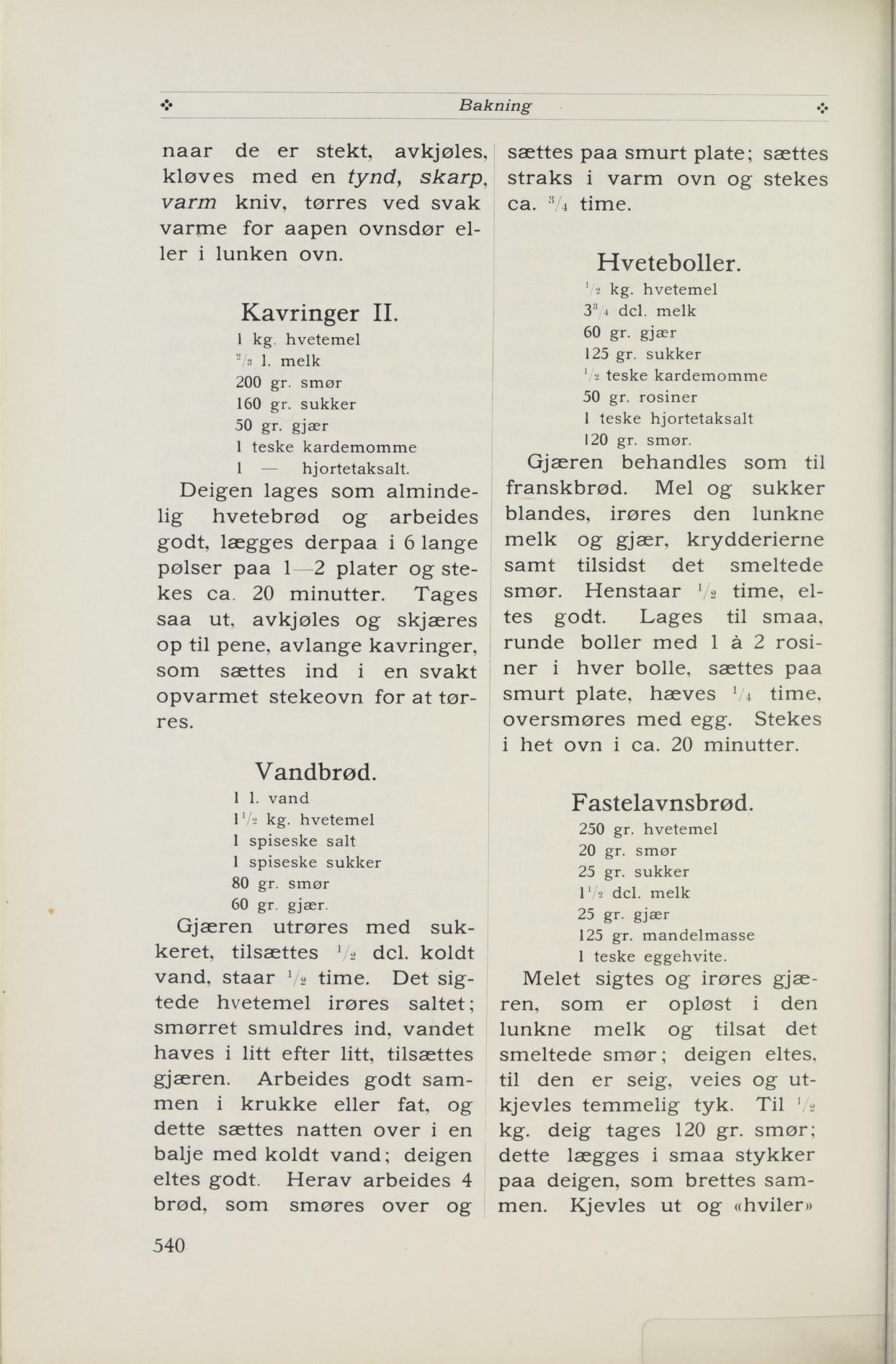
Erken's water bread (vannbrød, 1914) is a milk-free wheat bread made from 1.5 kg flour, 1 l water, 60 g yeast, 80 g butter, 25 g sugar and 1 tbsp salt. The dough cold-proofs overnight, is kneaded, shaped into 4 loaves and baked about 45 minutes in a hot oven.

Source: Henriette Schønberg Erken, Stor kokebok, 1914-utg. s. 540 (falt i det fri)

Be the first to rate

About the dish

Water bread is a simple wheat bread without milk, baked from a cold-proofed dough. Erken lets the dough stand overnight in a tub of cold water — the method of the day for keeping the dough evenly cool and giving a long, slow rise and good flavor.

How to make it

  1. 1

    Proof the yeast

    Stir the yeast together with the sugar, add ½ dl cold water, and let stand for ½ hour.

  2. 2

    Mix the dough

    Mix the sifted flour with the salt. Rub the butter into the flour, add the water a little at a time, and finally the yeast mixture.

  3. 3

    Cold-rise

    Work the dough together well in a bowl or crock. Cover and set in a cool place (the refrigerator, or as in the original, in cold water) overnight.

  4. 4

    Knead and shape

    Knead the dough well the next day and shape into 4 loaves. Brush them with water or melted butter and place on a greased baking sheet.

  5. 5

    Bake

    Put the loaves straight into a hot oven at 230 °C (450 °F), then lower to 200 °C (400 °F) after 10 minutes. Bake about 45 minutes total, until the loaves are baked through and sound hollow when you tap the underside. Cool on a rack.

Changes from the original

Measurements converted to modern units (dl, tsp, tablespoon→tbsp). The cold-water proofing has been modernized to the refrigerator. Oven temperature is specified (230 °C (445 °F) falling to 200 °C (390 °F)), since the original only says "hot oven."

In stores now

Clean, minimally processed groceries matched to the ingredients — approximate prices.

Product data and prices via Kassalapp. Prices are updated daily and may vary.

Tidsmaskin – hva endret seg?

Velg to utgaver og se hva Henriette Schønberg Erken la til, fjernet eller endret mellom dem.

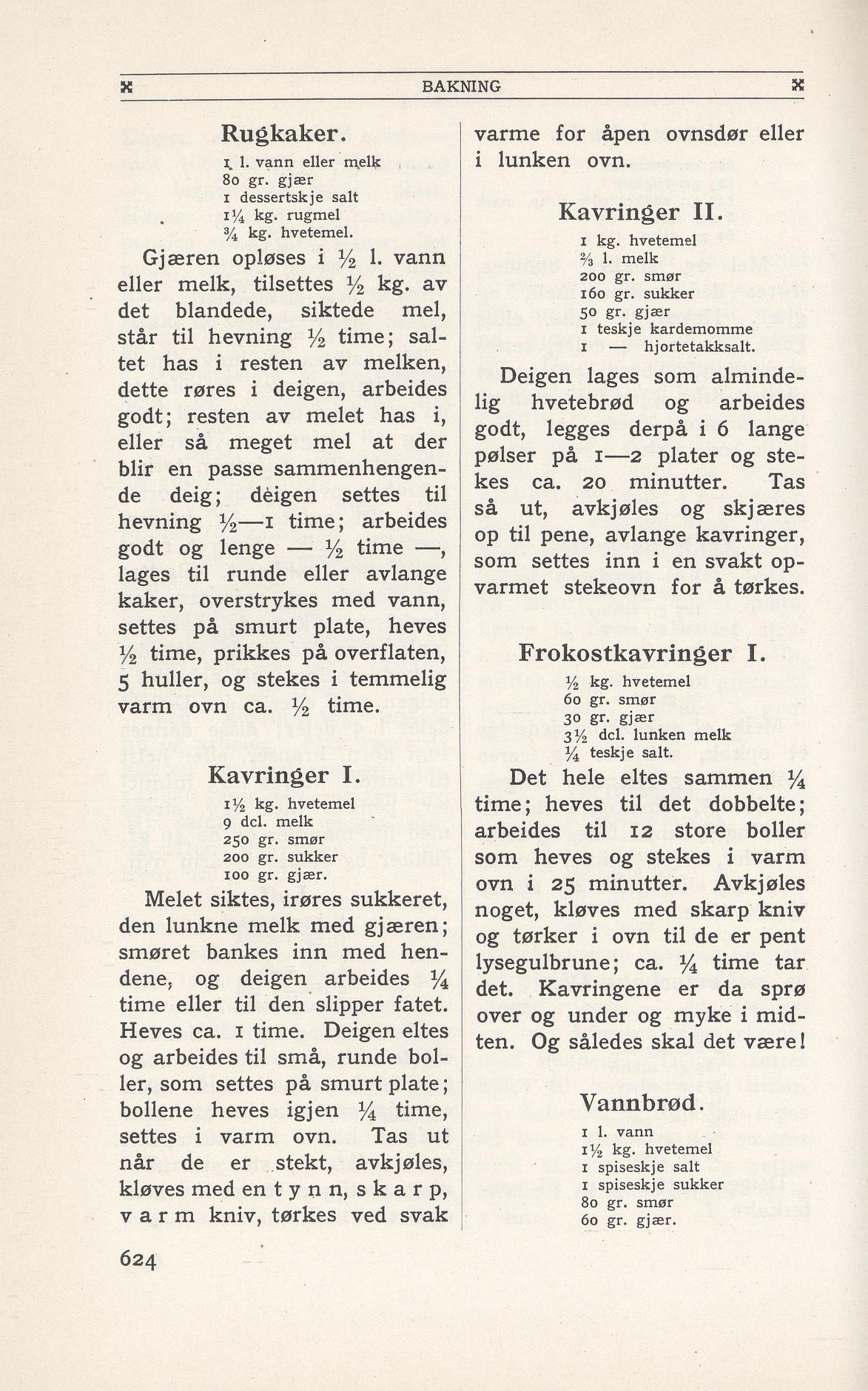
1914 (korrekturlest, s. 540)1949 (korrekturlest, s. 624)~47% av teksten endretfjernetlagt til
Vandbrød. 1 l. vand vann 1½ kg. hvetemel 1 spiseske spiseskje salt 25 gr. 1 spiseskje sukker 80 gr. smør 60 gr. gjær. Gjæren utrøres med sukkeret, tilsættes ½ del. koldt vand, staar ½ time. Det sigtede siktede hvetemel irøres saltet; smørret saltet, smøret smuldres ind, vandet haves inn, vannet med gjæren has i litt efter litt, tilsættes gjæren. litt. Arbeides godt sammen i krukke eller fat, og dette sættes settes natten over i en balje med koldt vand; vann; deigen eltes godt. Herav arbeides 4 brød, brød som smøres over og sættes paa settes på smurt plate; sættes settes straks i varm ovn og stekes ca. ¾ time.
Community interpretations

Be the first to share your own version.

See interpretations

Frequently asked questions

Why does the dough sit in cold water overnight?
The recipe uses a slow, cold rise: the crock or dish of dough is set overnight in a tub of cold water. This keeps the dough cool so it rises slowly and develops better flavor. Allow around 13 hours for the whole process.
How long and how should the loaves be baked?
The dough is divided into 4 loaves that are brushed and placed on a greased sheet. They go straight into a hot oven and bake about ¾ hour — roughly 45 minutes.
What is in vannbrød — and why is it called that?
It is made with 1 liter water, 1½ kg wheat flour, 1 tablespoon salt, 25 g sugar, 80 g butter, and 60 g yeast. The name comes from the liquid being water, not milk. The yeast is stirred with the sugar and half a deciliter of cold water and left ½ hour before being mixed into the flour, into which the salt is stirred and the butter rubbed.
Where is the recipe from?
From Henriette Schønberg Erken's "Stor kokebok" (1914), page 540.

Related recipes

More dishes in the same category from the archive

Read also

Kommentarer

Ingen kommentarer ennå. Bli den første til å dele!