Skip to content

Vanilla Pudding (pouding à la vanille)

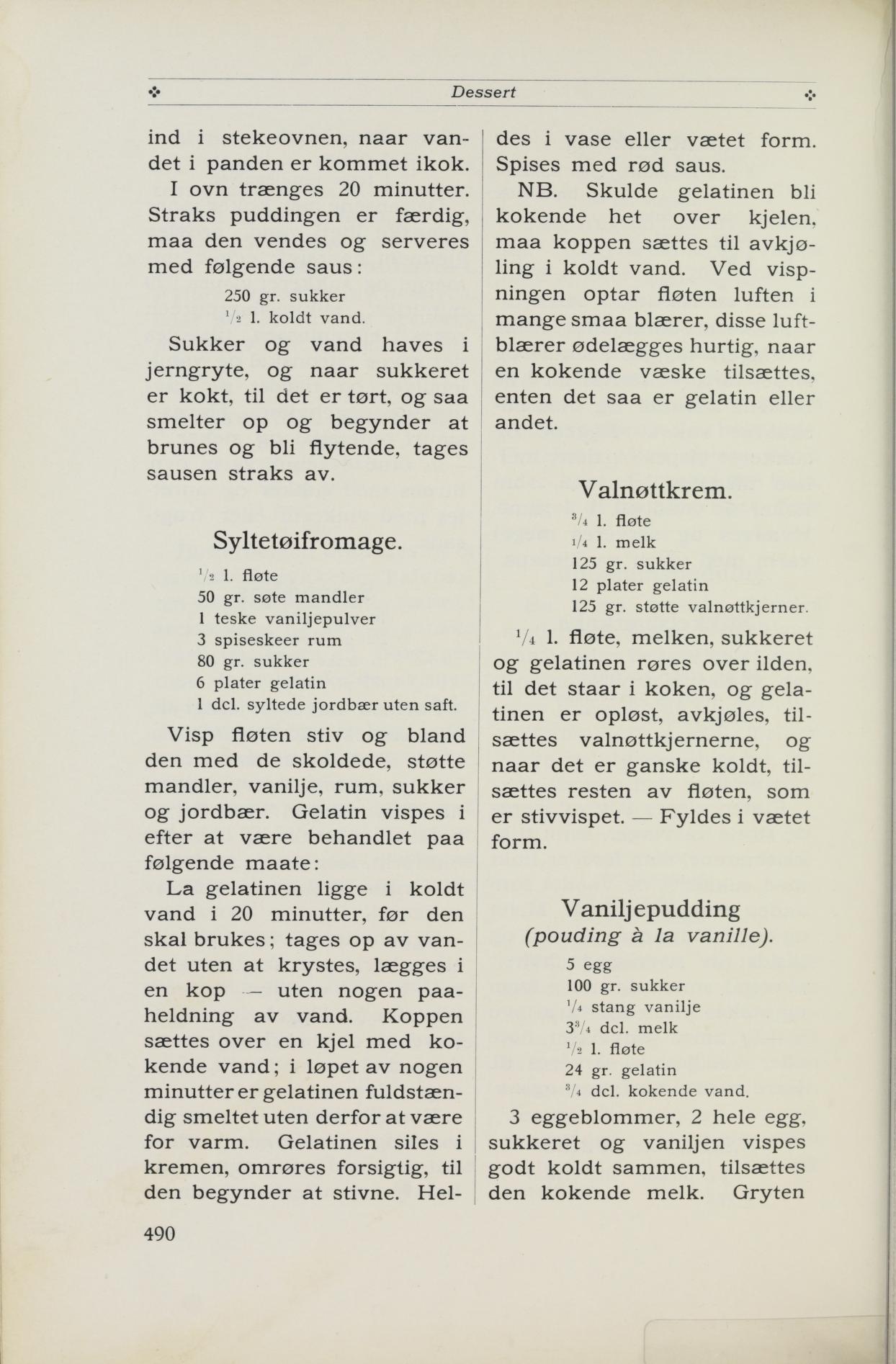
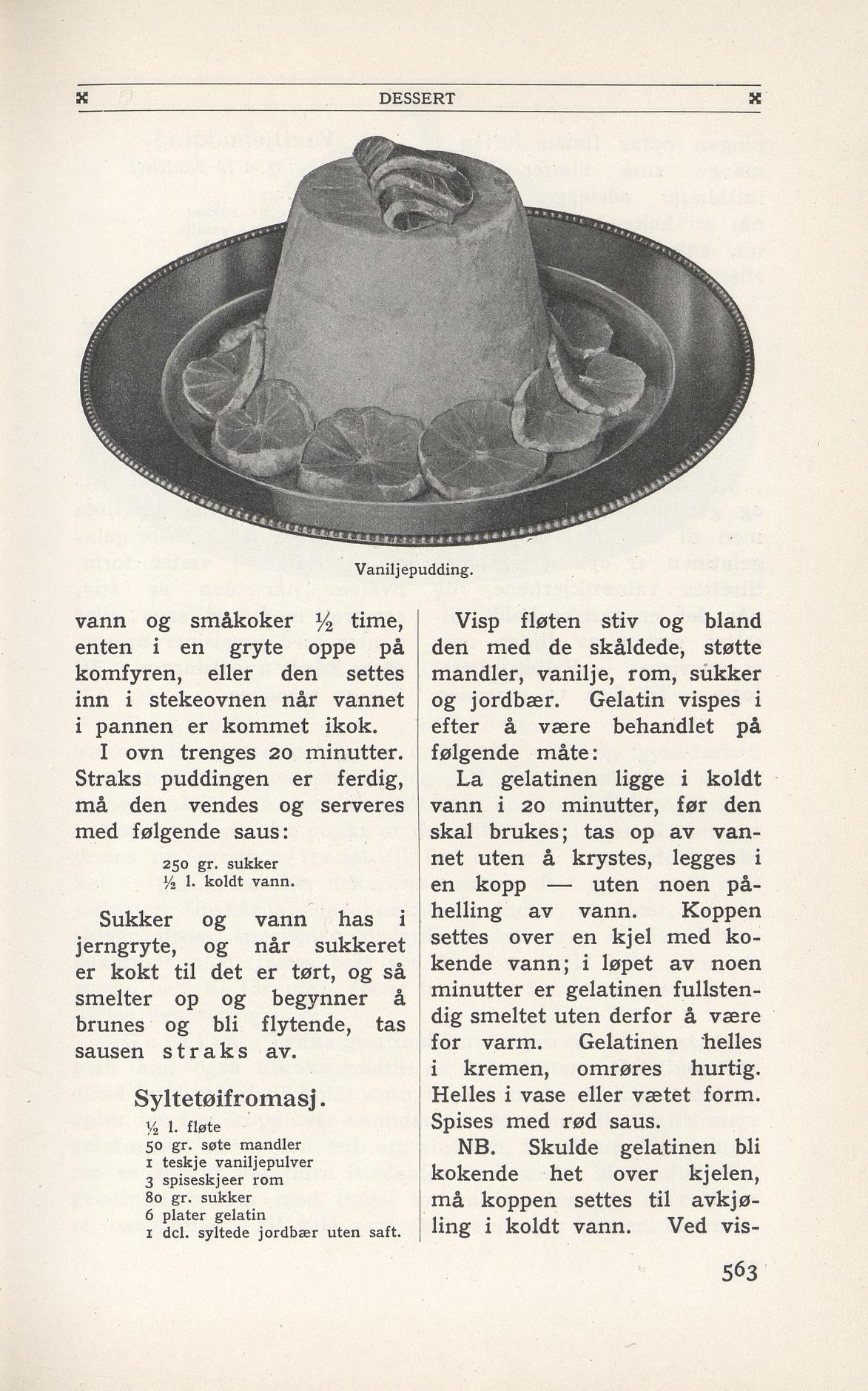
Cold vanilla pudding from Erken's Stor kokebok 1914: egg yolks, whole eggs, sugar, and vanilla are whisked, thinned with boiling milk, and heated to just below boiling without boiling. Stiffly whipped cream and gelatin dissolved in water are folded in. It sets in a dampened mold and is served turned out with a red sauce.

Source: Henriette Schønberg Erken, Stor kokebok, 1914-utg. s. 490 (falt i det fri)

Be the first to rate

About the dish

This cold vanilla pudding appears in the dessert chapter of "Stor kokebok" (1914). The French name "pouding à la vanille" shows how strongly French culinary terminology shaped Norwegian party food in Erken's day.

How to make it

  1. 1

    Whisk the egg mixture

    Whisk 3 egg yolks, 2 whole eggs, the sugar, and the vanilla together well while cold.

  2. 2

    Add the boiling milk

    Stir in the boiling milk while whisking.

  3. 3

    Heat gently

    Set the pan over low heat and bring the mixture to just below boiling, but it must not boil. Remove it from the heat.

  4. 4

    Fold in cream and gelatin

    Dissolve the gelatin in the boiling water. Fold the stiffly whipped cream into the cooled egg custard, then strain the gelatin in while gently stirring.

  5. 5

    Mold and chill

    Pour the pudding into a mold rinsed with cold water and chill until set.

  6. 6

    Serve

    Turn the pudding out onto a platter and serve with a red sauce.

Changes from the original

Measures converted to deciliters and grams, the amount of gelatin is given in grams (can be replaced with sheets), and the method is broken into numbered steps. The "5 eggs" of the ingredients is specified as 3 egg yolks and 2 whole eggs, as the original method indicates.

In stores now

Clean, minimally processed groceries matched to the ingredients — approximate prices.

Product data and prices via Kassalapp. Prices are updated daily and may vary.

Time machine – what changed?

Pick two editions and see what Henriette Schønberg Erken added, removed or changed between them.

1914 (proofread, p. 490) → Modernised~80% of the text changedremovedadded
5 3 stk eggeplommer. 2 stk egg (hele). 100 gr. sukker 1/2 stang vanilje 3 1/2 del. g sukker. 0,5 stk vaniljestang (kornene skrapes ut). 3,5 dl melk 1/2 l. (kokende). 5 dl fløte (kremfløte, stivvispet). 24 gr. g gelatin (plater eller pulver). 4 del. kokende vand. dl vann (kokende, til å løse gelatinen). Visp 3 eggeblommer, eggeplommer, 2 hele egg, sukkeret og vaniljen vispes godt koldt sammen, tilsættes sammen kaldt.. Spe inn den kokende melk. Gryten sættes melken under omrøring.. Sett kjelen over svak ild, bringes varme og bring blandingen til kokepunktet, men maa den må ikke koke, tages koke. Ta den av ilden. Tilsættes varmen.. Løs gelatinen i det kokende vannet. Vend den stivvispede fløte og den fløten inn i vandet opløste gelatin. Heldes den avkjølte eggekremen, og sil deretter gelatinen inn under forsiktig omrøring.. Hell puddingen i vætet form, hvælves, naar en form skylt med kaldt vann og sett kaldt til den er stiv, serveres stiv.. Hvelv puddingen på et fat og server med rød saus.

Note on Modernised

Mål er omregnet til desiliter og gram, gelatinmengden angis i gram (kan erstattes av plater), og fremgangsmåten er delt i nummererte trinn. Ingrediensene 5 egg er presisert til 3 eggeplommer og 2 hele egg slik originalens fremgangsmåte angir.

Community interpretations

Be the first to share your own version.

See interpretations →

Frequently asked questions

Why must the egg custard not boil?
Because the eggs would then curdle and the custard would turn grainy. The contents of the pan are heated over low heat until they approach boiling, and then removed from the heat.
How is the gelatin used?
24 grams of gelatin are dissolved in 4 deciliters of boiling water and stirred into the cooled egg custard together with the stiffly whipped cream (1/2 liter).
How long does it take, and how is the pudding served?
Allow around 5 hours in all, most of it setting time in the refrigerator. The mixture is poured into a dampened mold, turned out once set, and served with a red sauce.
Where does the recipe come from?
From Henriette Schønberg Erken's "Stor kokebok" (1914), page 490. It serves 8.

Related recipes

More dishes in the same category from the archive

Read also

Kommentarer

Ingen kommentarer ennå. Bli den første til å dele!