Skip to content

Walnuts with Marzipan

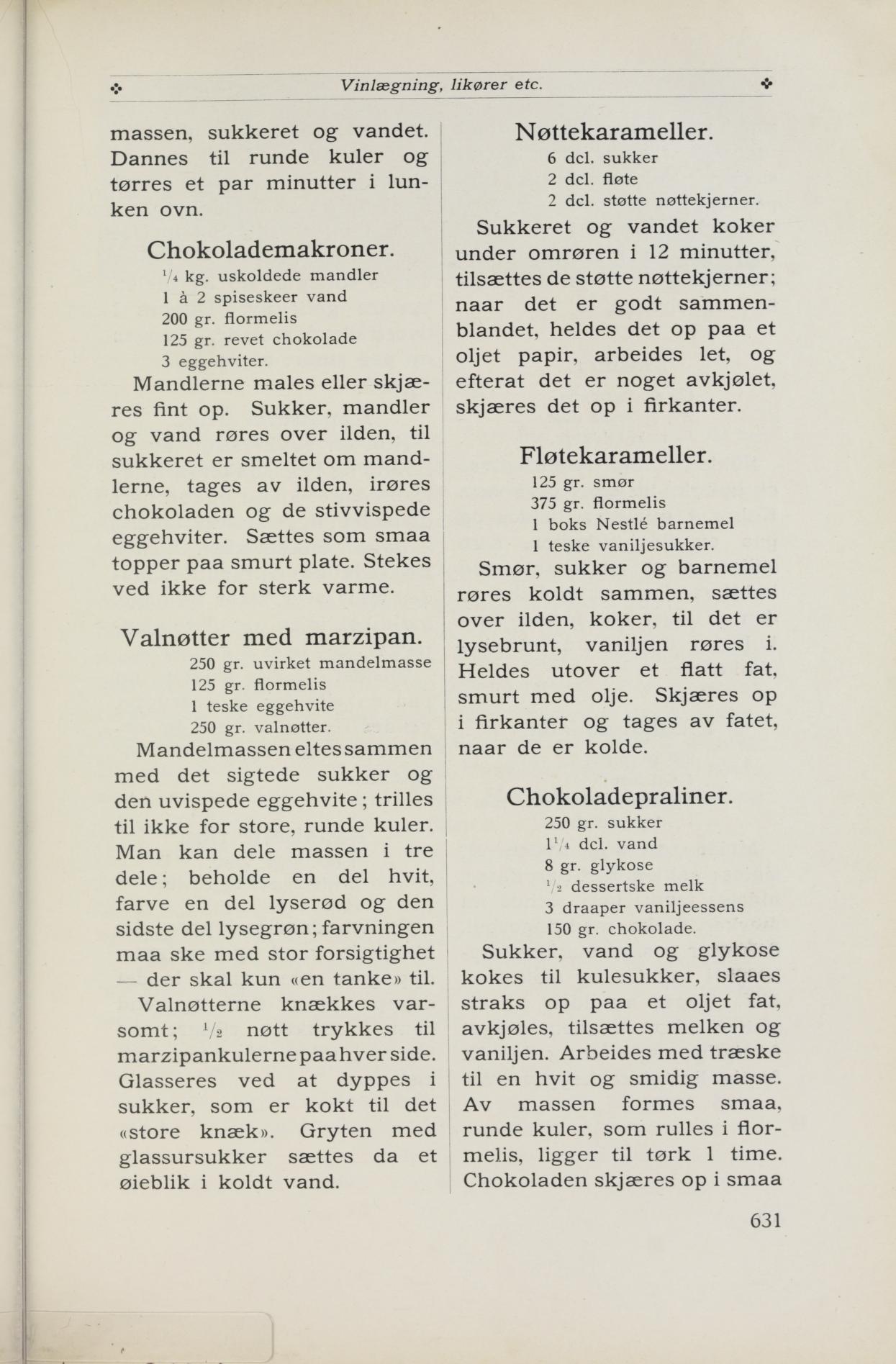
Marzipan balls of raw almond paste, confectioners' sugar and egg white, optionally colored, pressed between two walnut halves and glazed in sugar cooked to the hard crack stage (150–155 °C). From Erken 1914.

Source: Henriette Schønberg Erken, Stor kokebok, 1914-utg. s. 631 (falt i det fri)

Be the first to rate

About the dish

A classic confection from Erken's 'Stor kokebok' (1914): small marzipan balls pressed between two walnut halves and glazed in cooked sugar. Coloring in white, pink and light green was typical of the candy platters of the day, and Erken warns to use the color very sparingly.

How to make it

  1. 1

    Knead the marzipan

    Knead the marzipan paste thoroughly with the sifted confectioners' sugar and the unbeaten egg white into a smooth mass.

  2. 2

    Color the mass

    Divide the mass into three if you like. Leave one part white, color one pink and one light green. Use only a hint of color.

  3. 3

    Roll balls

    Roll the mass into small, round balls – not too large.

  4. 4

    Add the walnuts

    Crack the walnuts carefully so the halves stay whole. Press a walnut half onto each side of the marzipan balls.

  5. 5

    Glaze

    Cook the sugar and water to 150–155 °C (310 °F) (hard crack). Set the pan in cold water for a moment to stop the cooking, and dip the candies quickly in the sugar. Place them on greased paper to set.

Changes from the original

Quantities are given in modern units. 'Unworked almond paste' is modern raw marzipan paste. Cooking the sugar to the 'hard crack' stage has been specified as 150–155 °C (310 °F) with a syrup of sugar and water. Glazing is optional in the modern version.

Tidsmaskin – hva endret seg?

Velg to utgaver og se hva Henriette Schønberg Erken la til, fjernet eller endret mellom dem.

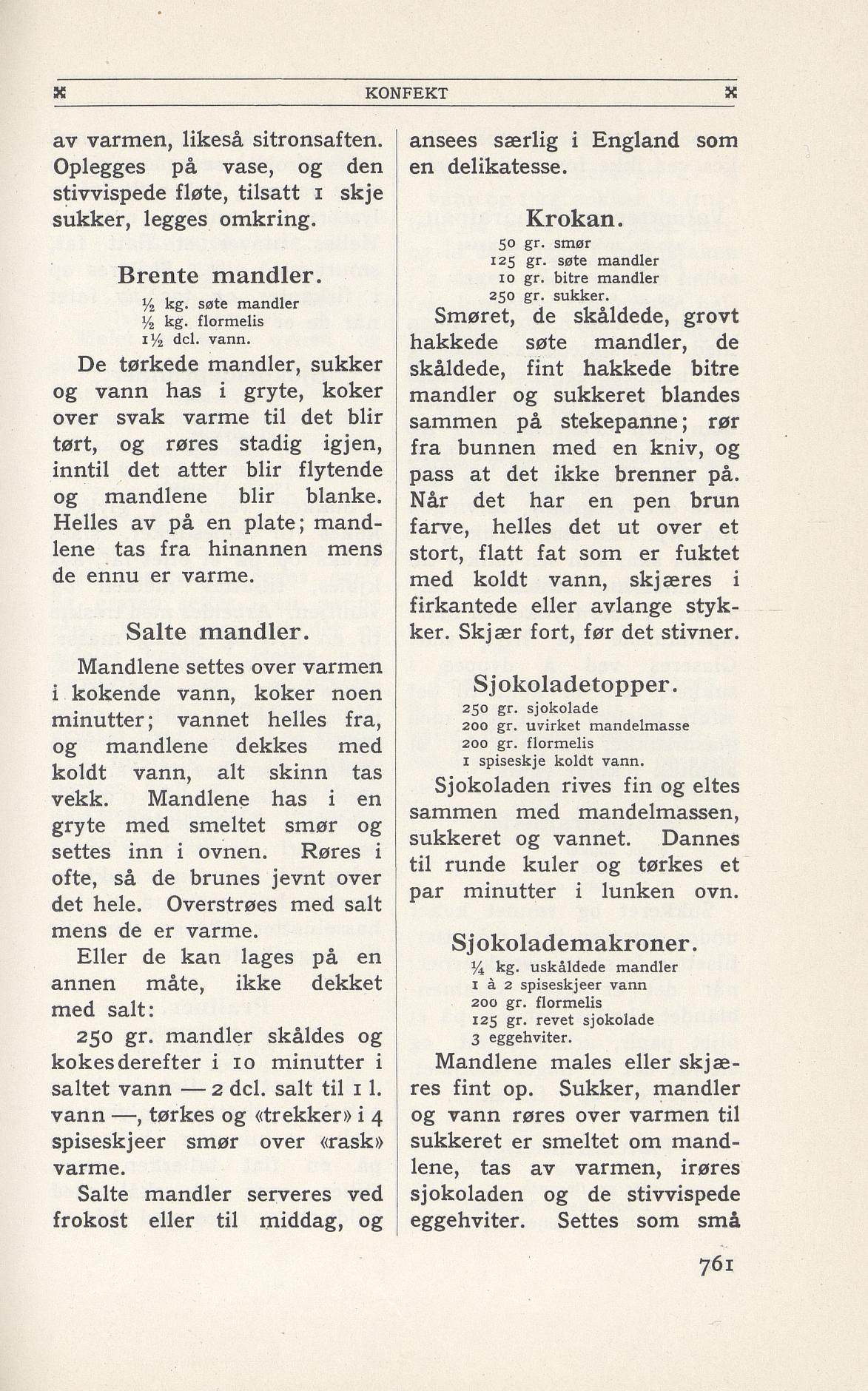
1914 (korrekturlest, s. 631)1949 (korrekturlest, s. 761)~37% av teksten endretfjernetlagt til
250 gr. uvirket mandelmasse 125 gr. flormelis 1 teske eggehvite teskje eggekvite 250 gr. valnøtter. Mandelmassen eltes sammen med det sigtede siktede sukker og den uvispede eggehvite; eggekvite; trilles til ikke for store, runde kuler. Man kan dele massen i tre dele; deler; beholde en del hvit, farve en del lyserød og den sidste siste del lysegrøn; farvningen maa ske lysegrønn; farvingen må skje med stor forsigtighet forsiktighet — der skal kun «en tanke» til. Valnøtterne knækkes Valnøttene knekkes varsomt; ½ nøtt trykkes til marzipankulerne paa marsipankulene på hver side. Glasseres Glaseres ved at å dyppes i sukker, som er kokt til det «store knæk». knekk». Gryten med glassursukker sættes glasursukker settes da et øieblik øieblikk i koldt vand. vann.

Community interpretations

Be the first to share your own version.

See interpretations

Frequently asked questions

What is the marzipan paste made of?
250 g of unworked almond paste is kneaded with 125 g sifted confectioners' sugar and 1 teaspoon unbeaten egg white. The mass is rolled into small, round balls.
How do you add the walnuts?
The walnuts (250 g) are cracked gently, and a walnut half is pressed onto each side of the marzipan ball.
How are the candies glazed?
The balls are dipped in sugar cooked to the hard crack stage. The pan of glazing sugar is set in cold water for a moment so the sugar does not keep cooking.
Can the marzipan be colored?
Yes, the recipe suggests dividing the mass into three: one part white, one pink and one light green. The coloring must be done very carefully – only a touch is needed.

Related recipes

More dishes in the same category from the archive

Read also

Kommentarer

Ingen kommentarer ennå. Bli den første til å dele!