Skip to content

Pig's Ears (Oreilles de Porc)

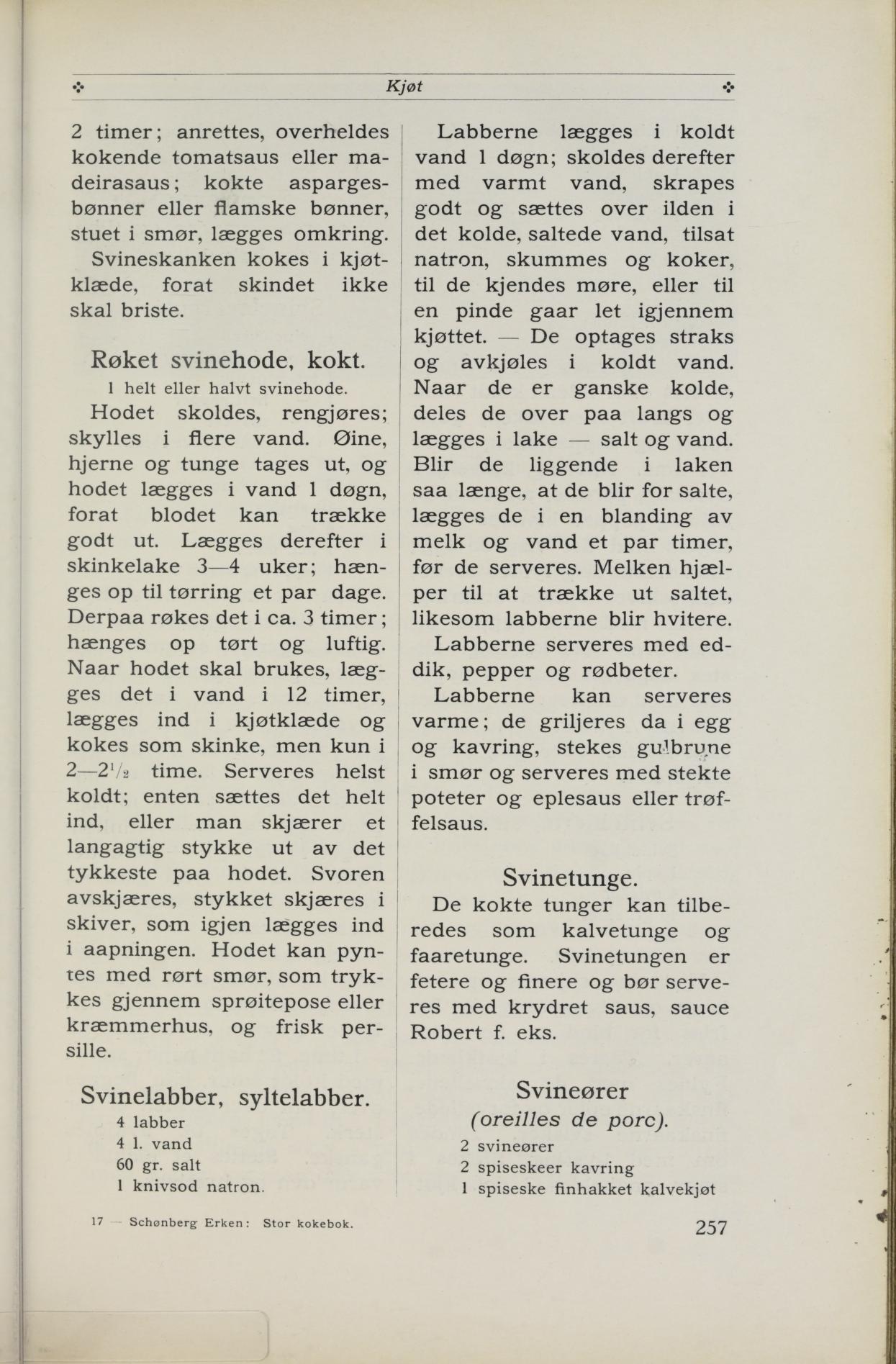
Pig's ears (oreilles de porc): 2 ears are soaked 6 hours and boiled 1½ hours in stock with onion, carrot and bouquet garni. Filled with a forcemeat of rusk, finely chopped veal, kidney suet, parsley, anchovy butter, salt, pepper and egg, wrapped in pork slices, sprinkled with breadcrumbs, browned in butter and baked ½ hour in the oven. The brown sauce is poured over at serving.

Source: Henriette Schønberg Erken, Stor kokebok, 1914-utg. s. 257 (falt i det fri)

Be the first to rate

About the dish

A French-inspired offal dish from the pork chapter, where the ears are first boiled tender in stock with root vegetables, filled with a forcemeat and browned with pork wrapped around. The French name «oreilles de porc» shows Erken's grounding in French cuisine.

How to make it

  1. 1

    Soaking

    Place the pig's ears in cold water for 6 hours.

  2. 2

    Boiling

    Place the ears in cold water or stock together with onion, carrot and bouquet garni. Boil for 1½ hours.

  3. 3

    Forcemeat

    Mix rusk, veal, kidney suet, parsley, anchovy butter, salt and pepper well, and moisten the mixture with the beaten egg.

  4. 4

    Fill the ears

    Fill the ears with the forcemeat, wrap pork slices around them and sprinkle with salt, pepper and grated bread or rusk.

  5. 5

    Browning and baking

    Brown the ears slowly in butter, put them in the oven (about 200 °C (390 °F)) for ½ hour and baste often with melted butter.

  6. 6

    Serving

    Pour the brown sauce over the ears on the serving platter.

Changes from the original

Measurements are converted to modern units (tablespoon/teaspoon kept), rusk kept with breadcrumbs as an alternative, kidney suet kept. Egg and pork slices are added to the ingredient list, and the method is divided into steps. Oven temperature is estimated at about 200 °C (390 °F).

In stores now

Clean, minimally processed groceries matched to the ingredients — approximate prices.

Product data and prices via Kassalapp. Prices are updated daily and may vary.

Tidsmaskin – hva endret seg?

Velg to utgaver og se hva Henriette Schønberg Erken la til, fjernet eller endret mellom dem.

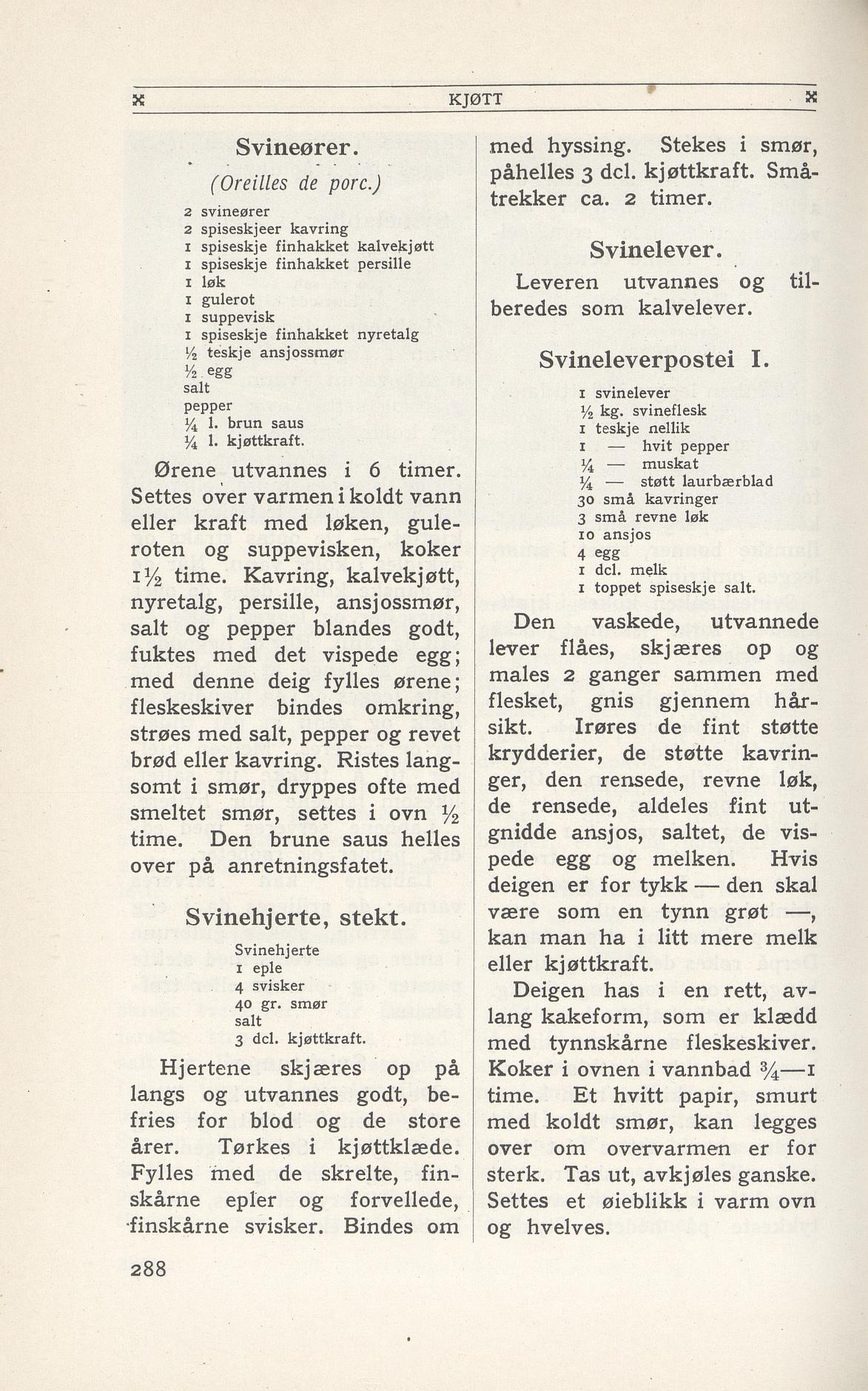
1914 (korrekturlest, s. 257)1949 (korrekturlest, s. 288)~40% av teksten endretfjernetlagt til
(Oreilles de pore.) 2 svineører 2 spiseskeer spiseskjeer kavring 1 spiseske spiseskje finhakket kalvekjøt kalvekjøtt 1 spiseske spiseskje finhakket persille 1 løk 1 gulerot 1 suppevisk 1 spiseske spiseskje finhakket nyretalg 1 teske 1/2 teskje ansjossmør 1 1/2 egg salt pepper 3/4 l. brun saus 1/2 l. kjøttkraft Ørene utvandes utvannes i 6 timer. Sættes Settes over ilden varmen i koldt vand vann eller kraft med løken, guleroten gule­roten og suppevisken, koker 1 1/2 time. Kavring, kalvekjøt, kalvekjøtt, nyretalg, persille, ansjossmør, salt og pepper blandes godt, fugtes fuktes med det vispede egg; med denne deig fyldes fylles ørene; fleskeskiver bindes omkring, strøes med salt, pepper og revet brød eller kavring. Ristes langsomt lang­somt i smør, dryppes ofte med smeltet smør, sættes settes i ovn ½ 3/4 time. Den brune saus heldes helles over paa anretningsfatet.

Community interpretations

Be the first to share your own version.

See interpretations

Frequently asked questions

How long does the entire preparation take?
Reckon on around 9 hours in total: 6 hours soaking the ears, 1½ hours boiling in water or stock with onion, carrot and bouquet garni, and finally ½ hour in the oven after browning in butter.
What does the filling consist of?
Rusk, finely chopped veal, kidney suet, parsley, anchovy butter, salt and pepper are mixed well and moistened with beaten egg. The mixture is filled into the ears.
How are the ears cooked after filling?
Pork slices (bacon slices) are wrapped around the ears, which are sprinkled with salt, pepper and grated bread or rusk. They are browned slowly in butter and basted often with melted butter, before ½ hour in the oven. The brown sauce is poured over on the serving platter.
Where does the recipe come from?
From Henriette Schønberg Erken's «Stor kokebok» (1914), page 257, under the name oreilles de porc. Given as 2 servings.

Related recipes

More dishes in the same category from the archive

Read also

Kommentarer

Ingen kommentarer ennå. Bli den første til å dele!