Skip to content

Spun Sugar I

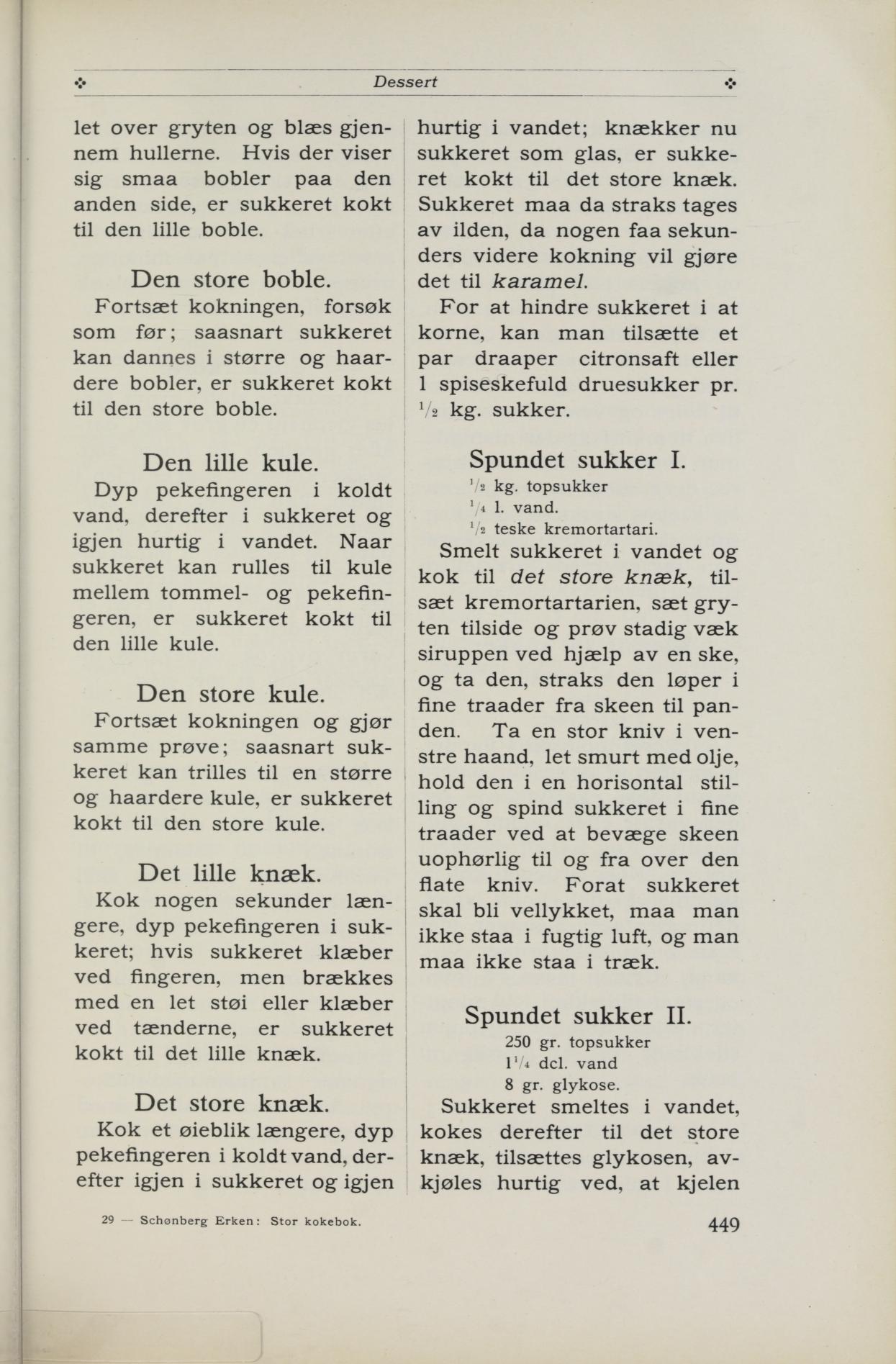
Spun Sugar I: 2 kg sugar boiled with 4 dl water to the hard crack stage, mixed with cream of tartar, and spun into fine threads with a spoon over an oiled knife. Must not be made in humid air or a draft.

Source: Henriette Schønberg Erken, Stor kokebok, 1914-utg. s. 449 (falt i det fri)

Be the first to rate

About the dish

Spun sugar was the crowning touch of the festive table - an airy cloud of golden sugar threads laid over ice cakes, kransekake, and mousses. Erken sternly warns against humid air and drafts, which make the threads collapse.

How to make it

  1. 1

    Boil the sugar

    Melt the sugar in the water and boil the mixture to the hard crack stage.

  2. 2

    Add cream of tartar

    Stir in the cream of tartar and set the pot aside.

  3. 3

    Test the syrup

    Keep testing the syrup with a spoon, and begin the work as soon as it runs in fine threads from the spoon down into the pan.

  4. 4

    Spin the threads

    Hold a large knife, lightly oiled, horizontally in your left hand, and spin the sugar into fine threads by moving the spoon continuously back and forth over the flat knife.

  5. 5

    Mind the air

    Never work in humid air or in a draft - the spun sugar will not succeed then.

Changes from the original

The amount of water is interpreted as deciliters (the OCR was unclear). Cream of tartar = cremor tartari, sold today as "cream of tartar." The quantities are kept but can be halved.

Tidsmaskin – hva endret seg?

Velg to utgaver og se hva Henriette Schønberg Erken la til, fjernet eller endret mellom dem.

1914 (korrekturlest, s. 449)Modernisert~77% av teksten endretfjernetlagt til
2 kg. topsukker kg sukker (toppsukker/raffinade). 4 dl. vand dl vann. 2 teske kremortartari. ts kremortartari (vinstein, cream of tartar). nøytral olje (til å smøre kniven). Smelt sukkeret i vandet vannet og kok blandingen til det store knæk, tilsæt kremortartarien, sæt gryten tilside knekk.. Rør inn kremortartarien og prøv sett gryten til side.. Prøv sirupen stadig væk siruppen ved hjælp av med en ske, skje, og ta den, begynn arbeidet straks den løper renner i fine traader tråder fra skeen til panden. Ta skjeen ned i pannen.. Hold en stor kniv i venstre haand, let kniv, lett smurt med olje, hold den vannrett i en horisontal stilling venstre hånd, og spind spinn sukkeret i fine traader tråder ved at bevæge skeen uophørlig å bevege skjeen uavbrutt til og fra over den flate kniv. Forat sukkeret skal bli vellykket, maa man ikke staa kniven.. Arbeid aldri i fugtig luft, og man maa ikke staa fuktig luft eller i træk. trekk – da lykkes ikke det spunne sukkeret.

Note til Modernisert

Vannmengden er tolket som desiliter (OCR var utydelig). Kremortartari = kremor tartari / vinstein, som i dag kjøpes som «cream of tartar». Mengdene er beholdt, men kan halveres.

Community interpretations

Be the first to share your own version.

See interpretations

Frequently asked questions

What does boiling the sugar to "the hard crack" mean?
It is the cooking stage where the syrup becomes hard and brittle when a drop is cooled in cold water (the hard crack stage). Only then is the cream of tartar added, and the pot is set aside.
How do I know the sugar is ready to spin?
Keep testing the syrup with a spoon. It is ready the moment it runs in fine threads from the spoon down into the pan. Then spin threads by moving the spoon ceaselessly back and forth over a large, flat knife held horizontally in the left hand and lightly oiled.
Why does spun sugar sometimes fail?
Humid air and drafts ruin the result. Erken specifies that you must not stand in humid air or in a draft while spinning the sugar.
What does the recipe consist of?
2 kg loaf sugar, 4 dl water, and 2 teaspoons cream of tartar. The recipe is from Henriette Schonberg Erken's "Stor kokebok" (1914), p. 449, and is counted for about 8 servings with roughly 50 minutes of work.

Related recipes

More dishes in the same category from the archive

Read also

Kommentarer

Ingen kommentarer ennå. Bli den første til å dele!