Skip to content

Lemon Jelly (gelée au citron)

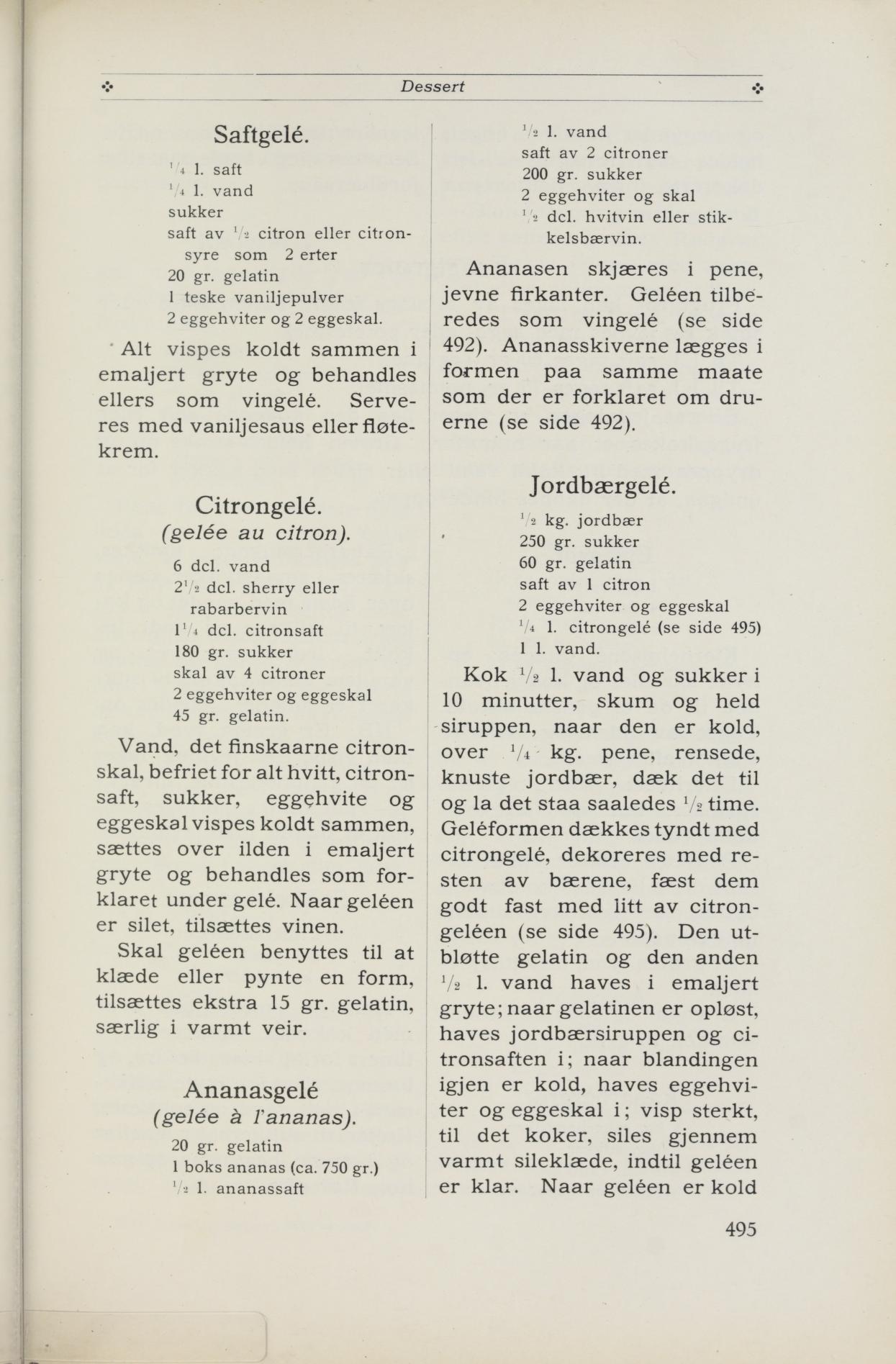
Erken's classic lemon jelly (1914): water, lemon zest and juice, sugar and gelatin are clarified with egg white and eggshell, strained and mixed with white wine or gooseberry wine. Also used to line and garnish molds, then with 15 g extra gelatin.

Source: Henriette Schønberg Erken, Stor kokebok, 1914-utg. s. 495 (falt i det fri)

Be the first to rate

About the dish

Lemon jelly was the base recipe in Erken's jelly chapter – it was both served as a dessert in its own right and used as a glossy "lining" and garnish in molded jelly dishes (see the strawberry jelly on the same page). Gooseberry wine is mentioned as a homemade substitute for white wine, typical of Norwegian households in 1914.

How to make it

  1. 1

    Soak the gelatin

    Soak the gelatin sheets in cold water for 10 minutes and squeeze out the water.

  2. 2

    Combine cold

    Put water, finely cut lemon zest, lemon juice, sugar, the soaked gelatin as well as egg whites and crushed eggshells into an enameled pot and whisk everything together well while cold.

  3. 3

    Bring to a boil and clarify

    Set the pot over the heat and whisk vigorously until it boils. Take the pot off and let it rest a little.

  4. 4

    Strain

    Pour the jelly through a hot, wrung-out cloth, and strain again until it is completely clear.

  5. 5

    Add the wine

    Stir the wine into the strained jelly.

  6. 6

    Set

    Pour the jelly into a rinsed mold and chill for 4–5 hours until firm. If the jelly is to be used to line or garnish a mold, use 15 g extra gelatin – especially in warm weather.

Changes from the original

Measurements modernized to dl/grams, the gelatin amount specified, and the use of extra gelatin to line a mold added as its own step. "Treated as explained under jelly" has been spelled out as clarifying, boiling and straining.

Tidsmaskin – hva endret seg?

Velg to utgaver og se hva Henriette Schønberg Erken la til, fjernet eller endret mellom dem.

1914 (korrekturlest, s. 495)1949 (korrekturlest, s. 569)~63% av teksten endretfjernetlagt til
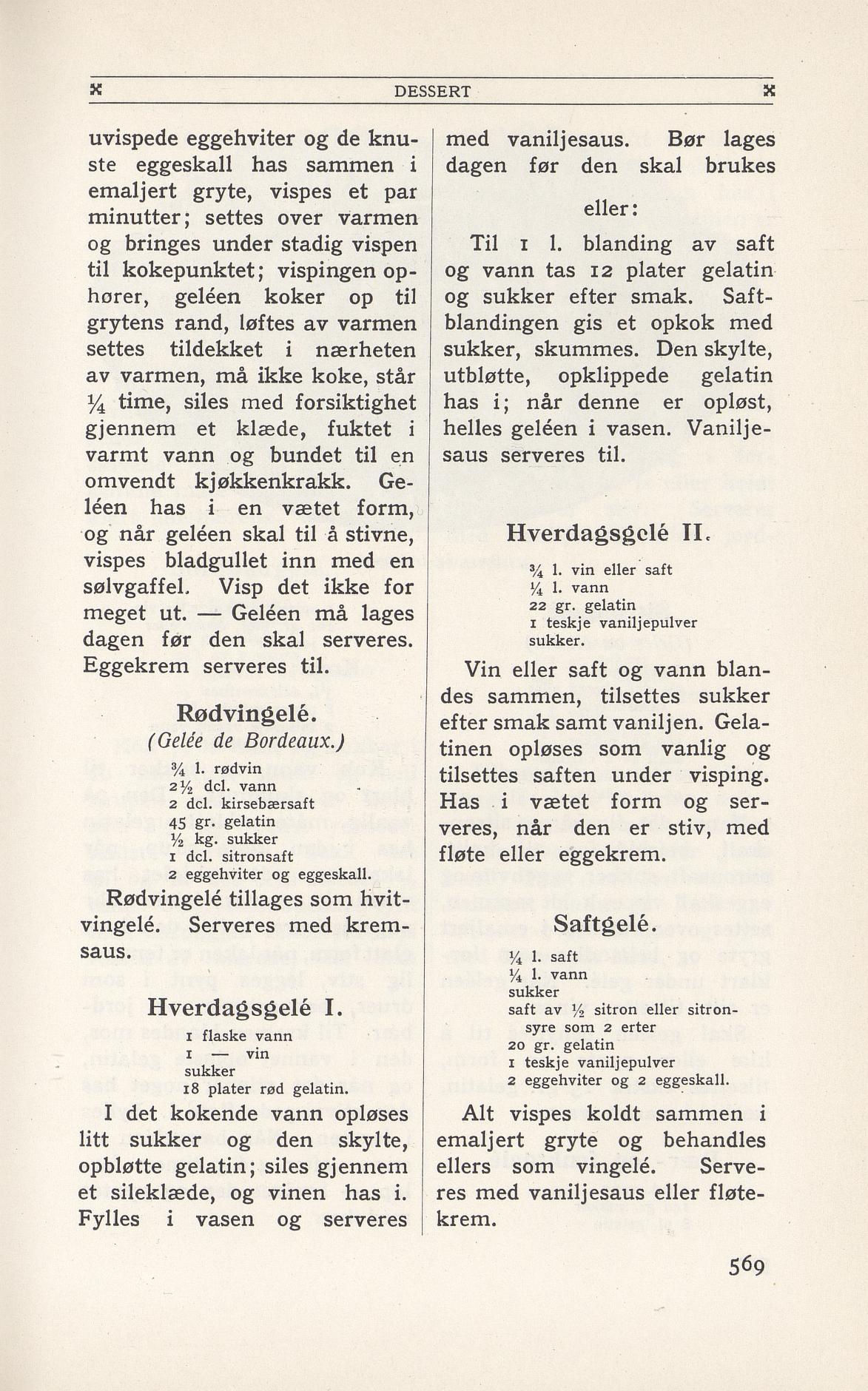
1 l. vand skal av 4 citroner 1¼ (Gelée au citron.) 6 del. citronsaft vann 2% dd. sherry eller rabarbravin iy 4 dd. sitronsaft 180 gr. sukker skall av 4 sitroner 2 eggehviter og eggeskal eggeskall 45 gr. gelatin 1½ del. hvitvin eller stikkelsbærvin. Vand, gelatin. Vann, det finskaarne citronskal, befriet finskårne sitronskall, befridd for alt hvitt, citronsaft, sitronsaft, sukker, eggehvite og eggeskal eggeskall vispes koldt sammen, sættes settes over ilden varmen i emaljert gryte og behandles som forklaret forklart under gele. Naar geleen gelé. Når geléen er silet, tilsættes silt, tilsettes vinen. Skal geleen geléen benyttes til at klæde å klæ eller pynte en form, tilsættes tilsettes ekstra 15 gr. gelatin, særlig i varmt veir. vær.
Community interpretations

Be the first to share your own version.

See interpretations

Frequently asked questions

Why use egg whites and eggshells in the jelly?
They are used to clarify the jelly. Egg white and crushed eggshell are whisked cold together with water, lemon zest, lemon juice and sugar, brought to a boil in an enameled pot and draw out impurities, which are strained off before the wine is added.
When should the wine be added?
Only after the jelly has been strained. Then you stir in 1½ dl of white wine or gooseberry wine, so the aroma and alcohol do not boil away.
How do I make the jelly firm enough to line a mold?
Use 15 g of gelatin extra in addition to the 45 g in the base recipe – especially in warm weather – when the jelly is to be used to line or garnish a mold.
What do I need to watch out for with the lemon zest?
The zest of 4 lemons should be cut finely and freed of all the white, otherwise the jelly turns bitter.

Related recipes

More dishes in the same category from the archive

Read also

Kommentarer

Ingen kommentarer ennå. Bli den første til å dele!