Skip to content

Lemon Bavarian Cream (Fromasj)

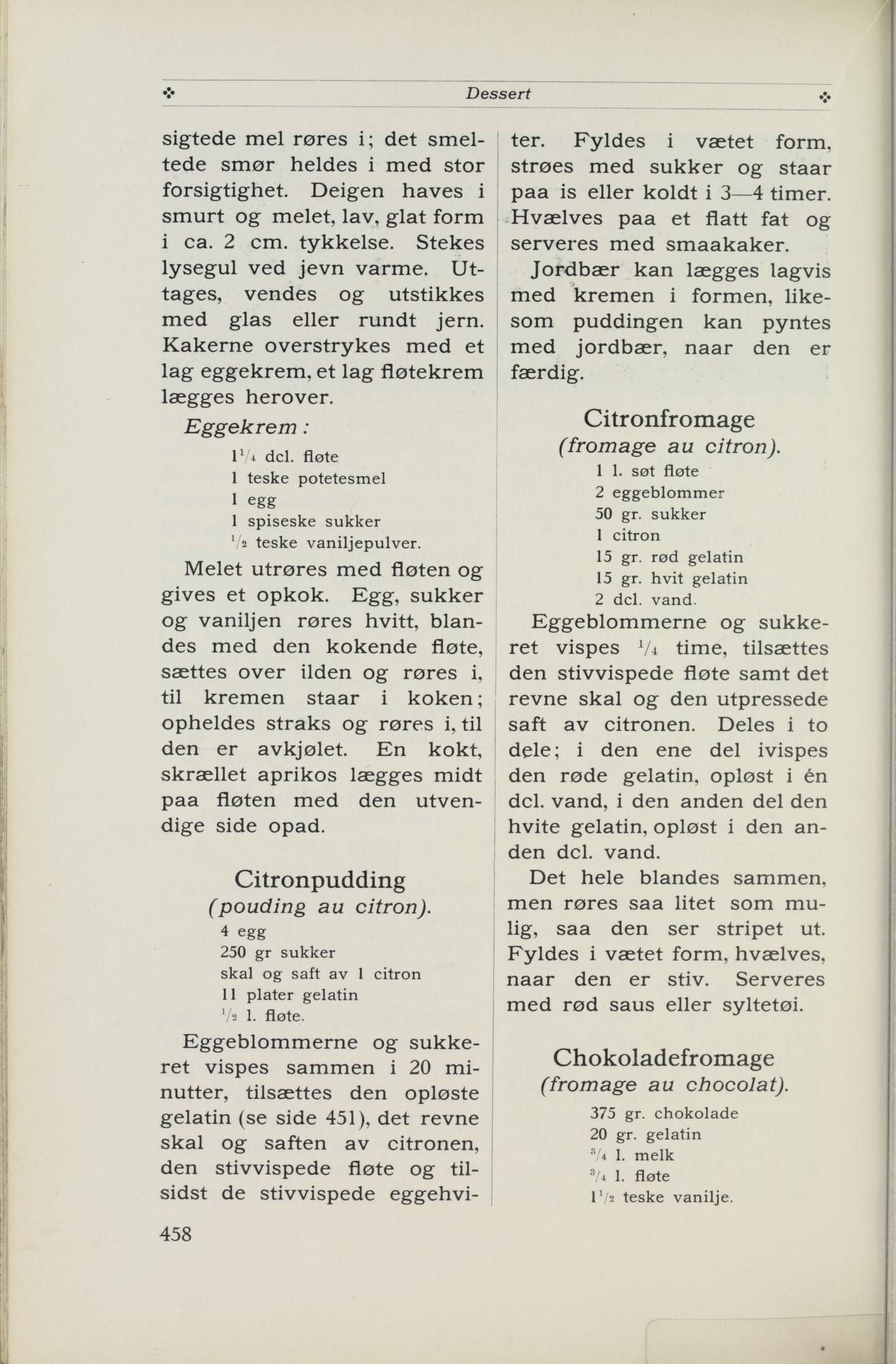
Two-toned lemon fromasj (a Norwegian Bavarian-style cream) from Erken 1914: whipped egg yolks, stiffly whipped cream (1 l) and lemon are split in two; one half sets with red gelatin, the other with white, and the two are barely folded together so the dessert turns out streaked. Sets in a moistened mold and is served turned out with a red sauce or jam.

Source: Henriette Schønberg Erken, Stor kokebok, 1914-utg. s. 458 (falt i det fri)

Be the first to rate

About the dish

A marbled ("streaked") fromasj where half is set with red gelatin and half with white, so the dessert takes on a two-toned pattern. The OCR of page 458 mixed together the ingredient columns for the egg custard for a cake, the lemon pudding and the lemon fromasj, so the number of egg yolks and the amount of sugar for the fromasj cannot be read with certainty.

How to make it

  1. 1

    Whip the yolk foam

    Whip the egg yolks and sugar together for a quarter of an hour into a pale, thick mixture.

  2. 2

    Cream and lemon

    Whip the cream stiff and fold it in. Add grated lemon zest and squeezed lemon juice.

  3. 3

    Divide the mixture

    Divide the mixture into two equal parts.

  4. 4

    Gelatin

    Soak the gelatin. Dissolve one portion in 1 dl of hot water and tint it red; dissolve the other in 1 dl of hot water. Whisk one gelatin mixture into each of the two parts.

  5. 5

    Marble

    Gently combine the two mixtures – stir as little as possible so the fromasj comes out streaked.

  6. 6

    Set and serve

    Fill a mold rinsed in cold water. Let it set in the cold until firm, turn out onto a platter and serve with a red sauce or jam.

Changes from the original

Unclear amounts for egg yolks and sugar are given as guidelines (4 yolks and 100 g sugar) and flagged in the note field. Red gelatin has been replaced by ordinary gelatin with a few drops of red food coloring, since colored gelatin is no longer commonly sold. Deciliters retained.

In stores now

Clean, minimally processed groceries matched to the ingredients — approximate prices.

Product data and prices via Kassalapp. Prices are updated daily and may vary.

Tidsmaskin – hva endret seg?

Velg to utgaver og se hva Henriette Schønberg Erken la til, fjernet eller endret mellom dem.

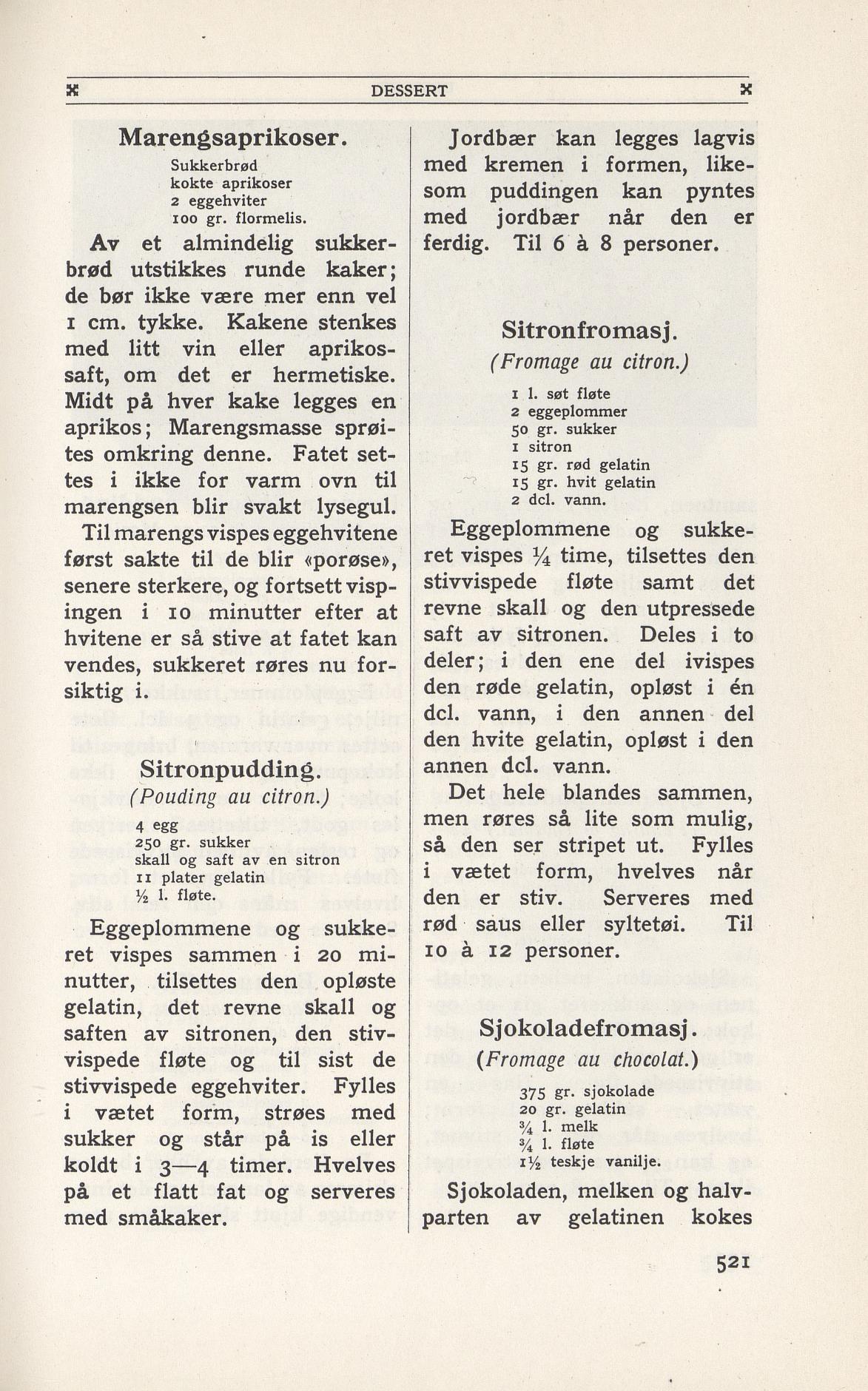
1914 (korrekturlest, s. 458)1949 (korrekturlest, s. 521)~42% av teksten endretfjernetlagt til
1 l. (Fromage au citron.) i 1. søt fløte eggeblommer 2 eggeplommer 50 gr. sukker 1 citron sitron 15 gr. rød gelatin 15 gr. hvit gelatin 2 del. vand Eggeblommerne vann. Eggeplommene og sukkeret vispes ¼ vispess ¾ time, tilsættes tilsettes den stivvispede fløte samt det revne skal skall og den utpressede saft av citronen. sitronen. Deles i to dele; deler; i den ene del ivispes den røde gelatin, opløst i én del. vand, vann, i den anden annen del den hvite gelatin, opløst i den anden annen del. vand. vann. Det hele blandes sammen, men røres saa litet så lite som mulig, saa den ser stripet ut. Fyldes Fylles i vætet form, hvælves, naar hvelves når den er stiv. Serveres med rød saus eller syltetøi. Til 10 å 12 personer.
Community interpretations

Be the first to share your own version.

See interpretations

Frequently asked questions

Why use both red and white gelatin?
To give the fromasj a streaked, marbled look. The mixture is divided in two, one part with red gelatin and one with white, and they are combined very briefly – stir as little as possible so the streaks are preserved.
How long does it take?
Count on about 4 hours in all. The egg yolks and sugar are whipped for a quarter of an hour, and the rest of the time goes to letting the fromasj set in the mold.
How do I get the fromasj out of the mold?
The mold should be moistened with water before it is filled. Once the fromasj is firm, it is turned out onto a platter. Serve with a red sauce or jam.
What are the main ingredients?
1 liter of sweet cream, egg yolks, sugar, one lemon (both grated zest and squeezed juice), 15 g of red and 15 g of white gelatin dissolved in 2 deciliters of water. The recipe is from Henriette Schønberg Erken's "Stor kokebok" (1914), p. 458.

Related recipes

More dishes in the same category from the archive

Read also

Kommentarer

Ingen kommentarer ennå. Bli den første til å dele!