Skip to content

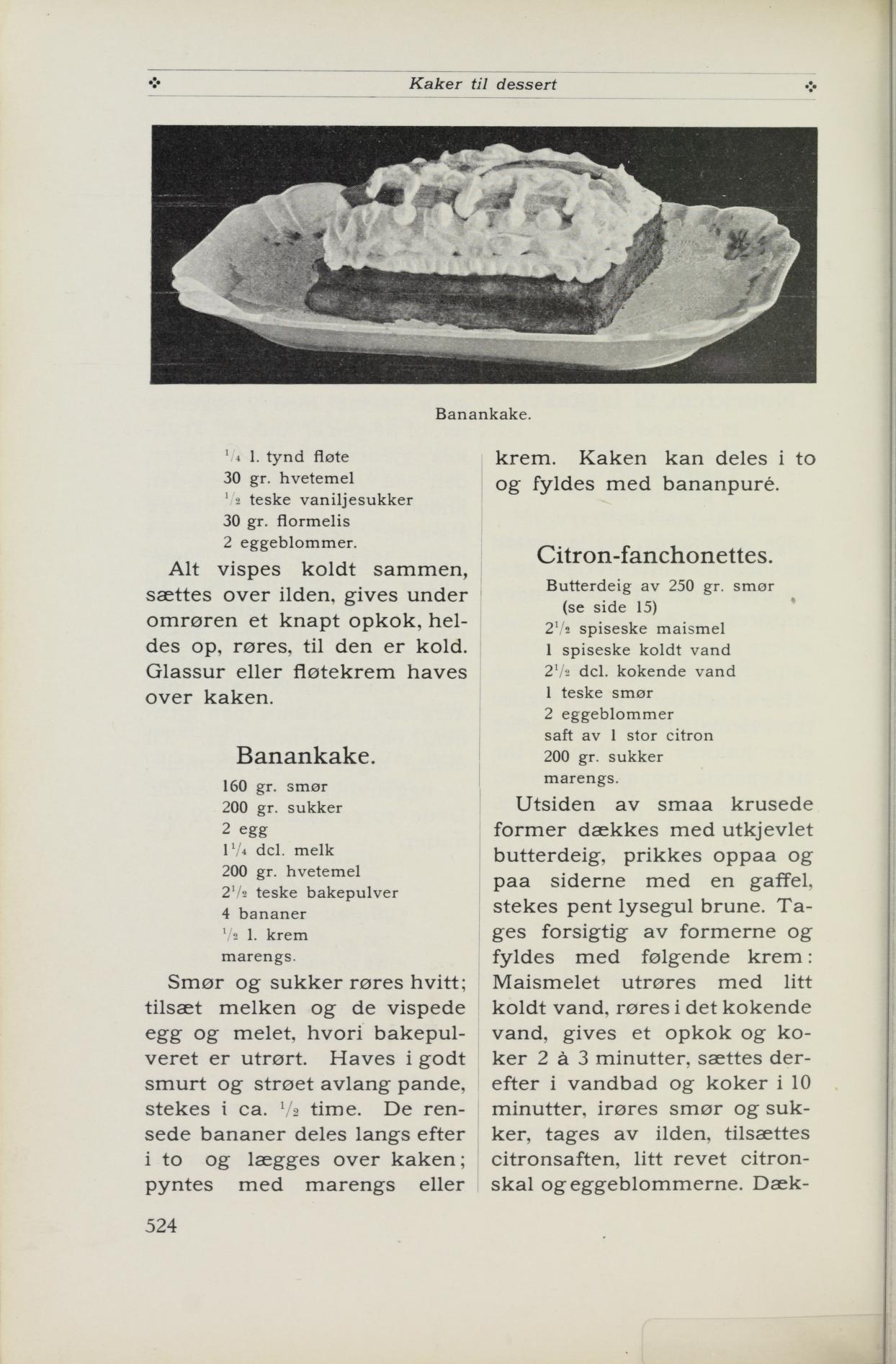
Lemon Fanchonettes

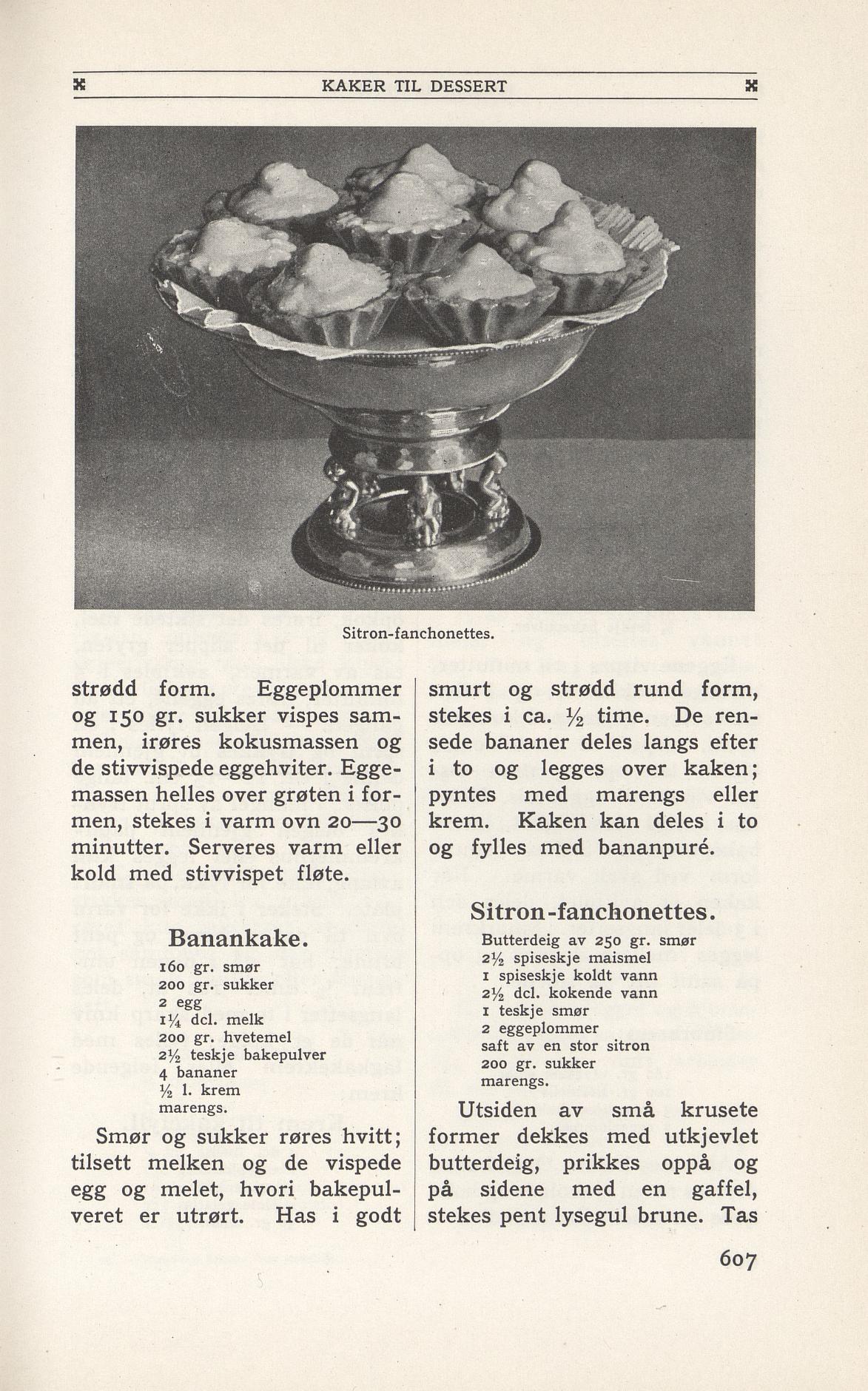
Lemon fanchonettes from Erken 1914: small puff pastry shells baked over the outside of fluted molds, filled with a cooked lemon cream of cornstarch, butter, sugar, egg yolks, and lemon, topped with meringue and lightly browned.

Source: Henriette Schønberg Erken, Stor kokebok, 1914-utg. s. 524 (falt i det fri)

Be the first to rate

About the dish

Fanchonettes are small puff pastry shells filled with cream and topped with meringue – a French-inspired dessert that belonged to finer occasions in bourgeois homes around 1914. Erken has the dough baked over the outside of small fluted molds, so that ready-made cups are formed.

How to make it

  1. 1

    Form the shells

    Roll out the puff pastry thin and cover the outside of small fluted molds with the dough. Prick the dough on top and on the sides with a fork.

  2. 2

    Bake

    Bake the shells at 200 °C (390 °F) until nicely pale golden/brown. Carefully remove them from the molds and let them cool.

  3. 3

    Cook the cream

    Mix the cornstarch with a little cold water, stir the mixture into the boiling water, bring it to a boil and let it cook 2–3 minutes. Then set the pan in a water bath and let the cream cook for 10 minutes.

  4. 4

    Finish the cream

    Stir in butter and sugar, take the pan off the heat, and add lemon juice, a little grated lemon zest, and the egg yolks. Stir well.

  5. 5

    Fill and cover

    Fill the cooled puff pastry shells with the cream and cover with stiffly whipped meringue of egg whites and powdered sugar.

  6. 6

    Browning

    Brown the meringue lightly in a not-too-hot oven, about 150 °C (300 °F), until it is pale golden.

Changes from the original

Measures have been converted to modern units. The amount of sugar is not given in the original's ingredient list (only mentioned in the method) and has been estimated at 75 g, likewise the meringue of 2 egg whites and 100 g sugar. Baking temperatures have been specified.

In stores now

Clean, minimally processed groceries matched to the ingredients — approximate prices.

Product data and prices via Kassalapp. Prices are updated daily and may vary.

Tidsmaskin – hva endret seg?

Velg to utgaver og se hva Henriette Schønberg Erken la til, fjernet eller endret mellom dem.

1914 (korrekturlest, s. 524)1949 (korrekturlest, s. 607)~51% av teksten endretfjernetlagt til
Butterdeig av 250 gr. smør (se side 15) 2 1/2 spiseske 2½ spiseskje maismel 1 spiseske spiseskje koldt vand 2 1/2 vann 2¾ del. kokende vand vann 1 teske teskje smør 2 eggeblommer eggeplommer saft av 1 en stor citron sitron 200 gr. sukker marengs. Utsiden av smaa krusede små krusete former dækkes dekkes med utkjevlet butterdeig, prikkes oppaa oppå og paa siderne på sidene med en gaffel, stekes pent lysegul brune. Tages forsigtig Tas forsiktig av formerne formene og fyldes fylles med følgende krem: Maismelet utrøres med litt koldt vand, vann, røres i det kokende vand, gives vann, gis et opkok og koker 2 à å 3 minutter, sættes settes derefter i vandbad vannbad og koker i 10 minutter, irøres smør og sukker, tages tas av ilden, tilsættes citronsaften, varmen, tilsettes sitronsaften, litt revet citronskal sitronskall og eggeblommerne. Dækkes eggeplommene. Dekkes med marengs. Brunes svakt i ikke for varm ovn. Til 10 å 12 personen.
Community interpretations

Be the first to share your own version.

See interpretations

Frequently asked questions

Why is the puff pastry rolled over the outside of the molds?
Because the shells are meant to become hollow cups. The dough is laid over the outside of small fluted molds, pricked with a fork on top and on the sides, and baked pale golden brown. Then they are carefully removed from the molds and filled with cream.
How do I make the lemon cream?
Mix 2 1/2 tablespoons corn flour into 1 tablespoon cold water, stir it into 2 1/2 deciliters boiling water, bring to a boil and cook 2-3 minutes. Then set in a water bath for 10 minutes, stir in 1 teaspoon butter and sugar, take off the heat, and add the juice of 1 large lemon, a little grated lemon zest, and 2 egg yolks.
How should the meringue be baked?
The cakes are covered with meringue and browned only lightly in a not-too-hot oven – they should take on color, not bake hard.
Where does the recipe come from?
From Henriette Schønberg Erken's "Stor kokebok" (1914), page 524, in the chapter on dessert cakes and small cakes. It yields about 12 pieces.

Related recipes

More dishes in the same category from the archive

Read also

Kommentarer

Ingen kommentarer ennå. Bli den første til å dele!