Skip to content

Pollock pudding

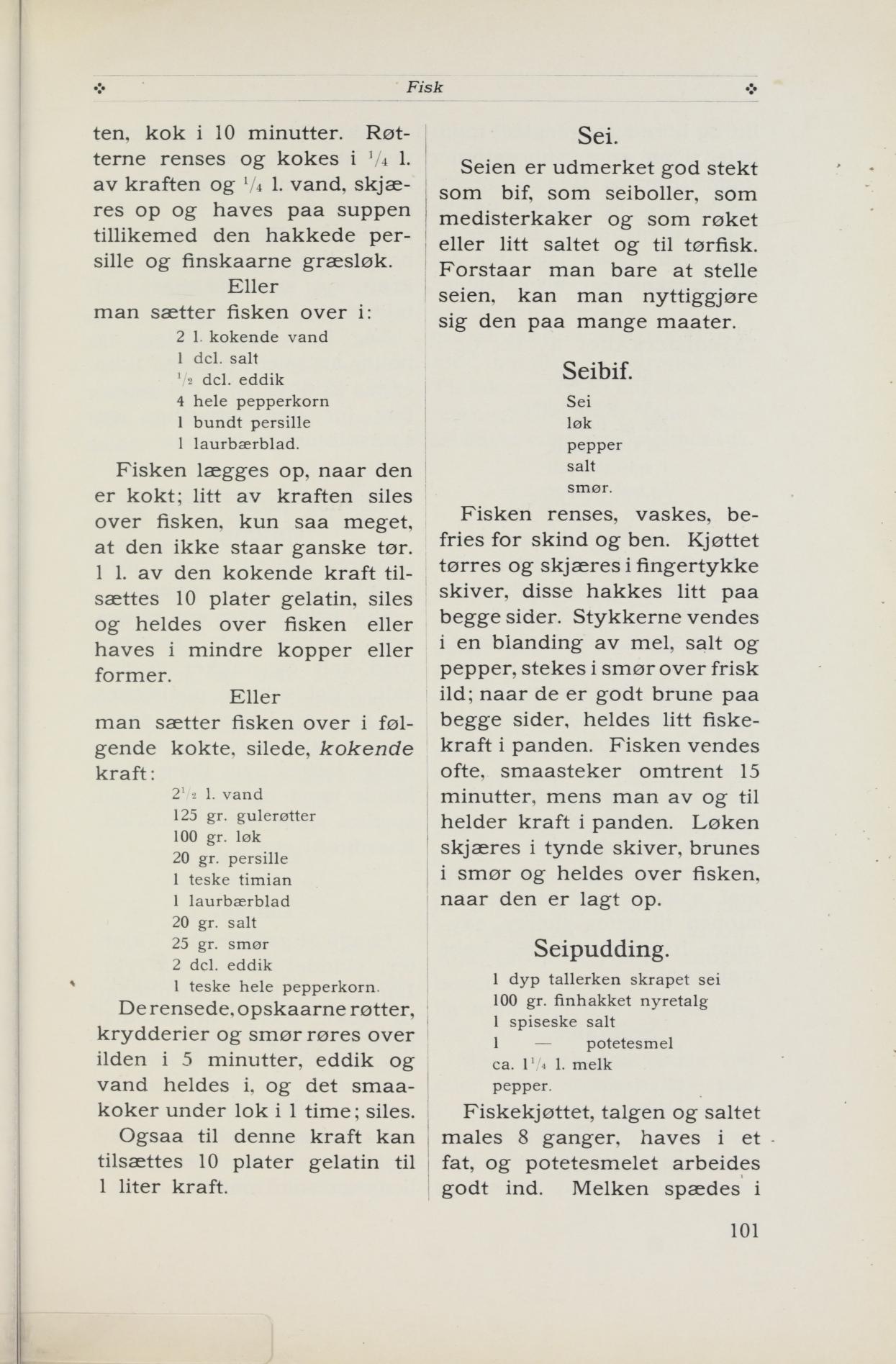
Erken's pollock pudding (seipudding, 1914): scraped pollock, kidney suet and salt ground several times, potato starch worked in, about 2.5 dl milk added while stirring in one direction, the forcemeat baked in a greased mold in a water bath in a hot oven for ¾ hour. The forcemeat can also be used for fish cakes or balls.

Source: Henriette Schønberg Erken, Stor kokebok, 1914-utg. s. 101 (falt i det fri)

Be the first to rate

About the dish

The pollock pudding belongs to Erken's thrifty fish dishes. She encourages the housewife to use pollock precisely for pudding and balls: "if it is not quite chalk-white, that makes no difference to the sensible and thrifty housewife."

How to make it

  1. 1

    Grind the forcemeat

    Run the fish flesh, the kidney suet and the salt through the meat grinder with a fine disc several times (the original says 8 times) into a completely fine, tough forcemeat.

  2. 2

    Work in the potato starch

    Place the forcemeat in a bowl and work the potato starch in well. Season with pepper.

  3. 3

    Add the milk

    Add the milk a little at a time while stirring constantly in the same direction, until the forcemeat is smooth and supple.

  4. 4

    Fill the mold

    Fill the forcemeat into a well-greased mold and smooth the surface.

  5. 5

    Bake in a water bath

    Bake the pudding in a water bath in a hot oven (about 175 °C (345 °F)) for about ¾ hour, until it is firm and cooked through.

  6. 6

    Variation

    The forcemeat can also be formed into fish cakes or balls.

Changes from the original

"1 deep plate of scraped pollock" is estimated at about 600 g of scraped/ground pollock flesh. Kidney suet is retained, but can be replaced with the same amount of butter. Grinding 8 times in the meat grinder is replaced by a meat grinder with a fine disc or a food processor. Measurements given in modern units (dl, g).

In stores now

Clean, minimally processed groceries matched to the ingredients — approximate prices.

Product data and prices via Kassalapp. Prices are updated daily and may vary.

Tidsmaskin – hva endret seg?

Velg to utgaver og se hva Henriette Schønberg Erken la til, fjernet eller endret mellom dem.

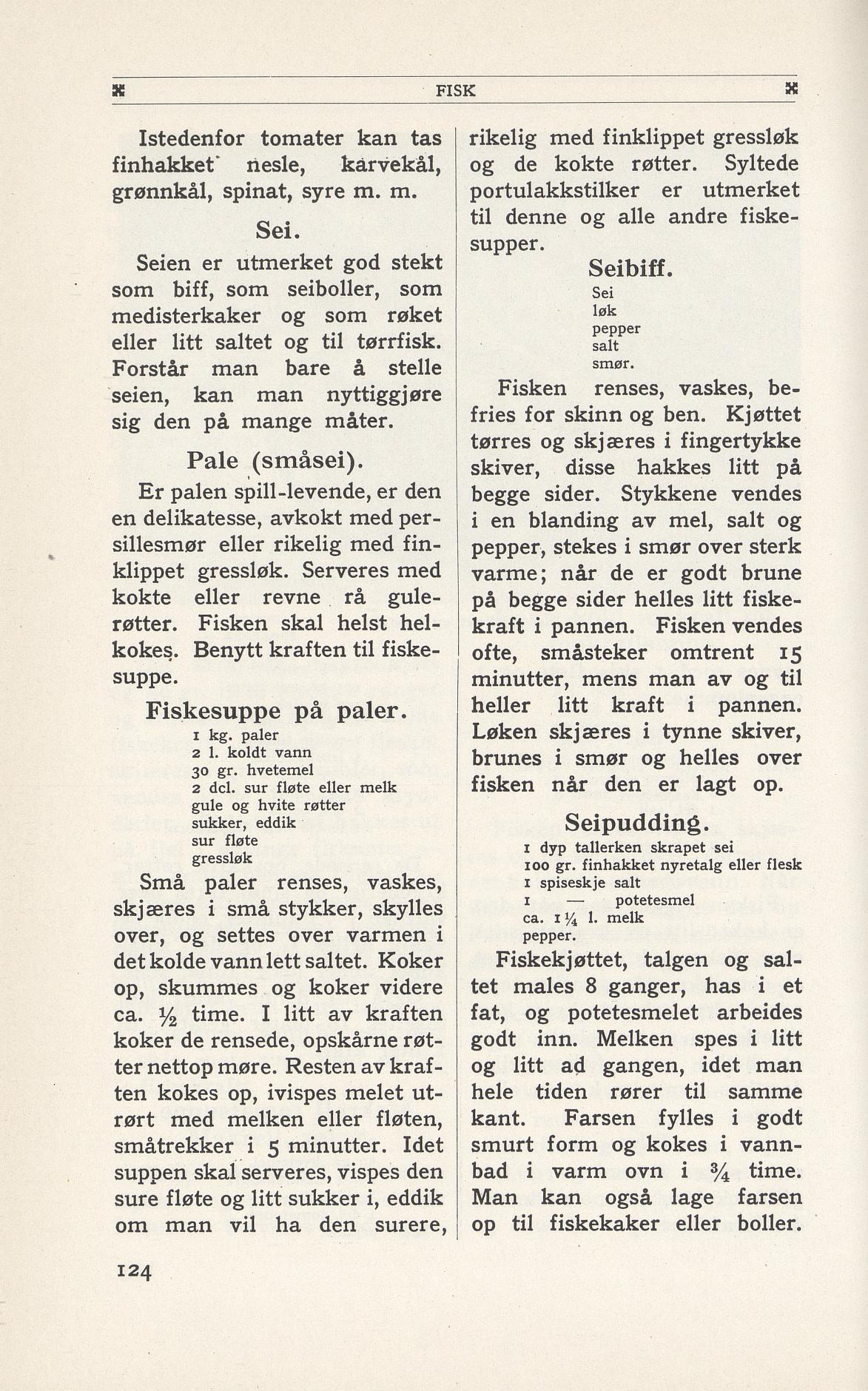
1914 (korrekturlest, s. 101)1949 (korrekturlest, s. 124)~34% av teksten endretfjernetlagt til
1 dyp tallerken skrapet sei 100 gr. finhakket nyretalg eller flesk 1 spiseske spiseskje salt 1 x — potetesmel ca. 1/4 1. 1½ l. melk pepper pepper. Fiskekjøttet, talgen og saltet males 8 ganger, haves has i et fat, og potetesmelet arbeides godt ind. inn. Melken spædes spes i litt og litt ad gangen, idet man hele tiden rører til samme kant. Farcen fyldes Farsen fylles i godt smurt form og stekes kokes i vandbad vannbad i varm ovn i 3/4 ¾ time. Man kan ogsaa også lage farcen farsen op til fiskekaker eller boller.

Community interpretations

Be the first to share your own version.

See interpretations

Frequently asked questions

How long and how is the pollock pudding baked?
The forcemeat is filled into a well-greased mold and baked in a water bath in a hot oven for ¾ hour (45 minutes).
Why should the fish forcemeat be ground so many times?
The recipe says the scraped pollock, kidney suet and salt are ground 8 times. This gives a completely fine, smooth forcemeat that binds the milk well and becomes firm in the mold.
What are the ingredients?
1 deep plate of scraped pollock, 100 g finely chopped kidney suet, 1 tablespoon salt, 1 tablespoon potato starch, about ¼ liter milk and pepper.
Can the forcemeat be used for anything other than pudding?
Yes, Schønberg Erken writes in "Stor kokebok" (1914) that the forcemeat can also be made up into fish cakes or fish balls.

Related recipes

More dishes in the same category from the archive

Read also

Kommentarer

Ingen kommentarer ennå. Bli den første til å dele!