Skip to content

Salting smaller fish such as herring and mackerel

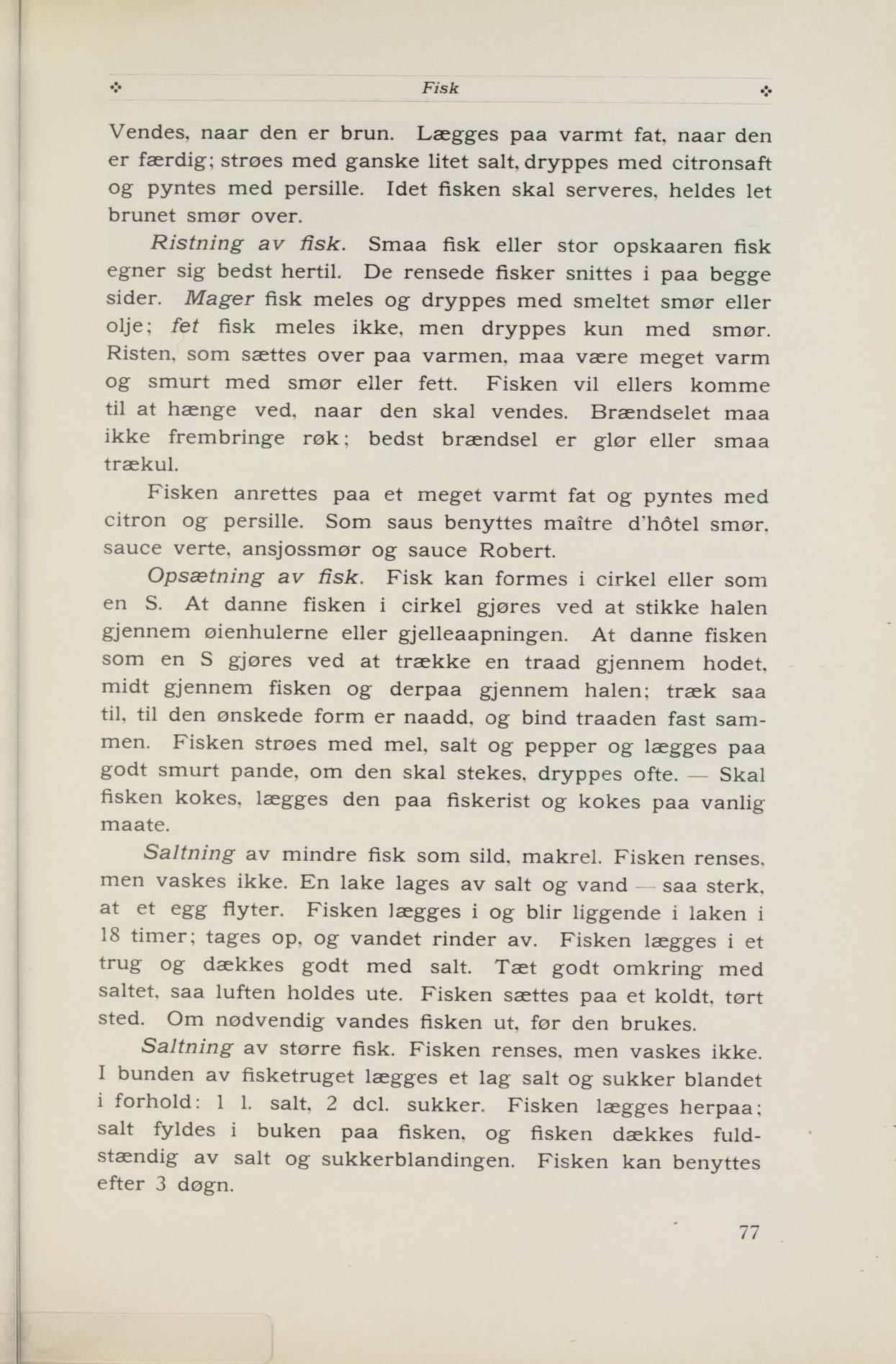
Erken's method for salting herring and mackerel: the fish is cleaned but not washed, sits 18 hours in a brine strong enough to float an egg, drains, and is then dry-salted packed tightly in a trough. Stored cold and dry, soaked before use.

Source: Henriette Schønberg Erken, Stor kokebok, 1914-utg. s. 77 (falt i det fri)

Be the first to rate

About the dish

Salting was the most important method of preserving fish in Norwegian households before the refrigerator. Erken describes the classic two-step method with brine followed by dry-salting in a trough.

How to make it

  1. 1

    Clean the fish

    Clean the fish, but do not wash it.

  2. 2

    Make the brine

    Stir salt into water until the brine is strong enough that an egg floats in it.

  3. 3

    Place the fish in brine

    Place the fish in the brine and let it sit for 18 hours. Then take it out and let the water drain off.

  4. 4

    Dry-salting

    Place the fish in a wooden tub or a tight container and cover it well with salt. Pack the salt tightly around it, so the air is kept out.

  5. 5

    Storage and use

    Store the fish in a cold, dry place. Soak the fish in cold water before use if necessary.

Changes from the original

No fixed quantities in the original; the brine is still measured with the egg test (about 300–350 g salt per liter of water). "Trough" is given as a wooden tub/container. The steps are numbered and the language modernized.

In stores now

Clean, minimally processed groceries matched to the ingredients — approximate prices.

Product data and prices via Kassalapp. Prices are updated daily and may vary.

Time machine – what changed?

Pick two editions and see what Henriette Schønberg Erken added, removed or changed between them.

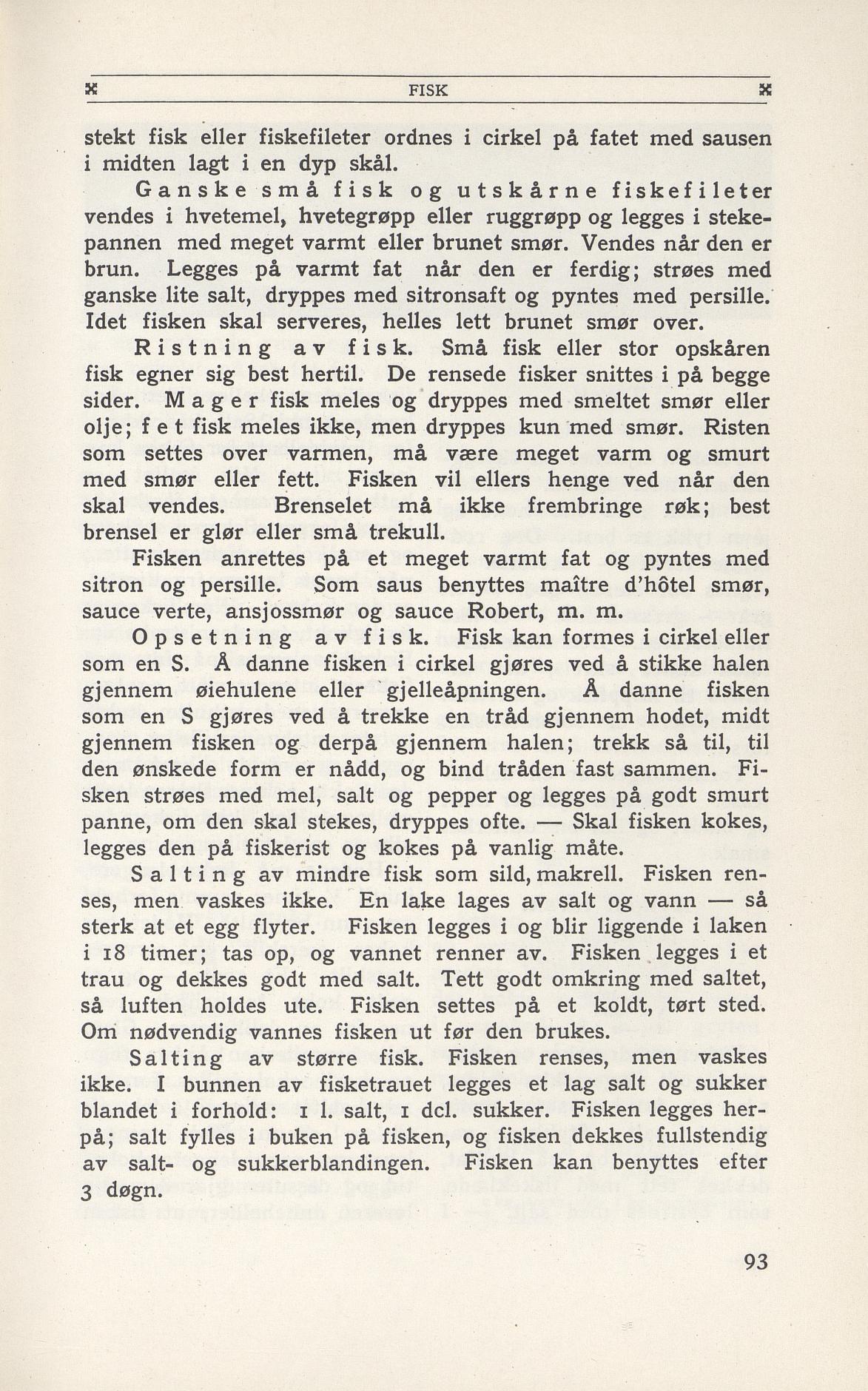
Modernised → 1949 (proofread, p. 93)~81% of the text changedremovedadded
sild eller makrell (renset, ikke vasket). salt (til lake og til tørrsalting, ca. 300–350 g per liter vann i laken). vann (til laken). 1 stk egg (til å prøve lakens styrke). Rens fisken, Salting av mindre fisk som sild, makrell. Fisken renses, men ikke vask den.. Rør ut vaskes ikke. En lake lages av salt i og vann til laken er — så sterk at et egg flyter flyter. Fisken legges i den.. Legg fisken og blir liggende i laken og la den ligge i 18 timer. Ta den så opp timer; tas op, og la vannet renne av.. Legg fisken renner av. Fisken legges i et trekar eller en tett beholder trau og dekk den dekkes godt med salt. Pakk saltet tett omkring, slik at Tett godt omkring med saltet, så luften holdes ute.. Sett fisken ute. Fisken settes på et kaldt, koldt, tørt sted. Vann Om nødvendig vannes fisken ut i kaldt vann før bruk om nødvendig. den brukes.

Note on Modernised

Ingen faste mengder i originalen; laken måles fortsatt med eggprøven (ca. 300–350 g salt per liter vann). «Trug» er angitt som trekar/beholder. Trinnene er nummerert og språket modernisert.

Community interpretations

Be the first to share your own version.

See interpretations →

Frequently asked questions

Why should the fish not be washed before salting?
According to Schønberg Erken's 1914 instructions, the fish is only cleaned, not washed. Water on the fish before salting makes it spoil more easily; the brine and salt handle the cleaning and preservation.
How strong should the brine be, and how long does the fish stay in it?
The brine is made from salt and water strong enough to float an egg. The fish sits in the brine for 18 hours, is then taken out and left to drain.
How is the fish stored after salting?
The fish is placed in a trough and covered well with salt, packed tightly around it so the air is kept out. The trough is set in a cold, dry place. If necessary, the fish is soaked before use.

Related recipes

More dishes in the same category from the archive

Read also

Kommentarer

Ingen kommentarer ennå. Bli den første til å dele!