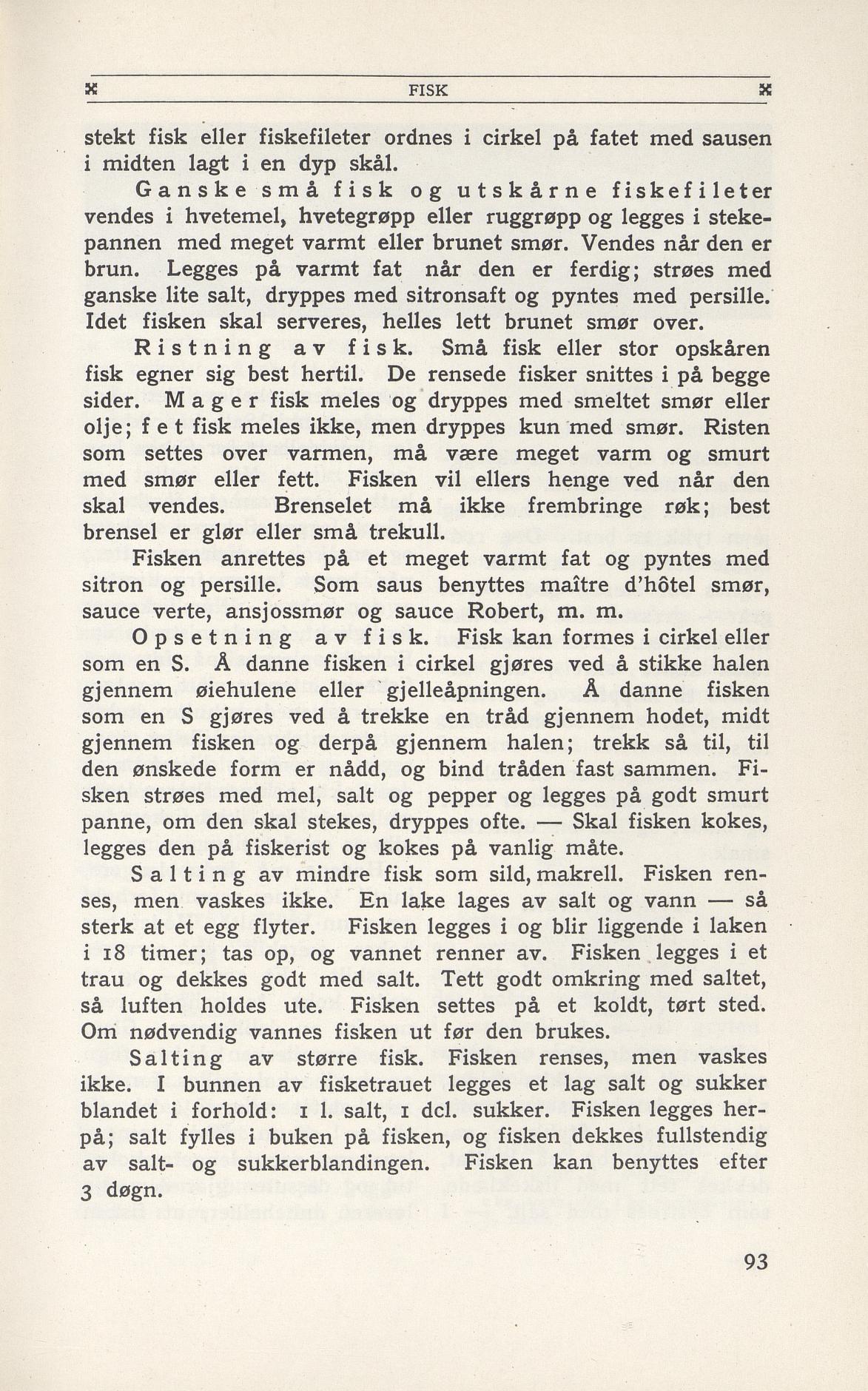
Original 1914 recipe
Verbatim from the first edition of the Big Cookbook.
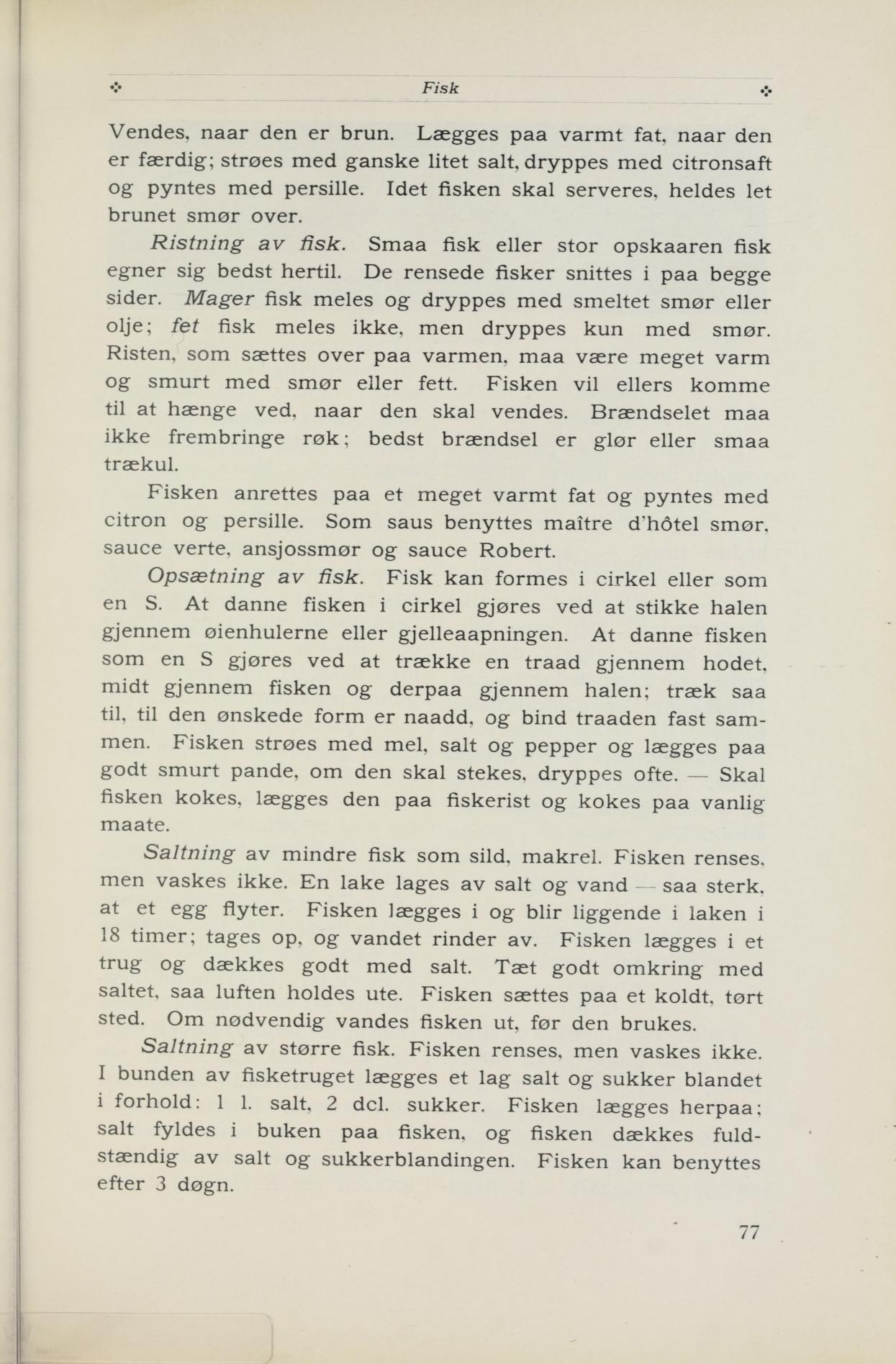
Erken's method for salting herring and mackerel: the fish is cleaned but not washed, sits 18 hours in a brine strong enough to float an egg, drains, and is then dry-salted packed tightly in a trough. Stored cold and dry, soaked before use.
Source: Henriette Schønberg Erken, Stor kokebok, 1914-utg. s. 77 (falt i det fri)
Salting was the most important method of preserving fish in Norwegian households before the refrigerator. Erken describes the classic two-step method with brine followed by dry-salting in a trough.
Clean the fish
Clean the fish, but do not wash it.
Make the brine
Stir salt into water until the brine is strong enough that an egg floats in it.
Place the fish in brine
Place the fish in the brine and let it sit for 18 hours. Then take it out and let the water drain off.
Dry-salting
Place the fish in a wooden tub or a tight container and cover it well with salt. Pack the salt tightly around it, so the air is kept out.
Storage and use
Store the fish in a cold, dry place. Soak the fish in cold water before use if necessary.
No fixed quantities in the original; the brine is still measured with the egg test (about 300–350 g salt per liter of water). "Trough" is given as a wooden tub/container. The steps are numbered and the language modernized.
Original 1914 recipe
Verbatim from the first edition of the Big Cookbook.

Revised 1949 recipe
From the revised edition of the Big Cookbook.

Clean, minimally processed groceries matched to the ingredients — approximate prices.
Product data and prices via Kassalapp. Prices are updated daily and may vary.
Be the first to share your own version.
More dishes in the same category from the archive
Ingen kommentarer ennå. Bli den første til å dele!